Paranasal Sinuses: Anatomy, Function & Health
Understanding your paranasal sinuses: anatomy, function, and common conditions explained.
Understanding Your Paranasal Sinuses
Your paranasal sinuses are air-filled cavities located within the bones of your face and skull. These hollow spaces are lined with a special mucus-producing tissue and connect directly to your nasal cavity. Far from being useless body parts, your sinuses play multiple crucial roles in maintaining your respiratory health, protecting your brain, and contributing to your overall well-being. Understanding how these structures work can help you appreciate the complexity of your body’s natural defense systems.
What Are Paranasal Sinuses?
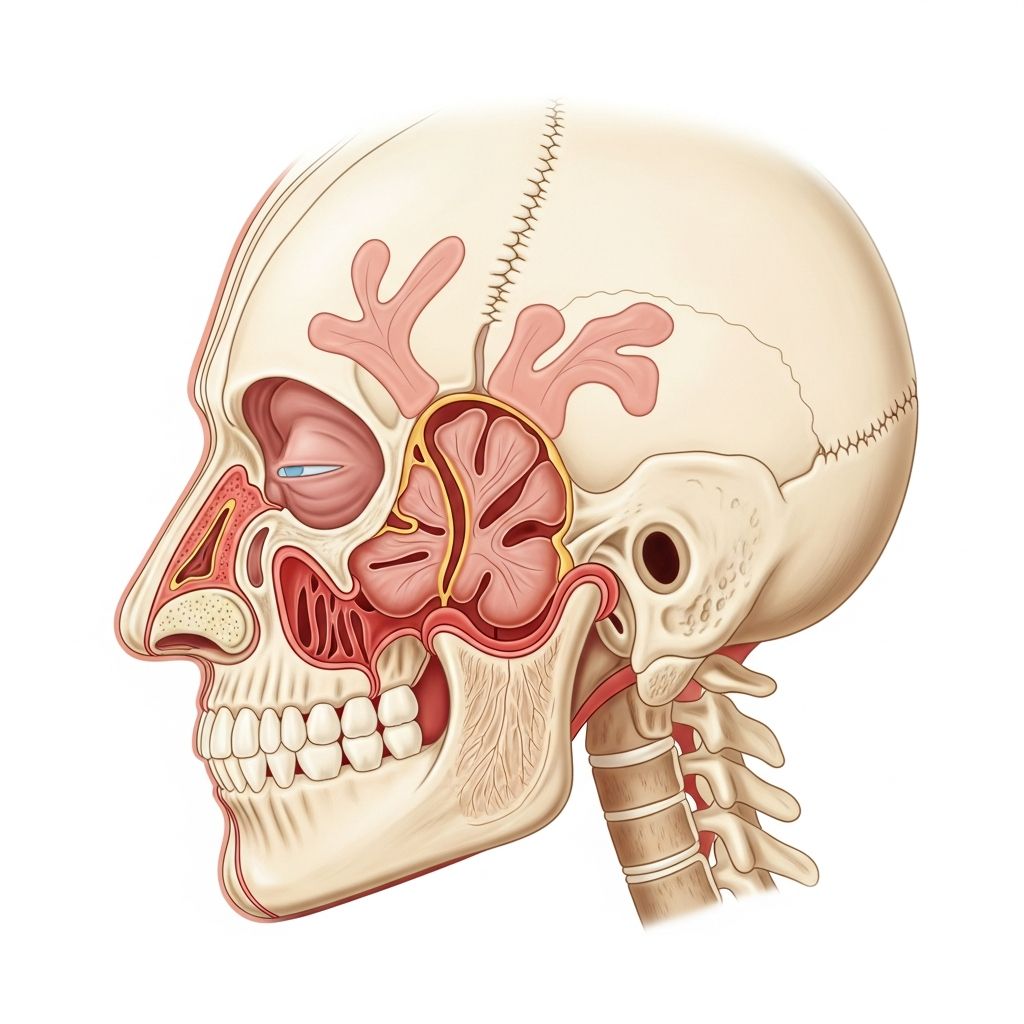
Paranasal sinuses are four pairs of air-filled cavities located throughout your facial bones and skull. The term “paranasal” literally means “beside the nose,” which accurately describes their anatomical relationship to your nasal cavity. These sinuses are lined with pseudostratified columnar epithelium, a specialized tissue that produces mucus to keep your nasal passages moist and healthy. Together, these four paired sinuses form an interconnected system that works in harmony to support your respiratory function and protect sensitive structures within your head.
The Four Types of Paranasal Sinuses
Maxillary Sinuses
The maxillary sinuses are the largest of all paranasal sinuses, located beneath your eyes within the maxillary bones of your upper jaw. With an approximate volume of 15 mL in adults, these pyramid-shaped cavities have their base facing your nasal cavity and extend laterally into the cheekbone’s zygomatic process. Their size and prominence make them one of the most frequently affected sinuses during infections or inflammation.
Frontal Sinuses
Positioned superior to your eyes within the frontal bone of your forehead, the frontal sinuses are the second-largest pair of paranasal sinuses. These sinuses contain a complex network of anterior and posterior cells that contribute to the drainage pathways for mucus. The anterior cells, including the agger nasi cell, push drainage in medial, posterior, or posteromedial directions, while posterior cells push drainage anteriorly.
Ethmoid Sinuses
The ethmoid sinuses are formed from several air cells within the ethmoid bone, positioned between your nose and eyes, just behind the bridge of your nose. These sinuses contain multiple smaller air-filled cavities called ethmoid air cells. Because the ethmoid bone is spongy and cube-shaped, it effectively separates your nasal cavity from your brain and eye sockets while housing these important air-filled spaces.
Sphenoid Sinuses
Located within the body of the sphenoid bone at the center of your head, behind the upper part of your nasal cavity, the sphenoid sinuses are unique butterfly-shaped structures. You have two sphenoid sinus cavities—one on each side—separated by a thin bony wall that rarely divides them evenly, meaning one sinus is typically larger than the other. Their central location makes them particularly important for accessing the pituitary gland during surgical procedures.
Anatomical Relationships and Drainage Pathways
The Ostiomeatal Complex
Your ethmoid sinuses are divided into two parts that reflect different drainage pathways through what’s called the ostiomeatal complex. This complex system of passages ensures that mucus flows efficiently out of your sinuses into your nasal cavity. The ethmoid infundibulum, a pyramidal space within the ethmoid region, facilitates the drainage of the maxillary, anterior ethmoid, and frontal sinuses. Understanding these drainage pathways is essential for comprehending how your sinuses maintain health and what happens when these passages become blocked.
Related Stories



Key Anatomical Structures
The uncinate process is a critical anatomical structure that determines how your frontal sinus drains. In approximately 80% of individuals, the uncinate process attaches to the lamina papyracea, resulting in frontal sinus drainage medial to the uncinate, while in the remaining 20% of cases, it attaches to either the skull base or middle turbinate, resulting in lateral drainage. This anatomical variation explains why some people may experience different sinus drainage patterns than others.
Blood Supply and Nerve Innervation
Arterial and Venous Supply
Your paranasal sinuses receive their blood supply from several important sources. The sphenopalatine artery supplies the sphenoid sinus, while the anterior and posterior ethmoid arteries supply the ethmoid sinuses—these latter arteries branch from the ophthalmic artery, which is itself a branch of the internal carotid artery. Venous drainage occurs through the maxillary vein for the maxillary and ethmoid sinuses, and through the maxillary vein for sphenoid sinus drainage as well.
Nerve Supply
The innervation of your paranasal sinuses varies by sinus type. The maxillary sinus receives sensory innervation from branches of the maxillary nerve, including the middle, anterior, and posterior superior alveolar nerves, as well as the infraorbital nerve. The sphenoid sinus is innervated by the sphenopalatine nerve, which carries parasympathetic fibers and sensory components from the trigeminal nerve (CN V2). The frontal sinus receives innervation from the supraorbital and supratrochlear nerves (branches of CN V1), while the ethmoid sinuses are innervated by the anterior and posterior ethmoid nerves.
Functions of Paranasal Sinuses
Air Filtration and Mucus Production
Your paranasal sinuses play a vital role in your body’s natural air filtration system. They produce mucus that drains into your nasal cavity, trapping harmful substances like dust, germs, and allergens before they can enter your lungs. This mucus production is continuous and essential—it keeps the tissue lining your nose moist and healthy while creating a protective barrier against pathogens. Though many people consider mucus unpleasant, it’s actually a sign that your sinuses are functioning properly to protect your health.
Humidification and Temperature Regulation
As air passes through your nasal passages and sinuses on its way to your lungs, your paranasal sinuses help humidify and heat the inspired air. This conditioning of air is particularly important in dry environments or during winter months when air moisture levels drop significantly. Additionally, your sinuses provide insulation to sensitive structures, protecting them from rapid temperature fluctuations in the nasal cavity.
Weight Reduction and Trauma Protection
The hollow, air-filled nature of your paranasal sinuses significantly decreases the relative weight of your skull, making it easier for your neck to support your head. Beyond weight reduction, these air-filled spaces act as shock absorbers, providing a buffer against facial trauma and potentially protecting your brain from impact injuries.
Voice Resonance
Your paranasal sinuses contribute to the resonance and quality of your voice. These air-filled cavities modify the sound waves produced by your vocal cords, creating the warm, layered resonance that characterizes your unique voice. This is why people often sound different when they have a sinus infection or nasal congestion—the blocked sinuses alter these acoustic properties.
Immune Defense
Your paranasal sinuses play an important role in immunological defense by filtering air and helping your body’s natural immune response against pathogens. The mucus produced by your sinuses contains antimicrobial compounds that help neutralize bacteria, viruses, and other harmful organisms before they can cause infection.
Common Conditions Affecting Paranasal Sinuses
Sinusitis
Sinusitis is inflammation of the mucous membrane lining your paranasal sinuses, often caused by bacterial or viral infections, allergies, or structural abnormalities. The diagnosis of sinusitis involves clinical examination combined with imaging studies such as CT scans to visualize the anatomy of your sinuses.
Nasal Polyps
Nasal polyps are noncancerous growths that can form in your nose or sinuses, often resulting from chronic inflammation associated with allergies, asthma, or frequent infections. These growths can obstruct normal sinus drainage and lead to chronic sinusitis if left untreated.
Sinus Congestion and Allergies
Colds, allergies, and environmental irritants can impact your ethmoid sinuses and other paranasal sinuses, causing congestion and inflammation. When your sinuses become congested, normal drainage pathways are obstructed, potentially leading to uncomfortable pressure and pain.
Treatment Options
Functional Endoscopic Sinus Surgery
For individuals suffering from chronic sinus conditions that don’t respond to medical management, functional endoscopic sinus surgery (FESS) offers a minimally invasive solution. This procedure unblocks your sinuses to restore normal drainage and airflow, providing relief from persistent symptoms. FESS uses small telescopes to visualize the sinus passages, allowing surgeons to precisely target problem areas without making external incisions on your face or scalp.
Transsphenoidal Approach
The unique location of the sphenoid sinus makes it an ideal surgical access point for pituitary gland procedures. Surgeons can use the transsphenoidal approach to remove pituitary tumors by accessing the gland through the nose and sphenoid sinus, avoiding the need for facial or scalp incisions.
Maintaining Sinus Health
Keeping your paranasal sinuses healthy involves maintaining proper nasal hygiene, staying hydrated to support mucus production, and avoiding environmental irritants when possible. If you experience persistent sinus symptoms such as constant stuffiness, sinus pressure, or pain that interferes with your daily life, consulting with a sinus specialist can help identify underlying causes and appropriate treatment options.
Frequently Asked Questions
Q: What exactly are paranasal sinuses?
A: Paranasal sinuses are four pairs of air-filled cavities located within the bones of your face and skull. They connect to your nasal cavity and are lined with tissue that produces mucus to keep your nose moist and healthy while filtering harmful substances.
Q: Why do I need paranasal sinuses?
A: Your paranasal sinuses serve multiple important functions: they filter air and trap germs, humidify and heat inspired air, reduce the weight of your skull, provide protection against head trauma, contribute to voice resonance, and play a role in immune defense.
Q: Which sinus is the largest?
A: The maxillary sinuses are the largest paranasal sinuses, with an approximate volume of 15 mL in adults. They’re located beneath your eyes in the cheekbones.
Q: What causes sinus infections?
A: Sinus infections can result from bacterial or viral infections, colds, allergies, environmental irritants, or structural abnormalities that obstruct normal sinus drainage.
Q: How do blocked sinuses occur?
A: Blocked sinuses typically occur when mucus drainage pathways become obstructed due to inflammation, nasal polyps, structural abnormalities, or infections, preventing normal mucus flow and air circulation.
Q: When should I see a doctor about sinus problems?
A: You should consult a healthcare provider if you experience persistent sinus symptoms lasting more than 10 days, severe sinus pain or pressure, chronic congestion, or symptoms that interfere with your daily activities.
References
- Anatomy, Head and Neck, Nose Paranasal Sinuses — National Center for Biotechnology Information (NCBI), National Institutes of Health. 2024. https://www.ncbi.nlm.nih.gov/books/NBK499826/
- Ethmoid Sinus: Anatomy & Function — Cleveland Clinic. 2024. https://my.clevelandclinic.org/health/body/ethmoid-sinus
- Sphenoid Sinus: What It Is & Function — Cleveland Clinic. 2024. https://my.clevelandclinic.org/health/body/sphenoid-sinus
- Functional Endoscopic Sinus Surgery (FESS) — Cleveland Clinic. 2024. https://my.clevelandclinic.org/health/treatments/17478-functional-endoscopic-sinus-surgery
- Nasal Polyps: Symptoms, Causes, Treatment & Removal — Cleveland Clinic. 2024. https://my.clevelandclinic.org/health/diseases/15250-nasal-polyps
- The Paranasal Sinuses – Structure – Function — TeachMeAnatomy. 2024. https://teachmeanatomy.info/head/organs/the-nose/paranasal-sinuses/
- Changing diagnostic and treatment strategies for chronic sinusitis — Cleveland Clinic Journal of Medicine. 1996. https://www.ccjm.org/content/ccjom/63/7/396.full.pdf
Similar Articles








Read full bio of Sneha Tete