Paraplegia: Definition, Causes, Symptoms, Types & Treatment
Complete guide to paraplegia: understanding causes, symptoms, types, and evidence-based treatment options.
Understanding Paraplegia: Definition and Overview
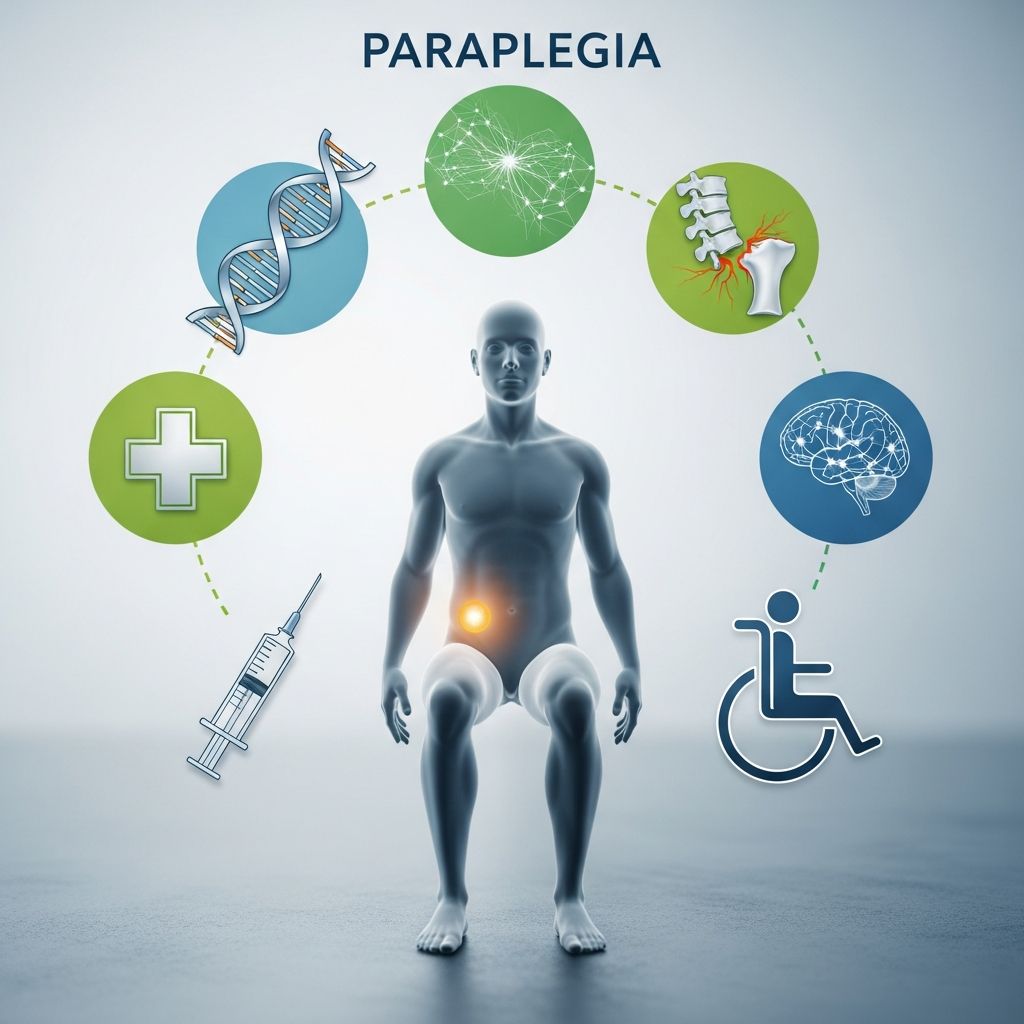
Paraplegia is a medical condition characterized by paralysis that primarily affects your legs, though it can sometimes extend to your lower body and may impact certain arm functions as well. This condition represents a significant challenge to mobility and independence, but understanding its causes, symptoms, and treatment options can help individuals manage their condition effectively and maintain quality of life.
The term paraplegia specifically refers to the inability to voluntarily move and control the lower limbs. Unlike quadriplegia, which affects all four limbs, paraplegia leaves the upper body and arms functioning normally in most cases. This distinction is important for understanding the scope of disability and the rehabilitation strategies that may be most effective.
Types of Paraplegia
Paraplegia manifests in different ways depending on the extent of nerve damage and spinal cord injury. Understanding these distinctions helps healthcare providers develop more targeted treatment plans.
Complete Paraplegia
Complete paraplegia occurs when there is a total loss of sensory and motor function below the level of the spinal cord injury. In this type, individuals experience no voluntary movement or sensation in the affected areas. This typically results from severe spinal cord trauma that completely severs or destroys nerve pathways.
Incomplete Paraplegia
Incomplete paraplegia involves partial preservation of motor or sensory function below the injury level. Individuals with incomplete paraplegia may retain some sensation, experience some voluntary muscle control, or have a combination of both. This type often provides better potential for recovery and rehabilitation compared to complete paraplegia.
Spasticity and Flaccidity
Beyond the complete and incomplete classifications, paraplegia can present with two distinct patterns of muscle behavior. Spastic paraplegia involves muscles that are tight, stiff, and hyperactive, often characterized by involuntary muscle contractions. Flaccid paraplegia, conversely, involves muscles that are weak, loose, and lack normal tone. The type of muscle response depends on the location and nature of the spinal cord damage and can significantly influence rehabilitation approaches.
Common Causes of Paraplegia
Spinal Cord Injuries: The Primary Cause
The most common cause of paraplegia is traumatic injury to the spinal cord. These injuries can result from various incidents that cause sudden, forceful damage to the spine and its neural structures.
Motor vehicle accidents represent a leading cause of spinal cord injuries, particularly those involving high-speed collisions. Falls from significant heights, especially among elderly individuals, also contribute substantially to paraplegia cases. Additionally, sports-related injuries from activities like diving, football, or gymnastics can cause severe spinal cord damage. Gunshot wounds and other penetrating injuries are also significant causes of traumatic spinal cord injuries leading to paraplegia.
Related Stories



Peripheral Nerve Conditions
Paraplegia can also develop from conditions affecting peripheral nerves—the nerves extending outward from the spinal cord. Polyneuropathies, which affect multiple nerves simultaneously, can cause paraplegia-like symptoms. Guillain-Barré syndrome, an autoimmune disorder affecting peripheral nerves, can result in progressive paralysis. Diabetes-related nerve damage, or diabetic neuropathy, represents another significant cause of peripheral nerve-related paraplegia.
Other Medical Conditions
Beyond traumatic injuries and peripheral neuropathies, numerous medical conditions can lead to paraplegia. These include spinal cord tumors or cancers that compress nerve pathways, degenerative spinal conditions such as severe arthritis, multiple sclerosis and other demyelinating diseases, spinal cord infections or abscesses, and vascular events affecting spinal cord blood supply. Additionally, certain genetic conditions like hereditary spastic paraplegia can progressively lead to paralysis over time.
Recognizing Paraplegia Symptoms
Primary Symptoms
The hallmark symptom of paraplegia is loss of voluntary movement and control in the legs. Individuals may experience complete inability to move their lower limbs or, in incomplete paraplegia cases, reduced motor control and weakness. Sensory loss is another primary symptom, with many individuals experiencing reduced or absent sensation below the level of injury. This loss of sensation can include diminished ability to feel temperature, touch, and pain in affected areas.
Secondary Complications
Beyond the primary paralysis and sensory loss, paraplegia often involves several secondary symptoms and complications. These may include bowel and bladder dysfunction, with individuals potentially experiencing loss of voluntary control. Sexual dysfunction commonly occurs due to nerve damage. Chronic pain and neuropathic pain can develop, sometimes causing significant discomfort. Spasticity or muscle rigidity may develop over time, and individuals may also experience orthostatic hypotension, characterized by dizziness upon position changes.
Diagnosis of Paraplegia
Clinical Evaluation
Diagnosing paraplegia begins with a comprehensive clinical evaluation. Healthcare providers will conduct detailed physical and neurological examinations to assess motor function, sensory perception, and reflex responses. They will thoroughly review your medical history, family history, and the circumstances surrounding symptom onset.
Diagnostic Testing
Several advanced imaging and testing techniques help confirm paraplegia diagnosis and identify its underlying cause. Magnetic resonance imaging (MRI) provides detailed images of the spinal cord and surrounding structures, helping identify injuries, tumors, or other abnormalities. Computed tomography (CT) scans offer additional structural information, particularly useful for identifying bone fractures. Electromyography (EMG) and nerve conduction studies measure electrical activity in muscles and nerves, helping assess nerve function. X-rays may be used as initial screening tools to identify spinal fractures or misalignments. In some cases, lumbar puncture or cerebrospinal fluid analysis may be performed to identify infections or other neurological conditions.
Differential Diagnosis Considerations
Paraplegia symptoms can resemble other neurological conditions, sometimes delaying accurate diagnosis. Conditions that may mimic paraplegia include multiple sclerosis, Guillain-Barré syndrome, spinal stenosis, certain vitamin deficiencies affecting nerve function, and functional neurological disorders. Careful diagnostic evaluation helps distinguish paraplegia from these conditions to ensure appropriate treatment.
Treatment and Management Approaches
Acute Phase Management
When paraplegia results from traumatic spinal cord injury, immediate medical intervention is critical. Emergency care focuses on preventing further damage and stabilizing the spine. Corticosteroid medications such as methylprednisolone may be administered to reduce inflammation and swelling in the spinal cord. In some cases, surgical intervention may be necessary to decompress the spinal cord, stabilize the spine, or remove debris. Bed rest and immobilization help protect the injured spinal cord during initial healing.
Rehabilitation and Physical Therapy
Comprehensive rehabilitation represents the cornerstone of paraplegia management. Physical therapy aims to strengthen remaining functional muscles, improve cardiovascular fitness, and maintain joint flexibility. Occupational therapy helps individuals adapt to daily living activities and develop strategies for independence. Speech therapy may be necessary if paraplegia affects breathing or swallowing functions. These therapeutic interventions, combined with structured exercise programs, help maximize functional capacity and quality of life.
Assistive Devices and Adaptive Equipment
Modern assistive technology provides individuals with paraplegia enhanced mobility and independence. Wheelchairs, ranging from manual to powered models, enable significant mobility. Exoskeletons represent emerging technology that can facilitate walking with robotic support. Specialized seating systems, positioning aids, and transfer equipment help prevent complications and improve daily functioning. Adaptive devices for personal care, home modifications, and vocational equipment enable participation in work and leisure activities.
Symptom-Specific Treatment
Beyond general rehabilitation, specific treatments address particular complications. Medications like baclofen or botulinum toxin can manage spasticity. Bladder and bowel dysfunction requires specialized management strategies, potentially including medications or intermittent catheterization. Chronic pain may respond to medications, spinal cord stimulators, or nerve blocks. Sexual dysfunction can be addressed through counseling and specialized medical interventions.
Psychological and Psychosocial Support
The psychological impact of paraplegia should not be underestimated. Counseling and mental health support help individuals cope with depression, anxiety, and adjustment challenges. Support groups connect individuals with paraplegia, providing community and practical advice. Family counseling addresses how paraplegia affects relationships and family dynamics.
Recovery Potential and Prognosis
Variability in Recovery
Recovery potential from paraplegia varies significantly depending on the cause, severity, and completeness of the injury. Complete spinal cord injuries historically have had limited recovery potential, though ongoing research continues to identify new therapeutic approaches. Incomplete paraplegia typically offers better prognosis for functional recovery, with many individuals regaining some degree of movement or sensation through rehabilitation.
Current State of Research
While currently no cure exists for permanent spinal cord damage, researchers continue advancing treatments that may reduce initial injury damage or promote nerve regeneration. Spinal cord stimulation, cellular transplantation approaches, and pharmaceutical interventions show promise in early research phases. Robotic-assisted rehabilitation technology continues improving, potentially enhancing recovery outcomes.
Living with Paraplegia: Practical Considerations
Home and Workplace Modifications
Successful adaptation to paraplegia often requires environmental modifications. Accessible home design including ramps, grab bars, and wheelchair-accessible bathrooms enables independent living. Workplace accommodations such as accessible facilities and assistive technology support vocational participation.
Health Maintenance and Complication Prevention
Regular medical monitoring helps prevent secondary complications. Skin care and pressure relief strategies prevent pressure injuries. Weight management through proper nutrition and exercise maintains cardiovascular health. Regular bowel and bladder management prevents infections and complications.
Social and Recreational Engagement
Individuals with paraplegia can maintain active, fulfilling lives through adapted recreational activities. Wheelchair sports, adaptive fitness programs, and accessible community resources enable continued participation in meaningful activities.
Frequently Asked Questions About Paraplegia
Q: Is paraplegia always permanent?
A: Paraplegia caused by complete spinal cord injury is typically permanent, though incomplete injuries may allow for some recovery. The permanence depends on the severity and nature of the injury. Some temporary conditions affecting the nerves can resolve with treatment, while traumatic spinal cord damage usually results in permanent paralysis. However, rehabilitation and adaptive strategies can significantly improve quality of life and function.
Q: Can people with paraplegia walk again?
A: Currently, most people with complete spinal cord injury do not regain walking ability, though ongoing research into regenerative therapies and advanced rehabilitation techniques offers future possibilities. Some individuals with incomplete paraplegia may regain limited walking ability through intensive rehabilitation. Robotic exoskeletons enable some individuals to stand and walk with assistance, though this is typically not independent walking.
Q: What should I do if I suspect I have paraplegia?
A: If you experience sudden paralysis, loss of sensation, or loss of control in your lower body, seek immediate emergency medical care. These symptoms require urgent evaluation to prevent permanent damage. Even gradual onset of symptoms warrants prompt medical evaluation to identify the underlying cause and begin appropriate treatment.
Q: How does paraplegia affect life expectancy?
A: Paraplegia itself does not necessarily reduce life expectancy, though complications from the underlying cause or secondary conditions can affect longevity. Proper medical management, infection prevention, and healthy lifestyle choices enable individuals with paraplegia to live full, normal lifespans.
Q: Can people with paraplegia have children?
A: Yes, many individuals with paraplegia can have children. While fertility may be affected in some cases, particularly in males, assisted reproductive technologies can help. Pregnancy and childbirth require specialized medical management and planning, but many individuals with paraplegia become parents successfully.
Q: What career options are available for someone with paraplegia?
A: Many career paths remain available to individuals with paraplegia, particularly with workplace accommodations and assistive technology. Professional counseling, vocational rehabilitation, and workplace modifications enable continued employment in various fields. Many individuals pursue education and careers successfully after paraplegia diagnosis.
Conclusion: Hope and Adaptation
While paraplegia presents significant challenges to mobility and independence, it does not define an individual’s potential for a meaningful, fulfilling life. Modern medical advances, rehabilitation techniques, assistive technologies, and psychological support enable individuals with paraplegia to adapt, thrive, and contribute to society. Early intervention, comprehensive rehabilitation, and ongoing medical management optimize outcomes and quality of life. Though permanent paralysis from spinal cord injury currently cannot be reversed, continuous research and technological innovation offer hope for future breakthroughs. For those living with paraplegia today, the combination of medical care, rehabilitation, adaptive equipment, and psychological support provides pathways to independence, employment, relationships, and life satisfaction.
References
- Paraplegia: Definition, Causes, Symptoms, Types & Treatment — Cleveland Clinic. 2024-08-22. https://my.clevelandclinic.org/health/symptoms/23984-paraplegia
- Spinal Cord Injury: Causes, Symptoms, Treatment & Types — Cleveland Clinic. 2024. https://my.clevelandclinic.org/health/diseases/12098-spinal-cord-injury
- Paralysis: What It Is, Causes, Symptoms, Management & Types — Cleveland Clinic. 2024. https://my.clevelandclinic.org/health/diseases/15345-paralysis
- Spinal Cord Injury Overview — Cleveland Clinic Abu Dhabi. 2024. https://www.clevelandclinicabudhabi.ae/en/health-hub/health-resource/diseases-and-conditions/spinal-cord-injury-overview
- Private Spinal Cord Rehabilitation — Cleveland Clinic London. 2024. https://clevelandcliniclondon.uk/clinical-institutes/rehabilitation/spinal-cord-injury
- Hereditary Spastic Paraplegia: What It Is, Symptoms & Types — Cleveland Clinic. 2024-08-22. https://my.clevelandclinic.org/health/diseases/hereditary-spastic-paraplegia
Similar Articles








Read full bio of medha deb