The Parathyroid Glands: Function, Location & Disorders
Understanding parathyroid glands: anatomy, calcium regulation, and common disorders explained.
Understanding the Parathyroid Glands
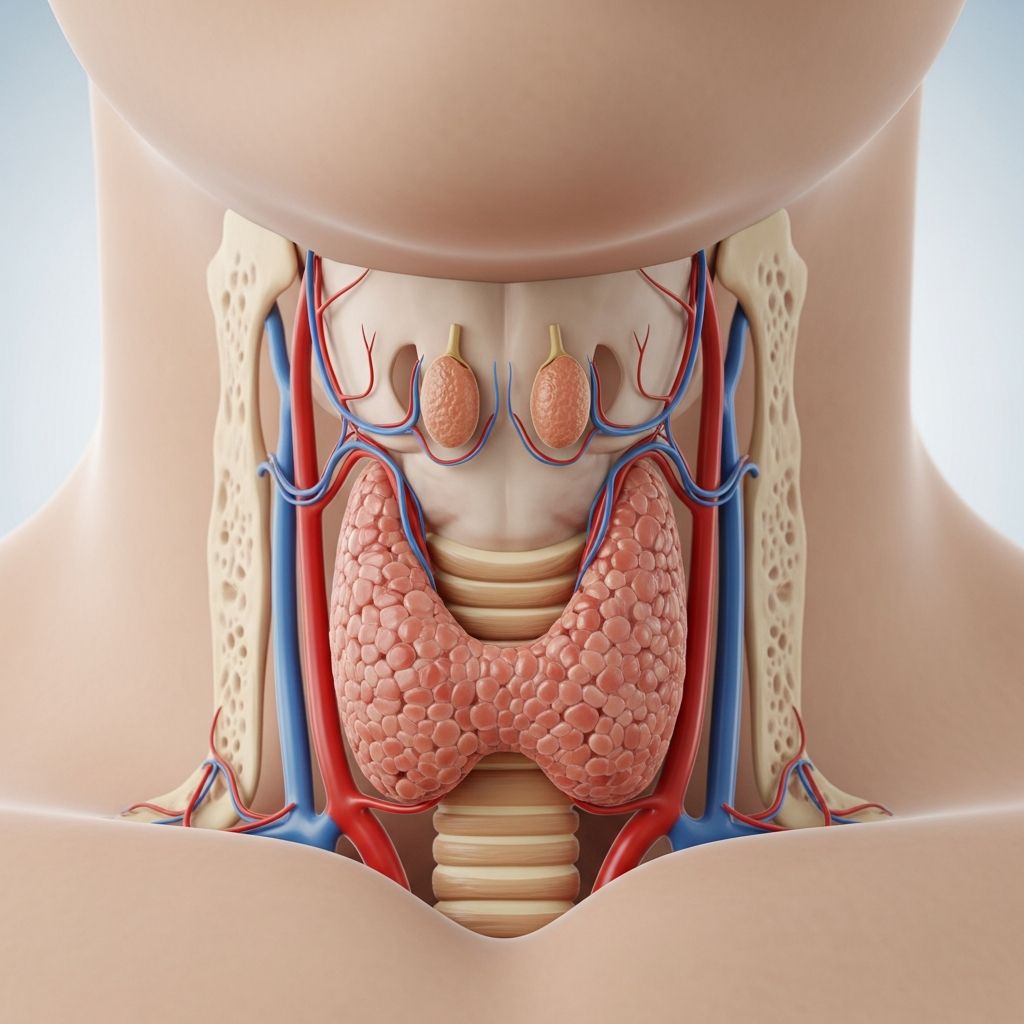
The parathyroid glands are small but essential endocrine glands that play a crucial role in regulating calcium and phosphorus levels throughout your body. Located in your neck behind the thyroid gland, these pea-sized organs work continuously to maintain the delicate balance of minerals necessary for proper heart, kidney, bone, and nervous system function. Most people have four parathyroid glands, though some individuals may have fewer or more than this standard number. When these glands function properly, they remain largely unnoticed, but when problems develop, they can significantly impact your overall health and wellbeing.
Anatomy and Location of the Parathyroid Glands
The parathyroid glands are typically embedded within the back surface of your thyroid gland, which is the butterfly-shaped gland located in your neck below the Adam’s apple. Approximately 80 percent of people have exactly four parathyroid glands arranged in pairs, with two glands positioned within each wing of the thyroid. Each gland is approximately the size and shape of a pea, making them extremely small despite their significant physiological importance.
The four parathyroid glands are named based on their position: the superior (upper) parathyroid glands and the inferior (lower) parathyroid glands. The superior parathyroid glands typically remain in a more stable position, while the inferior parathyroid glands are known to migrate during fetal development, traveling a greater distance to reach their final location. During surgical procedures in the neck area, this anatomical relationship is clinically significant because the parathyroid glands have specific relationships with the recurrent laryngeal nerve, with superior glands typically lying deep to this nerve and inferior glands lying superficial to it.
Ectopic Parathyroid Glands
In approximately 16 percent of the population, parathyroid glands can be located in unusual positions, a condition known as ectopic placement. These ectopic glands may be found along the esophagus in the neck or within the chest cavity in the mediastinum. Generally, ectopic parathyroid glands do not cause concern unless they become overactive and require surgical removal, which can present diagnostic challenges for healthcare providers attempting to locate them.
The Function and Physiology of Parathyroid Glands
The primary function of the parathyroid glands is to regulate calcium and phosphorus levels within your bloodstream. This regulatory process is achieved through the production and release of parathyroid hormone, commonly abbreviated as PTH. Calcium is absolutely essential for numerous bodily functions, including heart rhythm regulation, nerve signal transmission, muscle contraction, bone strength, and numerous enzymatic processes. When calcium levels in your blood become too low, the parathyroid glands respond by secreting more PTH, which works through multiple mechanisms to restore calcium balance.
Parathyroid Hormone and Calcium Regulation
PTH works through a sophisticated negative feedback system to maintain calcium homeostasis. When calcium levels drop, specialized calcium-sensing receptors on the surface of parathyroid chief cells detect this change and stimulate the synthesis and secretion of PTH. This hormone then acts on target tissues throughout the body to increase serum calcium levels through three primary mechanisms: stimulating the release of calcium from bone into the bloodstream, enhancing calcium absorption from food in the intestines, and promoting calcium conservation by the kidneys.
The feedback system is elegantly designed such that both calcium and vitamin D bind to receptors on parathyroid cells, inhibiting PTH release when calcium levels normalize. This ensures that calcium levels are maintained within a narrow, optimal range essential for health.
Related Stories



Effects of PTH on Bone, Kidneys, and Intestines
PTH exerts its most significant effects at the level of bones, kidneys, and the gastrointestinal system. In bone tissue, PTH stimulates osteoclasts while inhibiting osteoblasts, thereby breaking down bone and releasing calcium into the bloodstream. This process occurs through a complex mechanism involving the stimulation of osteoblasts to produce RANKL (Receptor Activator of Nuclear Factor Kappa-B Ligand), which allows osteoblasts to differentiate into osteoclasts, increasing bone resorption when serum calcium levels are low.
In the kidneys, PTH increases serum calcium through multiple pathways. First, it directly increases calcium reabsorption at the ascending loop of Henle, the distal convoluted tubule, and the collecting duct by upregulating calcium transporters. Second, PTH increases phosphate excretion in urine, which indirectly increases serum calcium because phosphate ions in the blood form insoluble salts with calcium. By reducing phosphate levels, more calcium remains ionized and available in the blood. Third, PTH stimulates the kidneys to produce more alpha-1-hydroxylase, the enzyme responsible for converting vitamin D into its active form, calcitriol. This active form of vitamin D is essential for calcium and phosphorus homeostasis and increases both calcium and phosphorus reabsorption in the kidney.
Additionally, vitamin D plays an important complementary role in maintaining blood calcium levels by enhancing your body’s ability to absorb calcium from dietary sources and facilitating proper mineral metabolism.
Common Parathyroid Disorders
Despite their small size, parathyroid glands can develop various conditions that significantly impact health. The two main disorders affecting parathyroid function are hyperparathyroidism and hypoparathyroidism, each representing opposite extremes of parathyroid hormone regulation.
Hyperparathyroidism
Hyperparathyroidism occurs when one or more parathyroid glands become overactive and release excessive amounts of parathyroid hormone. This condition manifests in two primary forms: primary hyperparathyroidism and secondary hyperparathyroidism.
Primary Hyperparathyroidism: This form occurs when something directly affects the parathyroid glands, causing them to produce too much PTH and elevate blood calcium levels (hypercalcemia). Approximately 100,000 people in the United States develop primary hyperparathyroidism each year. Common causes include parathyroid adenomas (benign tumors), parathyroid hyperplasia (enlargement of multiple glands), and rarely, parathyroid cancer. Parathyroid cancer is extremely uncommon, accounting for only 0.005 percent of all cancers and 0.5 to 1 percent of all parathyroid conditions.
Secondary Hyperparathyroidism: This form develops when underlying conditions, such as kidney disease or vitamin D deficiency, cause persistently low calcium levels that stimulate excessive PTH production. The parathyroid glands are responding appropriately to maintain calcium balance, but the stimulus for PTH production remains constant. If this condition persists for an extended period, it can lead to additional health complications.
Tertiary Hyperparathyroidism: Over time, if secondary hyperparathyroidism is not adequately managed, the parathyroid glands may begin to function autonomously, continuing to overproduce and secrete PTH even after the underlying condition is treated. In this tertiary phase, patients develop extremely high PTH levels along with elevated calcium and phosphate, despite resolution of the original causative condition.
Hypoparathyroidism
Hypoparathyroidism is a relatively rare condition characterized by low levels of parathyroid hormone in the blood. This results in low blood calcium levels (hypocalcemia) and elevated phosphorus levels (hyperphosphatemia). Approximately 75 percent of hypoparathyroidism cases result from accidental damage to the parathyroid glands during neck or thyroid surgery. Other causes include certain genetic conditions and autoimmune disorders that attack the parathyroid tissue.
When hypoparathyroidism develops from causes other than surgical injury, the condition typically progresses gradually with mild symptoms in most cases. Common symptoms include muscle cramps, tingling in the fingers and lips, numbness, fatigue, and in severe cases, tetany or seizures due to severe hypocalcemia.
Parathyroid Nodules and Lesions
Parathyroid lesions are relatively uncommon, and carcinomas are even more rare. Benign conditions such as parathyroid adenomas or hyperplastic parathyroid glands can be associated with increased PTH secretion. These nodules can sometimes be mistaken for thyroid nodules on imaging studies, particularly when they are non-functional. Accurate diagnosis often requires PTH measurement of aspirated material from suspicious nodules, which can help determine whether the lesion originates from parathyroid or thyroid tissue, enabling proper clinical management.
Diagnosis and Management
If you experience symptoms of abnormal blood calcium levels, such as muscle weakness, bone pain, kidney stones, or neurological symptoms, your healthcare provider can recommend simple blood tests to measure calcium, phosphorus, and PTH levels. These tests help determine whether parathyroid dysfunction is the underlying cause and guide appropriate treatment decisions.
Treatment options vary depending on the specific condition and its severity. For hyperparathyroidism, treatment may include monitoring, medication, or surgical removal of the affected gland or glands. For hypoparathyroidism, treatment typically involves calcium and vitamin D supplementation to maintain appropriate blood calcium levels.
Frequently Asked Questions
Q: How many parathyroid glands do most people have?
A: Most people have four parathyroid glands embedded behind their thyroid gland in the neck, though some individuals may have fewer or more than four.
Q: What is the main function of parathyroid hormone?
A: PTH is responsible for controlling and maintaining blood calcium levels by stimulating calcium release from bones, increasing calcium absorption in the intestines, and promoting calcium conservation by the kidneys.
Q: What causes secondary hyperparathyroidism?
A: Secondary hyperparathyroidism develops when underlying conditions such as kidney disease or vitamin D deficiency cause persistently low calcium levels, stimulating excessive PTH production as the parathyroid glands attempt to restore calcium balance.
Q: Can parathyroid glands be located outside their normal position?
A: Yes, approximately 16 percent of people have ectopic parathyroid glands located along the esophagus or in the chest, though these typically do not cause problems unless they become overactive.
Q: What percentage of hypoparathyroidism cases result from surgery?
A: Approximately 75 percent of hypoparathyroidism cases are caused by accidental damage to the parathyroid glands during neck or thyroid surgery.
Q: How rare is parathyroid cancer?
A: Parathyroid cancer is extremely rare, accounting for only 0.005 percent of all cancers and 0.5 to 1 percent of all parathyroid conditions.
Key Takeaways
The parathyroid glands, though small and often overlooked, are essential organs that maintain the critical balance of calcium and phosphorus in your body. Through the production of parathyroid hormone, these glands work continuously to ensure that calcium levels remain optimal for heart function, nerve transmission, muscle contraction, and bone health. Understanding the anatomy, physiology, and potential disorders of the parathyroid glands empowers you to recognize symptoms of dysfunction and seek appropriate medical evaluation. Whether facing hyperparathyroidism or hypoparathyroidism, effective diagnosis and management can restore normal parathyroid function and maintain overall health and wellbeing.
References
- Parathyroid Physiology — The Oto Approach. 2021. https://theotoapproach.com/the-oto-approach-episodes/parathyroid-physiology
- Parathyroid Glands: What They Are, Function & Location — Cleveland Clinic. 2025. https://my.clevelandclinic.org/health/body/parathyroid-gland
- Parathyroid Gland — Johns Hopkins University. 2024. https://pure.johnshopkins.edu/en/publications/parathyroid-gland
Similar Articles








Read full bio of medha deb