Parathyroid Glands: Function, Location & Health
Understanding your parathyroid glands: anatomy, function, and disorders that affect calcium balance.
Understanding Your Parathyroid Glands
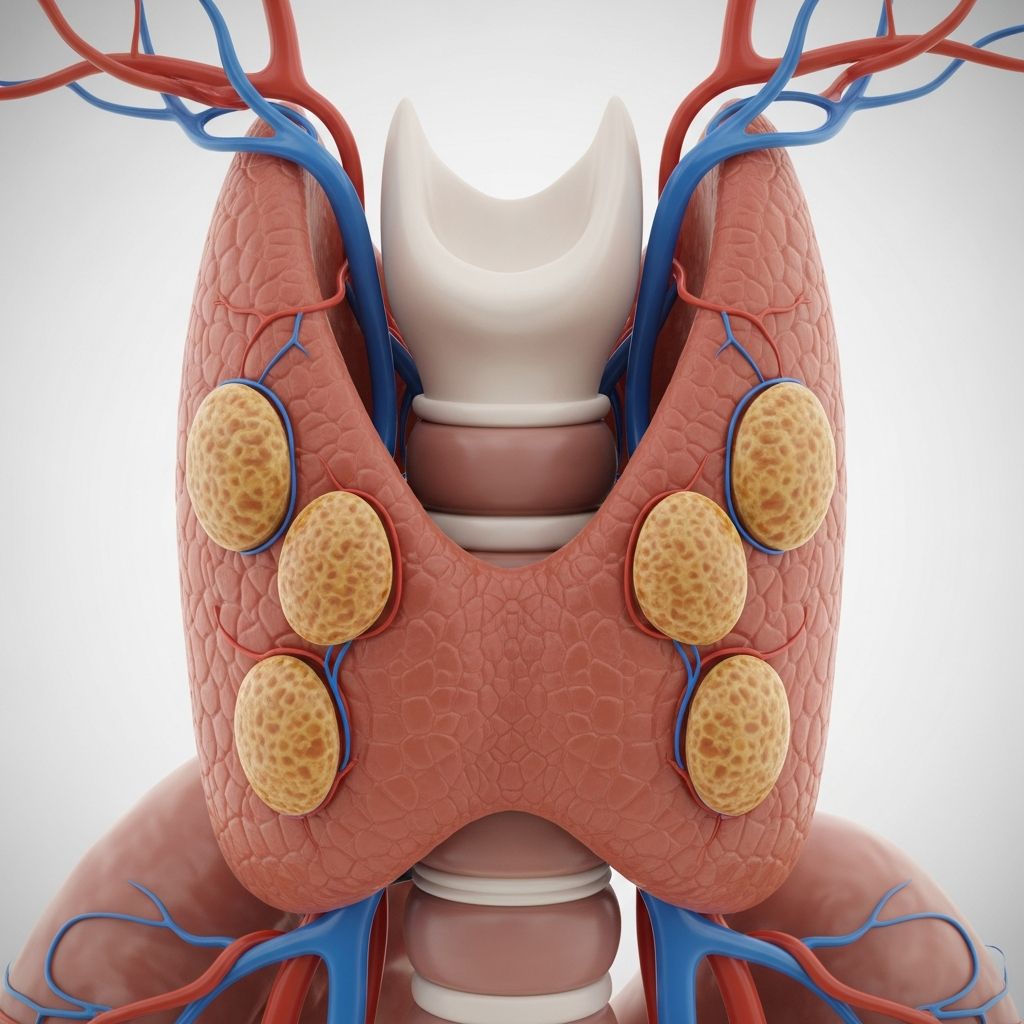
Your parathyroid glands are four tiny, pea-sized endocrine glands embedded within the back side of your thyroid gland in your neck. Despite their small size, these glands play an essential role in maintaining your overall health by controlling the amount of calcium in your bloodstream. Most people have exactly four parathyroid glands, though some individuals may have fewer or more than four. These small but mighty glands produce and release parathyroid hormone (PTH), a critical hormone responsible for regulating blood calcium levels and maintaining proper mineral balance in your body.
Anatomy and Location
The parathyroid glands are located behind the thyroid gland in your neck, typically arranged in two pairs. They are extremely small, each approximately the size and shape of a pea, making them difficult to visualize without specialized imaging. In most people, all four glands are found in their expected location behind the thyroid.
However, variations in gland location do occur. Around 16% of people have ectopic parathyroid glands, meaning one or more glands are located in an abnormal position. These ectopic glands may be situated along the esophagus in the neck or even in the chest, specifically in an area called the mediastinum. While ectopic parathyroid glands usually do not cause concern, if one becomes overactive and requires surgical removal, locating an ectopic gland can present a challenge for healthcare providers during initial examination.
In some cases, parathyroid glands may become enlarged. When this occurs, a single gland may grow significantly larger than its normal pea-like size, which can sometimes be detected through physical examination or imaging studies.
How Parathyroid Glands Function
The primary function of your parathyroid glands is producing and releasing parathyroid hormone to maintain proper calcium balance in your blood. Calcium is essential for numerous bodily functions, including bone health, muscle contraction, nerve transmission, and blood clotting. Your body carefully regulates calcium levels through a sophisticated feedback system.
The Calcium Regulation Process
Your parathyroid glands continuously monitor calcium levels in your bloodstream. When calcium levels drop below normal, your parathyroid glands detect this change and respond by releasing PTH. This hormone acts on three main targets to increase blood calcium levels:
- Your kidneys: PTH stimulates the kidneys to reabsorb more calcium and convert vitamin D into its active form, which helps increase calcium absorption
- Your intestines: Active vitamin D increases calcium absorption from the food you consume
- Your bones: PTH signals bone cells to release stored calcium into the bloodstream when necessary
Conversely, when blood calcium levels are adequate or high, your parathyroid glands reduce their PTH production. This feedback loop operates continuously to maintain calcium homeostasis—the stable internal environment your body requires for optimal function.
Calcium and Related Hormones
PTH works alongside another hormone called calcitonin to tightly control calcium levels in your bloodstream. While PTH increases blood calcium, calcitonin, produced by the thyroid gland, helps lower calcium levels when they become too high. Together, these hormones create a balanced system that keeps your calcium within a healthy range. Your parathyroid glands also influence phosphorus and vitamin D levels, creating an interconnected mineral regulation system.
Related Stories



Parathyroid Disorders and Conditions
When parathyroid glands malfunction, they can release either too much or too little parathyroid hormone, leading to serious health complications. The two main conditions involving parathyroid glands are hyperparathyroidism and hypoparathyroidism.
Hyperparathyroidism
Hyperparathyroidism occurs when one or more parathyroid glands become overactive and release excessive amounts of parathyroid hormone. This condition causes elevated calcium levels in the blood, a condition called hypercalcemia. Approximately 100,000 people in the United States develop primary hyperparathyroidism each year, making it a relatively common endocrine disorder.
Types of Hyperparathyroidism
Primary Hyperparathyroidism: This occurs when something directly affects the parathyroid glands themselves, causing them to malfunction and release excessive PTH even when blood calcium levels are already normal or high. In primary hyperparathyroidism, the glands essentially ignore the body’s calcium feedback signals.
Secondary Hyperparathyroidism: This develops when the parathyroid glands are responding appropriately to prolonged low calcium levels in the blood caused by another condition, such as kidney disease or vitamin D deficiency. The glands release excess PTH as a compensatory response, attempting to normalize calcium levels. If this process continues for an extended period, it may lead to additional health complications.
Symptoms of Hyperparathyroidism
Since healthcare providers often detect hypercalcemia in its early stage through routine blood tests, many people with primary hyperparathyroidism do not experience any symptoms initially. However, more severe or long-term cases of hypercalcemia may cause various symptoms, including:
- Excessive thirst and frequent urination
- Nausea and vomiting
- Constipation and digestive issues
- Weakness and fatigue
- Bone pain and osteoporosis
- Kidney stone formation
- Cognitive difficulties and confusion
- Muscle weakness and aches
Causes of Primary Hyperparathyroidism
Parathyroid Adenoma: A parathyroid adenoma is a benign, noncancerous growth that develops on one or more parathyroid glands. This is the most common cause of primary hyperparathyroidism, accounting for the majority of cases. An adenoma causes a single gland to become overactive, producing excessive PTH.
Parathyroid Cancer: While parathyroid cancer is exceptionally rare, it can cause primary hyperparathyroidism. Parathyroid cancer accounts for only 0.005% of all cancers and represents only 0.5% to 1% of all parathyroid conditions. However, when cancer does develop in a parathyroid gland, it typically causes more severe hypercalcemia than benign adenomas.
Hypoparathyroidism
Hypoparathyroidism is a rare condition characterized by low levels of parathyroid hormone in the blood. This deficiency causes low blood calcium levels (hypocalcemia) and high phosphorus levels (hyperphosphatemia). Unlike hyperparathyroidism, hypoparathyroidism occurs when the parathyroid glands do not produce sufficient PTH to maintain normal calcium balance. This condition requires careful medical management to prevent complications related to abnormal mineral levels.
Diagnostic Approaches
Diagnosing parathyroid disorders involves multiple diagnostic technologies and laboratory tests. Healthcare providers use blood tests to measure PTH levels, calcium concentration, phosphorus levels, and vitamin D status. Imaging studies such as sestamibi scans, ultrasound, and computed tomography may help identify abnormal parathyroid glands. In cases where surgery might be considered, advanced imaging helps locate problematic glands, particularly if they are ectopic or enlarged.
Treatment Options
Treatment for parathyroid conditions depends on the specific diagnosis, severity of symptoms, and individual patient factors. For hyperparathyroidism, treatment options may include observation with regular monitoring, medication to manage calcium levels, or surgical removal of the overactive gland or glands. For primary hyperparathyroidism caused by parathyroid cancer, surgery to remove the affected gland is typically the primary treatment approach, as it is the most effective way to reduce excessive PTH production.
Hypoparathyroidism is typically managed with calcium supplementation and active vitamin D therapy to maintain appropriate calcium and phosphorus levels in the blood.
Surgical Considerations
Parathyroidectomy, the surgical removal of one or more parathyroid glands, may be recommended for patients with symptomatic hyperparathyroidism or parathyroid cancer. Modern surgical techniques include minimally invasive options that reduce recovery time and complications compared to traditional open surgery. The decision to proceed with surgery should be individualized, taking into account the patient’s symptoms, biochemical values, and overall health status.
Research has shown that preoperative biochemical values, including calcium and PTH measurements, have limited predictive utility in determining which glands are affected or the extent of gland involvement. This underscores the importance of comprehensive preoperative imaging and experienced surgical teams in achieving optimal outcomes.
When to Seek Medical Attention
If you experience symptoms potentially related to calcium imbalance—such as persistent weakness, bone pain, kidney stones, or cognitive changes—consult with a healthcare provider. Routine blood work may reveal abnormal calcium or PTH levels even before symptoms develop. Additionally, if you have a family history of parathyroid disease or endocrine disorders, discuss screening with your healthcare provider.
Living with Parathyroid Conditions
Successfully managing parathyroid disorders requires ongoing collaboration with healthcare providers. For hyperparathyroidism, regular monitoring of calcium and PTH levels helps track disease progression and treatment effectiveness. Maintaining adequate vitamin D levels, consuming appropriate calcium intake, and staying physically active support bone health. For those undergoing parathyroid surgery, following postoperative care instructions ensures proper healing and optimal outcomes.
Frequently Asked Questions
Q: How many parathyroid glands do most people have?
A: Most people have four parathyroid glands, though some individuals may have fewer or more than four. These tiny glands are embedded in the back of the thyroid gland in your neck.
Q: What does parathyroid hormone do?
A: Parathyroid hormone (PTH) controls blood calcium levels by affecting your kidneys, intestines, and bones. It increases calcium reabsorption in the kidneys, enhances calcium absorption in the intestines through vitamin D activation, and stimulates calcium release from bone stores.
Q: What is the difference between hyperparathyroidism and hypoparathyroidism?
A: Hyperparathyroidism occurs when parathyroid glands produce too much PTH, leading to high blood calcium. Hypoparathyroidism is the opposite—too little PTH production, resulting in low blood calcium levels.
Q: How common is parathyroid cancer?
A: Parathyroid cancer is extremely rare, accounting for only 0.005% of all cancers and 0.5% to 1% of all parathyroid conditions. Most cases of primary hyperparathyroidism are caused by benign adenomas rather than cancer.
Q: What are ectopic parathyroid glands?
A: Ectopic parathyroid glands are glands located in abnormal positions, such as along the esophagus or in the chest. Around 16% of people have at least one ectopic parathyroid gland, though they usually do not cause health problems unless they become overactive.
Q: How is hyperparathyroidism treated?
A: Treatment options for hyperparathyroidism include careful monitoring, medication to manage calcium levels, or surgery to remove the overactive gland. The appropriate treatment depends on symptom severity and individual patient factors.
Q: What symptoms might indicate a parathyroid disorder?
A: Symptoms of hyperparathyroidism may include weakness, bone pain, kidney stones, nausea, and cognitive difficulties. Many people with mild hyperparathyroidism have no symptoms at all and are discovered through routine blood tests.
References
- Parathyroid Glands: What They Are, Function & Location — Cleveland Clinic. 2024-05-13. https://my.clevelandclinic.org/health/body/parathyroid-gland
- Parathyroid Hormone: What It Is, Function & Normal Levels — Cleveland Clinic. https://my.clevelandclinic.org/health/articles/22355-parathyroid-hormone
- Hyperparathyroidism: What It Is, Symptoms & Treatment — Cleveland Clinic. https://my.clevelandclinic.org/health/diseases/14454-hyperparathyroidism
- Parathyroid Cancer: Symptoms, Causes & Treatment — Cleveland Clinic. https://my.clevelandclinic.org/health/diseases/6182-parathyroid-cancer
- Reexamining the Role of Preoperative Biochemical Values in Predictive Models in Primary Hyperparathyroidism — Cleveland Clinic Department of Endocrine Surgery. https://consultqd.clevelandclinic.org/reexamining-the-role-of-preoperative-biochemical-values-in-predictive-models-in-primary-hyperparathyroidism
- Get Parathyroid Disease Care — Cleveland Clinic. https://my.clevelandclinic.org/services/parathyroid-disease-treatment
- Parathyroid Treatment Guide — Cleveland Clinic. https://pages.clevelandclinic.org/Parathyroid-Index.html
Similar Articles








Read full bio of Sneha Tete