Parathyroid Hormone: Function, Levels & Health
Understanding parathyroid hormone's role in calcium regulation and bone health.
Understanding Parathyroid Hormone
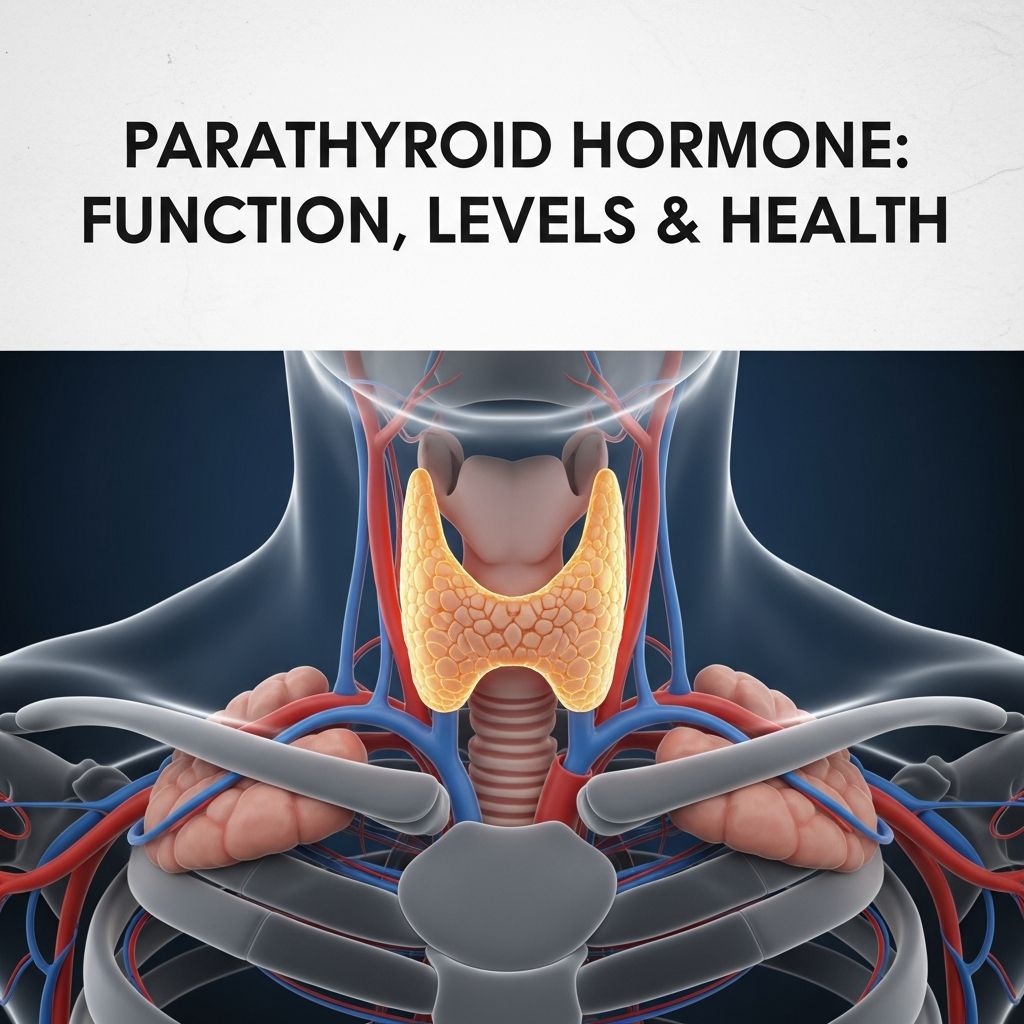
Parathyroid hormone (PTH), also known as parathormone, is a critical hormone produced by your parathyroid glands that plays a fundamental role in maintaining calcium balance throughout your body. Your parathyroid glands are four small, pea-sized endocrine glands located on the back side of your thyroid gland in your neck. These remarkable glands work tirelessly to regulate one of the most important minerals in your body—calcium—which is essential for muscle contraction, nerve transmission, and bone health.
The primary function of PTH is to maintain calcium homeostasis by controlling the amount of calcium in your bloodstream. When calcium levels drop, your parathyroid glands respond by increasing PTH production, which triggers a series of mechanisms to restore calcium balance. This delicate regulatory system is so important that your body maintains it within a narrow range throughout your lifetime.
The Role and Function of Parathyroid Hormone
Parathyroid hormone works in concert with another hormone called calcitonin to tightly control calcium levels in your bloodstream. Together, these hormones ensure that calcium remains within an optimal range for all your physiological processes.
When your blood calcium levels drop below normal, your parathyroid glands detect this change and respond by secreting more PTH. This hormone then travels through your bloodstream and targets three main areas to increase calcium levels:
Intestinal Calcium Absorption
PTH stimulates your intestines to absorb more calcium from the food you consume. It does this by promoting the activation of vitamin D, which enhances calcium uptake in the digestive tract. This is why vitamin D is so closely linked to calcium metabolism and bone health.
Bone Resorption
When calcium is needed urgently, PTH signals bone cells to release stored calcium into your bloodstream. While this is necessary for maintaining proper blood calcium levels, chronically elevated PTH can lead to bone loss over time if calcium intake remains inadequate.
Kidney Function
PTH acts on your kidneys to reduce the amount of calcium lost in urine, essentially conserving calcium. Additionally, it stimulates kidney cells to produce more active vitamin D, further enhancing calcium absorption and balance.
Once blood calcium levels return to normal, your parathyroid glands stop producing PTH, and your blood PTH levels decrease. This negative feedback loop ensures that calcium remains in perfect balance.
Normal PTH Levels
Understanding normal PTH levels is essential for interpreting test results and recognizing when something might be wrong. Normal PTH levels typically range from 12 to 68 picograms per milliliter (pg/mL), though this can vary slightly depending on the laboratory performing the test and the specific assay used.
Because PTH levels fluctuate based on calcium levels, healthcare providers typically order a calcium blood test along with a PTH test. Comparing the results of both tests helps your provider understand if your parathyroid glands are working properly to control your calcium levels. The relationship between these two values is crucial for accurate diagnosis.
Related Stories



It’s important to note that what’s considered “normal” can vary based on your age, sex, and other individual factors. Your healthcare provider will interpret your results in the context of your overall health and calcium levels.
High PTH Levels: Hyperparathyroidism
When PTH levels are higher than normal, the condition is called hyperparathyroidism. There are two main types, and the distinction depends on your blood calcium level.
Primary Hyperparathyroidism
Primary hyperparathyroidism occurs when PTH levels are high and blood calcium levels are also elevated. This indicates that a problem with your parathyroid glands is causing them to make too much PTH. The extra PTH raises your blood calcium levels, leading to hypercalcemia.
Possible causes of primary hyperparathyroidism include:
- Adenoma (a benign tumor) on one or more parathyroid glands
- Enlargement (hyperplasia) of one or more parathyroid glands
- Parathyroid cancer (extremely rare, accounting for less than 1% of parathyroid conditions)
- Genetic syndromes affecting parathyroid function
Approximately 100,000 people in the United States develop primary hyperparathyroidism each year, making it a relatively common endocrine disorder.
Secondary Hyperparathyroidism
Secondary hyperparathyroidism occurs when PTH levels are elevated but blood calcium levels are low or normal. This happens when your parathyroid glands are responding appropriately to low calcium levels, but the underlying cause lies outside the parathyroid glands themselves. Common causes include chronic kidney disease, vitamin D deficiency, and malabsorption disorders. If this process continues for an extended period, it can lead to additional health complications including bone disease and cardiovascular problems.
Low PTH Levels: Hypoparathyroidism
Hypoparathyroidism is a rare condition that occurs when you have low levels of parathyroid hormone in your blood. This causes you to have low levels of calcium (hypocalcemia) and high levels of phosphorus (hyperphosphatemia) in your blood.
Symptoms of hypoparathyroidism can include muscle cramps, tingling in your fingers and around your mouth, and in severe cases, seizures. Treatment typically involves calcium and vitamin D supplementation to maintain adequate blood calcium levels.
The PTH Test: When and Why It’s Ordered
Your healthcare provider may order a PTH test if you have symptoms suggestive of a parathyroid disorder or abnormal calcium levels. The test measures the amount of parathyroid hormone circulating in your blood and is often performed alongside a serum calcium test for comprehensive evaluation.
Reasons for PTH Testing
- Investigating high or low blood calcium levels
- Diagnosing parathyroid disease
- Monitoring kidney disease patients
- Evaluating bone health concerns
- Investigating symptoms like muscle weakness or fatigue
The test requires only a simple blood draw and can be performed in an outpatient setting. Results are typically available within a few days.
Symptoms of Abnormal PTH Levels
Both high and low PTH levels can cause noticeable symptoms affecting your daily life.
Symptoms of High PTH (Hypercalcemia)
- Excessive thirst and frequent urination
- Nausea and vomiting
- Constipation
- Muscle weakness and fatigue
- Bone pain or aching
- Kidney stones
- Cognitive difficulties or “brain fog”
- Depression or mood changes
Symptoms of Low PTH (Hypocalcemia)
- Muscle cramps and spasms
- Tingling sensations in fingers, toes, and around the mouth
- Numbness
- Seizures (in severe cases)
- Cardiac arrhythmias
- Dry skin and brittle nails
Treatment and Management
Treatment for abnormal PTH levels depends on the underlying cause and severity of the condition.
Managing Primary Hyperparathyroidism
Treatment options include surgery to remove the affected parathyroid gland or glands, medications to lower calcium levels, and monitoring with lifestyle modifications. Some patients may benefit from increased calcium and vitamin D intake, adequate hydration, and regular exercise.
Managing Hypoparathyroidism
Treatment typically involves calcium supplementation and active vitamin D (calcitriol) to maintain proper blood calcium levels and prevent symptoms.
Managing Secondary Hyperparathyroidism
Treatment focuses on addressing the underlying cause, such as managing kidney disease, correcting vitamin D deficiency, or treating malabsorption disorders.
PTH and Bone Health
Parathyroid hormone has a complex relationship with bone health. While PTH is necessary for maintaining calcium balance, chronically elevated PTH levels can promote increased bone remodeling, leading to a higher rate of bone turnover. Studies have shown that increased parathyroid hormone secretion can promote a chronic high remodeling state which could lead to osteoporosis, particularly when calcium intake is insufficient.
This is why managing PTH levels and ensuring adequate calcium and vitamin D intake are important for maintaining strong bones throughout your lifetime.
Diagnostic Considerations in Parathyroid Disease
Recent research has shown that relying solely on preoperative calcium and PTH values to predict gland involvement or disease extent has limitations. A large study of 2,000 consecutive patients undergoing parathyroid surgery found poor correlation between preoperative calcium and PTH values, suggesting that additional diagnostic imaging and clinical evaluation are necessary for accurate assessment of parathyroid disease.
Frequently Asked Questions
Q: What is the normal range for PTH?
A: Normal PTH levels typically range from 12 to 68 picograms per milliliter (pg/mL), though this can vary by laboratory. Your healthcare provider will interpret your results in context with your calcium level.
Q: Can PTH levels change throughout the day?
A: Yes, PTH levels naturally fluctuate based on your calcium intake, vitamin D status, and other factors. This is why a single PTH test should be interpreted along with calcium levels and other clinical findings.
Q: What should I do if I have abnormal PTH levels?
A: Consult your healthcare provider for proper evaluation. Abnormal PTH levels require investigation to determine the underlying cause and appropriate treatment plan.
Q: How is primary hyperparathyroidism treated?
A: Treatment options include surgery (parathyroidectomy), medications to lower calcium levels, and lifestyle modifications. Your healthcare provider will recommend the best approach based on your specific situation.
Q: Can vitamin D deficiency affect PTH levels?
A: Yes, vitamin D deficiency can lead to secondary hyperparathyroidism as your parathyroid glands work harder to maintain calcium balance. Correcting vitamin D deficiency often helps normalize PTH levels.
Q: Is parathyroid cancer common?
A: No, parathyroid cancer is extremely rare, accounting for only 0.005% of all cancers and 0.5% to 1% of all parathyroid conditions.
References
- Parathyroid Glands: What They Are, Function & Location — Cleveland Clinic. 2024. https://my.clevelandclinic.org/health/body/parathyroid-gland
- Parathyroid Hormone (PTH) Test: MedlinePlus Medical Test — U.S. National Library of Medicine. 2024. https://medlineplus.gov/lab-tests/parathyroid-hormone-pth-test/
- Hyperparathyroidism: What It Is, Symptoms & Treatment — Cleveland Clinic. 2024. https://my.clevelandclinic.org/health/diseases/14454-hyperparathyroidism
- Preoperative Calcium and Parathyroid Hormone Values Are Poor Predictors of Gland Volume and Multigland Disease in Primary Hyperparathyroidism — Endocrine Practice. 2022 Jan;28(1):77-82. doi: 10.1016/j.eprac.2021.08.003. https://pubmed.ncbi.nlm.nih.gov/34403781/
- Reexamining the Role of Preoperative Biochemical Values in Predictive Models in Primary Hyperparathyroidism — Cleveland Clinic Consult QD. 2021. https://consultqd.clevelandclinic.org/reexamining-the-role-of-preoperative-biochemical-values-in-predictive-models-in-primary-hyperparathyroidism
- Parathyroid Hormones and Bone Metabolism — Cleveland Clinic Journal of Medicine. 2023. https://www.ccjm.org/keyword/parathyroid-hormones
Similar Articles








Read full bio of medha deb