Parenteral Nutrition: What It Is, Uses & Types
Complete guide to parenteral nutrition: intravenous feeding for those unable to eat normally.
Understanding Parenteral Nutrition
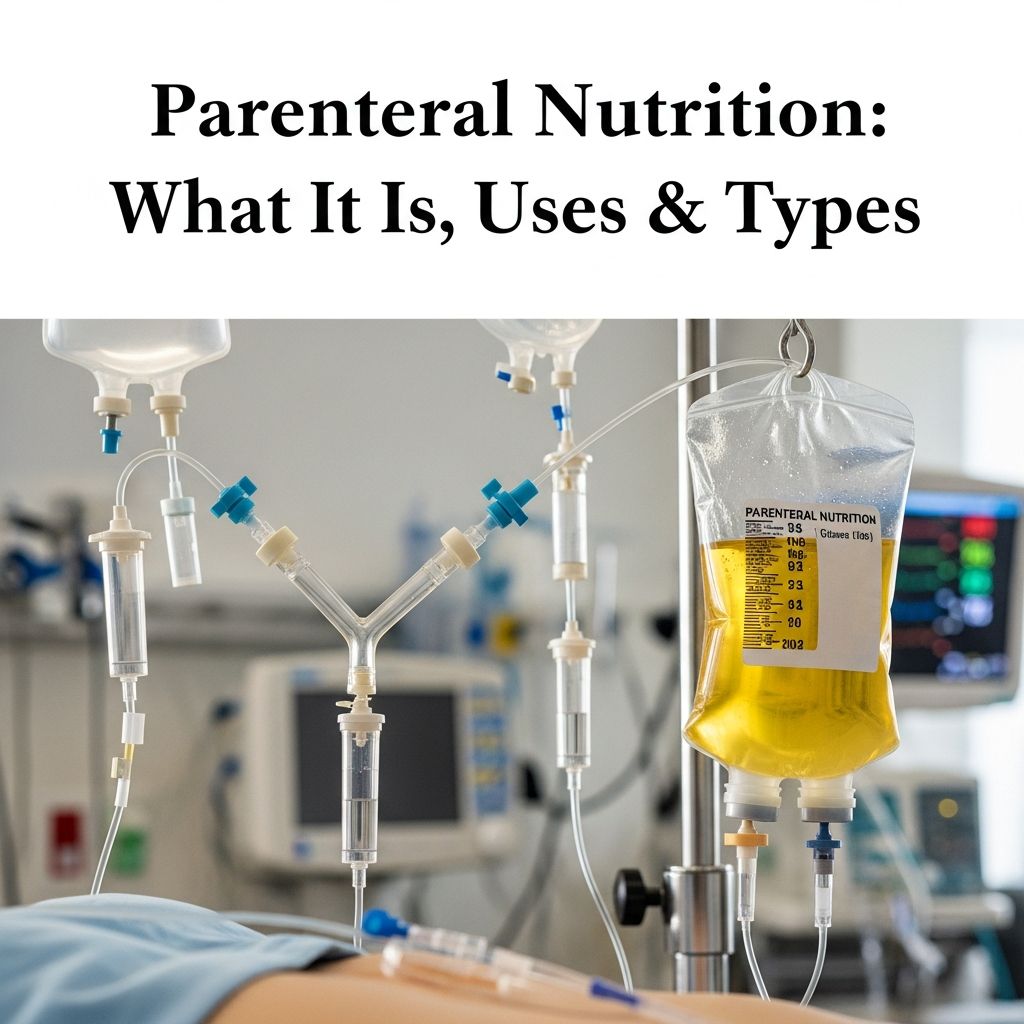
Parenteral nutrition is a specialized medical intervention that delivers essential nutrients directly into your bloodstream, bypassing your digestive system entirely. The term “parenteral” literally means “outside of the digestive tract,” distinguishing this method from traditional eating or tube feeding through the stomach and small intestine. This advanced nutritional support system represents a critical lifeline for individuals whose gastrointestinal systems are unable to process food normally due to illness, surgery, or chronic conditions.
People who cannot eat or absorb nutrients through their digestive tract receive partial or total nutritional support through intravenous infusions via an IV catheter. Unlike enteral nutrition, which delivers nutrients through a tube to the stomach or small intestine, parenteral nutrition completely circumvents the digestive system—from mouth to anus—allowing nutrients to reach the body’s cells directly through the bloodstream.
What Is Parenteral Nutrition?
Parenteral nutrition is a carefully formulated chemical mixture containing all essential nutrients your body requires for survival and health. The formula is not one-size-fits-all; rather, it is customized to meet your specific nutritional requirements based on your medical condition, laboratory results, and individual metabolic needs.
A complete parenteral nutrition formula includes six essential nutrients:
– Water for hydration and cellular function- Carbohydrates for energy production- Proteins for tissue repair and immune function- Fats for hormone production and nutrient absorption- Vitamins for metabolic processes and immune support- Minerals and trace elements for various physiological functions
Healthcare teams collaboratively design your formula, with doctors, nurses, nutritionists, and pharmacists working together to ensure optimal composition. A specialist prepares your formula in 24-hour doses, which must be refrigerated until the day of use and can be safely stored for up to seven days. Before administration, refrigerated formulas should be removed a few hours prior to allow adjustment to room temperature.
Types of Parenteral Nutrition
Parenteral nutrition is administered in two primary forms, depending on your medical needs and nutritional requirements:
Partial Parenteral Nutrition (PPN)
Partial parenteral nutrition provides supplementary nutrition to complement other feeding methods or oral intake. PPN is often given temporarily to patients requiring an immediate nutritional boost before transitioning to a longer-term solution, such as enteral feeding or gradual return to normal eating. This type is commonly administered to long-term hospital patients who experience general malnutrition from various causes and need support to maintain adequate nutritional status while their primary condition is being treated.
Total Parenteral Nutrition (TPN)
Total parenteral nutrition provides complete nutritional support, replacing all calories and nutrients normally obtained through eating. TPN is indicated when your digestive system isn’t functioning adequately or when gastrointestinal disease requires complete rest of the digestive tract. Some patients may require TPN due to medical reasons that make enteral feeding impossible or contraindicated. Total parenteral nutrition is complete enough to sustain life for as long as necessary—even permanently for individuals with permanently impaired gastrointestinal function or extremely premature infants who haven’t yet developed normal feeding capabilities.
Medical Conditions Requiring Parenteral Nutrition
Various serious medical conditions may necessitate parenteral nutrition therapy. Your healthcare team will determine whether you need PN based on your health history, body mass index, and laboratory test results. Conditions that commonly require parenteral nutrition include:
Related Stories



– Severe gastrointestinal disease or dysfunction- Post-surgical complications affecting digestive ability- Short bowel syndrome- Crohn’s disease or severe inflammatory bowel disease- Bowel obstruction or paralysis- Severe malabsorption syndromes- Extreme prematurity in infants- Cancer patients unable to maintain nutrition through conventional means
Parenteral Nutrition Catheter Types
The delivery method for parenteral nutrition depends on the catheter type, which is determined by your specific medical needs and the anticipated duration of therapy:
Central Venous Catheters
Central venous catheters are tubes inserted into major veins, usually in the chest area, allowing direct access to larger blood vessels. These are the most common type used for parenteral nutrition.
Tunneled Catheters
Tunneled catheters are long-term options surgically placed beneath the skin in the upper chest, providing secure access for extended parenteral nutrition therapy. These catheters minimize infection risk and are ideal for patients requiring home parenteral nutrition.
Peripherally Inserted Central Catheters (PICCs)
PICC lines are inserted through veins in the upper arm and advanced to larger central veins. They offer a less invasive alternative to chest catheters while still providing central venous access for parenteral nutrition delivery.
Implanted Ports
Implanted ports are small chambers placed under the skin, usually in the upper chest wall, connected to central veins. For internal catheters with implanted ports, you attach the IV bag to a tube connected to a special needle called a Huber needle, which inserts into the implanted port.
If you have an external catheter, you or your healthcare provider will attach the external end to another tube that connects to the IV bag containing your nutrition solution. Short-term catheters are generally placed in the hospital and removed prior to discharge, while long-term options are designed for extended use, either in-hospital or at home.
Administration and Infusion Process
Parenteral nutrition infusion typically takes approximately 10 to 12 hours to fully transfer from the IV bag into your body. Many patients choose to receive their infusion at night while sleeping, making the therapy less disruptive to daily activities. This extended infusion time allows your body to gradually absorb and process the nutrients, reducing the risk of metabolic complications.
The parenteral nutrition is delivered weekly from your home infusion pharmacy and must be stored in a refrigerator along with any associated medication vials. Once weekly, your IV catheter dressing and cap will be changed as part of routine maintenance procedures, and blood will be drawn for laboratory monitoring.
Monitoring and Healthcare Management
During parenteral nutrition therapy, your healthcare team will maintain constant vigilance over your nutritional status and overall health. Comprehensive monitoring includes:
Regular Clinical Assessments
Healthcare providers will continuously monitor your fluid intake and output, periodically weighing and measuring you to assess for changes in nutritional status. These measurements help guide adjustments to your parenteral nutrition formula.
Laboratory Testing
Periodic blood tests ensure you maintain the right balance of essential nutrients. Testing includes assessment of electrolytes, glucose levels, liver and kidney function, and micronutrient status including copper, zinc, selenium, and manganese. Results from these tests inform adjustments to your formula composition.
Metabolic Monitoring
Your healthcare team monitors various metabolic parameters to prevent complications and optimize your nutritional support. This includes assessment of your nutritional needs based on your changing clinical condition and lab results.
Advantages of Parenteral Nutrition
The primary advantage of parenteral nutrition is providing your gastrointestinal system an opportunity to heal from severe illness or surgery. For long-term hospital patients, particularly geriatric individuals who struggle to sustain nutritional needs through eating or enteral feeding, partial parenteral nutrition offers an important boost helping their bodies manage other medical difficulties.
For people with permanently impaired gastrointestinal function or extremely premature and sick infants who haven’t developed normal feeding abilities, total parenteral nutrition can be truly life-saving. It maintains essential bodily functions, supports immune response, and provides the nutrients necessary for wound healing and recovery during critical periods when traditional feeding is impossible.
Complications and Risks
While parenteral nutrition is an effective intervention, it is considered less ideal than enteral feeding due to higher complication risks. The primary concerns include infection of the bloodstream from the IV catheter and atrophy of the digestive tract when it remains unused for extended periods.
Common Complications
– Bloodstream infections (central line-associated bloodstream infections)- Digestive tract atrophy from disuse- Catheter-related thrombosis (blood clots)- Catheter displacement or malposition- Nutritional imbalances despite monitoring
Other Possible Complications
– Metabolic complications including high blood sugar or electrolyte imbalances- Liver complications from prolonged parenteral nutrition use- Bone health issues from long-term therapy- Nutrient deficiencies if formula requires adjustment- Mechanical complications with the catheter or infusion pump
Transitioning Away from Parenteral Nutrition
While parenteral nutrition can be used long-term if necessary, your healthcare team recognizes that enteral feeding is preferable and oral feeding is ideal. As soon as your body allows, your healthcare team will want to transition you to oral feeding, enteral feeding, or a combination of both to avoid long-term complications associated with parenteral feeding. This transition is managed carefully with your medical team providing equal care and monitoring as when you began parenteral nutrition therapy.
Home Parenteral Nutrition
For patients requiring extended parenteral nutrition, home parenteral nutrition (HPN) may be appropriate. This allows patients to receive treatment outside the hospital setting while maintaining their nutritional support. Home parenteral nutrition requires a comprehensive team of clinicians to successfully manage and minimize associated complications.
Before discharge from the hospital, patients and caregivers receive education on catheter care, infusion pump operation, parenteral nutrition setup and disconnect procedures, maintenance of intake and output records, review of metabolic complications, and contact numbers for problems that may arise. This preparation ensures safe and effective administration in the home environment.
Frequently Asked Questions
Q: How long does parenteral nutrition infusion take?
A: The parenteral nutrition infusion takes approximately 10 to 12 hours to fully transfer from the IV bag into your body. Many patients choose to receive infusions at night while sleeping to minimize disruption to daily activities.
Q: Can I eat while receiving parenteral nutrition?
A: Depending on your diagnosis, you may not be able to eat while taking PN. If you can eat, it is important to follow the type of diet prescribed by your healthcare provider to complement your parenteral nutrition therapy.
Q: How often is blood testing required during parenteral nutrition?
A: Your healthcare team will take regular blood tests to ensure you have the right balance of essential nutrients. Testing frequency depends on your individual medical condition and how stable your nutritional status remains. Once weekly, blood will be drawn as part of routine catheter maintenance.
Q: How long can parenteral nutrition be stored?
A: All parenteral nutrition doses must be refrigerated until the day they are used and can be stored for up to seven days. Before administration, refrigerated formulas should be removed a few hours prior to use to adjust to room temperature.
Q: Is parenteral nutrition permanent?
A: While parenteral nutrition can be used long-term or permanently if necessary, healthcare teams work toward transitioning patients to oral or enteral feeding as soon as medically feasible to reduce long-term complications.
Q: How is the catheter maintained?
A: Once weekly, your IV catheter dressing and cap will be changed and blood will be drawn for laboratory monitoring. Proper catheter maintenance is essential to prevent infections and ensure continued function.
References
- Parenteral Nutrition: What it Is, Uses & Types — Cleveland Clinic. Accessed 2025. https://my.clevelandclinic.org/health/treatments/22802-parenteral-nutrition
- Enteral and Parenteral Nutrition — American College of Gastroenterology. Accessed 2025. https://gi.org/topics/enteral-and-parenteral-nutrition/
- Overview of Home Parenteral Nutrition: An Update — PubMed Central, National Institutes of Health. https://pubmed.ncbi.nlm.nih.gov/29035672/
- Nutrition Support at Home and Feeding Tubes — Cleveland Clinic. Accessed 2025. https://my.clevelandclinic.org/departments/digestive/depts/nutrition-support-at-home
Similar Articles








Read full bio of medha deb