Parkinson’s Disease: Risk Factors and Causes
Understanding the causes and risk factors behind Parkinson's disease for better prevention and management.
Understanding Parkinson’s Disease
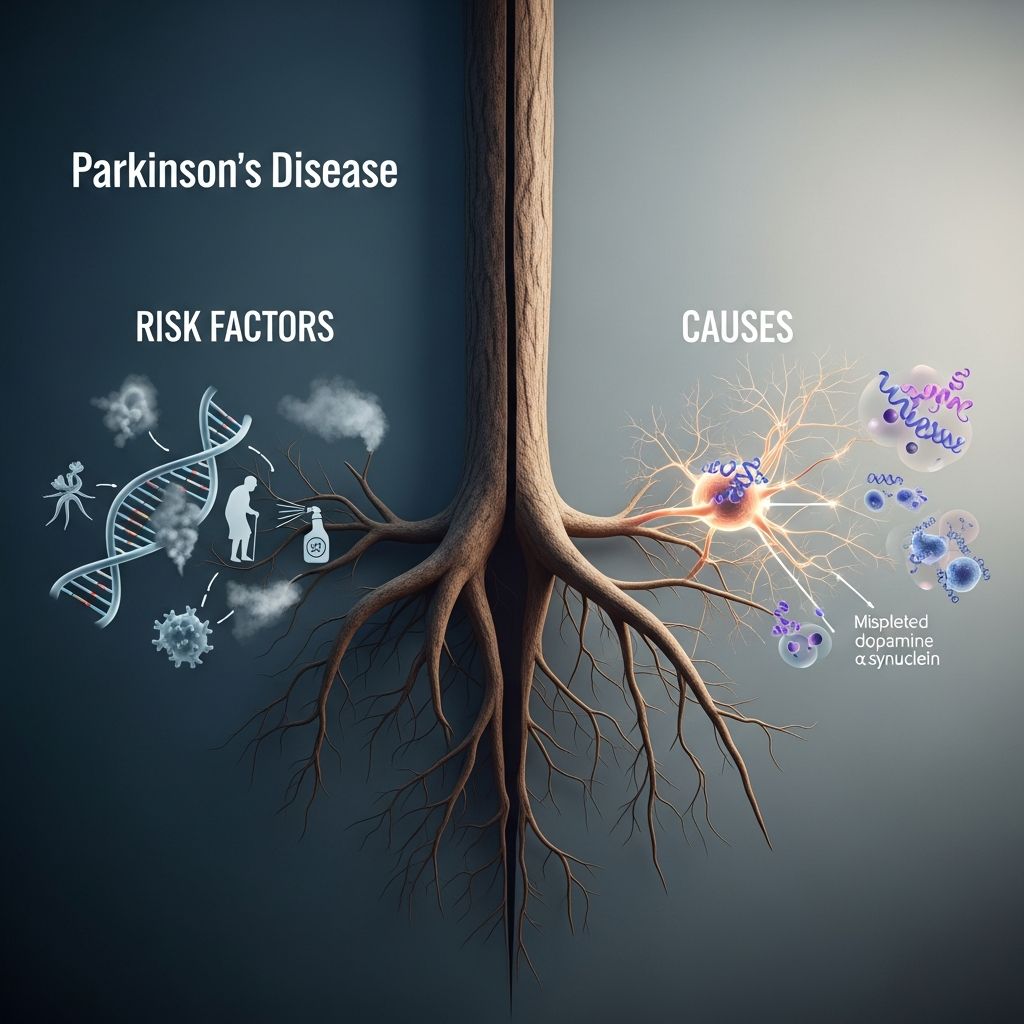
Parkinson’s disease is a progressive neurological disorder that affects movement, balance, and coordination. It is caused by the gradual loss of dopamine-producing neurons in the brain, particularly in a region called the substantia nigra. While the exact cause of Parkinson’s disease remains unknown, research has identified several risk factors and potential causes that may contribute to its development. This article explores the genetic, environmental, and lifestyle factors associated with Parkinson’s disease, providing a comprehensive overview of what is currently understood about its origins.
Genetic Factors in Parkinson’s Disease
Genetics play a significant role in the development of Parkinson’s disease, although most cases are not directly inherited. Scientists estimate that about 10–15% of Parkinson’s cases are linked to genetic mutations. These mutations can be passed down from parents to children, but they are relatively rare unless multiple family members have been affected.
Common Genetic Mutations
- LRRK2 (Leucine-Rich Repeat Kinase 2): This is the most common genetic mutation associated with Parkinson’s disease, particularly in families of North African or Ashkenazi Jewish descent.
- Alpha-synuclein: Mutations in this gene are less common but can also trigger Parkinson’s disease.
- PARK2, PINK1, DJ-1: These genes are associated with early-onset Parkinson’s disease, typically affecting individuals under the age of 50.
Genetic Testing and Counseling
Advances in genetic research have led to the development of genetic testing programs, such as the PD GENEration initiative, which offers free genetic testing and counseling for individuals with Parkinson’s disease. These programs help patients and their families better understand their genetic risk and make informed decisions about their health.
Environmental Factors and Parkinson’s Disease
Environmental exposures are another important factor in the development of Parkinson’s disease. While no single environmental factor has been definitively proven to cause Parkinson’s, several have been linked to an increased risk.
Common Environmental Risk Factors
- Pesticide Exposure: Studies have shown that exposure to certain pesticides, such as paraquat and rotenone, may increase the risk of Parkinson’s disease.
- Head Injury: Traumatic brain injury, particularly repeated head trauma, has been associated with a higher risk of developing Parkinson’s.
- Area of Residence: Living in rural areas or areas with high levels of industrial pollution may increase the risk of Parkinson’s disease.
- Well Water: Drinking water from wells contaminated with pesticides or other toxins may also be a risk factor.
Other Environmental Exposures
- Herbicides and Solvents: Exposure to these chemicals, often found in agricultural and industrial settings, may increase the risk of Parkinson’s.
- Air Pollution: Long-term exposure to air pollution, particularly in urban areas, has been linked to a higher risk of Parkinson’s disease.
- Metals: Exposure to metals such as lead and manganese may also contribute to the risk.
Age and Parkinson’s Disease
Age is the most significant risk factor for Parkinson’s disease. The risk of developing Parkinson’s increases with age, with most cases occurring in individuals over the age of 60. However, Parkinson’s can also affect younger people, particularly those with a genetic predisposition.
Related Stories



Age-Related Statistics
| Age Group | Risk of Parkinson’s Disease |
|---|---|
| Under 50 | Low |
| 50–60 | Moderate |
| Over 60 | High |
Gender and Parkinson’s Disease
Men are more likely to develop Parkinson’s disease than women. The reasons for this gender difference are not fully understood, but hormonal and genetic factors may play a role.
Gender-Related Statistics
- Men are about 1.5 times more likely to develop Parkinson’s disease than women.
- The risk for women increases after menopause, suggesting a possible hormonal influence.
Lifestyle Factors and Parkinson’s Disease
Lifestyle choices can also influence the risk of developing Parkinson’s disease. While some factors may increase the risk, others may offer protective benefits.
Protective Lifestyle Factors
- Physical Activity: Regular exercise has been shown to reduce the risk of Parkinson’s disease.
- Caffeine Consumption: Studies suggest that moderate caffeine intake may lower the risk of Parkinson’s.
- Smoking: While not recommended, research has found that smokers have a lower risk of Parkinson’s disease, possibly due to the effects of nicotine on the brain.
Risk-Enhancing Lifestyle Factors
- Sedentary Lifestyle: Lack of physical activity may increase the risk of Parkinson’s.
- Poor Diet: Diets high in dairy products and low in antioxidants may be associated with a higher risk.
Combination of Factors
Most experts agree that Parkinson’s disease is caused by a combination of genetic, environmental, and lifestyle factors. The interaction of these factors determines an individual’s risk of developing the disease. For example, someone with a genetic predisposition may be more susceptible to environmental toxins, while someone with a healthy lifestyle may be less likely to develop Parkinson’s even if exposed to risk factors.
Gene-Environment Interactions
- Genetic mutations may increase susceptibility to environmental toxins.
- Environmental exposures may trigger the onset of Parkinson’s in individuals with a genetic predisposition.
- Lifestyle choices can modify the risk associated with both genetic and environmental factors.
Autoimmune and Other Factors
Recent research has also explored the role of autoimmune factors in Parkinson’s disease. Some studies have found that individuals with autoimmune rheumatic diseases have a higher risk of developing Parkinson’s. Additionally, certain infections, such as Hepatitis C and H. pylori, have been linked to an increased risk.
Other Potential Risk Factors
- Type 2 Diabetes: Individuals with Type 2 diabetes may have a higher risk of Parkinson’s disease.
- Cardiovascular Disease: Heart disease and stroke may also increase the risk.
- Infections: Certain viral and bacterial infections have been associated with Parkinson’s.
Frequently Asked Questions (FAQs)
Q: Can Parkinson’s disease be prevented?
A: There is no guaranteed way to prevent Parkinson’s disease, but maintaining a healthy lifestyle, avoiding environmental toxins, and staying physically active may reduce the risk.
Q: Is Parkinson’s disease hereditary?
A: While most cases are not directly inherited, genetic mutations can increase the risk, especially if multiple family members are affected.
Q: What are the early signs of Parkinson’s disease?
A: Early signs include tremors, stiffness, slow movement, and balance problems. Other symptoms may include depression, anxiety, and sleep disturbances.
Q: How is Parkinson’s disease diagnosed?
A: Diagnosis is based on a combination of medical history, physical examination, and sometimes imaging tests or genetic testing.
Q: Can lifestyle changes help manage Parkinson’s disease?
A: Yes, regular exercise, a healthy diet, and stress management can help manage symptoms and improve quality of life.
Conclusion
Parkinson’s disease is a complex condition influenced by a combination of genetic, environmental, and lifestyle factors. While the exact cause remains unknown, ongoing research continues to uncover new insights into the risk factors and potential causes of Parkinson’s disease. Understanding these factors can help individuals make informed decisions about their health and potentially reduce their risk of developing the disease.
References
- Parkinson’s Disease: Risk Factors and Causes — Mayo Clinic. 2023. https://www.mayoclinic.org/diseases-conditions/parkinsons-disease/symptoms-causes/syc-20376055
- Causes | Parkinson’s Foundation — Parkinson’s Foundation. 2023. https://www.parkinson.org/understanding-parkinsons/causes
- What Causes Parkinson’s Disease | APDA — American Parkinson Disease Association. 2023. https://www.apdaparkinson.org/what-is-parkinsons/causes/
- Update: Protective and risk factors for Parkinson disease — PubMed. 2023. https://pubmed.ncbi.nlm.nih.gov/38879999/
- Causes—Parkinson’s disease — NHS. 2023. https://www.nhs.uk/conditions/parkinsons-disease/causes/
Similar Articles








Read full bio of Sneha Tete