Parkinson’s Linked Conditions: Essential Guide To Symptoms & Risks
Discover conditions commonly associated with Parkinson's disease, their symptoms, management strategies, and how they impact daily life for better care outcomes.
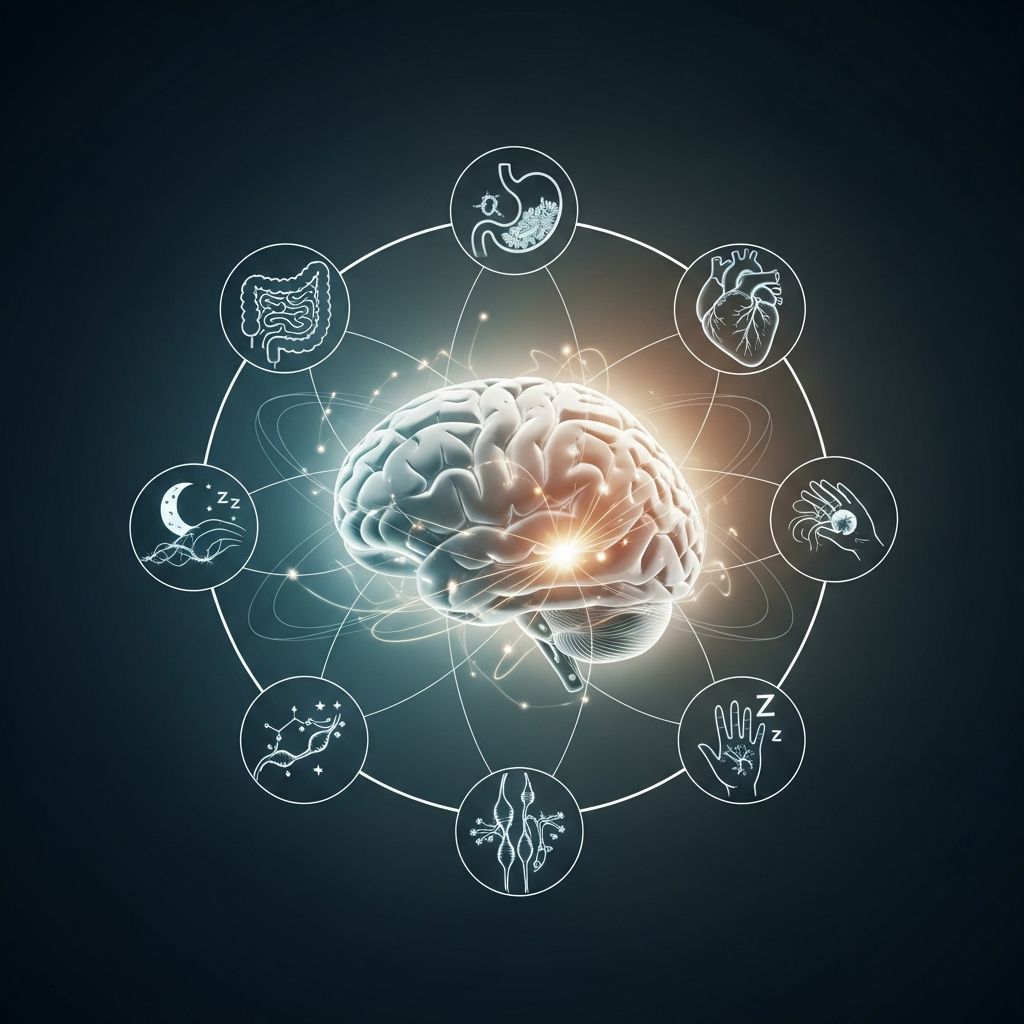
Parkinson’s disease (PD) frequently coexists with various other health issues that share neurological pathways or exacerbate motor and non-motor symptoms. Understanding these associations aids in comprehensive management and enhances quality of life.
Non-Motor Manifestations in Parkinson’s
Beyond the hallmark tremors and rigidity, PD involves a spectrum of non-motor symptoms affecting autonomic functions, cognition, mood, sleep, and sensory processing. These often emerge early and significantly influence daily functioning.
Autonomic Dysfunction Challenges
Autonomic nervous system impairments, termed dysautonomia, impact up to 80% of PD patients. Common issues include orthostatic hypotension (nOH), where blood pressure drops upon standing, leading to dizziness or fainting in 30-50% of cases. Gastrointestinal problems like constipation affect nearly all individuals due to slowed gut motility, while urinary urgency, incontinence, and sexual dysfunction further complicate life.
- Orthostatic Hypotension: A drop of at least 20 mmHg systolic or 10 mmHg diastolic blood pressure after standing, increasing fall risk.
- Constipation: Occurs in most patients, sometimes predating motor symptoms, due to impaired stomach emptying and reduced colon movement.
- Sweating and Temperature Issues: Excessive sweating or intolerance to heat/cold disrupts comfort.
Management involves hydration, compression stockings for nOH, dietary fiber for constipation, and medications like midodrine or droxidopa when needed.
Sleep Disturbances and Their Impact
Sleep disorders plague up to 98% of PD patients, including insomnia, daytime somnolence, restless legs syndrome, and REM sleep behavior disorder (RBD). RBD, where individuals act out vivid dreams, can precede PD motor symptoms by years and signals underlying neurodegeneration.
| Sleep Disorder | Prevalence in PD | Key Features |
|---|---|---|
| Insomnia | High | Frequent night awakenings |
| Daytime Sleepiness | Common | Unintended naps |
| REM Sleep Behavior Disorder | Up to 50% | Physical enactment of dreams, injury risk |
| Restless Legs Syndrome | 20-30% | Urge to move legs, worse at night |
Treatments include melatonin, clonazepam for RBD, and optimizing PD medications to minimize sleep fragmentation.
Cognitive and Psychiatric Overlaps
Cognitive decline affects up to 80% over time, progressing to dementia in 30-50%. Neuropsychiatric symptoms like depression, anxiety, apathy, hallucinations, and impulse control disorders occur in 60% and may precede motor signs.
- Depression impacts 40-50%, treatable with SSRIs.
- Hallucinations often medication-related, managed by dose adjustments.
- Impulse control from dopamine agonists requires monitoring.
Cancer Risks and Dermatological Links
PD patients face a higher melanoma incidence, possibly due to shared genetic or pigmentation factors. Seborrheic dermatitis, a scaly scalp/rash condition, also appears frequently as a premotor sign.
Regular skin checks are recommended, with melanoma risk elevated twofold. Preventive measures include sun protection and dermatologist visits.
Motor Complications from Long-Term Management
Prolonged levodopa use leads to motor fluctuations: “off” periods of returning symptoms and dyskinesias (involuntary movements). Dystonia, painful muscle contractions, affects 50%.
Strategies include timed dosing, adjunct therapies like entacapone, or deep brain stimulation.
Atypical Parkinsonisms: Key Distinctions
Atypical parkinsonisms mimic PD but respond poorly to levodopa and progress faster. They comprise 20% of parkinsonism cases.
Related Stories



Lewy Body Dementia (LBD)
LBD features PD motor symptoms plus early dementia, visual hallucinations, fluctuating cognition, and RBD. Alpha-synuclein aggregates (Lewy bodies) underlie both PD and LBD.
Multiple System Atrophy (MSA)
MSA causes parkinsonism with severe autonomic failure (nOH, urinary issues), cerebellar ataxia, and pyramidal signs. Median survival is 7-10 years.
Progressive Supranuclear Palsy (PSP)
PSP involves tau protein buildup, leading to vertical gaze palsy, frequent falls backward, and axial rigidity. Poor levodopa response distinguishes it.
Corticobasal Degeneration (CBD)
CBD presents asymmetric rigidity, apraxia, myoclonus, alien limb phenomenon, and cortical sensory loss.
| Condition | Main Differentiators from PD | Prognosis |
|---|---|---|
| LBD | Early dementia, hallucinations | Variable, 5-8 years |
| MSA | Autonomic dominance, ataxia | 6-9 years |
| PSP | Gaze palsy, early falls | 6-8 years |
| CBD | Asymmetric, apraxia, alien limb | 6-8 years |
Sensory and Pain Syndromes
Sensory deficits affect 90%, including anosmia (loss of smell, early marker), pain (nociceptive or neuropathic in 55%), and visual issues like reduced acuity or hallucinations.
Pain management uses analgesics, PT, or dopamine optimization.
Diagnostic Approaches and Differential Diagnosis
Differentiating PD from atypicals relies on history, exam (e.g., levodopa response), and imaging (DaTscan for dopamine loss). Vascular parkinsonism from strokes or drug-induced forms must be excluded.
Holistic Management Strategies
Multidisciplinary care addresses comorbidities: neurologists for motor issues, cardiologists for nOH, gastroenterologists for GI problems, and psychiatrists for mood. Exercise, speech therapy, and nutrition optimize outcomes.
Preventive screenings for melanoma and regular monitoring prevent complications.
Frequently Asked Questions (FAQs)
What increases melanoma risk in PD?
Genetic links and possibly L-DOPA effects; annual skin exams advised.
How is nOH managed?
Increased salt/fluids, medications like midodrine, avoiding triggers.
Can sleep disorders predict PD?
Yes, RBD often precedes by 10+ years.
Do atypical parkinsonisms respond to PD drugs?
Limited response; supportive care primary.
Are skin changes a PD sign?
Seborrheic dermatitis yes, indicating early dysautonomia.
References
- Related Conditions | Parkinson’s Foundation — Parkinson’s Foundation. 2023. https://www.parkinson.org/understanding-parkinsons/what-is-parkinsons/related-conditions
- Related Conditions | Parkinson’s Disease — Michael J. Fox Foundation. 2023. https://www.michaeljfox.org/related-conditions
- Parkinson’s disease – Wikipedia — Wikipedia (informed by primary sources). 2026-02-23. https://en.wikipedia.org/wiki/Parkinson’s_disease
- Parkinson’s disease – Causes – NHS — NHS. 2024. https://www.nhs.uk/conditions/parkinsons-disease/causes/
- Parkinson’s disease – Symptoms and causes – Mayo Clinic — Mayo Clinic. 2024-10-25. https://www.mayoclinic.org/diseases-conditions/parkinsons-disease/symptoms-causes/syc-20376055
- Parkinsonism: What It Is, Causes & Types – Cleveland Clinic — Cleveland Clinic. 2023-11-09. https://my.clevelandclinic.org/health/diseases/22815-parkinsonism
Similar Articles








Read full bio of medha deb