Psychosis in Parkinson’s: Understanding Hallucinations and False Beliefs
Learn how to recognize and manage psychotic symptoms in Parkinson's disease
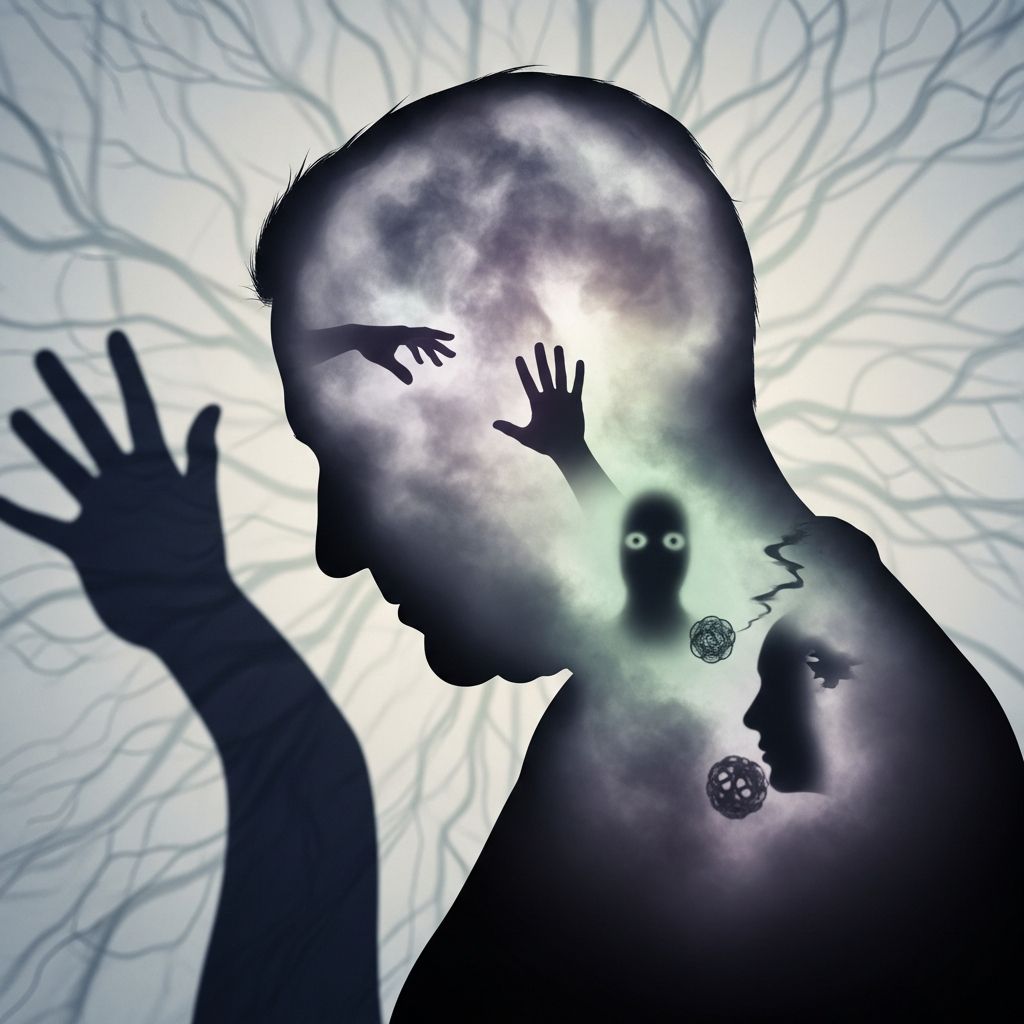
Parkinson’s disease is widely recognized for its motor symptoms—tremors, rigidity, and movement difficulties. However, the condition extends far beyond physical manifestations. Among the most challenging non-motor symptoms are hallucinations and delusions, collectively known as Parkinson’s disease-associated psychosis (PDP). These experiences can profoundly affect quality of life for patients and their families, yet remain underrecognized and under-discussed in many medical settings.
The Scope of Psychotic Symptoms in Parkinson’s
Psychotic symptoms represent a significant concern for individuals living with Parkinson’s disease. Research indicates that between 20-40% of people with Parkinson’s will experience some form of psychosis during their disease progression. When followed longitudinally over the course of disease advancement, this prevalence can increase substantially. However, it is essential to understand that these statistics encompass a spectrum of experiences, from minor, transient symptoms to severe disturbances in perception and belief.
The manifestation of psychotic symptoms in Parkinson’s disease typically occurs in the later stages of the condition, though it can affect individuals at any point in their disease journey. The variability in timing and severity underscores the complexity of Parkinson’s as a neurological condition and the individual nature of disease progression.
Distinguishing Hallucinations from Delusions
While hallucinations and delusions are often discussed together, they represent distinct types of sensory and cognitive disturbances that require different approaches to understanding and management.
Understanding Hallucinations
Hallucinations occur when the brain produces sensory perceptions without external stimuli. Unlike dreams or nightmares, which occur during sleep, hallucinations happen while a person is awake and can occur at any time of day or night. These false sensory experiences can involve any of the five senses, though visual hallucinations are by far the most prevalent in Parkinson’s disease.
Visual hallucinations in Parkinson’s often involve seeing people or animals that are not present. Patients may report seeing a deceased loved one in their room, perceiving a pet on the furniture despite not owning one, or witnessing shadowy figures. These experiences feel completely real to the person experiencing them.
Beyond visual experiences, individuals may encounter auditory hallucinations (hearing voices or sounds), tactile sensations (feeling touches or movements), olfactory experiences (smelling odors), or gustatory phenomena (tasting substances). The multisensory nature of hallucinations demonstrates the widespread impact that Parkinson’s-related changes can have on brain function.
Examining Delusions
Delusions differ fundamentally from hallucinations by involving firmly held false beliefs rather than sensory misperceptions. A person experiencing a delusion becomes convinced of something that is not true and acts upon this belief with conviction. Unlike passing doubts or worries, delusions are resistant to logic or evidence that contradicts them.
Delusions in Parkinson’s disease often cluster around specific themes. Common delusional content includes unfounded jealousy, wherein a person believes their partner is unfaithful and may exhibit suspicious, argumentative, or aggressive behavior. Persecution delusions lead individuals to believe they are being attacked, harassed, or subjected to conspiracies, resulting in paranoid, defiant, or socially withdrawn conduct.
Related Stories



Another recurring theme involves health-related obsessions, where individuals become preoccupied with believing something is abnormal about their body or health status, leading to excessive worry, frequent medical appointments, and symptom-focused anxiety.
Causes and Contributing Factors
The development of hallucinations and delusions in Parkinson’s disease is multifactorial, involving interactions between the disease process itself, medication effects, and various lifestyle and environmental factors.
Medication-Related Causes
Dopaminergic medications form the cornerstone of Parkinson’s treatment, helping to restore dopamine signaling in the brain and improve motor symptoms. However, while these medications are essential, they can contribute to psychotic symptoms. Increasing dopamine levels through pharmacological intervention can trigger neurochemical changes that lead to hallucinations and delusions. This creates a therapeutic dilemma: the medications that provide relief from movement symptoms may simultaneously increase the risk of psychiatric complications.
Disease Progression and Neurological Changes
As Parkinson’s advances, natural changes occur in brain function that independently increase the likelihood of psychotic symptoms, regardless of medication use. The neurodegenerative process affects multiple neurotransmitter systems beyond dopamine, creating a neurological environment more susceptible to distorted perceptions and false beliefs.
Additional Risk Factors
Several other factors can elevate the risk of experiencing hallucinations and delusions:
- Advanced age, which may increase vulnerability to neuropsychiatric symptoms
- Cognitive changes and dementia, which often accompany Parkinson’s progression and increase psychosis risk
- Sleep disruptions, including insomnia or interrupted sleep patterns that affect brain function
- Delirium from acute medical conditions such as infections or fever that temporarily affect mental status
- Psychological stressors including job loss, grief from bereavement, or other major life changes
- Sensory impairments, particularly vision and hearing loss common in aging, which can cause misinterpretation of environmental stimuli
The Relationship Between Hallucinations and Delusions
While hallucinations and delusions can occur independently, they frequently interact and influence one another. In some instances, an initial hallucination may trigger the development of a related delusion. For example, a person who halluccinates seeing an intruder might subsequently develop a delusion that they are being persecuted or attacked. Conversely, existing delusional beliefs can color the interpretation of subsequent hallucinations, creating a self-reinforcing cycle of psychotic symptoms.
The relationship between these symptoms emphasizes the importance of comprehensive assessment and individualized treatment approaches that address the full spectrum of psychotic manifestations.
The Spectrum of Symptom Severity
Not all psychotic symptoms in Parkinson’s disease carry equal clinical significance. Healthcare providers often distinguish between minor hallucinations and more substantial psychotic experiences.
Minor hallucinations or illusions represent a milder category wherein individuals misinterpret things that genuinely exist rather than perceiving things that are entirely absent. These might include briefly seeing movement out of the corner of one’s eye or momentarily misidentifying an object. Studies show that among individuals with minor hallucinations, approximately 10% experience symptom resolution within a few years, while 52% maintain stable symptoms and 38% experience progressive worsening.
Because minor hallucinations typically do not significantly impair function or distress the patient, doctors generally do not prescribe antipsychotic medications for this level of symptom severity. However, medical monitoring remains important, as symptoms can intensify over time, necessitating treatment escalation.
When to Seek Medical Attention
Recognition of emerging psychotic symptoms is crucial because early intervention can improve outcomes and quality of life. Individuals with Parkinson’s disease or their caregivers should consult with their healthcare provider promptly if:
- New hallucinations or delusional thinking develops
- Previously experienced symptoms are increasing in frequency or intensity
- Psychotic symptoms are causing distress to the patient or affecting family relationships
- Behaviors based on delusions are becoming concerning or dangerous
- The person appears confused or disoriented beyond their baseline cognitive status
Management and Treatment Approaches
Addressing hallucinations and delusions in Parkinson’s disease involves a comprehensive strategy that extends beyond medication adjustments alone.
Medication Review and Adjustment
The first step in management typically involves reviewing current medications with a healthcare provider. Sometimes, adjusting dosages of dopaminergic medications or temporarily discontinuing certain agents can alleviate psychotic symptoms. In other cases, medications used to manage other Parkinson’s symptoms may need modification if they contribute to hallucinations or delusions.
Antipsychotic Medication Considerations
When psychotic symptoms persist despite medication adjustment and significantly impact quality of life, antipsychotic medications may be considered. However, traditional antipsychotics can paradoxically worsen motor symptoms in Parkinson’s disease. Specialized antipsychotic agents have been developed that can address psychotic symptoms while minimizing motor deterioration, though medication selection should always be individualized based on the patient’s specific circumstances and symptom profile.
Behavioral and Environmental Strategies
Non-pharmacological interventions play a vital role in managing psychotic symptoms. These supportive strategies include:
- Reassurance and validation: Gently acknowledging the person’s experience without reinforcing false beliefs helps maintain trust and emotional safety
- Optimal lighting: Adequate, consistent lighting reduces visual misperceptions and illusions
- Environmental simplification: Reducing clutter and complexity in the living space decreases opportunities for misinterpretation of environmental stimuli
- Counseling support: Professional psychological support helps both patients and caregivers process difficult emotions and develop coping strategies
- Sleep optimization: Addressing sleep disorders and maintaining regular sleep schedules support overall brain function and may reduce psychotic symptoms
- Stress reduction: Minimizing major life stressors and providing emotional support contribute to symptom management
The Role of Healthcare Provider Communication
Effective management of hallucinations and delusions depends on open communication between patients, caregivers, and healthcare providers. Many people hesitate to report these symptoms due to embarrassment, fear of judgment, or concerns about losing independence. Creating a safe, non-judgmental space for discussing these experiences enables providers to develop appropriate treatment plans and prevents symptom progression that might have been preventable with earlier intervention.
Understanding Disease Complexity
Parkinson’s disease presents differently across individuals, and the prevalence and severity of psychotic symptoms vary considerably. Relying on single percentage figures to represent hallucination or delusion prevalence can be misleading, as the disease’s complexity means that percentages and symptom risks change as the condition progresses and individual circumstances evolve.
This variability underscores why personalized medical care and ongoing monitoring are essential components of managing Parkinson’s disease, particularly when psychotic symptoms emerge.
Supporting Patients and Caregivers
Hallucinations and delusions can be frightening and distressing for both patients and their loved ones. Caregivers may experience considerable stress when managing behaviors arising from delusional beliefs or coping with a loved one’s frightening hallucinations. Education, counseling support, and connection with support groups specifically addressing Parkinson’s disease psychosis can help families navigate these challenging aspects of the condition.
Recognition that these symptoms are a manifestation of neurobiological changes—not character flaws or intentional behaviors—helps reduce stigma and supports compassionate, evidence-based care.
References
- Parkinson’s Hallucinations: Causes and Treatment — WebMD. https://www.webmd.com/parkinsons-disease/parkinsons-hallucinations-delusions
- Hallucinations/Delusions | Parkinson’s Foundation — Parkinson’s Foundation. https://www.parkinson.org/understanding-parkinsons/non-movement-symptoms/hallucinations-delusions
- More to Parkinson’s: Parkinson’s-related Hallucinations and Delusions — More to Parkinson’s. https://www.moretoparkinsons.com
- Hallucinations & Delusions | Parkinson’s Disease — Michael J. Fox Foundation. https://www.michaeljfox.org/symptoms/hallucinations-delusions
- Hallucinations and delusions – as a symptom — Parkinson’s UK. https://www.parkinsons.org.uk/information/symptoms/behavioural/hallucinations-delusions
- Cognitive deficits and psychosis in Parkinson’s disease — PubMed. 2006. https://pubmed.ncbi.nlm.nih.gov/16734499/
- Understanding Parkinson’s disease–related hallucinations and delusions — Acadia Pharmaceuticals. https://acadia.com
Similar Articles








Read full bio of medha deb