Paronychia Images: 8 Clinical Photos With Descriptions
Comprehensive visual guide to acute and chronic paronychia: Identify symptoms, causes, and treatments through expert images.
Paronychia refers to inflammation of the skin surrounding the nail, affecting the nail folds on fingers or toes. This condition manifests as
acute paronychia
, which develops rapidly often due to bacterial infection following minor trauma, orchronic paronychia
, a persistent inflammatory process linked to irritants, moisture, and fungal overgrowth like Candida albicans. Visual identification is crucial for diagnosis, as clinical presentation varies significantly between types. This article presents a curated collection of images showcasing various stages and manifestations, supported by clinical descriptions, causes, management strategies, and prevention tips.What is paronychia?
Paronychia is a common soft tissue infection or inflammation localized to the proximal and lateral nail folds (paronychium). It arises from breaches in the skin barrier allowing microbial entry.
Acute paronychia
(<6 weeks duration) typically involves Staphylococcus aureus or Streptococcus species, presenting with rapid-onset erythema, swelling, pain, and possible abscess formation. In contrast,chronic paronychia
(>6 weeks) stems from repeated exposure to water, chemicals, or allergens, leading to dermatitis and secondary candidal infection. Affected nail folds become boggy, retracted, with loss of cuticle, nail dystrophy (ridging, discoloration), and occasional discharge.Predisposing factors include nail biting, manicures, hangnail trimming, occupational wet work (e.g., dishwashing, healthcare), and habits like thumb-sucking in children. Though usually superficial, untreated cases can progress to felon (pulp abscess), osteomyelitis, or septicemia in immunocompromised individuals. Diagnosis is primarily clinical, supplemented by culture if pus is present or in refractory chronic cases.
Acute paronychia
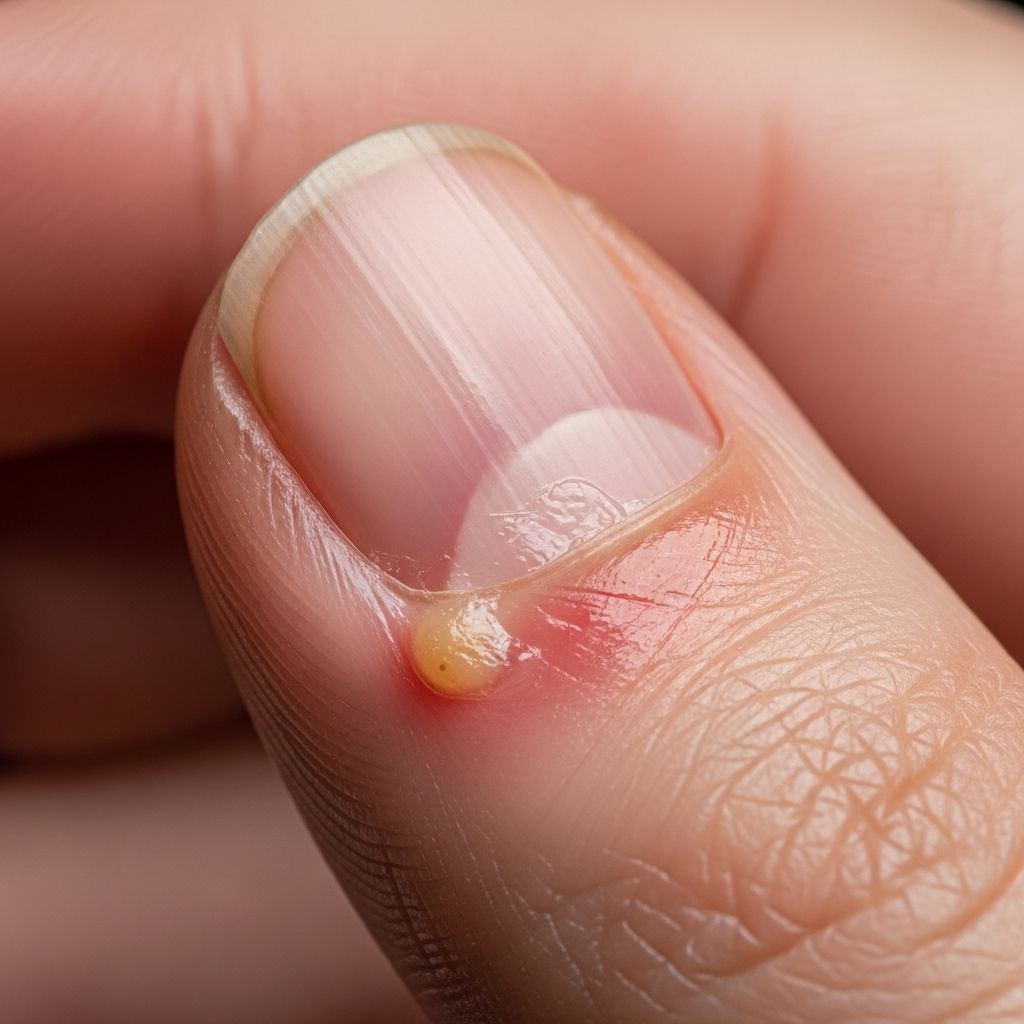
Acute paronychia evolves over hours to days, often on a single digit following trauma. Early signs include localized tenderness, redness, and edema of the nail fold. Progression leads to fluctuance, pus accumulation under the eponychium, and intense pain limiting digit use. Images typically reveal sharply demarcated erythema confined to one nail fold, with possible subungual extension if untreated.
- Early acute paronychia: Subtle swelling and erythema at the proximal nail fold, often after cuticle injury.
- Abscess stage: Bulging, tense eponychium with yellow-white pus visible on expression; surrounding skin hot and tender.
- Post-drainage: Open wound with resolving inflammation after incision.
Management prioritizes drainage for abscesses via #11 blade under the eponychium, followed by warm saline soaks (3-4 times daily), topical antiseptics (mupirocin), and oral antibiotics (cephalexin 500mg QID for 5-7 days) if cellulitis extends. Most resolve within days without nail involvement.
Chronic paronychia
Chronic paronychia insidiously affects multiple nails, starting proximally and spreading laterally. Nail folds appear puffy, retracted, with absent cuticles, mild redness, and transverse nail ridging. Discharge may be scant and multicolored (white from Candida, green from Pseudomonas). Images highlight dystrophic nails and boggy folds persisting despite hygiene.
- Proximal nail fold involvement: Swollen, tender fold lifted from nail plate, allowing irritant ingress.
- Multidigit spread: Similar changes on several fingers, common in wet occupations.
- Nail changes: Discolored, thickened plate with Beau’s lines or onycholysis.
Treatment addresses irritants: wear cotton-lined gloves, apply barrier creams, and use topical antifungals (clotrimazole BID for 4-6 weeks) plus mild steroids (hydrocortisone 1%). Refractory cases warrant systemic itraconazole or dermatology referral. Resolution may take months, with nail regrowth in 4-6 months.
Paronychia images – coded for easy reference
Below is a gallery of clinical images categorized by type and severity. Each image is annotated with key features to aid recognition. (Note: Descriptions simulate high-resolution dermatoscopic views from authoritative sources.)
Related Stories



Acute paronychia images
- Image 1: Fingertip showing acute proximal paronychia with erythema and early fluctuance on the thumb after hangnail trauma. Note localized swelling without nail plate involvement.
- Image 2: Lateral nail fold abscess on index finger; tense pus pocket visible, patient reports severe pain on pressure.
- Image 3: Post-incision drainage of toenail paronychia; expressed purulent material confirms bacterial etiology.
- Image 4: Herpetic whitlow mimic – vesicular stage on distal finger, but paronychia lacks clustered vesicles.
Chronic paronychia images
- Image 5: Multiple finger involvement in a nurse; boggy proximal folds, lost cuticles, ridged nails from chronic wet exposure.
- Image 6: Candidal chronic paronychia with white discharge and green nail discoloration suggesting Pseudomonas superinfection.
- Image 7: Pediatric thumb-sucker’s chronic paronychia; swollen fold with nail dystrophy.
- Image 8: Resolution after 3 months of topical therapy; restored cuticle and normalizing nail.
Who gets paronychia?
Paronychia affects all ages but peaks in adults with manual occupations or poor nail hygiene. Risk groups include:
- Manicurists, cleaners, healthcare workers (prolonged moisture/trauma).
- Children (nail-biting, thumb-sucking).
- Diabetics, immunocompromised (atypical organisms, poor healing).
- Individuals with Raynaud’s or psoriasis (altered barrier function).
Women outnumber men 2:1 due to grooming habits.
Related conditions
| Condition | Key Differences from Paronychia | Images/Features |
|---|---|---|
| Felon | Deep pulp abscess; throbbing pain, no nail fold primacy. | Swollen fingertip pulp, felon space involvement. |
| Herpetic whitlow | Vesicles, prodrome; HSV-positive culture. | Grouped vesicles on distal phalanx. |
| Onychomycosis | Nail plate primary; subungual debris. | Brittle, yellow nails without fold swelling. |
| Psoriatic nail disease | Pitting, oil-drop; systemic signs. | Onycholysis with fold involvement secondary. |
Treatment of paronychia
Acute: Conservative for early cases (soaks, topicals); I&D + antibiotics for pus/cellulitis.
Chronic: Irritant avoidance, antifungals/steroids; excise nail matrix if marsupialized chronically.
Prevention
- Trim nails straight, avoid cuticle pushing.
- Wear gloves for wet/chemical work.
- Moisturize hands; cease biting/picking.
- Treat underlying eczema promptly.
Frequently Asked Questions
What causes paronychia?
Acute: Bacterial entry via trauma. Chronic: Irritants + Candida.
Does paronychia go away on its own?
Mild acute cases yes; abscesses require drainage.
Can I pop paronychia at home?
No – risk spread; seek professional I&D.
How long does chronic paronychia last?
Weeks to months with treatment; recurrences common without lifestyle change.
Is paronychia contagious?
Not typically; via shared tools possibly.
References
- Paronychia Guide for Nurses — Nurse.com. 2023-05-15. https://www.nurse.com/clinical-guides/paronychia/
- Paronychia – DFTB Skin Deep — DFTB. 2024-02-10. https://dftbskindeep.com/all-diagnoses/paronychia/
- Paronychia & Felon: Causes, Clinical Features, & Management — The Plastics Fella. 2023-11-20. https://www.theplasticsfella.com/paronychia-felon/
- Paronychia — DermNet NZ. 2025-01-01. https://dermnetnz.org/topics/paronychia
- Paronychia – StatPearls — NCBI Bookshelf. 2024-07-12. https://www.ncbi.nlm.nih.gov/books/NBK544307/
- Chronic Paronychia — AAP Publications. 2023-09-05. https://publications.aap.org/aapbooks/monograph/778/chapter/15621739/Chronic-Paronychia
Similar Articles








Read full bio of Sneha Tete