Parotidectomy: Surgery for Parotid Gland Conditions
Understanding parotidectomy: surgical treatment for parotid gland tumors and conditions.
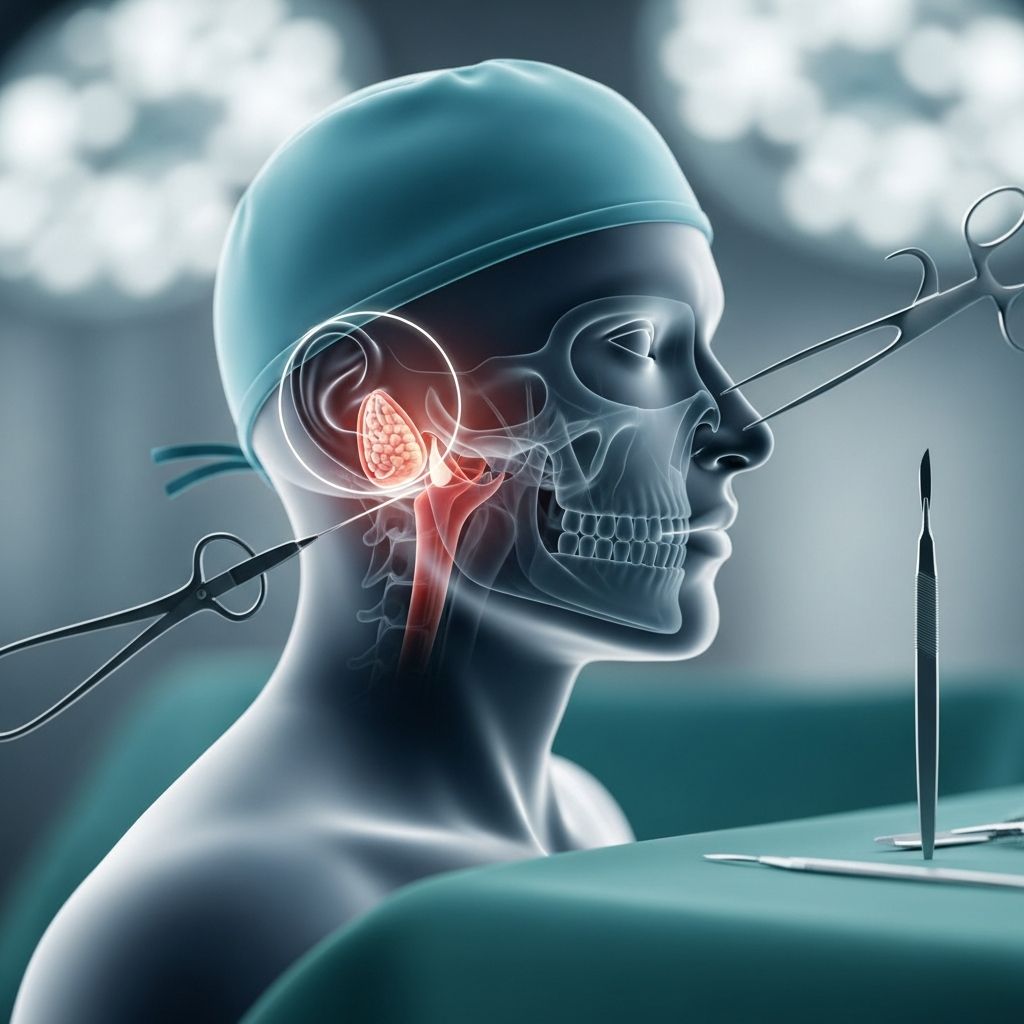
What Is Parotidectomy?
Parotidectomy is a surgical procedure in which a surgeon removes all or part of the parotid gland, one of the major salivary glands located in front of your ears. The parotid glands produce saliva that aids in swallowing and digestion of food. This procedure is performed under general anesthesia and represents a significant surgical intervention due to the complexity of the structures involved, particularly the facial nerve that runs through the gland.
The parotid gland is divided into two main sections: the superficial lobe and the deep lobe. Depending on the location and extent of the condition being treated, your surgeon may remove only the affected portion (partial parotidectomy) or the entire gland (total parotidectomy). The decision about how much tissue to remove depends on the diagnosis, size of the tumor, and whether the condition is benign or malignant.
Why Parotidectomy Is Performed
Parotidectomy treats various conditions affecting the parotid gland. The most common reasons for this surgery include:
Benign Tumors: Pleomorphic adenomas and Warthin tumors are the most frequent benign parotid tumors. While these are noncancerous, they can grow and cause discomfort or cosmetic concerns. Superficial parotidectomy is typically sufficient for benign tumors, with studies showing recurrence rates as low as 4.2% when performed by experienced surgeons.
Malignant Tumors: Cancerous parotid tumors require more extensive surgical treatment. Total or radical parotidectomy combined with neck dissection may be necessary, particularly for high-grade malignancies. Surgery aims to remove the tumor before it spreads to other areas.
Salivary Stones: Calculi can block the salivary ducts, causing pain, swelling, and recurrent infections. When conservative treatments fail, parotidectomy may be necessary to relieve the obstruction permanently.
Chronic Infections: Severe or recurrent parotid gland infections that don’t respond to antibiotics and other conservative treatments may require surgical removal of the affected gland tissue.
Preparation for Parotidectomy
Before undergoing parotidectomy, you’ll need several diagnostic tests to confirm the diagnosis and plan the surgical approach:
Imaging Studies: Ultrasound, computed tomography (CT), or magnetic resonance imaging (MRI) help your surgeon visualize the gland, identify the tumor location and size, and assess involvement of surrounding structures including the facial nerve.
Fine Needle Aspiration Biopsy (FNAB): This minimally invasive procedure involves using a thin needle to collect tissue samples from the mass. The collected cells are examined under a microscope to determine if the tumor is benign or malignant. FNAB has demonstrated diagnostic accuracy rates exceeding 94% when performed with ultrasound guidance.
Pre-operative Evaluation: Your anesthesiologist will review your medical history, current medications, and perform necessary lab work to ensure you’re safe for general anesthesia. You’ll receive specific instructions about fasting before surgery, typically requiring you to avoid food and drink for several hours beforehand.
The Surgical Procedure
Parotidectomy is typically performed under general anesthesia, meaning you’ll be asleep throughout the procedure. The surgery generally takes two to four hours, depending on the complexity of the case and whether additional procedures like neck dissection are needed.
Related Stories



Surgical Approach: The surgeon makes an incision in front of and slightly behind the ear, following a carefully planned line that hides the scar in natural skin creases. For traditional procedures, the modified Blair incision provides good visibility of the gland. More recently, minimally invasive micro-parotidectomy techniques use smaller, well-hidden incisions that result in reduced pain and faster healing.
Facial Nerve Identification: Protecting the facial nerve is the most critical aspect of parotidectomy. The facial nerve runs through the parotid gland and controls the muscles of facial expression, including those for smiling, blinking, and closing your eyes. Your surgeon carefully identifies and traces the facial nerve branches, preserving them throughout the procedure. Some surgeons use intraoperative nerve monitoring equipment to help ensure the nerve remains unharmed.
Tumor Removal: Once the facial nerve is identified and protected, the surgeon removes the affected portion of the gland along with surrounding tissue. For benign tumors, a partial or superficial parotidectomy is often sufficient. For malignant tumors, more extensive removal including total parotidectomy may be necessary.
Reconstruction: After tumor removal, the surgeon may reconstruct the area using muscle flaps, grafts, or a combination of both. This reconstruction serves multiple purposes: it restores facial symmetry, provides protective tissue over the facial nerve, and helps prevent complications like Frey’s syndrome, a condition causing excessive sweating in the surgical area.
Closure: The surgeon carefully closes the incision with sutures or skin adhesive. A drain may be placed to prevent fluid accumulation beneath the wound. The incision is typically covered with a pressure dressing to minimize swelling.
Recovery and Aftercare
Immediate Post-operative Period: After surgery, you’ll wake in a recovery room where medical staff monitor your vital signs and provide pain medication. Healthcare providers will assess whether your facial nerve is functioning normally by asking you to smile or close your eyes. Some numbness or weakness in the ear or face is common immediately after surgery due to swelling and anesthesia.
Hospital Discharge: Most parotidectomy patients go home the same day, though some may require overnight observation depending on the extent of surgery and individual circumstances. Minimally invasive procedures often allow same-day discharge with faster recovery.
First Two Weeks: During this period, you should rest and avoid strenuous activities. Keep your head elevated to minimize swelling. You may experience bruising, swelling, and mild to moderate pain, all manageable with prescribed pain medications. The drain, if placed, will be removed within a few days during a follow-up visit.
Wound Care: Keep the incision clean and dry as instructed. Your surgeon will provide specific guidelines for showering and bathing. Avoid swimming or soaking in water until the incision is completely healed. Return to your surgeon’s office for suture removal, typically 7-10 days after surgery.
Activity Restrictions: Gradually increase your activity level over several weeks. Most people can return to sedentary work within 1-2 weeks. Heavy lifting, intense exercise, and contact sports should be avoided for at least 4-6 weeks to prevent complications and allow proper healing.
Scar Maturation: The surgical scar typically appears pink or red initially but gradually fades over several months to a year. Minimally invasive techniques result in less noticeable scars due to their smaller incisions and careful placement in natural skin creases.
Potential Complications and Risks
While parotidectomy is generally safe when performed by experienced surgeons, several complications can occur:
Facial Nerve Injury: This is the most serious potential complication. Temporary facial nerve weakness or paralysis occurs in a small percentage of cases, usually resolving within weeks to months as swelling decreases. Permanent facial nerve damage is rare but possible, particularly with extensive tumor removal or cancerous involvement of the nerve.
Greater Auricular Nerve Injury: This nerve provides sensation to the lower part of the ear and the earlobe. Injury causes numbness in this area, which is usually permanent but not typically bothersome to patients.
Frey’s Syndrome: This condition causes excessive sweating or flushing on the side of surgery during eating. It occurs when regenerating nerve fibers misdirect and stimulate sweat glands instead of salivary glands. Reconstruction techniques using muscle flaps or grafts can help prevent this complication.
Infection: As with any surgery, infection is possible though uncommon with proper wound care and antibiotic prophylaxis. Signs include increasing pain, redness, warmth, or drainage from the incision.
Seroma or Hematoma: Fluid accumulation (seroma) or blood collection (hematoma) beneath the wound can occur. Proper drain placement and compression dressing minimize this risk. Small collections often resolve spontaneously, while larger ones may require drainage.
Scarring: While scarring is inevitable with any surgical procedure, modern techniques minimize visible scarring through careful incision placement and meticulous closure.
Taste Changes: Some patients report temporary changes in taste perception on the surgical side due to nerve irritation, usually resolving within months.
Side Effects and What to Expect
Beyond major complications, several common side effects occur during recovery:
Swelling and Bruising: Significant swelling and bruising are normal and typically peak within 48-72 hours before gradually improving. Cold compresses during the first 48 hours and heat after that can help manage swelling.
Pain and Discomfort: Varying degrees of pain are expected, effectively managed with prescribed medications. Over-the-counter pain relievers may help once you’ve transitioned from prescription medications.
Temporary Facial Weakness: Mild temporary weakness or drooping on the surgical side is common due to swelling and nerve irritation, usually improving as swelling decreases.
Numbness: Numbness in the ear or surrounding area is common and may persist long-term, but typically doesn’t cause significant problems.
Dry Mouth: If the entire parotid gland was removed, you may experience some dry mouth since salivary production decreases. The remaining salivary glands usually compensate, but this can be a permanent side effect in some patients.
Treatment Outcomes and Success Rates
Parotidectomy outcomes depend largely on the underlying diagnosis. For benign tumors, parotidectomy is highly effective and often curative, with low recurrence rates when appropriately performed. For malignant tumors, surgery removes the cancerous tissue but may need to be combined with radiation therapy or chemotherapy for optimal outcomes, particularly in high-grade malignancies.
The extent of surgery performed influences outcomes. Benign tumors typically require only superficial parotidectomy with excellent results and minimal complications. Malignant tumors often necessitate total or radical parotidectomy with neck dissection, which may have higher complication rates but is necessary for disease control.
Frequently Asked Questions
Q: How long does parotidectomy surgery take?
A: The procedure typically takes two to four hours, depending on the tumor’s complexity and whether additional procedures like neck dissection are required.
Q: Will I have permanent facial nerve damage?
A: Permanent facial nerve damage is rare when surgery is performed by experienced surgeons. Most temporary facial weakness resolves as swelling decreases. Your surgeon takes extensive precautions to protect this critical nerve.
Q: How long is the recovery period?
A: Most patients return to normal activities within 2-4 weeks, with full recovery taking 4-6 weeks. Minimally invasive procedures may have faster recovery times.
Q: Can parotid tumors come back after surgery?
A: Recurrence rates for benign tumors are very low, around 4.2%, when appropriately treated. Malignant tumors may recur, which is why additional treatment like radiation therapy may be recommended.
Q: Will I need to stay overnight in the hospital?
A: Most patients go home the same day after parotidectomy. Only in select cases where extensive surgery was performed or complications arise might overnight observation be necessary.
Q: What can I eat after parotidectomy?
A: You’ll start with soft foods and liquids immediately after surgery. As you heal and pain improves, you can gradually progress to regular foods over several days to a week.
Q: Will I have numbness after surgery?
A: Some numbness in the ear or surrounding area is common and usually permanent, though it rarely causes significant problems. This results from unavoidable nerve irritation during surgery.
References
- Parotidectomy: Procedure & Recovery — Cleveland Clinic. 2024. https://my.clevelandclinic.org/health/treatments/24057-parotidectomy-parotid-gland-tumor-surgery
- Retrospective Analysis of 136 Patients Operated for a Parotid Global — National Center for Biotechnology Information (NCBI), PubMed Central. 2022. https://pmc.ncbi.nlm.nih.gov/articles/PMC9478809/
- Salivary Glands — Johns Hopkins University, Department of Otolaryngology-Head and Neck Surgery. 2024. https://www.hopkinsmedicine.org/health/treatment-tests-and-therapies/parotidectomy
Similar Articles








Read full bio of Sneha Tete