Parsley: Uses, Risks, And Prevention Guide
Discover parsley's culinary uses, health benefits, and potential skin risks like phytophotodermatitis from psoralens.
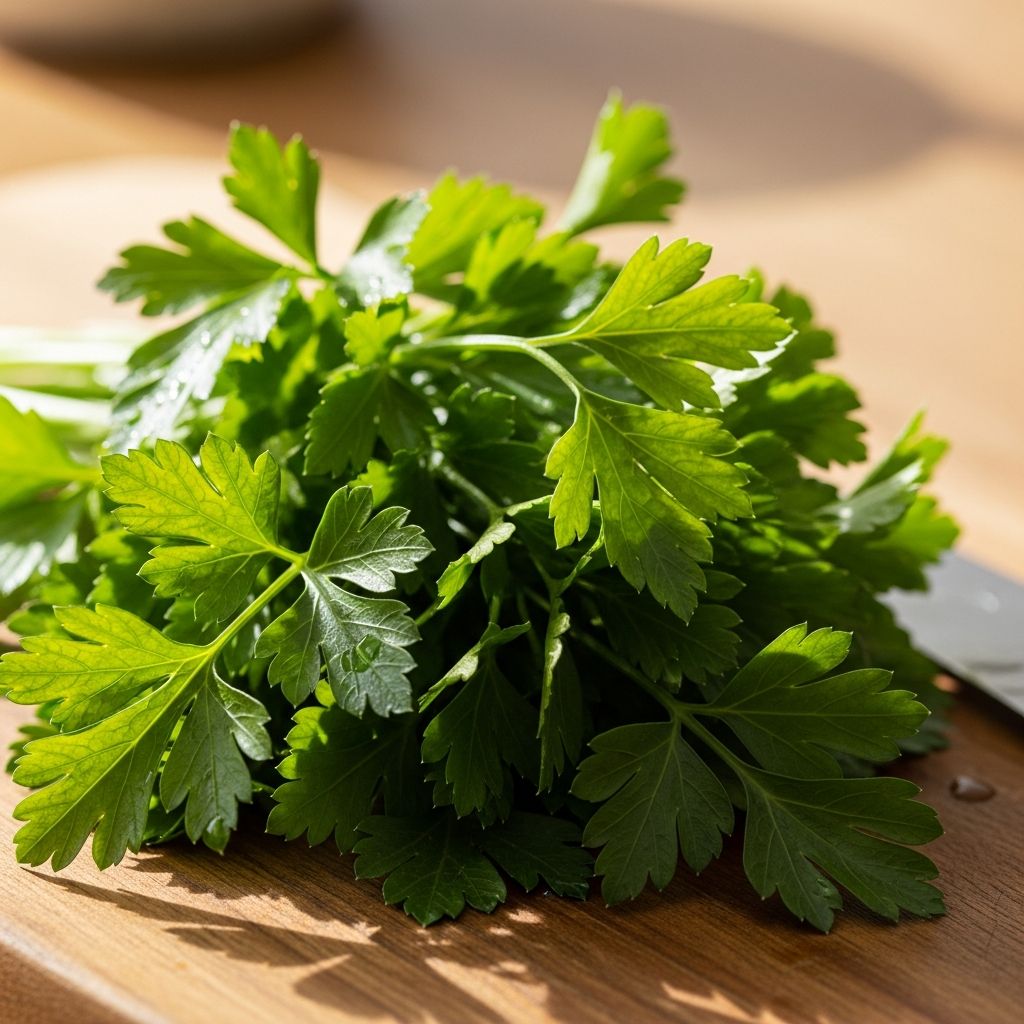
Parsley (Petroselinum crispum) is a bright green, biennial herb belonging to the Apiaceae family, widely used as a culinary seasoning and garnish. Native to the Mediterranean region, it is prized for its fresh, slightly bitter flavor and high nutritional content. Beyond the kitchen, parsley offers medicinal benefits, cosmetic applications, and serves as a natural breath freshener due to its chlorophyll richness. However, it contains psoralens, photoreactive compounds that can trigger phytophotodermatitis—a phototoxic skin reaction—when plant sap contacts skin followed by UVA exposure.
What is parsley?
Parsley is a flowering plant in the family Apiaceae, closely related to carrots, celery, and parsnips. It grows 10–30 cm tall, with erect stems supporting tripinnate leaves that are finely divided and bright green. The plant produces small white to yellowish-green umbel flowers in the second year, followed by oval or globose schizocarps (seeds). Cultivated varieties include flat-leaf (Italian) parsley, prized for robust flavor, and curly-leaf (French) parsley, used mainly for garnishing.
Originating from the central Mediterranean (southern Italy, Algeria, Tunisia), parsley has naturalized worldwide. It thrives in moist, well-drained soil with full sun to partial shade. Harvesting involves cutting outer leaves, allowing continuous growth. Nutritionally, 100g fresh parsley provides over 130mg vitamin C (more than oranges), 1.3mg vitamin B9 (folate), 1.07mg iron, and antioxidants like flavonoids (apigenin, luteolin) and carotenoids (lutein, zeaxanthin). It also contains chlorophyll, myristicin, and furanocoumarins like psoralen, bergapten, and xanthotoxin.
Culinary uses
Parsley is a staple in global cuisines for its versatility. Fresh leaves enhance salads, soups, sauces, and meats with a clean, herbaceous note. It pairs excellently with fish, potatoes, eggs, and legumes. In Mediterranean cooking, it’s key in tabbouleh, salsa verde, and chimichurri. Dried parsley loses potency but suits longer cooking. Parsley root and seeds are used in stews and pickling. As a garnish, finely chopped parsley adds color and freshness to dishes.
- Classic recipes: Tabbouleh (bulgur, tomatoes, parsley), persillade (parsley-garlic butter), gremolata (parsley, garlic, lemon zest).
- Health tip: Add to smoothies for vitamin boost without overpowering taste.
Medicinal uses
Traditional medicine employs parsley for diuretic, anti-inflammatory, and antioxidant effects. Teas from leaves or roots treat urinary tract infections, bloating, and menstrual issues. Apigenin exhibits anti-cancer properties in lab studies, inhibiting tumor growth. Flavonoids combat oxidative stress, potentially aiding atopic dermatitis by modulating inflammation and supporting skin barrier function. Myristicin may protect against lung cancer. However, evidence is largely preclinical; consult professionals before therapeutic use.
| Active Compound | Potential Benefit |
|---|---|
| Apigenin | Anti-inflammatory, anti-cancer |
| Vitamin C | Immune support, antioxidant |
| Flavonoids | Skin health, eczema relief |
| Psoralens | Phototherapy (therapeutic doses) |
Cosmetic uses
Parsley features in natural skincare for brightening and detoxifying properties. Masks with chopped leaves or juice reduce puffiness under eyes and fade dark spots via vitamin C and chlorophyll. Infusions soothe irritation, while essential oil (steam-distilled) acts as a mild astringent in toners. However, caution is advised due to photosensitizing psoralens.
Related Stories



- Eye mask: Crushed parsley + yogurt, apply 15 min.
- Toner: Parsley infusion + witch hazel.
- Warning: Patch test; avoid sun post-application.
Phytophotodermatitis from parsley
Parsley causes phytophotodermatitis, a phototoxic reaction from furocoumarins (psoralens) in sap. These penetrate skin and react with UVA light (320–400nm), generating reactive oxygen species that damage keratinocytes, causing inflammation. Common in gardeners, cooks, or those brushing against plants in sunlight. Not an allergy; affects anyone with sufficient exposure.
Mechanism
Psoralens intercalate DNA, forming cross-links upon UVA absorption. This halts cell division, leading to epidermal necrosis. Linear streaks or bizarre patterns (drip marks, handprints) reflect sap distribution.
Risk factors
- Handling fresh parsley, parsnips, celery (Apiaceae family).
- Sun exposure post-contact (even brief).
- Occupational: Chefs, food handlers, gardeners.
- Children playing in gardens; ‘wildflower necklaces’.
Clinical features
Symptoms appear 24–48 hours post-exposure: exaggerated sunburn with burning pain, erythema, edema, bullae in streaks/blotches. Peaks day 2–3, resolves 7–14 days with hyperpigmentation (weeks to months, darker in skin of color). Itch minimal; pain dominates.

Typical bizarre patterns of postinflammatory hyperpigmentation from phytophotodermatitis.
Variation in skin types
Fair skin: Intense blistering. Darker skin: Severe hyperpigmentation, less blistering.
Complications
- Secondary infection from blisters.
- Permanent scarring rare.
- Chronic pigmentation.
Diagnosis
Clinical: History of plant contact + sun + pattern. Patch testing unnecessary (phototoxic, not allergic). Biopsy shows necrotic keratinocytes, sparing dermis.
Differential diagnosis
| Condition | Key Differences |
|---|---|
| Photocontact dermatitis (photoallergic) | Itchy eczema; non-sunburn pattern |
| Contact dermatitis | No light needed; diffuse |
| Chemical burn | Immediate; no latency |
| Cutaneous larva migrans | Serpiginous track |
Treatment
Symptomatic: Cool compresses, potent topical corticosteroids (e.g., clobetasol), oral NSAIDs for pain. Severe cases: Oral steroids. Avoid irritants; emollients for healing. Pigmentation fades naturally; hydroquinone or IPL if persistent. Prevent infection.
Prevention
- Wear gloves handling parsley/plants.
- Wash sap off immediately with soap/water.
- Cover skin or use UVA sunscreen post-exposure.
- Avoid sun 24–48 hours after contact.
Other plants causing phytophotodermatitis
Apiaceae family: Parsnip, celery, fennel, angelica. Others: Citrus (lime, lemon), fig, giant hogweed (highly potent).
- Giant hogweed: Severe burns; invasive.
- Celery: Occupational in harvesters.
Frequently asked questions
Q: Can parsley cause skin burns?
A: Yes, via phytophotodermatitis. Sap + sunlight causes painful blisters and pigmentation.
Q: Is parsley safe to eat?
A: Absolutely; oral psoralens don’t cause skin reactions. Enjoy in moderation.
Q: How to treat parsley-induced rash?
A: Topical steroids, pain relief, sun protection. Resolves in 1–2 weeks.
Q: Who is at risk for phytophotodermatitis?
A: Gardeners, chefs, anyone handling psoralen-plants in sun.
Q: Does parsley benefit skin?
A: Topically, yes for brightening; but risk photosensitivity.
Food handlers and skin risks
In catering, 55% hand dermatitis from wet work, 40% food contact. Parsley among irritants; combined with detergents heightens risk.
References
- Phytophotodermatitis — DermNet NZ. 2021-11. https://dermnetnz.org/topics/phytophotodermatitis
- Plants that cause skin problems — DermNet NZ. 1999. https://dermnetnz.org/topics/plants-that-cause-skin-problems
- Skin problems in food handlers and the catering industry — DermNet NZ. 2012. https://dermnetnz.org/topics/skin-problems-in-food-handlers-and-the-catering-industry
- Photocontact Dermatitis — DermNet NZ. 2023. https://dermnetnz.org/topics/photocontact-dermatitis
- Flavonoids as Natural Anti-Inflammatory Agents in the Atopic Dermatitis Treatment — NIH / PMC. 2024. https://pmc.ncbi.nlm.nih.gov/articles/PMC11859288/
Similar Articles








Read full bio of Sneha Tete