PASI Score: How To Calculate And Interpret PASI 50/75/90/100
Comprehensive guide to the Psoriasis Area and Severity Index for assessing psoriasis severity and treatment response.
The
Psoriasis Area and Severity Index (PASI)
is a widely used tool in dermatology to quantitatively assess the severity and extent of psoriasis, particularly chronic plaque psoriasis. Developed in 1989, it provides an objective numerical score ranging from 0 (no disease) to 72 (most severe), aiding clinicians in diagnosis, treatment selection, and monitoring therapeutic efficacy.What is the PASI score?
The PASI score combines assessments of
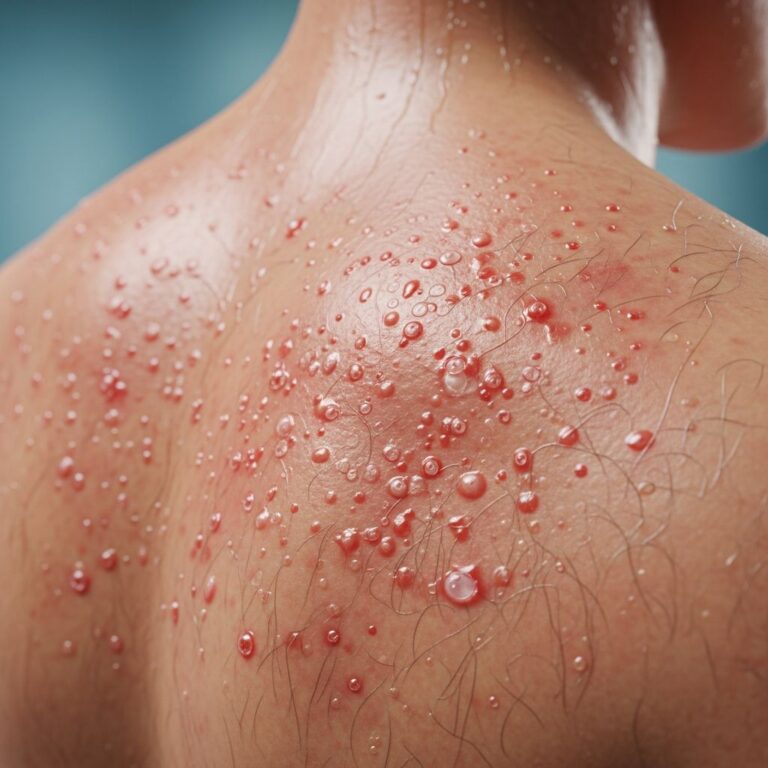
psoriatic lesion severity
(erythema, induration, and desquamation) and thepercentage of body surface area (BSA)
affected in four anatomical regions. This composite index is the gold standard for evaluating psoriasis in clinical trials and guides eligibility for biologic therapies in many guidelines.Psoriasis affects approximately 2-3% of the global population, manifesting as erythematous plaques with silvery scales. The PASI enables standardized comparisons across patients and studies, facilitating evidence-based decisions. Unlike subjective tools, PASI offers reproducibility, though inter-observer variability exists.
Who developed the PASI?
The PASI was introduced by Fredricksson and Pettersson in their seminal 1978 paper published in the International Journal of Dermatology. It has since become the primary outcome measure in over 90% of psoriasis clinical trials, validated across diverse populations and treatment modalities.
How is the PASI calculated?
PASI calculation involves dividing the body into four regions—head and neck (10% weighting), upper limbs (20%), trunk (30%), and lower limbs (40%)—reflecting their proportional surface areas. For each region, severity scores for three parameters and an area score are multiplied and weighted.
The overall formula is:
PASI = 0.1(AhIh) + 0.2(AuIu) + 0.3(AtIt) + 0.4(AlIl)
Where A = area score (0-6), I = average intensity score (0-4, mean of erythema, induration, desquamation), and subscripts h, u, t, l denote head/neck, upper limbs, trunk, lower limbs.
Severity parameters
In each region, three clinical features are scored from 0 (none) to 4 (very severe):
- Erythema (redness): Vascular inflammation causing discoloration.
- Induration (thickness/plaque elevation): Due to epidermal hyperplasia and inflammatory infiltrate.
- Desquamation (scaling): Parakeratosis leading to silvery scales.
| Score | Description |
|---|---|
| 0 | No involvement |
| 1 | Slight |
| 2 | Moderate |
| 3 | Severe |
| 4 | Very severe |
The intensity score (I) is the average of these three.
Area of involvement
Each region is scored based on the estimated percentage of BSA affected:
| Score | Percentage Affected |
|---|---|
| 0 | 0% |
| 1 | 1-9% |
| 2 | 10-29% |
| 3 | 30-49% |
| 4 | 50-69% |
| 5 | 70-89% |
| 6 | 90-100% |
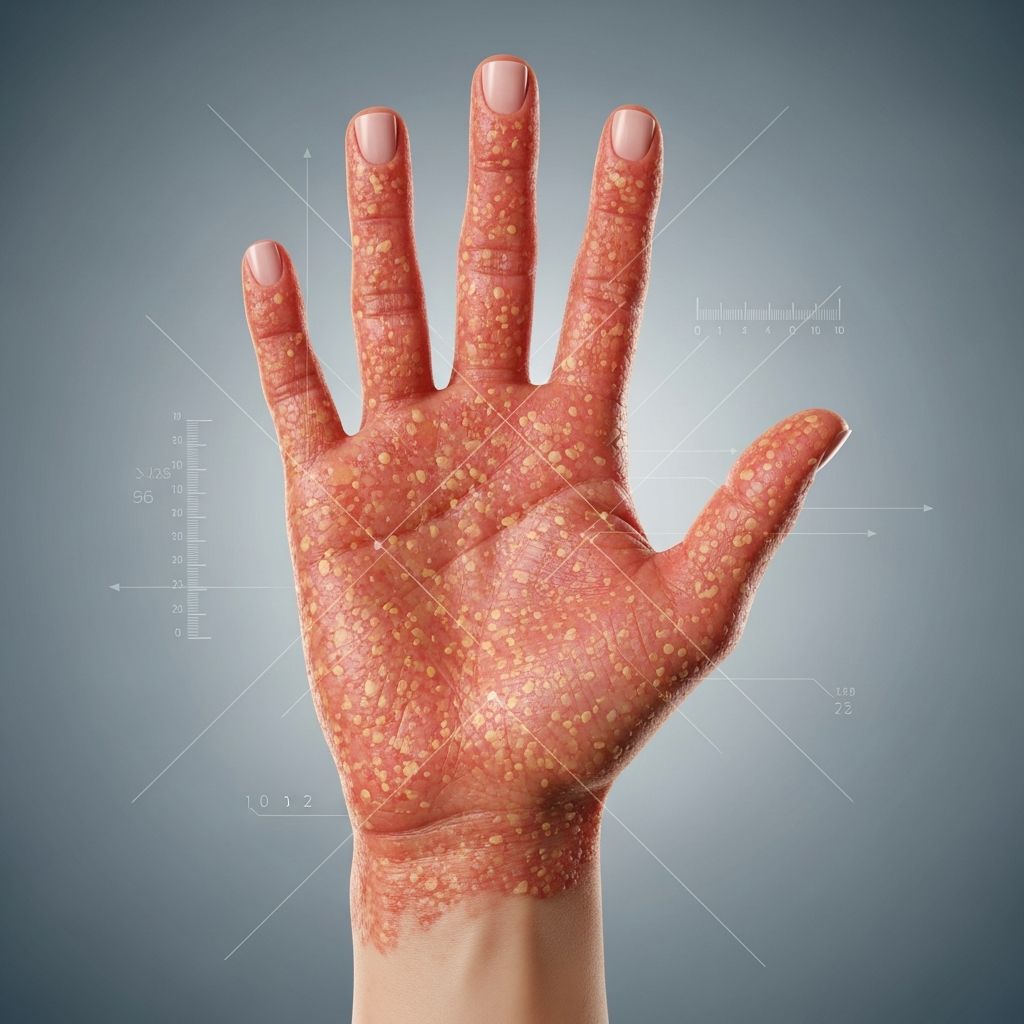
Estimates use the hand palm (approximately 1% BSA) as a reference.
Example calculation
Suppose head/neck: average intensity 2.3, area 1; upper limbs: 1.7/3; trunk: 0/0; lower limbs: 3.0/4.
PASI = 0.1(1×2.3) + 0.2(3×1.7) + 0.3(0×0) + 0.4(4×3.0) = 0.23 + 1.02 + 0 + 4.8 = 6.05 (moderate psoriasis).
PASI 50, PASI 75, PASI 90, PASI 100
These terms denote percentage improvements from baseline PASI:
- PASI 50: ≥50% reduction.
- PASI 75: ≥75% reduction (traditional endpoint for efficacy in trials).
- PASI 90: ≥90% reduction (near-complete clearance).
- PASI 100: 100% clearance (complete resolution).
Modern biologics like IL-17/IL-23 inhibitors often achieve PASI 90/100 in >50% of patients at week 16.
Related Stories



Interpreting the PASI score
| PASI Score | Severity |
|---|---|
| 0 | Clear |
| 0.1-5 | Mild |
| 5.1-10 | Moderate |
| >10 | Severe |
Scores >12 may indicate need for systemic therapy. However, PASI correlates imperfectly with quality-of-life impact.
Patient-oriented PASI (poPASI)
poPASI weights regions by patient-identified impact (e.g., hands/face higher priority), addressing PASI’s BSA bias. Scores range 0-72, validated for real-world use.
Modified PASI (mPASI)
Excludes palms/soles/genitals (often disproportionately symptomatic), focusing on standard body areas for consistency in trials.
PASI assessment tools
- Online calculators: Tools like the Corti.li PASI calculator simplify computation.
- Apps: Mobile applications for self-assessment and tracking.
- Training: Consensus guidelines reduce inter-rater variability to <20%.
Advantages of PASI
- Validated, sensitive to change.
- Standardized for trials/reimbursement.
- Comprehensive (area + severity).
- Free, quick (<5 min).
Disadvantages of PASI
- Subjectivity: Observer-dependent (variability up to 30%).
- Insensitivity: Poor for mild disease, palms/soles, non-plaque types.
- BSA underestimation: Difficult for >10% estimates.
- No QoL integration: Ignores itch/pain/psychosocial burden.
Alternatives include BSA, DLQI, PGA.
Who uses PASI?
- Dermatologists: Baseline/treatment monitoring.
- Clinical trials: Primary endpoint.
- Guidelines: NICE, AAD eligibility for biologics (e.g., PASI >10 + DLQI >10).
- Patients: Self-monitoring with apps.
Frequently asked questions
What is a good PASI score?
A PASI <3 indicates controlled disease; PASI 75+ response is clinically meaningful.
Can patients calculate their own PASI?
Yes, using photos and online tools, though professional assessment is recommended.
Is PASI used for all psoriasis types?
Primarily plaque; adaptations exist for guttate/pustular.
How often should PASI be assessed?
Baseline, week 4/12/16 for biologics, then every 6-12 months.
Does PASI predict treatment success?
Early PASI 75 at week 4 predicts sustained response.
References
- PASI score: Definition and how to calculate — Medical News Today. 2023-05-15. https://www.medicalnewstoday.com/articles/pasi-score
- Patient-oriented PASI score — DermNet NZ. 2024-01-10. https://dermnetnz.org/topics/patient-oriented-pasi-score
- Understanding Your PASI Score For Psoriasis — Healthline. 2023-08-22. https://www.healthline.com/health/pasi-psoriasis
- PASI Score — Canadian Association of Psoriasis Patients. 2024-03-05. https://canadianpsoriasis.ca/en/psoriasis/what-is-psoriasis/pasi-score
- PASI (psoriasis area and severity index) — DermNet NZ. 2024-02-18. https://dermnetnz.org/topics/pasi-score
- Psoriasis Area Severity Index (PASI) Calculator — Corti. 2023-11-01. http://pasi.corti.li
Similar Articles








Read full bio of medha deb