Patch Testing: Expert Guide To Procedure, Results And Aftercare
Comprehensive guide to patch testing for diagnosing allergic contact dermatitis and identifying skin allergens.
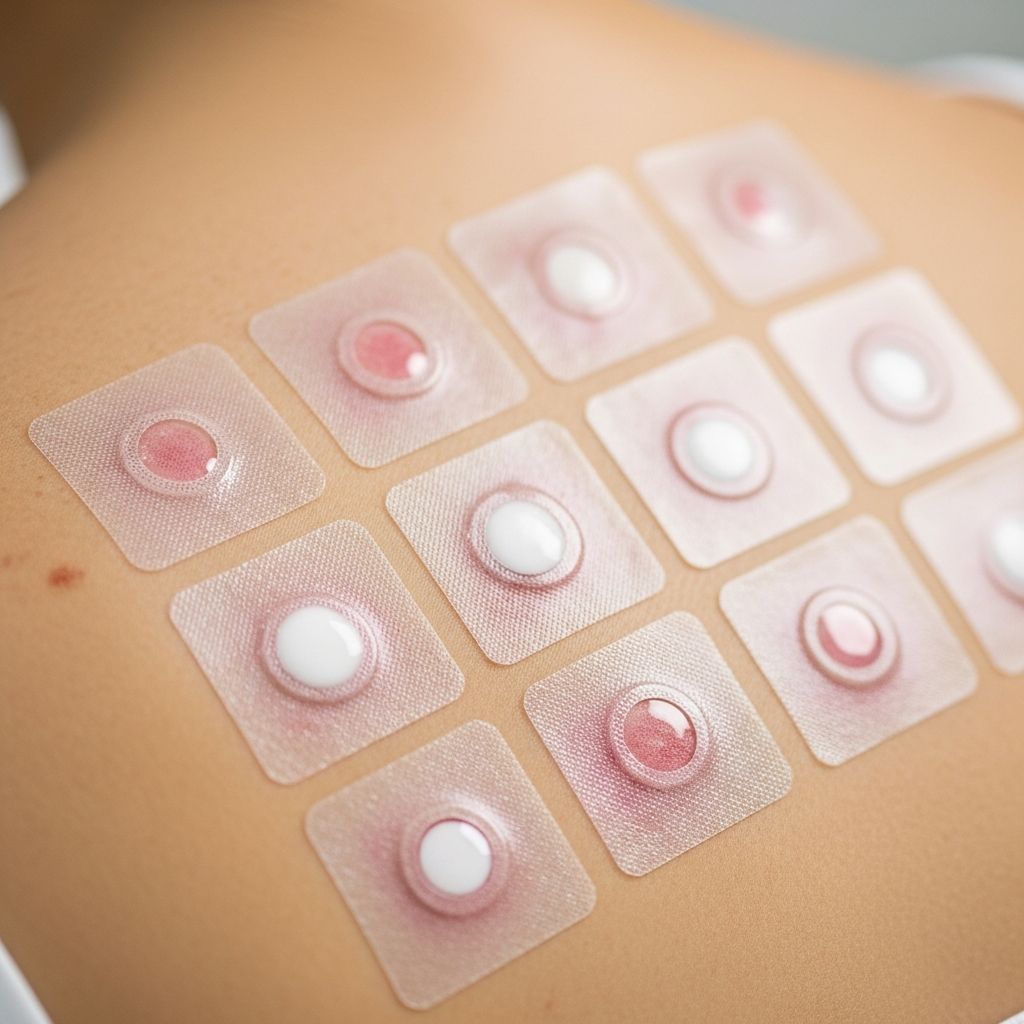
Patch testing is undertaken for the investigation and confirmation of substances that produce allergic contact dermatitis (ACD). It involves applying appropriately diluted allergens to the skin, usually on the back for convenience, for 48 hours. The patch tests are then read at 96 hours as reactions usually take 48–96 hours to develop. Positive reactions produce a patch of dermatitis at the application site of the offending allergen, which will appear as a red and possibly raised, vesicular and even blistering area.
What is patch testing?
Patch tests are not the same as skin prick tests, which are used to diagnose hay fever allergy. Skin prick tests check for immediate reactions, whereas patch tests detect delayed hypersensitivity reactions (type IV hypersensitivity).
A series of allergens are applied, usually to the back, on special tapes fitted with small aluminium discs (Finn chambers) that hold the individual allergens (between 10 and 12 per panel). Anywhere between 30 and over a hundred allergens can be applied at a time. Ideally the patch tests are applied when the dermatitis is inactive, but if the back skin is inflamed, the arms or abdominal skin can be used for application.
After carefully marking the position of the patch test panels, they are removed at 48 hours, and the skin inspected 48 hours after that (day 4).
Allergic contact dermatitis
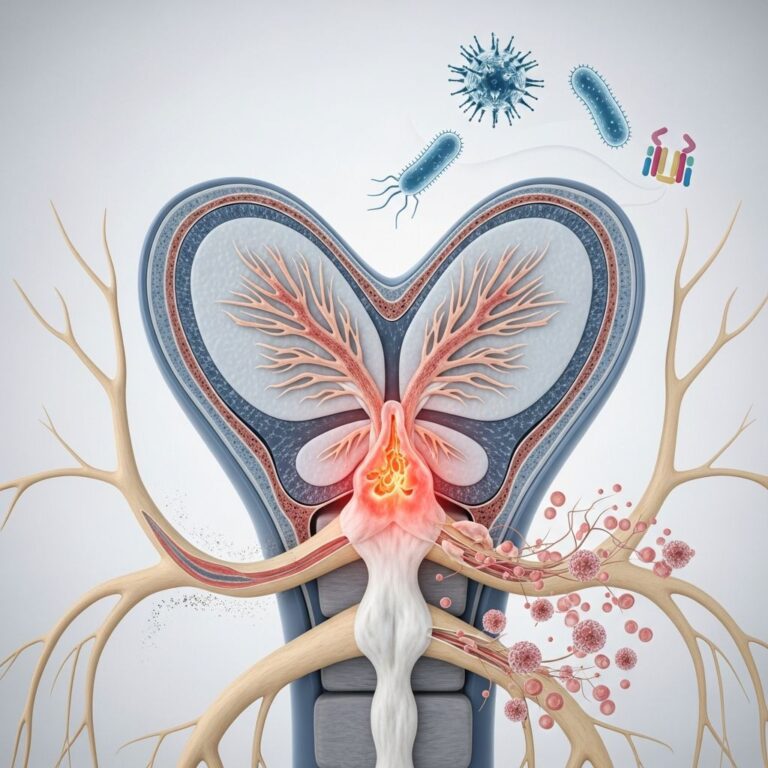
Allergic contact dermatitis arises when an allergen penetrates the skin and sensitises T lymphocytes (a type of white blood cell) in the skin. After a subsequent exposure, an inflammatory reaction occurs at the site of contact.
Common causes of ACD include fragrances, preservative chemicals, rubber accelerators, hair dyes, antibiotics and metal salts such as nickel.
Who should have patch tests?
Patch tests should be performed on:
- Individuals with chronic eczema of unknown aetiology
- People with atopic dermatitis or other dermatoses that may be complicated by ACD
- Patients with occupational dermatitis
- Individuals with recurrent acute dermatitis of unclear cause
- Anyone who has failed to respond to conventional treatment for eczema.
Patch testing is indicated for patients with a diagnostic hypothesis of contact dermatitis (CD), other skin conditions aggravated by CD (e.g., atopic dermatitis, seborrheic dermatitis), chronic eczema without established etiology, or suspected occupational CD.
Contraindications to patch testing
Patch tests should not be applied to widespread active dermatitis, as this can lead to false positive results.
Other relative contraindications include:
- Severe active atopic dermatitis
- Patient unable to tolerate the procedure
- Use of high-potency topical steroids or immunosuppressive medication
- Patient unable or unwilling to avoid topical treatments on the test site for 1 week before and after testing.
Preparation for patch testing
Patients should be advised to:
- Avoid applying topical steroids or other medications to the back for 1–2 weeks before testing
- Patients with hand or facial dermatitis should use a potent topical steroid on these sites to suppress the dermatitis
- Inform the clinic if they have taken oral steroids or immunosuppressive drugs recently
- Avoid sun exposure to the back before testing (to avoid phototoxic reactions)
- Patients should shower the night before testing and wear loose clothing
- Inform the clinic of any metal allergy (e.g., nickel)
- Bring any suspected products (e.g., cosmetics, medicaments).
Related Stories



Method of patch testing
Allergen selection is crucial. Standard series of allergens are used, supplemented by additional allergens relevant to the patient’s history and occupation. These may include:
- Cosmetics and personal care products
- Medicaments
- Plants
- Occupational chemicals
- Suspected commercial products.
Allergens are diluted to safe concentrations to avoid active sensitisation. They are placed in Finn chambers on adhesive tape (e.g., Scanpor® tape). Typically 30–100 allergens are tested in 3–10 panels.
The panels are applied to the back in a grid pattern and secured. Sites are marked with a marker pen or tags.
What to do after patch testing
Patients should be given clear written and verbal instructions:
- Avoid wetting the back (no showering or bathing)
- Wear loose clothing
- Avoid activities causing sweating or friction
- Avoid sunlight, solarium, sauna
- Avoid adhesive tape, plasters, creams and ointments on the back
- Report if patches become loose or itchy
- Return at 48 hours for patch removal and initial reading (D2)
- Return at 96 hours for final reading (D4).
During patch testing, patches are left on for 48 hours. The area is evaluated 2–4 days after removal.
How to read patch tests
Reactions are graded according to international guidelines (International Contact Dermatitis Research Group):
| Reaction | Code | Description |
|---|---|---|
| Negative | − | No reaction |
| Doubtful | ? | Faint erythema only |
| Weak positive | + | Erythema, infiltration, possibly papules |
| Strong positive | ++ | Erythema, infiltration, papules, vesicles |
| Extreme positive | +++ | Intense erythema, infiltration, coalescing vesicles, bullae, lymphangitis |
| Irritant | IRI | Sores, erosions limited to application site |
| Not tested | NT | |
| Doubtful to positive | ?+ | Used for reactions of doubtful relevance |
Positive reactions are those graded +, ++ or +++. ?+ reactions are doubtful to weak positive.
Readings are complex and require training. Positive reactions must be correlated with patient history for clinical relevance.
Interpretation
A positive patch test indicates sensitisation to that allergen, but clinical relevance must be determined:
- Current relevance: Explains present dermatitis
- Previous relevance: Caused past dermatitis
- Relevance excluded: Exposure but no dermatitis
- Relevance unknown: Exposure uncertain.
If patch testing reveals allergies, a treatment plan includes avoidance instructions and possibly medication to heal the rash.
What if patch tests are negative?
Negative patch tests do not exclude ACD. Reasons include:
- Inappropriate test concentrations
- Missed relevant allergens
- Systemic immunosuppression
- Recent topical steroid use
- Inactive dermatitis at testing
- Technical errors.
Consider repeat testing with additional allergens or product testing.
Photopatch tests
Photopatch testing investigates photoallergic contact dermatitis. Duplicate sets of photoallergens are applied. One set is removed and read at D2; both sites then irradiated (5 J/cm² UVA). Final reading at D4 compares irradiated vs. non-irradiated sites.
Common photoallergens: sunscreen chemicals, fragrances, drugs (e.g., ketoprofen).
Adverse reactions
Most reactions are mild but can include:
- Irritant reactions (burning, stinging)
- Active sensitisation (rare, new allergy)
- Excited skin syndrome (hyperirritability)
- Post-test dermatitis flare
- Persistent reactions (? “angry back”)
Treat with topical steroids if needed.
Allergen avoidance
The goal of patch testing is avoidance of relevant allergens. Patients receive:
- Written lists of allergens to avoid
- Information leaflets
- Product substitution advice
- Follow-up to reinforce advice.
For nickel allergy: avoid costume jewellery, use hypoallergenic products. Fragrance allergy: use fragrance-free products.
Patient information leaflets
Many clinics provide leaflets explaining results and avoidance, e.g.:
Frequently asked questions
What is the purpose of patch testing?
Patch testing identifies specific allergens causing allergic contact dermatitis.
How long do I wear the patches?
Patches are worn for 48 hours, with readings at removal (D2) and 96 hours (D4).
Does patch testing hurt?
It may itch or become uncomfortable but is generally painless.
What if I have a positive reaction?
Your dermatologist will advise on avoidance and treatment.
Can patch tests cause new allergies?
Rarely, through active sensitisation.
Who performs patch testing?
Experienced dermatologists or trained specialists.
References
- Patch Testing for Skin Allergies — Nationwide Children’s Hospital. 2023. https://www.nationwidechildrens.org/family-resources-education/health-wellness-and-safety-resources/helping-hands/patch-testing-for-skin-allergies
- Patch tests — National Center for Biotechnology Information (PMC). 2014-01-13. https://pmc.ncbi.nlm.nih.gov/articles/PMC3900336/
- Allergy skin tests — Mayo Clinic. 2023. https://www.mayoclinic.org/tests-procedures/allergy-tests/about/pac-20392895
- Patch testing can find what’s causing your rash — American Academy of Dermatology (AAD). 2023. https://www.aad.org/public/diseases/eczema/types/contact-dermatitis/patch-testing-rash
- Patch tests: Skin Contact Allergy Tests Explained — DermNet NZ. 2025-02. https://dermnetnz.org/topics/patch-tests
Similar Articles








Read full bio of Sneha Tete