Patient-Oriented PASI Score: 4-Step Self-Assessment Guide
Empowering psoriasis patients to self-assess disease severity using the simple PO-PASI tool for better management.
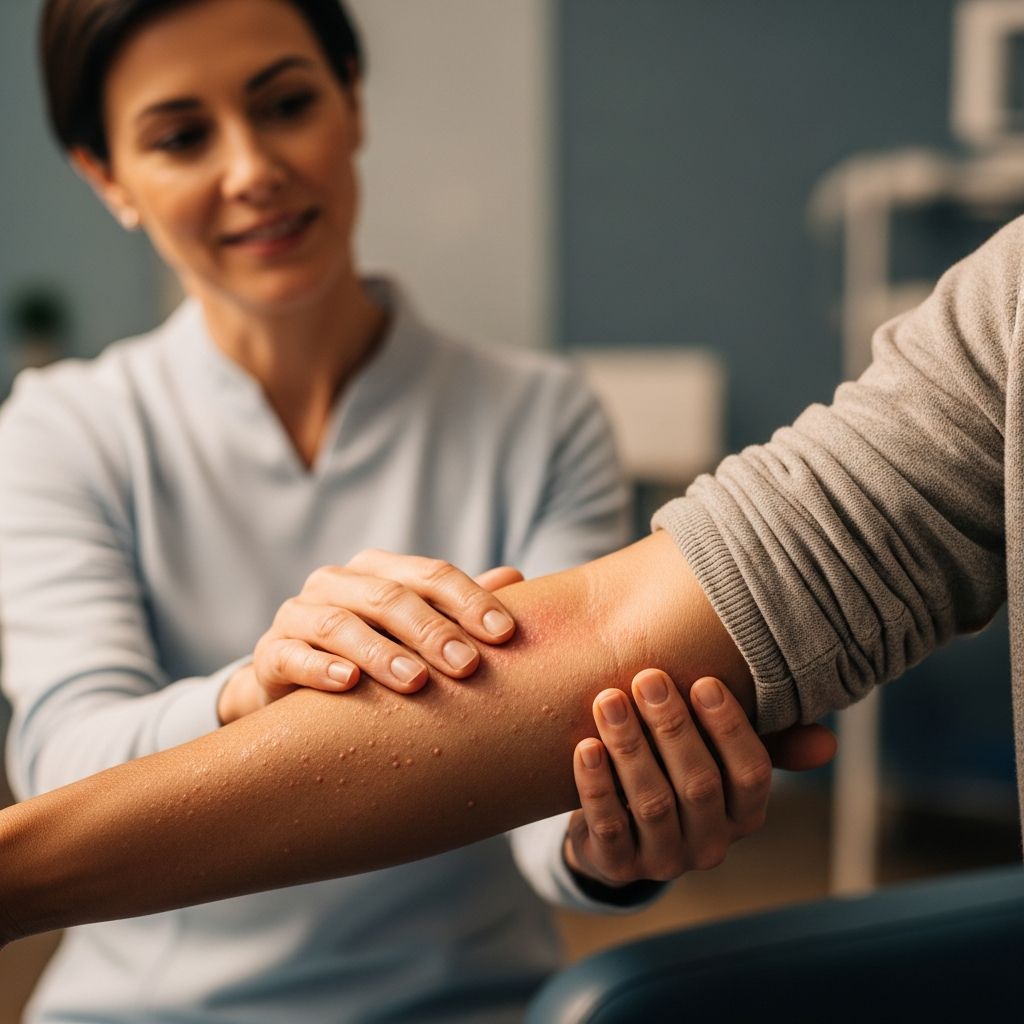
The
patient-oriented PASI score (PO-PASI)
is a simplified version of the standard Psoriasis Area and Severity Index (PASI), designed specifically for people with psoriasis to assess their own condition. Unlike the clinician-assessed PASI, which divides the body into four regions and requires complex calculations, PO-PASI focuses on just one representative area per body region, making it accessible for self-use at home.This tool empowers patients to monitor their psoriasis severity objectively, track treatment effectiveness over time, and share accurate scores with dermatologists during consultations. By rating key symptoms—redness (erythema), thickness (induration or plaque elevation), and scaling—along with the percentage of affected area, users can generate a score ranging from 0 (clear skin) to 72 (most severe), mirroring the full PASI scale.
What is psoriasis?
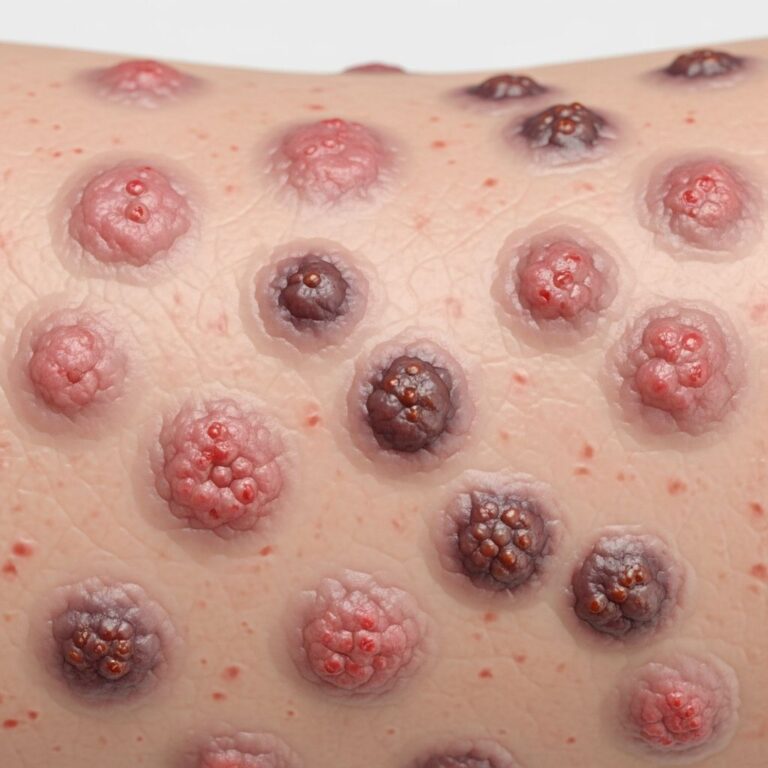
Psoriasis is a chronic, immune-mediated inflammatory skin disease affecting approximately 2-3% of the global population. It causes rapid skin cell turnover, leading to thick, scaly plaques that can itch, burn, or cause discomfort. Common types include plaque psoriasis (most prevalent), guttate, pustular, and erythrodermic variants. Triggers include stress, infections, medications, and genetics.
Symptoms vary in severity: mild cases affect less than 3% of body surface area (BSA), moderate 3-10%, and severe over 10%. Effective management relies on regular assessment tools like PASI or PO-PASI to guide topical therapies, phototherapy, systemic drugs, or biologics.
Who can use PO-PASI?
PO-PASI is ideal for adults and older children with plaque psoriasis who want to take an active role in their care. It’s particularly useful for:
- Patients on long-term treatments monitoring response.
- Those between doctor visits to detect flares early.
- Participants in clinical trials or apps tracking progress.
- Individuals learning to recognize symptom changes.
It’s not a diagnostic tool—see a dermatologist for initial evaluation. Beginners or those with non-plaque types may need guidance.
How to use PO-PASI
PO-PASI simplifies assessment by selecting one representative psoriatic plaque in each of four body regions: head and neck, upper limbs (arms/hands), trunk, and lower limbs (legs/feet). Score three qualities—erythema, thickness, scaling—from 0-4, then estimate affected area percentage as 0-6. Plug into the formula for a total score.
Step 1: Select representative areas
Choose typical plaques showing average severity in each region. Avoid outliers like healing or crusted lesions for accuracy.
Step 2: Score severity (intensity)
For the chosen plaque in each region, rate:
- Erythema (redness): 0=none, 1=mild (pink), 2=moderate (red), 3=severe (very red), 4=fiery red.
- Thickness/plaque elevation: 0=none, 1=mild (<2mm), 2=moderate (2-4mm), 3=severe (>4mm), 4=very thick.
- Scaling: 0=none, 1=mild (fine), 2=moderate (moderate), 3=severe (hard), 4=very severe (very hard/ribbon-like).
Average these three for the region’s severity score (e.g., (1+2+0)/3 = 1).
Step 3: Score area affected
Estimate psoriasis coverage in each region:
| Score | % Affected |
|---|---|
| 0 | 0% (clear) |
| 1 | 1-9% |
| 2 | 10-29% |
| 3 | 30-49% |
| 4 | 50-69% |
| 5 | 70-89% |
| 6 | 90-100% |
Regions weighted: head/neck (0.1), upper limbs (0.2), trunk (0.3), lower limbs (0.4).
Step 4: Calculate PO-PASI
Related Stories



Formula per region: (Severity average × Area score × Region weight). Sum all four:
Total PO-PASI = 0.1×(E_h + T_h + S_h)/3 × A_h + 0.2×(E_u + T_u + S_u)/3 × A_u + 0.3×(E_t + T_t + S_t)/3 × A_t + 0.4×(E_l + T_l + S_l)/3 × A_l
Where E=erythema, T=thickness, S=scaling, A=area, subscripts h=head, u=upper, t=trunk, l=lower.
Example: Mild head plaque (all 1s, area 1), clear elsewhere → Score ~0.3 (mild).
Understanding your PO-PASI score
Scores range 0-72:
- 0: Clear skin.
- 0.1-5: Mild—topicals often suffice.
- 6-10: Moderate—consider phototherapy/systemics.
- >10: Severe—biologics or hospital care may be needed.
Track monthly; a 75% drop (PASI 75) indicates good response.
Advantages of PO-PASI
- Easy self-assessment without clinician.
- Standardized like PASI for doctor comparisons.
- Promotes patient engagement and early intervention.
- Useful in telehealth or resource-limited settings.
Limitations
- Subjective estimates can vary.
- Less precise for very mild/widespread or non-plaque psoriasis.
- Doesn’t capture itch, pain, or quality of life (use DLQI alongside).
- Intra-rater variability; practice improves accuracy.
Not a replacement for professional PASI but a valuable adjunct.
PO-PASI vs. standard PASI
| Aspect | PO-PASI | Standard PASI |
|---|---|---|
| User | Patient self | Clinician |
| Areas assessed | 1 plaque/region | All affected areas |
| Complexity | Simple | Complex formula |
| Score range | 0-72 | 0-72 |
| Use case | Home monitoring | Trials/clinics |
PO-PASI correlates well with PASI (r>0.9), validated for patient use.
Frequently asked questions
What if I have no plaques in a region?
Score area 0; it contributes nothing to total.
How often should I calculate PO-PASI?
Weekly during flares, monthly otherwise, or as doctor advises.
Can PO-PASI replace doctor visits?
No—use it to prepare for appointments.
Is there an app for this?
Many dermatology apps include PO-PASI calculators; check with your provider.
What if scores don’t improve?
Discuss triggers, adherence, or treatment change with dermatologist.
Who developed PO-PASI?
Adapted from PASI (Fredriksson & Pettersson, 1978) for patients by DermNet NZ and psoriasis experts, emphasizing accessibility.
References
- PASI score: Definition and how to calculate — Medical News Today. 2023-05-15. https://www.medicalnewstoday.com/articles/pasi-score
- Understanding Your PASI Score For Psoriasis — Healthline. 2023-08-20. https://www.healthline.com/health/pasi-psoriasis
- Understanding key psoriasis outcome measures — Bristol Myers Squibb (official patient resources). 2024-01-10. https://www.bms.com/patient-and-caregivers/patient-resources-by-condition/immunology-resources/understanding-key-psoriasis-outcome-measures.html
- PASI (psoriasis area and severity index) — DermNet NZ. 2024-06-01. https://dermnetnz.org/topics/pasi-score
Similar Articles








Read full bio of Sneha Tete