Pattern Analysis In Dermoscopy: A Comprehensive Guide
Master pattern analysis for melanocytic lesion diagnosis and melanoma detection.
Understanding Pattern Analysis in Dermoscopy
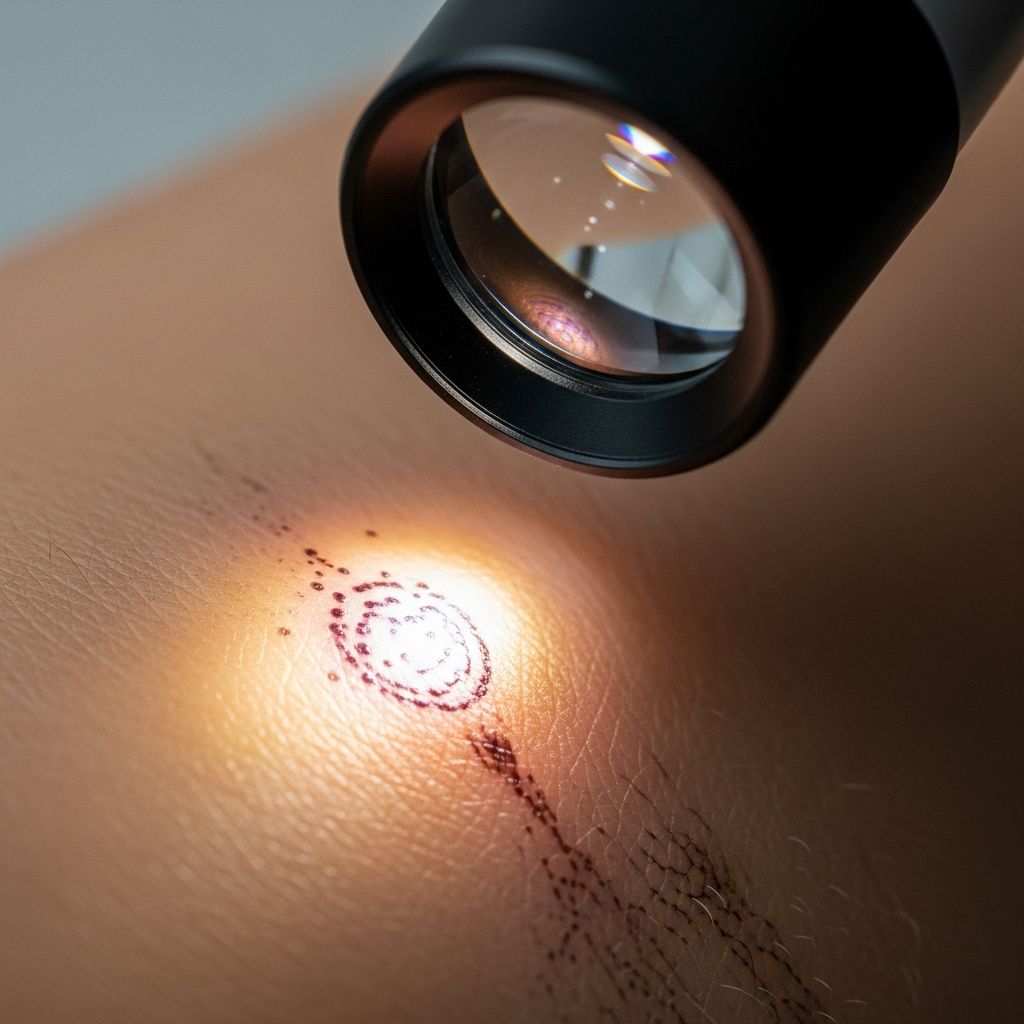
Pattern analysis represents a fundamental diagnostic approach in dermoscopy that involves the simultaneous assessment of all diagnostic features visible within a lesion. This methodology has become the preferred technique among expert dermoscopists for evaluating melanocytic lesions and differentiating benign nevi from malignant melanoma. The method combines the analysis of structural patterns, color distribution, and architectural organization to generate reliable diagnostic conclusions.
In clinical practice, dermoscopic evaluation begins with the first-step algorithm, which determines whether a lesion is melanocytic or nonmelanocytic. Once melanocytic pathology is identified, pattern analysis provides the framework for further diagnostic assessment and clinical decision-making regarding potential excision or follow-up monitoring.
Core Components of Dermoscopic Assessment
Pattern analysis relies on the identification and interpretation of specific dermoscopic elements that form the visual patterns observed in skin lesions. Understanding these fundamental building blocks is essential for accurate diagnosis.
Dermoscopic Elements and Structures
Dermoscopic features are categorized into distinct elements that form recognizable patterns:
- Lines – including reticular, branched, parallel, radial, and curved patterns
- Rounded structures – such as dots, circles, and clods
- Pseudopods – lines with bulbous terminal extensions
- Structureless areas – regions lacking defined repetitive patterns
These elements appear in melanocytic and nonmelanocytic lesions alike. The absence of defined structure is described as a structureless pattern, which carries specific diagnostic significance depending on its color composition and distribution within the lesion.
Color Assessment in Dermoscopy
Color analysis provides critical diagnostic information correlated with histopathological findings. Colors observed dermatoscopically include:
- Black – indicating superficial or dense melanin deposition
- Dark brown – reflecting deeper melanin distribution
- Light brown (tan) – representing intermediate pigmentation depth
- Blue-grey – suggesting melanin in the dermis
- White – often indicating regression or scarring
- Red and pink – reflecting vascular and inflammatory components
The correlation between observed color and histologic depth of pigmentation allows dermoscopists to infer the location and extent of melanocytic involvement within skin layers.
Line Patterns and Their Histologic Correlates
Dermoscopic patterns of lines form through the repetition of one basic element and directly correlate with underlying histopathology. Recognition of these five distinct line patterns is fundamental to pattern analysis:
Reticular and Branched Lines
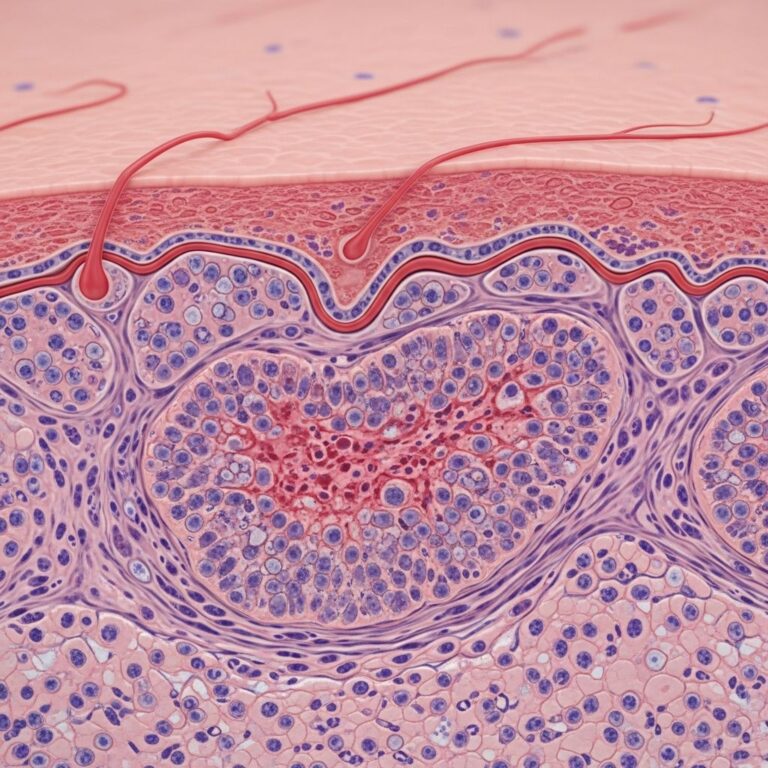
Reticular lines are straight intersecting patterns that meet at regular intervals at right angles, resembling a fishnet appearance. Branched lines also run straight but intersect at irregular intervals and not at right angles. These patterns typically reflect normal interdigitation of epidermal rete ridges and dermal papillae, with basal epidermal hyperpigmentation and proliferation of pigmented melanocytes preferentially involving the rete ridges while preserving overall epidermal architecture.
Both reticular and branched lines commonly appear in association with other dermoscopic patterns, either symmetrically or asymmetrically distributed. When combined with dots and clods, these patterns reflect the simultaneous presence of multiple histologic features, such as large nests of pigmented melanocytes producing clods alongside elongated pigmented rete ridges.
Related Stories



Parallel, Radial, and Curved Lines
Parallel lines run alongside each other without crossing and may indicate specific pathologic processes. Radial lines extend outward from the lesion center like rays, creating a distinctive pattern. Curved lines form arc-like configurations within the lesion. Each pattern type carries distinct diagnostic implications and helps characterize the specific nature of melanocytic involvement.
Modified Pattern Analysis: The Kittler System
Modified or revised pattern analysis, as described by Kittler et al, represents a simplified yet highly effective diagnostic system now widely adopted in clinical practice. This approach employs much simpler terminology than traditional metaphoric dermoscopic pattern recognition and operates as a single-step system that directly guides clinical decision-making.
Core Principles of Modified Analysis
The Kittler system emphasizes straightforward lesion description followed by determination of whether excision is warranted. Asymmetry of structural elements and patterns serves as a primary warning sign for potential malignancy. Lesions exhibiting such asymmetry should be considered suspicious and warrant excisional biopsy or specialist referral.
The method breaks down pattern assessment into global patterns (overall lesion appearance) and local patterns (specific regional features), allowing systematic evaluation of the entire lesion while identifying focal areas of concerning morphology.
Understanding CHAOS and Malignancy Clues
CHAOS is a critical concept in modified pattern analysis representing lesions that show multiple patterns with asymmetry of structure and/or color on dermoscopy. This finding is characteristically true for melanoma, basal cell carcinomas, and squamous cell carcinomas, indicating architectural disruption and diagnostic concern.
Recognition of Suspicious Patterns
Non-concentric multicomponent patterns are highly suspicious of malignancy, though they may occasionally appear in benign lesions such as collision tumors, recurrent nevi, and congenital melanocytic nevi. This distinction underscores the importance of integrating dermoscopic findings with clinical context and patient history.
Dermoscopic Clues to Malignancy
When evaluating pigmented lesions, clinicians should consider excising lesions demonstrating one or more of the following dermoscopic clues to malignancy:
- Asymmetry in color distribution and structural arrangement
- Multiple colors, particularly when irregularly distributed
- Irregular borders with abrupt pigment cutoff
- Atypical pigment network with broadened lines
- Blue-white structures indicating dermal melanin or regression
- Irregular dots and globules of varying sizes
- Streaks or pseudopods at lesion periphery
Global Dermoscopic Patterns for Melanocytic Lesions
Global patterns describe the overall appearance and arrangement of dermoscopic features across the entire lesion. These patterns are classified using descriptive terminology reflecting the predominant element types and their organization:
- Reticular pattern – dominated by line networks of regular appearance
- Globular pattern – characterized by dots and globules as predominant elements
- Starburst pattern – showing peripheral radial lines or pseudopods
- Multicomponent pattern – displaying multiple distinct patterns within the same lesion
- Structureless pattern – lacking clearly defined repetitive elements
Alternative Diagnostic Algorithms
While pattern analysis remains central, additional systematic approaches complement and validate clinical decision-making in dermoscopic evaluation of pigmented lesions.
The ABCDE Rule and Blum’s Modification
Blum’s modified ABC-point list provides a practical scoring system particularly useful for non-specialist practitioners:
- A – Asymmetry – asymmetry of outer shape or differential structures inside the lesion in at least one axis
- B – Border cutoff – abrupt cutoff of the network at the border in at least one-quarter of the circumference
- C – Color – presence of three or more distinct colors
- D – Differential structures – three or more differential structural types present
- E – Evolution – documented change observed in the last three months
The Menzies Method and CASH Scoring
The Menzies method systematically evaluates architectural and symmetry features through the CASH scoring system:
Architecture (0-2 points) assesses overall order versus disorder, ranging from none/mild disorder (0 points) through moderate (1 point) to marked disorder (2 points). Symmetry (0-2 points) evaluates contour, colors, and structural arrangement, with symmetry in two axes scoring 0 points, one axis scoring 1 point, and no symmetry scoring 2 points.
Homogeneity (1-7 points) counts the number of different structural types present, including pigment network, dots, globules, blotches, regression, streaks, blue-white veil, and polymorphous vessels. A total CASH score of 2-17 is calculated, with higher scores indicating increased malignancy likelihood.
Special Considerations: Non-melanocytic Lesions and Nail Matrix Melanoma
Pattern analysis principles apply beyond melanocytic lesions, as nonmelanocytic lesions are composed of the same basic elements as melanocytic lesions. Basal cell carcinomas and squamous cell carcinomas frequently demonstrate chaos and multiple dermoscopic clues requiring careful evaluation and appropriate management.
Dermoscopy of Pigmented Nail Matrix Lesions
Specialized application of pattern analysis to longitudinal melanonychia requires recognition of hallmark clues specific to nail matrix melanoma. Examination of the pigmented stripe may reveal parallel lines showing chaotic variation in width, interval, and color, distinguishing malignant lesions from benign longitudinal melanonychia.
Competent nail matrix biopsy technique is essential for adequate histological diagnosis. Modern approaches such as the ‘pop the bonnet’ technique allow direct visualization of the entire matrix including dermoscopic evaluation of both nail bed and nail plate, facilitating accurate assessment and tissue sampling.
Practical Application of Pattern Analysis
Effective pattern analysis requires systematic evaluation combining multiple assessment methods. The recommended approach involves:
- Determine whether the lesion is melanocytic or nonmelanocytic using the first-step algorithm
- Identify global patterns using simplified descriptive terminology
- Assess local features and identify any areas of asymmetry or structural disruption
- Evaluate specific malignancy clues including asymmetry, multiple colors, and atypical patterns
- Synthesize findings to generate diagnostic conclusion and clinical recommendation
- Consider excision, specialist referral, or monitoring based on cumulative assessment
Dermoscopic-Histologic Correlation
The diagnostic accuracy of pattern analysis depends fundamentally on understanding how dermoscopic observations correlate with underlying histopathology. Colors observed dermoscopically directly reflect the nature of pigmentation and the depth of melanin deposition within skin layers. Structural patterns correlate with specific histologic features including melanocytic proliferation patterns, architectural distortions, and inflammatory responses.
This correlation allows experienced dermoscopists to make accurate inferences about lesion type and malignant potential based purely on surface morphology, without requiring histopathologic confirmation in all cases.
Integration with Other Dermoscopic Methods
While pattern analysis remains highly effective, integration with other established methods such as the three-point checklist provides additional diagnostic confidence. The three-point checklist, designed for non-experts, evaluates atypical pigment network, blue-white structures, and additional dermoscopic features, though it is less specific than comprehensive pattern analysis performed by experienced observers.
Frequently Asked Questions
Q: What is the primary advantage of pattern analysis over other dermoscopic methods?
A: Pattern analysis integrates assessment of all visible dermoscopic features simultaneously, providing comprehensive evaluation that accommodates complex lesions and increases diagnostic accuracy compared to single-feature assessment methods.
Q: Can pattern analysis be reliably applied by non-specialist clinicians?
A: While pattern analysis is most accurate when performed by trained dermoscopists, simplified versions such as the modified Kittler system with emphasis on CHAOS and malignancy clues can be effectively applied by general practitioners with appropriate training.
Q: How does asymmetry of structure and color indicate malignancy?
A: Asymmetry reflects disorderly and uncontrolled growth patterns characteristic of melanoma, in contrast to the orderly, symmetrical appearance of benign nevi which grow in organized and uniform patterns.
Q: Are multicomponent patterns always malignant?
A: No. While non-concentric multicomponent patterns are highly suspicious for malignancy, they may occasionally occur in benign lesions such as collision tumors, recurrent nevi, and congenital melanocytic nevi, emphasizing the importance of integrating dermoscopy with clinical context.
Q: What role does color analysis play in pattern recognition?
A: Color assessment provides information about pigment type and depth, which correlates with specific histopathologic findings and helps characterize the extent and location of melanocytic involvement within the skin.
Q: How should dermoscopists approach lesions with borderline findings?
A: When doubt exists regarding the benignity or malignancy of a lesion, the recommended approach involves either excisional biopsy for definitive diagnosis, specialist referral for expert evaluation, or close clinical follow-up with repeated dermoscopic documentation to assess for evolution.
References
- Pattern Analysis – Dermoscopy — DermNet NZ. 2008. https://dermnetnz.org/cme/dermoscopy-course/pattern-analysis
- Other Algorithms for Melanocytic Lesions – Dermoscopy — DermNet NZ. https://dermnetnz.org/cme/dermoscopy-course/other-algorithms-for-melanocytic-lesions
- Dermatoscopic-Histologic Correlation – Dermoscopy — DermNet NZ. https://dermnetnz.org/cme/dermoscopy-course/dermatoscopic-histologic-correlation
- Three-Point Checklist – Dermoscopy — DermNet NZ. https://dermnetnz.org/cme/dermoscopy-course/three-point-checklist
Similar Articles








Read full bio of medha deb