Pea Protein vs. Whey Protein: Which Is Better?
Discover the key differences between pea protein and whey protein to find the best fit for your fitness goals, diet, and health needs.
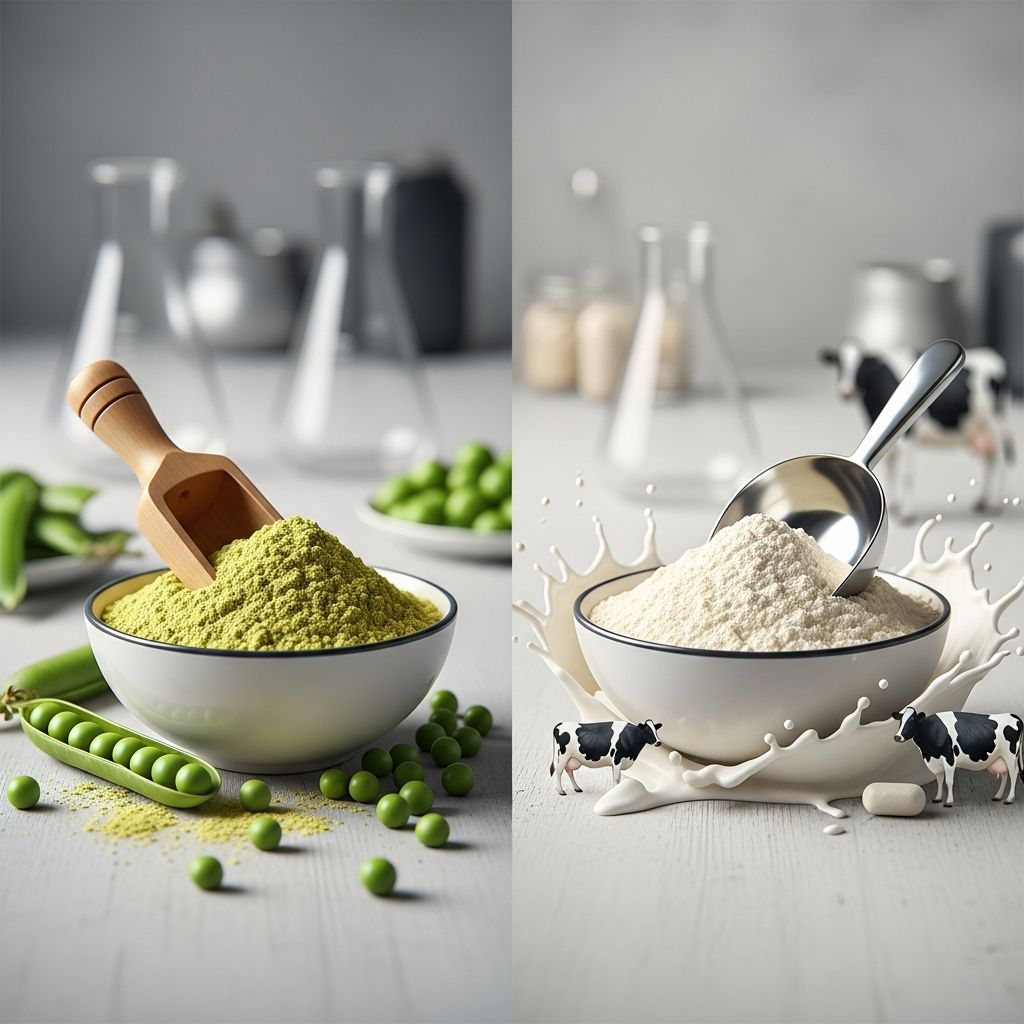
Choosing between
pea protein
andwhey protein
depends on your dietary needs, fitness goals, and health considerations. Both are popular protein supplements for muscle building and recovery, but pea protein excels as a plant-based, allergen-free option, while whey offers superior leucine content for rapid absorption.This comprehensive guide breaks down their differences in nutrition, amino acid profiles, digestibility, and real-world applications to help you decide.
What Is Pea Protein?
**Pea protein** is derived from yellow split peas through a process that isolates the protein, resulting in a powder that’s about 80-90% protein by weight. It’s a complete protein containing all nine essential amino acids, making it suitable for vegans and vegetarians.
Unlike soy or rice proteins, pea protein provides a balanced amino acid profile, with high levels of branched-chain amino acids (BCAAs) like leucine, isoleucine, and valine, essential for muscle synthesis. A typical 30-gram serving delivers 23-25 grams of protein, low carbs (0.5-4g), minimal fat (2g), and notable micronutrients like iron (up to 60% DV).
- Key Nutrients per 30g serving (isolate): 120 calories, 25g protein, 0.5g carbs, 2g fat, 4.8mg iron.
- Rich in arginine (5.9g/100g), supporting blood flow and heart health.
- Hypoallergenic, gluten-free, and lactose-free.
Pea protein’s earthy taste blends well in smoothies, and its fiber content aids satiety for weight management.
What Is Whey Protein?
**Whey protein** is a byproduct of cheese production from milk, available as concentrate (70-80% protein), isolate (90%+ protein), or hydrolysate (pre-digested). It’s renowned for its complete amino acid profile and high bioavailability.
Whey is particularly rich in leucine (about 10-12% of its aminos), triggering muscle protein synthesis (MPS) more effectively post-workout. A 30g serving provides 24-25g protein, with more calcium and potassium than pea, but it contains lactose in concentrates, posing issues for dairy-sensitive individuals.
- Key Nutrients per 30g serving (isolate): ~120 calories, 25g protein, 1-3g carbs, 1g fat, higher in BCAAs.
- Fast-digesting, ideal for athletes needing quick recovery.
- Not suitable for vegans or those with dairy allergies.
Pea Protein vs. Whey Protein: A Head-to-Head Comparison
Both proteins support muscle growth, but differences emerge in sourcing, digestion, and specific benefits. Here’s a detailed breakdown:
| Aspect | Pea Protein | Whey Protein |
|---|---|---|
| Source | Plant-based (yellow peas) | Animal-based (milk) |
| Protein per 30g | 23-25g | 24-25g |
| Complete Protein? | Yes | Yes |
| Leucine Content | ~8% (lower) | ~11% (higher) |
| Digestibility | Good, but slower; may cause bloating | Excellent, rapid absorption |
| Iron | High (27-60% DV) | Low |
| Calcium/Potassium | Moderate | Higher |
| Allergens | Low (hypoallergenic) | Dairy/lactose |
| Best For | Vegans, heart health, iron needs | Athletes, quick recovery |
Pea protein matches whey in stimulating MPS and strength gains, per studies on resistance-trained individuals. However, whey edges out in peak MPS due to higher leucine.
Nutrition Breakdown: Amino Acids and Micronutrients
Amino acids drive protein efficacy. Pea protein’s profile per 100g includes 23.6g essential aminos, with strengths in arginine and lysine but slightly lower leucine than whey.
Related Stories



- Pea EAAs/100g: Leucine 8.2g, Isoleucine 4.8g, Valine 5.1g, Lysine 7.2g.
- Whey Strengths: Higher leucine triggers greater insulin response for anabolism.
Micronutrients favor pea for iron (critical for energy, immunity) and plant compounds aiding heart health via cholesterol reduction. Whey provides more electrolytes for hydration.
Muscle Building and Recovery: Do They Perform Equally?
Research shows
pea protein builds muscle comparably to whey
. A study found pea supplementation increased biceps strength and size similarly to whey in trainees. Both elevate MPS via BCAAs, though whey’s faster absorption suits immediate post-workout use.For endurance or plant-based diets, pea’s sustained release prevents amino “valley” dips. Vegans hit protein targets (1.6g/kg bodyweight for athletes) easily with pea.
Digestion and Gut Health
Whey isolate digests fastest (PDCAAS score near 1.0), minimizing bloating. Pea, while digestible, may cause gas due to oligosaccharides; isolates reduce this.
Pea’s fiber supports gut microbiome, and its anti-inflammatory peptides benefit long-term health. Choose isolates for both to optimize tolerance.
Health Benefits Beyond Muscle
Heart Health
Pea protein lowers LDL cholesterol and blood pressure, per animal and human trials. Whey also supports cardiovascular health but less potently.
Weight Management
Both promote satiety, but pea’s fiber enhances fullness, aiding fat loss. A high-protein pea breakfast boosts fat oxidation.
Other Perks
- Pea: Kidney protection, antioxidant effects, high iron for vegans.
- Whey: Bone health via calcium, immune-boosting lactoferrin.
Taste, Texture, and Usage
Pea has a gritty, beany taste best masked in smoothies. Whey is creamier, vanilla/chocolate flavors shine.
- Recipes: Pea in oats, soups; whey in shakes.
- Mix pea with rice protein for optimal aminos.
Cost and Sustainability
Pea is often cheaper, with lower environmental impact (less water/land than dairy). Both ~$1-2/serving.
Which Should You Choose?
- **Choose Pea If:** Vegan, allergen-free needs, iron boost, heart/kidney focus.
- **Choose Whey If:** Maximal MPS, dairy-tolerant, budget for isolates.
- **Hybrid:** Blend for balanced profile.
Consult a dietitian for personalized advice.
Frequently Asked Questions (FAQs)
Is pea protein as good as whey for building muscle?
Yes, studies show similar gains in strength and size.
Does pea protein cause bloating?
Possible with concentrates; isolates are gentler.
Can vegans use pea protein?
Absolutely—it’s plant-based and complete.
Which has more protein per scoop?
Comparable at 25g/30g serving.
Is pea protein good for weight loss?
Yes, high satiety and low calories aid fat loss.
References
- What Is Pea Protein? Benefits, Nutrition & Uses — Daily Harvest. 2023. https://daily-harvest.com/blogs/ingredients/what-is-pea-protein
- Pea Protein: Non-Dairy Muscle Builder — DrAxe.com. 2023-05-15. https://draxe.com/nutrition/pea-protein/
- The Dietitian’s Nutrition Guide to Pea Protein — PURIS. 2024. https://www.puris.com/hubfs/Category%20Guides/Pea%20Protein%20Nutrition%20Guide.pdf?hsLang=en
- The Current Situation of Pea Protein and Its Application — PMC (Peer-reviewed). 2022-08-10. https://pmc.ncbi.nlm.nih.gov/articles/PMC9412838/
- Pea Protein vs. Whey Protein: The Differences Explained — Levels Protein. 2024. https://levelsprotein.com/blogs/supplements/pea-protein-vs-whey-protein
- Pea Protein: Nutritional Benefits and Types — Cleveland Clinic. 2023-07-20. https://health.clevelandclinic.org/pea-protein
Similar Articles








Read full bio of Sneha Tete