Peak Flow Measurement: Guide to Monitoring Asthma
Learn how peak flow measurement helps diagnose and manage asthma effectively.
What is Peak Flow Measurement?
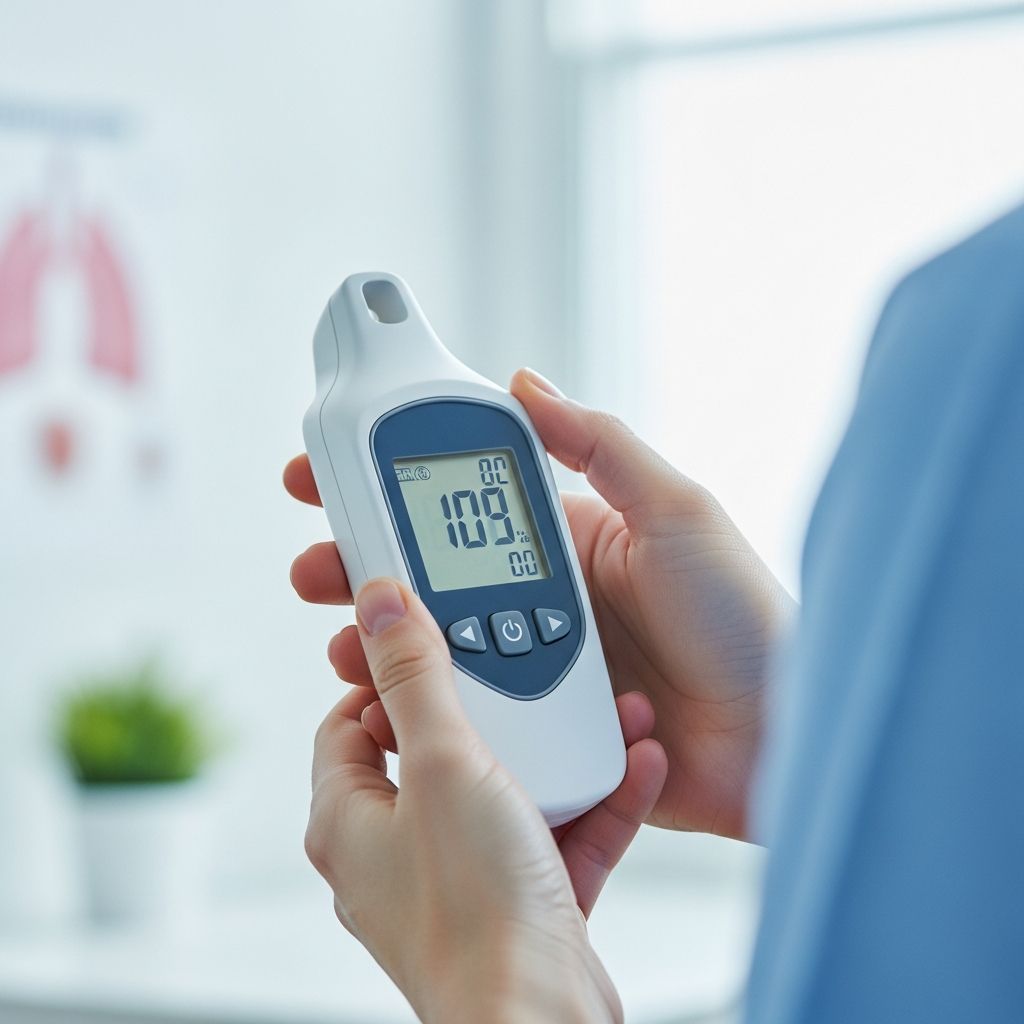
Peak flow measurement is a quick and simple test that evaluates how fast air can be expelled from your lungs. Also known as peak expiratory flow (PEF) or peak expiratory flow rate (PEFR), this measurement is expressed in liters per minute (L/min). Peak flow measurement reflects the maximal exhalation rate following full inspiration, making it a valuable tool for asthma management, particularly when spirometry is unavailable.
The test involves using a small, hand-held device called a peak flow meter, which is portable, inexpensive, and accessible enough to be used almost anywhere. The device works by measuring the force of air coming out of your lungs in one fast blast, with the marker moving along a numbered scale to display your measurement. Peak flow measurement is especially useful for people with asthma or other chronic lung diseases who need to monitor their respiratory function regularly.
Understanding Peak Flow Meters
A peak flow meter is a simple, plastic device designed for portability and ease of use. The device comes in various brands and models, and it’s important to use the same meter on a regular basis, as readings can vary between different brands and types. The International Organization for Standardization has published guidelines for PEF meters, and clinicians and patients should choose devices that meet these criteria.
Peak flow meters typically consist of a mouthpiece connected to a numbered scale. When you blow forcefully into the mouthpiece, the force of your exhalation causes an internal marker to move along the scale, displaying your peak flow reading. The simplicity and portability of these devices make them ideal for both clinical settings and home monitoring.
Normal Peak Flow Values
Normal peak flow measurements vary significantly based on individual factors including age, sex, and height. Generally, a normal reading in adults is approximately between 400 to 600 L/min, though some sources indicate that normal peak flow in adults may range between 400 and 700 L/min. In children, a normal peak flow may range from around 150 to 450 L/min.
Peak flow numbers are typically higher in people who are younger, taller, or male. To establish your personal best, you should measure your peak flow over a two-week period when your asthma is under good control—meaning you feel well and don’t have any symptoms. Your personal best serves as a baseline for comparing future readings and detecting changes in your respiratory function.
How to Measure Peak Flow: Proper Technique
Proper technique is essential for obtaining accurate peak flow measurements, as maximal effort is required when using a peak flow meter to obtain valid results. The depth of the preceding breath, airway caliber, muscle strength, and voluntary effort all contribute to peak expiratory flow. Follow these steps to measure your peak flow correctly:
Step-by-Step Instructions
Step 1: Stand up straight or sit upright to allow for maximum lung capacity. Take a full, deep breath in through your mouth, filling your lungs completely with air.
Step 2: Place the mouthpiece of the peak flow meter between your lips and seal your mouth around it. Ensure there is a good seal to prevent air from escaping.
Related Stories



Step 3: Blow out as hard and as fast as you possibly can into the meter. Put maximum effort into this exhalation, as the force of the air coming out of your lungs causes the marker to move along the numbered scale.
Step 4: Note the number where the marker has stopped on the scale and write down your score.
Step 5: Repeat the entire routine three times, with a short rest between each attempt. You know you have completed the routine correctly when the numbers from all three tries are very close together. Use the highest of these three scores to fill in your peak flow diary.
When to Measure Peak Flow
Peak flow measurement is typically done one or more times daily at the same time of day. Optimal timing involves measuring your peak flow before taking asthma medicine, as medications can affect your readings. You may also need to measure peak flow whenever you are experiencing early signs of an asthma attack or when advised by your healthcare provider.
Peak flow measurement is mainly used to help diagnose and monitor asthma. You may be asked to keep a peak flow diary for two or more weeks to help your doctor make an asthma diagnosis. This documentation can show a pattern of peak flow scores over time that are not normal, which, alongside clinical history and other tests like spirometry and FeNO, can suggest you have asthma.
Common Factors That Affect Peak Flow Accuracy
Several factors can compromise the accuracy of peak flow measurements. Clinicians should observe patients using a peak flow meter to identify suboptimal effort or technique. Common issues include:
Technique-Related Issues:
- Not breathing out strongly enough to show your true level of dysfunction
- Coughing during the test
- Poor seal around the mouthpiece while doing the test
- Blocking the mouthpiece with your tongue
- Insufficient initial breath depth
Device and Medication-Related Issues:
- A dirty meter that may interfere with accurate readings
- Using medicines that open the airways (bronchodilators) before measurement
- Using a different type or brand of peak flow meter, as measurements may vary among brands and types
However, variability exists between devices, and no good technique exists to calibrate readings between different flow meters. To ensure consistency, it’s important to use the same device regularly and to maintain it in clean, working condition.
Interpreting Peak Flow Results
Understanding your peak flow scores is crucial for effective asthma management. Your healthcare provider or asthma nurse will look for a pattern of scores that show changes which are not normal. A big difference between your score and a normal score, or variations when you have symptoms versus when you don’t, could suggest you have asthma.
In the emergency setting, a peak flow rate of less than 50% of your personal best without improvement despite aggressive therapy warrants hospital admission for ongoing care and close monitoring for signs of impending respiratory failure. Generally, a peak flow rate below 200 L/min indicates severe obstruction for most adults younger than 65.
The Asthma Action Plan and Color-Coded Zones
After a patient’s personal best is established, peak flow guides in creating an asthma action plan that uses color-coded zones modeled after a traditional traffic light to simplify interpretation. This system provides clear guidance for managing your condition based on your measurements:
| Zone | Peak Flow Range | Status | Action |
|---|---|---|---|
| Green Zone | 80% to 100% of personal best | Good asthma control | Continue with current regimen; no symptoms present |
| Yellow Zone | 50% to 80% of personal best | Caution zone | Begin home action plan with bronchodilators and contact healthcare provider if readings don’t improve |
| Red Zone | Below 50% of personal best | Medical emergency | Begin bronchodilator therapy immediately and seek emergency care; severe airway obstruction may be present |
Green Zone (80-100%): This zone designates peak flow values of 80% to 100% of your personal best. In the absence of symptoms, you continue with your current regimen without any changes.
Yellow Zone (50-80%): The yellow zone encompasses peak flow values between 50% and 80% of your personal best. You should employ your home action plan, beginning with bronchodilators when you identify readings in this zone.
Red Zone (Below 50%): Patients in the red zone have peak flow measurements below 50% of their personal best. You should begin bronchodilator therapy immediately and contact your clinician if your peak flow measurements do not immediately return to the yellow or green zones. Peak flow measurements in this range indicate that severe airway obstruction may be present and constitute a medical emergency.
Peak Flow Measurement in Hospital Settings
Respiratory therapists and nurses can obtain and report serial peak flow measurements throughout a patient’s hospital course to guide disposition decisions and assess the effectiveness of treatment. In the inpatient setting, patients often do not know their personal best, so published tables of normal PEF rates for height and weight are available as reference standards.
Peak flow measurement in the hospital helps determine whether patients can be safely discharged or require continued observation. A patient with a peak flow rate of less than 50% without improvement despite aggressive therapy warrants hospital admission for ongoing care and close monitoring for signs of impending respiratory failure.
Causes of Reduced Peak Flow
Causes of a reduced PEFR include asthma (the most common cause) and COPD (chronic obstructive pulmonary disease). COPD includes conditions such as:
Emphysema: A chronic lung condition that affects the smallest air sacs in the lungs (alveoli), leading to reduced surface area for gas exchange.
Chronic Bronchitis: Long-term inflammation of the bronchi that creates excessive mucus production and a persistent cough.
A reduced peak flow measurement can indicate compromised airway function and should prompt evaluation by a healthcare provider to determine the underlying cause and appropriate treatment.
Patient Education and Symptom Management
Patient education on proper technique is essential, as validity hinges on maximal effort. Factors such as the depth of the preceding breath, airway caliber, muscle strength, and voluntary effort influence results. After a patient’s personal best is established, peak flow guides in creating an asthma action plan, symptom self-management, and assisting in treating acute exacerbations.
Patients with asthma may monitor their condition using a peak flow diary, which allows them to track patterns and changes in their measurements over time. This documentation helps both patients and healthcare providers identify triggers, assess treatment effectiveness, and make informed decisions about medication adjustments.
Color-coded zones modeled after a traditional traffic light simplify interpretation and give patients a clear understanding of necessary management based on their symptoms and peak flow measurements. Interpretation in pediatric patients requires care due to potential limitations in technique, and parents or caregivers should work closely with healthcare providers to establish appropriate baseline measurements and action plans for children.
Peak Flow vs. Spirometry
While peak flow measurement is a valuable screening tool, it has limitations compared to spirometry. Spirometry is a more comprehensive lung function test that measures multiple parameters including forced expiratory volume, forced vital capacity, and other indicators of respiratory function. Peak flow measurement is quick and accessible, making it ideal for regular home monitoring and early detection of changes in asthma control.
Peak expiratory flow measurement is critical in asthma management, particularly when spirometry is unavailable. Measured using widely accessible peak flow meters, PEF offers an objective assessment of airflow limitation and helps guide asthma control and treatment decisions.
Monitoring Peak Flow Over Time
It’s important to keep track of your peak flow readings. A healthcare provider can use this information to observe your numbers over time and determine if your results are changing. Regular monitoring helps identify patterns that may indicate worsening asthma control or early warning signs of an exacerbation.
Personalized asthma action plans, developed based on individual PEF values, enable more precise therapeutic adjustments and early intervention. By establishing a consistent monitoring routine and comparing your measurements to your personal best, you and your healthcare provider can make informed decisions about treatment modifications and take proactive steps to prevent asthma attacks.
When Your Provider May Recommend Peak Flow Monitoring
Your provider may not advise you to use a peak flow meter unless your asthma is moderate or severe and you are managing it with medicine. Peak flow can also be used to assess other lung problems, such as COPD and its associated conditions. If you have been diagnosed with asthma or another chronic respiratory condition, ask your healthcare provider whether peak flow monitoring is appropriate for your situation.
Frequently Asked Questions
Q: How often should I measure my peak flow?
A: Peak flow measurement is typically done one or more times daily at the same time of day, or whenever you are having early signs of an asthma attack. Your healthcare provider may advise other specific times when measuring peak flow is useful for your particular situation.
Q: What does it mean if my peak flow is in the yellow zone?
A: If your peak flow is in the yellow zone (50-80% of your personal best), you should employ your home action plan, beginning with bronchodilators. Contact your healthcare provider if your readings don’t improve to the green zone, as this may indicate worsening asthma control.
Q: Why do my peak flow readings vary between different peak flow meters?
A: Variability exists between devices, and no good technique exists to calibrate readings between different flow meters. It’s important to use the same peak flow meter on a regular basis for consistent, comparable measurements.
Q: Can children use peak flow meters?
A: Yes, children can use peak flow meters, but interpretation requires care due to potential limitations in technique. Parents and caregivers should work with healthcare providers to ensure proper technique and establish appropriate baseline measurements and action plans.
Q: What is a normal peak flow reading for adults?
A: A normal peak flow in adults may be between 400 and 700 L/min, depending on age, height, and sex. Peak flow numbers are typically higher in people who are younger, taller, or male.
Q: Should I measure peak flow before or after taking asthma medication?
A: Your provider may advise you to use a peak flow meter before taking asthma medicine to get an accurate baseline measurement. However, your provider may advise other times when using a peak flow meter is useful depending on your specific treatment plan.
References
- Peak Flow Rate Measurement – StatPearls — National Center for Biotechnology Information (NCBI), U.S. National Library of Medicine. 2024. https://www.ncbi.nlm.nih.gov/books/NBK459325/
- Peak Expiratory Flow Rate (PEFR) Measurement – Geeky Medics — Geeky Medics. 2024. https://geekymedics.com/peak-expiratory-flow-rate-pefr/
- Peak Flow — Asthma + Lung UK. 2024. https://www.asthmaandlung.org.uk/symptoms-tests-treatments/tests/peak-flow
- Peak Flow Measurement — University of Rochester Medical Center. 2024. https://www.urmc.rochester.edu/encyclopedia/Content?contentTypeID=92&ContentID=P07755
- Peak Flow Meter: How To Use, Measurement & Results — Cleveland Clinic. 2024. https://my.clevelandclinic.org/health/treatments/peak-flow-meter
- Measuring Your Peak Flow Rate — American Lung Association. 2024. https://www.lung.org/lung-health-diseases/lung-disease-lookup/asthma/treatment/devices/peak-flow
Similar Articles








Read full bio of medha deb