Peak Flow Meter: How To Use, Measure & Interpret Results
Master peak flow monitoring: Learn proper techniques, interpret results, and manage asthma effectively.
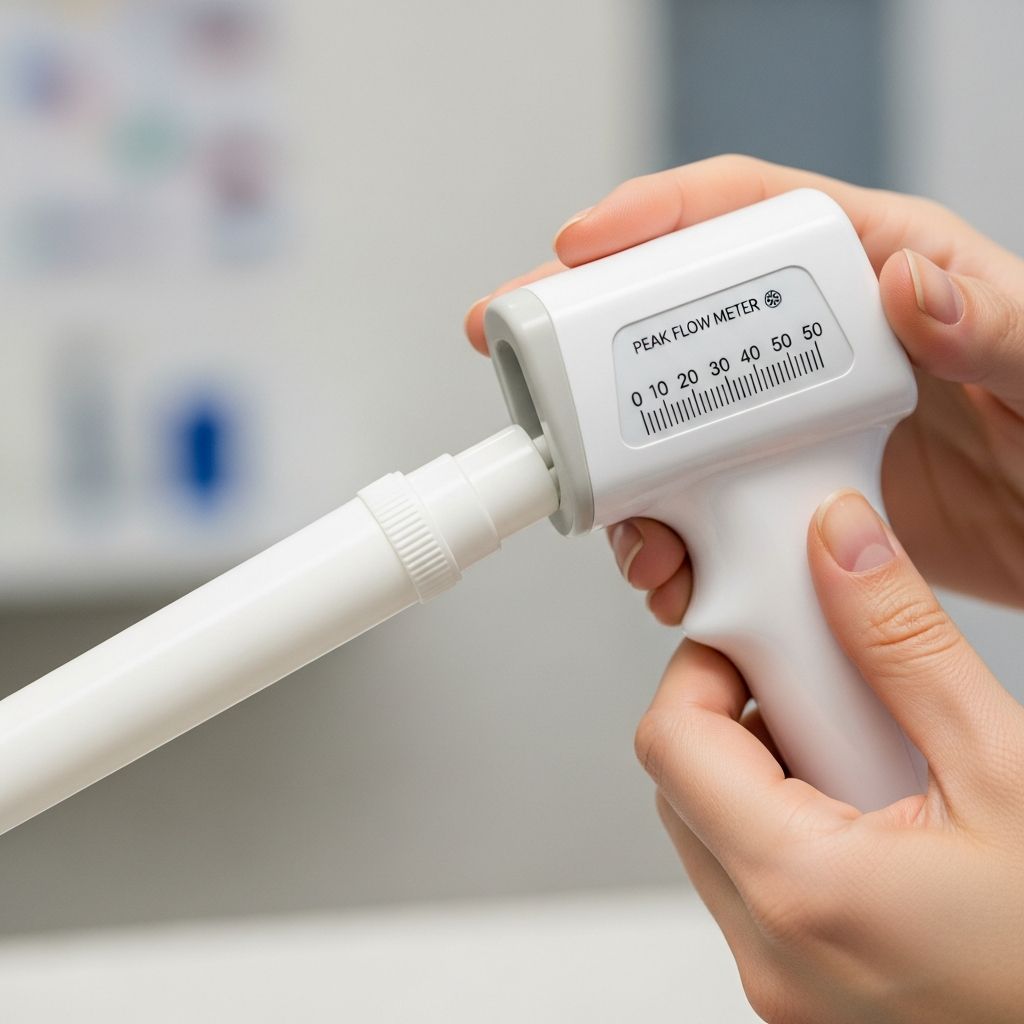
Understanding Peak Flow Meters
A peak flow meter is a small, handheld device that measures how fast you can exhale air from your lungs when you blow out as hard and as fast as possible. This measurement, known as peak expiratory flow, provides an objective assessment of how well your airways are functioning. Peak flow meters are essential tools for managing moderate to severe asthma, allowing patients to track changes in their respiratory function and detect potential asthma exacerbations before symptoms become severe.
The peak expiratory flow rate is an objective measure of airflow obstruction that patients can learn with little difficulty. By understanding your peak flow readings, you gain valuable insight into your lung function and can work more effectively with your healthcare provider to manage your asthma symptoms.
Types of Peak Flow Meters
Peak flow meters come in two main varieties, each with distinct characteristics:
Manual Peak Flow Meters
Manual peak flow meters feature markers on the device that you use to track your peak flow reading. When you exhale forcefully into the meter, the force of the air causes a sliding marker to move along a numbered scale. You then read the number where the marker has stopped, providing your peak flow measurement.
Digital Peak Flow Meters
Digital peak flow meters display your peak flow reading on an electronic screen, eliminating the need to read a numbered scale. These devices often offer additional features such as data storage and easy tracking capabilities, making them convenient for regular monitoring.
Measurement Units and Normal Ranges
Peak flow meters measure airflow in liters per minute (L/min). Your peak flow reading depends on several individual factors including age, height, and sex. Peak flow numbers are typically higher in people who are younger, taller, or male.
Normal peak flow ranges vary significantly by age group:
– Adults: Normal peak flow typically ranges between 400 and 700 L/min- Children: Normal peak flow may range from approximately 150 to 450 L/min
It’s important to remember that peak flow meters come with charts showing average readings, but you don’t need to aim for these numbers—they’re simply averages that don’t account for individual variations.
How To Properly Use Your Peak Flow Meter
Correct technique is essential for obtaining accurate peak flow measurements. A healthcare provider will demonstrate proper usage and ensure you’re using your meter correctly.
Step-by-Step Measurement Instructions
Step 1: Prepare the Device
Before each use, ensure the sliding marker or arrow on your peak flow meter is at the bottom of the numbered scale at zero or the lowest number.
Step 2: Position Yourself
Stand in an upright position and take a deep breath. Place the meter horizontally and put your mouth around the mouthpiece, creating a tight seal with your lips.
Related Stories



Step 3: Exhale Forcefully
Exhale as hard and as fast as you can in one quick blast. The force of the air coming out of your lungs causes the marker to move along the numbered scale. Note the number where the marker stops.
Step 4: Record Your Reading
Write down the number you see. It’s crucial to record the highest reading, not an average, as you cannot breathe out too much when using a peak flow meter, but you can breathe out too little.
Step 5: Repeat Three Times
Repeat the entire routine three times, with the marker reset to zero before each attempt. The numbers from all three tries should be very close together if you’ve performed the routine correctly.
Step 6: Identify Your Daily Peak Flow
The highest of these three readings is your daily peak flow. This is the measurement you’ll record and track over time.
Timing and Frequency of Measurements
Consistency in measurement timing significantly impacts the reliability of your data. Measure your peak flow rate close to the same time each day. One suggested approach is to measure your peak flow rate twice daily: between 7 and 9 a.m. and between 6 and 8 p.m.
Some people measure peak flow both before and after taking medication to assess how effectively their asthma medications are working. Always try to do it the same way each time to ensure consistency and reliable comparisons.
The frequency of measurement depends on your asthma severity. If your asthma is well controlled, you may only need to measure peak flow when you sense your asthma is getting worse. However, more severe asthma may require several measurements daily.
Determining Your Personal Best Peak Flow
Your personal or usual best peak flow is the highest number you can achieve over a two-week period while your asthma is under good control. “Good control” means you feel good and don’t have any symptoms.
To find your personal best peak flow, use your peak flow meter daily or as instructed by your healthcare provider over a period of two weeks when your asthma is well-managed. Record all your readings and identify the highest number achieved during this period.
This personal best number becomes the baseline for all future peak flow interpretations. You’ll compare your other peak flow readings to this number to determine if your asthma is improving or worsening. Regularly using your peak flow meter will help you recognize decreases in your airflow early, which can help guide your asthma treatment.
Understanding Peak Flow Zones: The Traffic Light System
Healthcare providers generally use a “traffic light” system consisting of three zones to determine your peak flow rate and guide treatment decisions. This color-coded system helps you quickly understand whether your asthma is well-controlled, requires monitoring, or demands immediate action.
Calculating Your Zones
To find the number ranges for your zones, multiply your personal best peak flow by specific percentages:
| Zone | Percentage Range | Status |
|---|---|---|
| Green Zone | 80-100% | All Clear |
| Yellow Zone | 50-80% | Caution |
| Red Zone | Below 50% | Medical Alert |
Green Zone: All Clear (80-100% of Personal Best)
A reading in the green zone means your asthma is in good control, and you’re not experiencing noticeable symptoms. You’re feeling fine and breathing normally. Continue taking your asthma medicines as directed by your healthcare provider. No additional action is required beyond your routine medication regimen.
Example: If your personal best peak flow is 400 L/min, your green zone would be 320-400 L/min.
Yellow Zone: Caution (50-80% of Personal Best)
A reading in the yellow zone indicates caution and signals that your asthma may be getting worse. You may have some symptoms, such as mild coughing or wheezing. Your healthcare provider will likely advise you to use your quick-relief (rescue) medication when you’re in this zone.
If you’re in the yellow zone, you must adjust your medicine according to your healthcare provider’s specific instructions. Use the peak flow values and your symptoms together to take action if necessary.
Example: Using the same 400 L/min personal best, your yellow zone would be 200-320 L/min.
Red Zone: Medical Alert (Below 50% of Personal Best)
A reading in the red zone represents a medical emergency requiring immediate action. This indicates a significant drop in your airflow and potential severe airway obstruction. If your peak flow is in the red zone, immediately use your rescue inhaler or other emergency medications as prescribed.
If your peak flow doesn’t improve after using your rescue medication, call a healthcare provider immediately or go to the nearest emergency room.
Example: With a 400 L/min personal best, your red zone would be below 200 L/min.
Recording and Tracking Peak Flow Readings
Maintaining accurate records of your peak flow readings is crucial for effective asthma management. Write down your daily peak flow on a sheet of paper, on your calendar, in your smartphone, or in your asthma diary.
When recording your readings, also note:
– The date and time of measurement- Whether you took asthma medication before or after the reading- Any symptoms you experienced- Environmental factors or triggers that may have affected your reading
Keep a chart of your peak flow rates and discuss the readings with your healthcare provider at regular appointments. These records help your provider observe your numbers over time and determine if your results are changing significantly. A healthcare provider can use this information to create an asthma action plan to help manage your symptoms and adjust your treatment as needed.
Factors Affecting Peak Flow Measurements
Several factors can influence your peak flow readings, and understanding these can help you interpret your results more accurately:
Medication Timing: Taking asthma medication before you use a peak flow meter can result in inaccurate readings. If you want to assess your baseline airflow, measure before taking medication. If you want to measure the effectiveness of your medication, measure after taking it—but consistently use the same timing.
Meter Consistency: Using the same peak flow meter is important to get the most accurate measurements, as different peak flow meter brands may use different measurement scales.
Individual Variations: Your “normal” peak flow may differ significantly from another person’s “normal” peak flow. This is why establishing your personal best is so important—it serves as your individual baseline.
Measurement Technique: Proper technique is essential. If you don’t blow hard enough or fast enough, you’ll get a lower reading that doesn’t reflect your true peak flow.
Benefits of Using a Peak Flow Meter
Regular peak flow monitoring offers numerous advantages for asthma management:
– Early detection of asthma exacerbations before symptoms become severe- Objective data to guide medication adjustments- Better understanding of your asthma patterns and triggers- Improved communication with your healthcare provider- Enhanced ability to manage your asthma at home- Recognition of how well your current treatment plan is working
Safety Considerations and Risks
In general, a peak flow meter is safe and easy to use. However, some potential risks include:
– Inaccurate readings if proper technique isn’t followed- Inaccurate results if asthma medication is taken immediately before measurement- Difficulty knowing if you’re using it correctly without proper instruction- Variability in readings if you’re not consistent with timing and technique
A healthcare provider will demonstrate how to use your meter and ensure you use it properly to minimize these risks.
Frequently Asked Questions
What should I do if my peak flow reading is 250 L/min?
Whether a reading of 250 L/min is good depends on your personal best peak flow. It may be good for some people but not others. Talk to a healthcare provider if you have questions about your specific peak flow meter readings and what they mean for your individual situation.
How often should I use my peak flow meter?
Use your meter at least once a day or as directed by your healthcare provider. The frequency depends on your asthma severity and whether your asthma is well-controlled. Your healthcare provider will give you specific instructions based on your individual needs.
Can my peak flow readings vary from day to day?
Yes, your numbers may vary a little bit. However, if there are any significant drops in your numbers, use your rescue inhaler or any other medications as directed and call a healthcare provider immediately or get emergency care. Variations of up to 20 percent are considered normal.
What’s the difference between peak flow and normal peak flow?
Peak flow is a single measurement taken at any given time. Your “normal” or “personal best” peak flow is the highest reading you achieve over a two-week period when your asthma is well-controlled. Your normal peak flow serves as the reference point for interpreting whether current readings indicate good control or require intervention.
Should I have an asthma action plan?
Yes, if you have an asthma action plan, make sure you understand and can follow it. Your healthcare provider may use your peak flow numbers to create or adjust your asthma action plan to help manage your symptoms more effectively.
Conclusion
A peak flow meter is a valuable tool for managing asthma and recognizing changes in how well you’re breathing. By learning to use it correctly, tracking your readings consistently, and understanding the traffic light zone system, you can take an active role in managing your respiratory health. While it may be challenging to know if you’re using it correctly at first, your healthcare provider can demonstrate proper technique and ensure accuracy. Your peak flow readings provide objective data that, combined with your symptoms, helps guide treatment decisions and ensures you receive appropriate care when your asthma isn’t well-controlled.
References
- Peak Flow Meter: How To Use, Measurement & Results — Cleveland Clinic. 2024. https://my.clevelandclinic.org/health/treatments/peak-flow-meter
- How to Use a Peak Flow Meter to Control Asthma — HealthCentral. 2024. https://www.healthcentral.com/article/your-peak-flow-meter-is-an-important-tool
- Measuring Your Peak Flow Rate — American Lung Association. 2024. https://www.lung.org/lung-health-diseases/lung-disease-lookup/asthma/treatment/devices/peak-flow
- A practical guide for peak expiratory flow monitoring in asthma patients — Cleveland Clinic Journal of Medicine, Vol. 64, No. 4. 1997. https://www.ccjm.org/content/ccjom/64/4/195.full.pdf
- Your Guide To Creating an Asthma Action Plan — Cleveland Clinic. 2024. https://health.clevelandclinic.org/asthma-action-plan
- Asthma: Types, Causes, Symptoms, Diagnosis & Treatment — Cleveland Clinic. 2024. https://my.clevelandclinic.org/health/diseases/6424-asthma
Similar Articles








Read full bio of Sneha Tete