Peanut Allergy: Causes, Symptoms, Diagnosis & Management
Complete guide to understanding peanut allergies, from diagnosis to emergency management and prevention strategies.
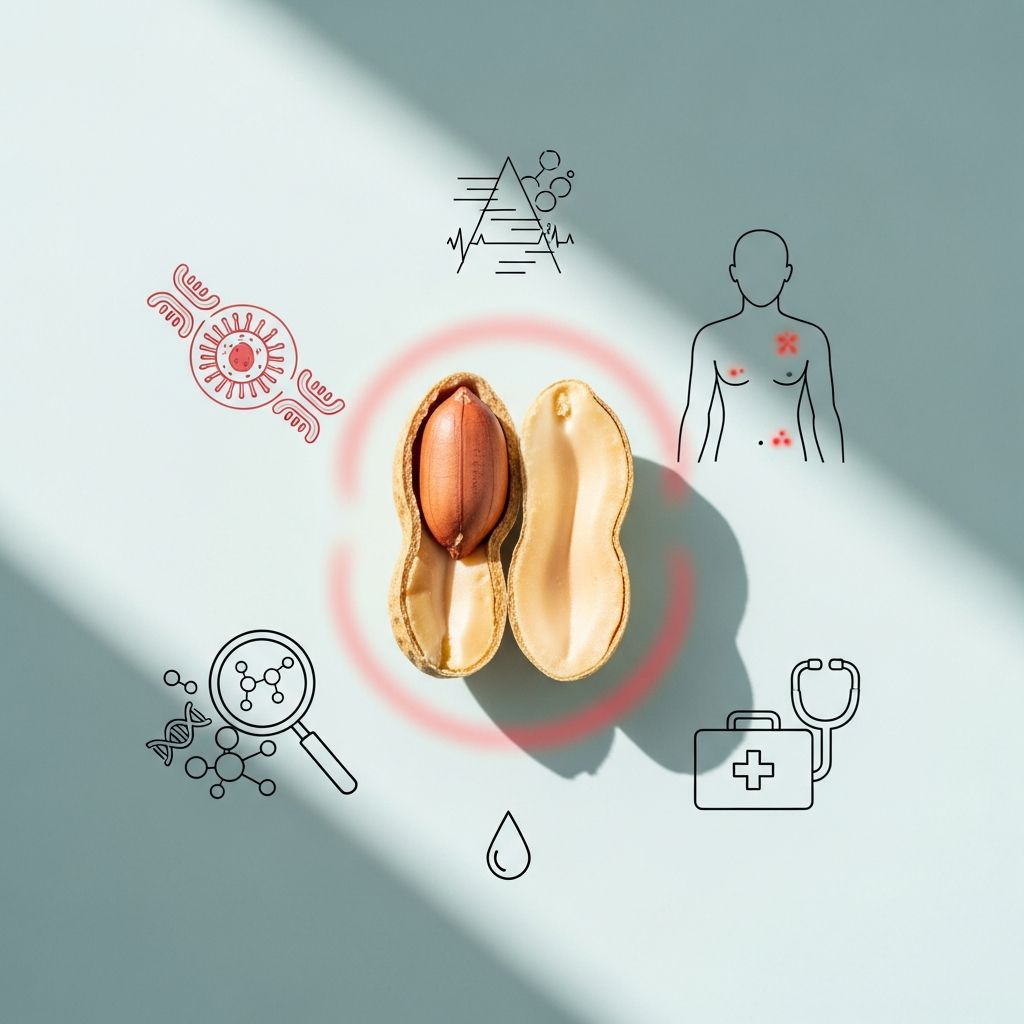
Peanut Allergy: Understanding an Immune Response to Allergens
Peanut allergy is an adverse immune response triggered by exposure to peanut allergens. This condition represents one of the most significant food-related allergies affecting both children and adults worldwide. Peanut allergy is the most common cause of food-related anaphylaxis, a severe and potentially life-threatening allergic reaction that requires immediate medical intervention. Understanding the mechanisms, symptoms, and management strategies for peanut allergy is essential for patients, families, and healthcare professionals.
Introduction to Peanut Allergens
The peanut, scientifically known as Arachis hypogaea, belongs to the legume family and is distinct from tree nuts, despite common misconceptions. Peanuts are not botanically related to tree nuts such as walnuts, almonds, or hazelnuts. However, cross-contamination and confusion between peanuts and tree nuts remain practical concerns for highly sensitive individuals.
Peanuts contain 11 distinct allergens designated as Ara h 1 through Ara h 11. These allergens are seed storage proteins and biological reserves that naturally enable the peanut seed to germinate and develop into a mature plant. The presence of multiple allergens contributes to the varied severity of individual allergic responses and the complexity of developing effective immunotherapies.
Demographics and Prevalence
The prevalence of peanut allergy varies significantly across different populations. In the United Kingdom, peanut allergy affects approximately 0.2–2.5% of children and 0.3–0.5% of adults. The United States has experienced a notable rise in prevalence over recent decades, with peanut allergy increasing from 0.4% of children in 1997 to 1.4% in 2008.
This increasing trend has prompted significant changes in prevention strategies and early introduction protocols. Current recommendations now encourage non-allergic mothers to consume potentially allergenic foods, including peanuts, regularly during pregnancy and to introduce these foods to infants without unnecessary delay, contrary to previous avoidance-based approaches.
Causes and Risk Factors
The exact cause of peanut allergy remains incompletely understood. However, the development of peanut allergy requires exposure to one of the peanut allergens through one of three primary routes:
- Gastrointestinal exposure: Direct ingestion of peanut-containing foods
- Cutaneous exposure: Contact with peanut allergens through the skin
- Respiratory exposure: Inhalation of peanut allergen particles
Several factors influence the likelihood of developing peanut allergy. Children with atopic conditions such as severe eczema, asthma, or existing food allergies demonstrate higher risk for developing peanut allergy. Family history of atopy also increases susceptibility, as between 5% and 9% of siblings of children with peanut allergy will develop the condition themselves.
Clinical Features and Symptoms
Peanut allergy manifests through a spectrum of clinical symptoms ranging from mild cutaneous reactions to life-threatening systemic anaphylaxis. Immediate allergic reactions typically develop within 30 minutes of exposure to a peanut allergen and include:
- Urticaria (hives)
- Angioedema (swelling of deeper skin and mucous membrane layers)
- Anaphylaxis (severe, rapid-onset systemic reaction)
Related Stories



Anaphylaxis represents the most severe manifestation of peanut allergy and constitutes a medical emergency. Clinical features of anaphylaxis include dyspnoea (breathlessness), wheeze resulting from bronchospasm and laryngeal edema, tachycardia (increased heart rate), hypotension (low blood pressure), dizziness, and loss of consciousness. Without prompt recognition and treatment with adrenaline, bronchodilators, and antihistamines, anaphylaxis can be fatal.
Late-phase allergic reactions can develop 2–6 hours after initial allergen exposure and typically peak around 6–9 hours. These reactions result from recruitment of leukocytes and antigen-specific T cells. Symptoms include erythema (redness), edema (swelling), sneezing, itching, and coughing. Late-phase reactions usually resolve completely within 1–2 days without treatment.
Children with asthma face significantly elevated mortality risk from peanut-induced anaphylaxis compared to non-asthmatic children, making careful allergen avoidance and emergency preparedness particularly critical for this population.
Complications and Risk Factors
The most serious complication of peanut allergy is anaphylaxis-related mortality. Risk stratification helps identify patients requiring more intensive monitoring and preparedness. Factors that increase anaphylaxis severity include:
- Concurrent asthma diagnosis
- History of previous severe reactions
- Delayed adrenaline administration
- Adolescent or young adult age
- Unrecognized allergen exposure
Psychological and social complications also affect patients with peanut allergy, including anxiety about accidental exposure, social isolation during meals, and restrictions on food choices and dining locations.
Diagnosis of Peanut Allergy
Clinical diagnosis forms the foundation of peanut allergy identification and is based on the rapid development of characteristic allergic symptoms and signs following peanut consumption. However, confirmatory testing is essential to establish a definitive diagnosis.
Skin Prick Testing
Skin prick testing involves placing a drop of peanut allergen extract on the skin, then pricking the skin to assess for a weal (raised bump) within 15 minutes. According to the British Society of Allergy and Clinical Immunology (BSACI), a weal measuring ≥8 mm in diameter is highly predictive of peanut allergy. Skin prick testing must be performed exclusively in specialist centres equipped with emergency equipment in case of anaphylaxis.
Serum Specific IgE Testing
Serum specific IgE tests identify sensitization to peanut allergens by measuring immunoglobulin E antibodies against peanut proteins in blood samples. These tests carry no risk of anaphylaxis and can be performed in various clinical settings. Results are categorized by concentration levels, with values above 0.35 kU/L generally indicating sensitization.
Differential Diagnosis Considerations
Important differential diagnoses to consider include other food allergies, oral allergy syndrome, non-IgE-mediated food allergies, food intolerances, and reactions to food additives or contaminants. Detailed clinical history and selective testing help distinguish peanut allergy from these conditions.
Comprehensive Management Plan
Confirmed peanut allergy necessitates a comprehensive management plan that should be documented, shared with the patient’s family, school, workplace, and healthcare providers. This plan should include emergency protocols for anaphylaxis management.
Complete Allergen Avoidance
The cornerstone of peanut allergy management is strict and complete avoidance of peanuts and peanut-containing products, including:
- Peanuts and peanut butter
- Peanut flour and peanut oil (arachis oil)
- All processed foods potentially containing peanut derivatives
- Foods manufactured in facilities processing peanuts
Patients must carefully read ingredient lists and allergen warnings on all manufactured foods. In New Zealand, the United States, and many other countries, the possibility of peanut contamination must be declared on food packaging. When eating away from home, patients face increased risk of unintended contamination, requiring thorough inquiry about food preparation methods and ingredients.
Current recommendations suggest that highly peanut-sensitive individuals should also avoid tree nuts due to contamination and confusion risks, even if they are not sensitized to specific tree nuts.
Emergency Medication Management
Patients with confirmed peanut allergy should carry antihistamines at all times and take them immediately when allergic reactions occur. Patients and their carers require regular training in the proper use of adrenaline auto-injectors or adrenaline in prepared syringes. If an adrenaline auto-injector is used, immediate medical attention must be sought, even if symptoms appear to resolve, to manage potential biphasic reactions and ensure appropriate monitoring.
Early Introduction and Prevention Strategies
Current prevention recommendations represent a significant shift from previous avoidance-based approaches. For infants without eczema or food allergies, peanut products should be introduced when developmentally ready, typically between 4–6 months of age, following cultural and family preferences without delay.
For infants with eczema, early introduction between 4–6 months is strongly recommended, particularly when specific IgE testing is negative. Dosing for early introduction typically involves 2 grams of peanut protein (approximately 2 teaspoons of peanut butter thinned) administered 3 times weekly. For high-risk infants with severe eczema or existing egg allergy, serum specific IgE testing or skin prick testing should be performed before introducing peanuts.
Advanced Treatment Approaches
Peanut immunotherapy represents an emerging treatment approach showing promising results. Clinical trials of oral, sublingual, and epicutaneous peanut immunotherapy have demonstrated potential for desensitization and sustained unresponsiveness. However, these approaches are not yet routinely offered as standard treatment for peanut allergy.
Humanised anti-IgE monoclonal antibody therapy using omalizumab has demonstrated effectiveness in accelerating desensitization during peanut immunotherapy protocols. This targeted approach reduces baseline reactivity and may facilitate safer immunotherapy administration in highly sensitized patients.
Special Considerations for High-Risk Individuals
Infants and children at elevated risk for severe allergic reactions—including those with asthma, eczema, or other existing food allergies—warrant more intensive evaluation and management. Families with parental anxiety regarding peanut introduction should receive counseling and testing to make informed decisions about introduction timing and methods.
Reintroduction of peanuts following a period of avoidance should only be attempted when no reaction to peanut and nut products has occurred for 3–5 years, and exclusively under strictly supervised conditions at specialized allergy centres.
Outcomes and Prognosis
The long-term outlook for individuals with peanut allergy varies considerably. While some individuals experience spontaneous resolution during childhood or adolescence, many maintain persistent peanut allergy into adulthood. Regular monitoring, appropriate emergency preparedness, and adherence to avoidance strategies significantly improve safety outcomes and quality of life.
Access to emergency treatment, family and caregiver education, and psychological support contribute substantially to successful long-term management and reduction of adverse outcomes.
Frequently Asked Questions
Q: Are peanuts the same as tree nuts?
A: No. Peanuts belong to the legume family, while tree nuts (almonds, walnuts, hazelnuts) are botanically distinct. However, cross-contamination and confusion present practical risks for highly sensitive individuals, and many recommendations suggest avoiding tree nuts to minimize risk.
Q: Can peanut allergy be outgrown?
A: While some children naturally outgrow peanut allergy, many maintain the allergy into adulthood. Spontaneous resolution rates vary, and reintroduction should only be attempted under supervised medical conditions after several years of symptom-free avoidance.
Q: What should I do if someone has an anaphylactic reaction?
A: Administer adrenaline immediately using an auto-injector or prepared syringe, call emergency services, and position the person lying down with legs elevated. Seek immediate medical attention even if symptoms appear to improve, as biphasic reactions can occur.
Q: Should I avoid peanuts during pregnancy if I have a family history of allergies?
A: The current recommendation from UK guidelines suggests that atopic women (those with hay fever, asthma, or eczema) or women carrying a fetus with family history of atopy in the biological father or siblings should avoid peanuts. Non-atopic women can safely consume peanuts during pregnancy without increasing allergy risk in offspring.
Q: How is peanut allergy diagnosed?
A: Diagnosis combines clinical history with confirmatory testing. Skin prick testing (performed in specialist centres) or serum-specific IgE blood tests identify sensitization. A weal ≥8 mm on skin prick testing is highly predictive of peanut allergy.
Q: Is early introduction of peanuts safe for infants?
A: Yes, early introduction between 4–6 months of age actually reduces the risk of developing peanut allergy. Even infants with mild-to-moderate eczema can have peanuts introduced at 4–6 months if specific IgE testing is negative. This represents a shift from previous avoidance recommendations.
Q: What are the 11 peanut allergens?
A: Peanuts contain 11 distinct allergens designated Ara h 1 through Ara h 11. These are seed storage proteins that vary in their allergenic properties, which explains why individual reactions to peanuts can differ substantially.
Conclusion
Peanut allergy represents a significant global health concern requiring comprehensive understanding, careful diagnosis, and meticulous management. The transition from allergen avoidance to controlled early introduction has fundamentally changed prevention approaches, particularly in high-risk populations. Patients with confirmed peanut allergy require individualized management plans incorporating strict allergen avoidance, emergency medication access, and regular medical follow-up. Emerging immunotherapy approaches offer potential for future treatment options, while ongoing research continues to refine our understanding of peanut allergy mechanisms and optimal prevention and treatment strategies.
References
- Peanut allergy – DermNet — DermNet New Zealand. Accessed 2026. https://dermnetnz.org/topics/peanut-allergy
- Peanut Allergy — Medsafe New Zealand. Accessed 2026. https://www.medsafe.govt.nz/profs/PUarticles/peanut.htm
- Food Allergy Prevention in 2024: Best Practices, Tools, and Tips — National Association of Pediatric Nurse Practitioners. 2024. https://ce.napnap.org/sites/default/files/course/2024-06/Handout_2024%20FARE%20Webinar%20on%20Food%20Allergy%20Prevention_V9.1_FINAL.pdf
- Food Allergy — DermNet New Zealand. Accessed 2026. https://dermnetnz.org/topics/food-allergy
- Eating Safely when you have Food Allergies — Ministry for Primary Industries New Zealand. Accessed 2026. https://www.mpi.govt.nz/dmsdocument/10205-Eating-Safely-when-you-have-Food-Allergies
- Food Allergy Guidelines — Starship Hospital. Accessed 2026. https://www.starship.org.nz/guidelines/food-allergy/
- Allergen labelling for food businesses — Food Standards Australia New Zealand. Accessed 2026. https://www.foodstandards.gov.au/business/labelling/allergen-labelling
Similar Articles








Read full bio of medha deb