Pearly Penile Papules Images: 5 Photos And Diagnosis Tips
Detailed images and comprehensive guide to identifying, understanding, and managing pearly penile papules on the penis.
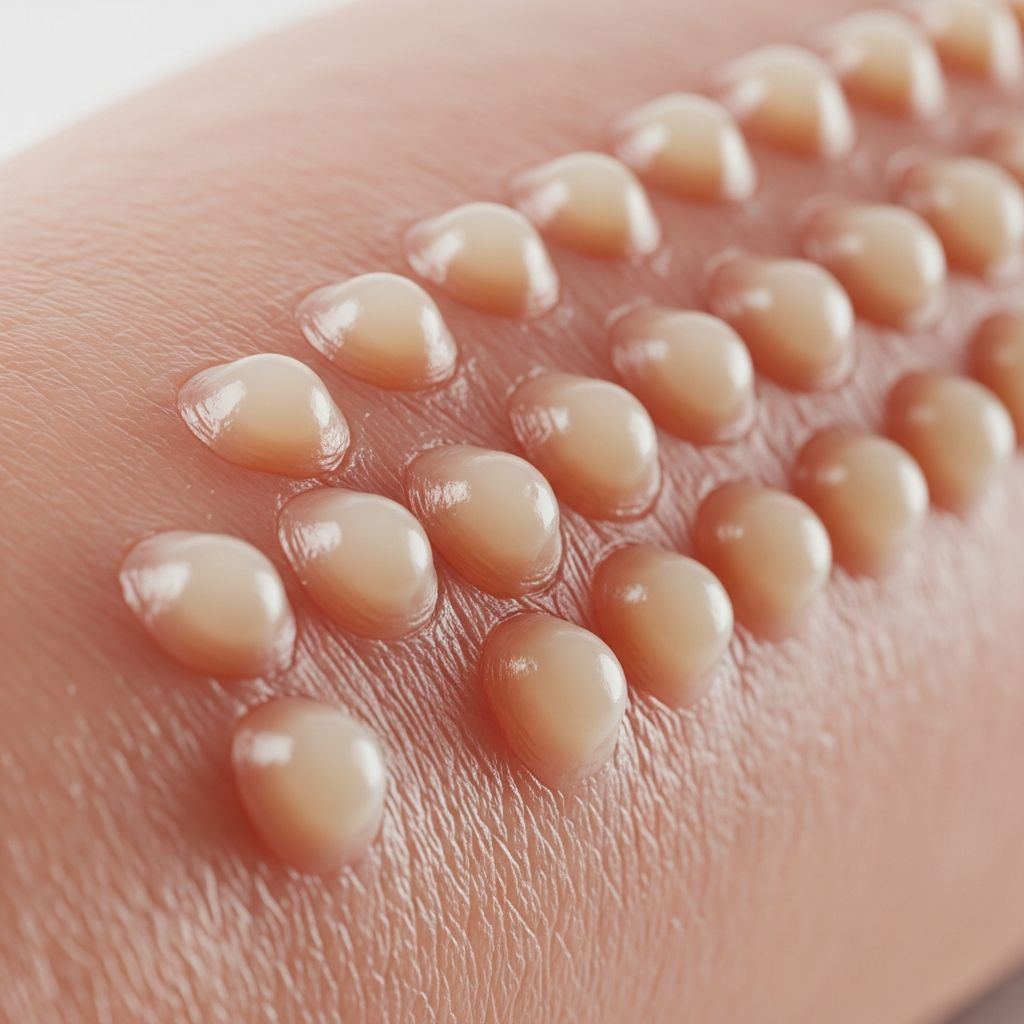
Pearly penile papules (PPP), also known as hirsutoid papillomas or acral angiofibromas, are small, dome-shaped, whitish or skin-colored projections that form around the corona of the glans penis. These benign lesions are a normal anatomical variant observed in up to 48% of males, particularly uncircumcised men, and are most prevalent during adolescence and early adulthood. Unlike sexually transmitted infections, PPP are harmless, non-contagious, and do not require treatment unless for cosmetic reasons. This article provides detailed clinical images, descriptions, and expert guidance to help differentiate PPP from concerning conditions.
What are pearly penile papules?
Pearly penile papules present as multiple rows of tiny (1-4 mm), smooth, rounded papules encircling the coronal sulcus and margin of the glans penis. They have a pearly, translucent appearance under direct light, often resembling pearls strung in a necklace-like pattern. Histologically, PPP are angiofibromas composed of fibrous tissue, blood vessels, and connective tissue, without viral or malignant components.
Prevalence studies indicate PPP in 14-48% of men, with higher rates in uncircumcised individuals (up to 25% overall). They typically emerge post-puberty due to possible hormonal influences but may spontaneously regress with age in some cases. PPP cause no symptoms—no pain, itching, discharge, or functional impairment—distinguishing them from inflammatory or infectious genital lesions.
Clinical images of pearly penile papules
The following descriptions represent high-resolution clinical photographs of PPP at various stages and presentations, sourced from dermatological archives. These images illustrate typical morphologies for educational purposes.
Classic presentation
Image shows multiple uniform, 1-2 mm whitish papules in 2-4 regular rows around the glans corona on an uncircumcised penis. Papules are asymptomatic and symmetrical.
Close-up view
Magnified dermoscopic image reveals pearly sheen, central vascular puncta, and fibrous cores without scaling or irregularity, confirming benign angiofibroma.
Sparse distribution
Scattered papules in a single row, less confluent, on circumcised glans; common in lighter skin types.
Dense beading
Numerous tightly packed papules forming a prominent ‘cobblestone’ ridge; observed in 10-20% of cases.
Hyperpigmented variant
Brownish papules in darker skin phototypes, still dome-shaped and regular.
Differential diagnosis
PPP must be distinguished from potentially harmful conditions. Key differentials include:
- Genital warts (HPV): Cauliflower-like, irregular, friable; caused by human papillomavirus, sexually transmitted. Unlike PPP, they may itch or bleed.
- Molluscum contagiosum: Umbilicated pearly papules with central core; viral, contagious via contact.
- Lichen nitidus: Minute, flat-topped papules; often pruritic, scattered beyond corona.
- Fordyce spots: Ectopic sebaceous glands on shaft; yellowish, not on corona.
- Penile balanitis xerotica obliterans: White plaques with scarring; pre-malignant potential.
| Feature | Pearly Penile Papples | Genital Warts | Molluscum |
|---|---|---|---|
| Appearance | Dome-shaped, uniform rows | Irregular, verrucous | Umbilicated |
| Location | Corona only | Any genital area | Genitals, trunk |
| Cause | Benign variant | HPV virus | Poxvirus |
| Symptoms | None | May itch/bleed | May inflame |
| Treatment needed? | Cosmetic only | Yes | Yes |
Related Stories



Dermoscopy or biopsy confirms diagnosis if needed; HPV testing differentiates viral warts.
Causes and risk factors
The exact etiology is unknown, but PPP likely represent ectopic sebaceous or apocrine glands blocked during puberty. Risk factors include:
- Uncircumcised status (higher prevalence)
- Family history (genetic predisposition)
- Age 16-30 years
- Possibly hormonal surges
PPP are not linked to hygiene, sexual activity, or STIs.
Management and treatment
Treatment is unnecessary for asymptomatic PPP, as they are benign and may regress. Reassurance suffices for 50% of concerned patients. For cosmetic removal:
- CO2 laser ablation: Vaporizes papules precisely; minimal scarring, 1-2 sessions
- Electrocautery/electrosurgery: Burns off lesions; quick, low downtime
- Cryotherapy: Freezes with liquid nitrogen; effective but higher pigmentation risk
- Pulsed dye laser: Targets vessels; good for vascular papules
- Excision/curettage: Surgical scraping; reserved for few lesions
Procedures use local anesthesia; healing in 7-10 days with mild redness. Avoid home remedies like castor oil, toothpaste, or acids—they cause irritation/scarring. Consult a dermatologist or urologist.
Patient information leaflet
Pearly penile papules (PPP) are common, harmless small bumps around the head of the penis. They look like pearls in rows and affect many men (up to 1 in 2). PPP are not warts, cancer, or an infection—they cannot be caught from partners.
Usually, no treatment is needed. If bothersome, a doctor can remove them safely with laser or heat. Do not use wart creams or home tricks, as they harm sensitive skin.
See a doctor if bumps change, bleed, or you have other symptoms.
Frequently Asked Questions (FAQs)
Q: Are pearly penile papules normal?
A: Yes, PPP are a normal variant in 14-48% of men, like freckles or moles.
Q: Do pearly penile papules go away?
A: They may fade with age but often persist lifelong; removal is optional.
Q: Can I remove pearly penile papules at home?
A: No—home remedies risk burns/scars. Seek professional laser/electrocautery.
Q: Are pearly penile papules an STD?
A: No, not contagious or viral; unlike HPV warts.
Q: Does circumcision remove pearly penile papules?
A: No, PPP can occur on circumcised penises; circumcision doesn’t prevent or treat them.
Q: Is treatment painful?
A: Minimal with numbing cream; quick recovery.
References
- Pearly Penile Papples Treatment – Boston Dermatologist — Dermatology Institute of Boston. 2023. https://www.dermboston.com/dermatology-services-boston/medical-treatments/skin-conditions/pearly-penile-papules/
- Pearly Penile Papples: Causes, Symptoms & Treatment — Cleveland Clinic. 2023-05-15. https://my.clevelandclinic.org/health/diseases/23936-pearly-penile-papules
- Pearly Penile Papples — Newnan Dermatology. 2024. https://www.newnanderm.com/pearly-penile-papules
- Pearly Penile Papples vs. HPV: Symptoms & Treatment — Everlywell. 2023. https://www.everlywell.com/blog/hpv/pearly-penile-papples-vs-hpv/
- What You Need to Know About Penile Papples — WebMD. 2024-01-10. https://www.webmd.com/skin-problems-and-treatments/what-you-need-to-know-about-penile-papples
- Pearly Penile Papple — StatPearls, NCBI Bookshelf. 2023-07-17. https://www.ncbi.nlm.nih.gov/books/NBK442028/
- Home Treatment for PPP — Clarewell Clinics. 2023. https://clarewellclinics.co.uk/genital-dermatology/pearly-penile-papples/home-treatment-for-ppp/
Similar Articles








Read full bio of medha deb