Pearly Penile Papules: What You Need To Know
Benign skin-coloured bumps on the glans penis: causes, diagnosis, and treatment options explained.
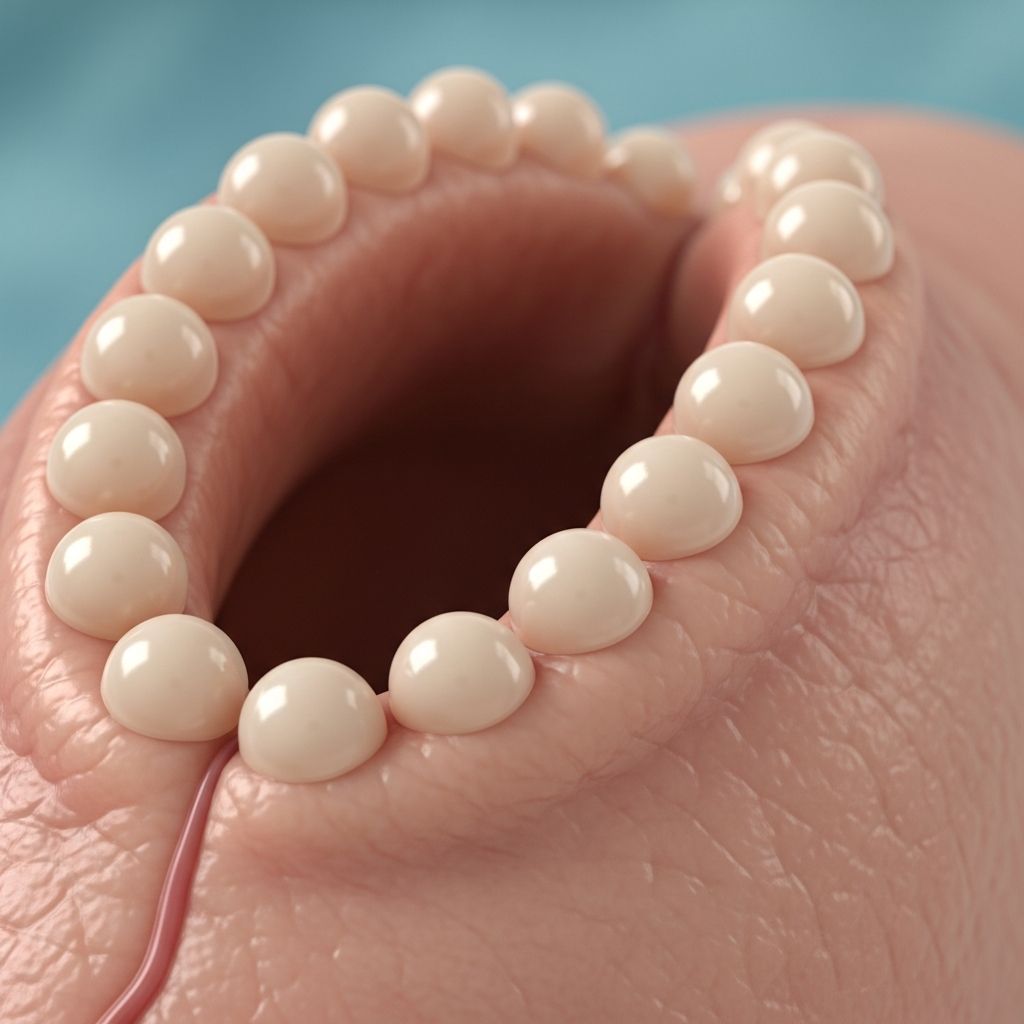
Pearly penile papules are small dome-shaped to thread-like
skin-coloured bumps
that are typically located on the sulcus or corona of the glans penis. The papules are commonly arranged all the way around the head of the penis in one or several rows.What are pearly penile papules?
Pearly penile papules (PPP), also known as
hirsutoid papillomas
orgenital angiofibromas
, represent a common variant of normal genital anatomy. These are benign, asymptomatic lesions affecting the penile skin, particularly uncircumcised males. They manifest as multiple rows of tiny, smooth, dome-shaped or filiform papules encircling the corona (the ridge separating the glans from the penile shaft) or sulcus (the groove behind the corona).Prevalence studies indicate PPP occur in 8-43% of men, with higher rates in uncircumcised individuals and during adolescence or early adulthood post-puberty. The papules measure 1-4 mm in size, exhibit a pearly, white, flesh-coloured, or yellowish sheen, and lack symptoms such as pain, itching, or discharge.
Despite their alarming appearance, PPP are entirely harmless, non-infectious, and not associated with malignancy or sexual activity. They often cause significant psychological distress due to fears of sexually transmitted infections (STIs).
Who gets pearly penile papules?
PPP predominantly affect
young adult males
, emerging shortly after puberty. Epidemiological data reveal:- Prevalence: 8-48% across populations, up to 25-33% in some studies.
- Age: Most common in teens to 30s; may regress spontaneously with age.
- Circumcision status: Significantly more frequent in uncircumcised men (due to protected coronal skin); rare post-circumcision.
- Ethnicity: No strong racial predilection, though some reports note higher rates in certain groups.
- Genetics: Familial clustering suggests hereditary factors; possibly linked to hormonal changes during puberty.
Women do not develop PPP, as the condition is specific to penile anatomy.
What causes pearly penile papules?
The precise aetiology remains unknown, but PPP are considered a
normal anatomical variant
rather than a pathology. Key hypotheses include:- Embryological remnant: Leftover structures from fetal development of penile glands (e.g., Tyson glands).
- Angiofibroma-like: Composed of dilated vessels, fibroblasts, and fibrosis, akin to ectopic sebaceous glands.
- Hormonal influence: Onset post-puberty suggests androgen-driven skin changes.
- Mechanical factors: Chronic friction or protection in uncircumcised foreskin may promote persistence.
Importantly, PPP are not caused by infections, poor hygiene, STIs, or trauma. No viral DNA (e.g., HPV) is detected.
What are the clinical features of pearly penile papules?
PPP present with characteristic morphology:
- Appearance: 1-4 mm smooth, dome-shaped, filiform, or thread-like papules; white, skin-coloured, pinkish, or translucent with pearly sheen.
- Location: Uniform rows (1-5) around corona/sulcus; rarely on shaft.
- Symptoms: Asymptomatic; no pain, itch, bleeding, or discharge.
- Progression: Stable or regress spontaneously over decades.
Clinical images typically show regular beaded rows, distinguishing from irregular warts.
Diagnosis
Diagnosis is
clinical
, based on hallmark appearance; no tests needed in typical cases.- Dermoscopy: Reveals dilated vessels and star-shaped fibroblasts.
- Biopsy (rare): Confirms angiofibroma: acanthotic epidermis, papillary dermal angiogenesis, stellate fibroblasts, concentric fibrosis.
Differential diagnosis
PPP mimic several conditions; key differentiators:
Related Stories



| Condition | Key Features | Differentiation from PPP |
|---|---|---|
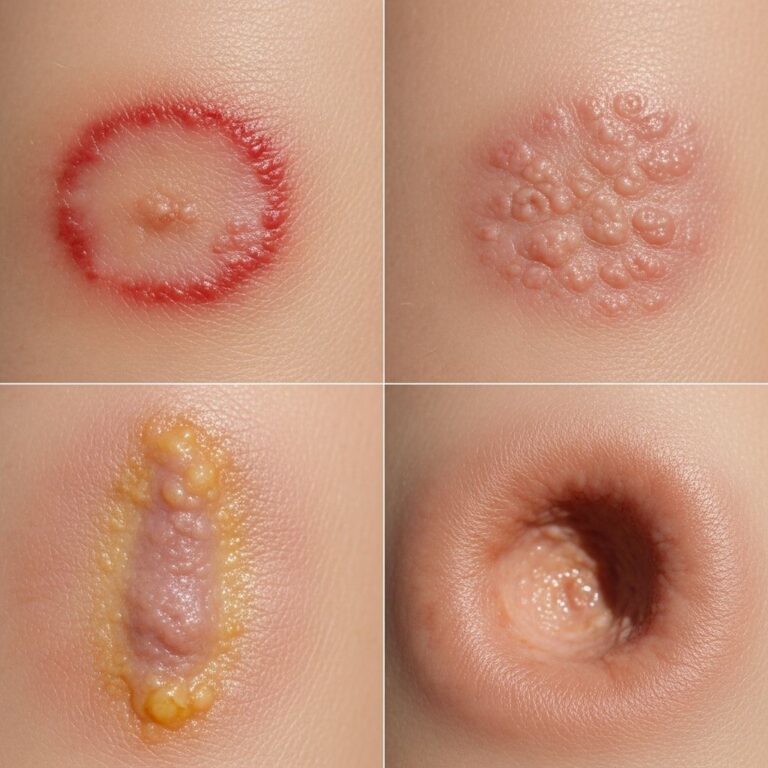
| Genital warts (HPV) | Irregular, sessile/pedunculated, friable; may itch/bleed | Verrucous surface, HPV+; irregular distribution |
| Molluscum contagiosum | Umbilicated pearly papules; contagious | Central dell, viral inclusions |
| Fordyce spots | Yellow-white ectopic sebaceous glands on shaft | Larger, scattered, no corona rows |
| Lichen nitidus | Tiny flat-topped papules; may itch | Shiny, polygonal; truncal involvement |
| Sebaceous hyperplasia | Yellow umbilicated papules | Central punctum; shaft location |
Biopsy or HPV testing resolves doubts.
What is the treatment for pearly penile papules?
Treatment is
cosmetic only
; reassurance suffices for most. Options for distressed patients:- Laser ablation: CO2 or Er:YAG laser; precise, minimal scarring (1-2 sessions).
- Electrocautery/desiccation: Effective but risks pigmentation/scarring.
- Cryotherapy: Liquid nitrogen; multiple freezes needed.
- Excision/shave: Surgical; reserved for few lesions.
- Topicals: Ineffective (e.g., retinoids, podophyllin).
Post-treatment: Erythema, crusting resolve in 1-2 weeks; sun protection advised.
Prevention
PPP cannot be prevented, as they are anatomical. Circumcision may reduce incidence by exposing corona to friction.
Outlook
Excellent; benign, non-progressive. Many regress with age. Psychological reassurance key.
Frequently Asked Questions
Are pearly penile papules an STD?
No, PPP are not sexually transmitted; no infectious agent involved.
Do pearly penile papules go away?
They may fade spontaneously over time, especially after age 40.
Can women have pearly penile papules?
No, exclusive to penile skin.
Is treatment painful?
Local anesthesia used; mild discomfort post-procedure.
Can I remove PPP at home?
No; self-treatment risks scarring/infection. Seek dermatologist.
References
- Pearly Penile Papules: White Spots on Penis — Healthline. 2017-05-10. https://www.healthline.com/health/pearly-penile-papules
- Pearly Penile Papules Treatment — DermBoston. Accessed 2026. https://www.dermboston.com/dermatology-services-boston/medical-treatments/skin-conditions/pearly-penile-papules/
- Pearly penile papules: what it is, symptoms and treatment — TopDoctors. Accessed 2026. https://www.topdoctors.co.uk/medical-dictionary/pearly-penile-papules/
- Pearly penile papules — DermNet NZ. 2008. https://dermnetnz.org/topics/pearly-penile-papules
- Pearly Penile Papules: Causes, Symptoms & Treatment — Cleveland Clinic. Accessed 2026. https://my.clevelandclinic.org/health/diseases/23936-pearly-penile-papules
- Pearly Penile Papule — StatPearls, NCBI Bookshelf. Accessed 2026. https://www.ncbi.nlm.nih.gov/books/NBK442028/
Similar Articles








Read full bio of medha deb