Pellagra: Complete Guide To Causes, Symptoms, And Treatment
Vitamin B3 deficiency causing the classic 4 D's: dermatitis, diarrhoea, dementia, and death if untreated.
Pellagra is a systemic disease caused by vitamin B3 (niacin) deficiency. It is characterised by the 4 D’s — dermatitis, diarrhoea, dementia and, if untreated, death. The name ‘pellagra’ derives from the Italian ‘pelle agra’, meaning sour or rough skin. This condition primarily affects populations with poor diets, such as those reliant on maize without proper processing, and remains relevant in developing regions or malnourished individuals.
Introduction
Pellagra was first described in the early 18th century by Spanish physician Gaspar Casal among peasants consuming primarily maize-based diets. It became epidemic in the southern United States in the early 20th century until recognised as a niacin deficiency. Today, it is rare in industrialised nations but persists in areas with poverty, alcoholism, or malabsorption disorders. The disease manifests seasonally, with skin symptoms worsening in spring and summer due to photosensitivity.
Demographics
Pellagra predominantly affects adults in low-income regions of Africa, Asia, and Latin America where staple diets lack niacin or its precursor tryptophan. Women are more commonly impacted due to lower dietary intake and higher requirements during pregnancy or lactation. In developed countries, it occurs secondary to chronic alcoholism, eating disorders, HIV/AIDS, carcinoid syndrome, or Hartnup disease. Children and the elderly are vulnerable in famine or institutional settings. Globally, the World Health Organization notes it as a public health concern in maize-dependent populations.
Causes
Pellagra results from inadequate niacin intake or impaired conversion from tryptophan. Niacin exists as nicotinic acid or nicotinamide and is essential for NAD and NADP coenzymes in cellular metabolism.
Primary pellagra
Arises from diets deficient in niacin and tryptophan, typically:
- Maize-based diets (corn lacks bioavailable niacin; untreated nixtamalisation destroys tryptophan).
- Predominantly millet or polished rice.
- Famine, poverty, or unbalanced vegetarian diets.
Maize’s niacytin binds niacin, reducing absorption by up to 90% without alkali processing.
Secondary pellagra
Due to conditions impairing niacin absorption, utilisation, or increasing demand:
- Gastrointestinal disorders: Crohn’s disease, coeliac disease, chronic diarrhoea, post-gastrectomy.
- Inborn errors: Hartnup disease (impaired tryptophan absorption), carcinoid syndrome (tryptophan diversion to serotonin).
- Medications: Isoniazid, 6-mercaptopurine, phenytoin (interfere with niacin metabolism).
- Other: Alcoholism (poor diet, impaired absorption), chronic kidney disease, diabetes, HIV.
Tryptophan provides ~60 mg niacin equivalents per gram; 60 mg tryptophan = 1 mg niacin.
Clinical features
Symptoms progress from mild to severe, often starting with skin changes. Not all 4 D’s appear simultaneously.
Dermatitis
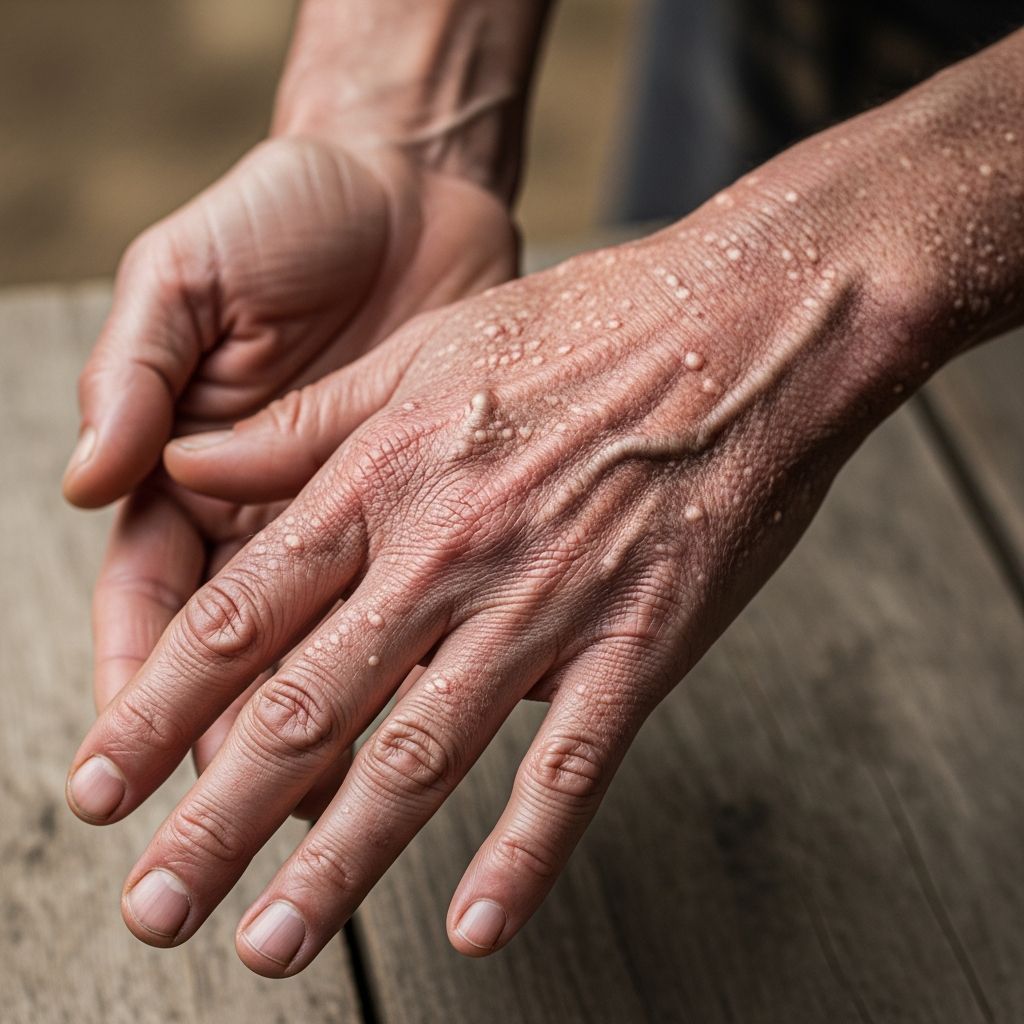
The hallmark is a photosensitive eruption on sun-exposed areas, resembling severe sunburn. Initial erythema evolves to hyperpigmented, scaly plaques. Key sites include:
- Casal’s necklace: Symmetric erythematous or hyperpigmented band around the neck.
- Pellagrous glove/sandal: Dorsal hands (sparing creases), feet.
- Malar rash: Butterfly distribution on face.
- Perineal/periorificial: Scrotum, vulva, elbows, knees.
Lesions are pruritic, burning, and may blister (‘wet pellagra’). In darker skin, erythema is subtle; hyperpigmentation predominates. Resolution leaves atrophy or hyperpigmentation. Histology shows parakeratosis, acanthosis, spongiosis, and dermal inflammation.
Related Stories



Diarrhoea
Watery, non-bloody diarrhoea with abdominal pain, nausea, anorexia. Tongue is beefy red, smooth (glossitis), with angular cheilitis. Oesophagus and intestines show inflammation, ulceration. Symptoms stem from impaired epithelial turnover.
Dementia
Early: irritability, depression, anxiety, insomnia, tremors. Advanced: confusion, hallucinations, delusions, rigidity, stupor. Neuropathology includes neuronal chromatolysis and gliosis. Psychiatric symptoms may precede skin changes in 10-20% cases.
Other features
- Mucosal: Stomatitis, cheilosis.
- Gastrointestinal: Dysphagia, achlorhydria.
- Neurological: Peripheral neuropathy, spastic paresis.
Complications
Untreated pellagra leads to cachexia, sepsis from skin infections, and death within 4-5 years, often from diarrhoea or dementia-related complications. Survivors may have residual neuropathy or pigmentation. Secondary infections exacerbate morbidity.
Diagnosis
Primarily clinical, based on history, diet, and 4 D’s in endemic areas. No single confirmatory test exists.
- Urinary metabolites: Low N-methylnicotinamide (N-MN) or 2-pyridone/N-MN ratio <2 (gold standard, but insensitive early).
- Blood tests: Low serum niacin; normal in Hartnup. Check albumin, B vitamins for polydeficiency.
- Therapeutic trial: Rapid improvement with niacin confirms diagnosis (skin clears in 1-2 weeks).
- Histology: Non-specific; excludes other dermatoses.
Differential diagnoses
| Condition | Key Distinguishing Features |
|---|---|
| Photodermatoses (e.g., polymorphous light eruption) | Lacks systemic symptoms; no niacin response. |
| Zinc deficiency (acrodermatitis enteropathica) | Periorificial/acral dermatitis; low serum zinc. |
| Necrolytic migratory erythema | Associated with glucagonoma; migratory lesions. |
| Kwashiorkor | Edema, hepatomegaly; protein deficiency. |
| Hartnup disease | Urinary aminoaciduria; cerebellar ataxia. |
| Drug eruptions | Temporal link to medication. |
Treatment
Prompt niacin replacement is curative in early stages. WHO guidelines:
- Nicotinamide: 300-500 mg/day orally in divided doses for 3-4 weeks (avoids niacin flush).
- Severe cases: IV nicotinamide 100 mg 2-3x/day initially.
- Adjuncts: Thiamine 100 mg, riboflavin 10 mg, pyridoxine 50 mg, folic acid 5 mg daily; high-protein diet (eggs, meat, dairy); multivitamins.
- Skin care: Emollients, sunscreens, topical steroids if infected.
Response: Diarrhoea/mucositis improves in days; skin in 1-2 weeks; mental status slower. Chronic cases may need prolonged therapy.
Outcome
With treatment, prognosis is excellent; symptoms resolve fully if addressed early. Mortality approaches 100% untreated. Hartnup requires lifelong niacin and low-tryptophan diet. Prevention: Niacin fortification, diverse diets, alkali maize processing.
Frequently Asked Questions
What is pellagra?
A disease from niacin (vitamin B3) deficiency featuring dermatitis, diarrhoea, dementia, and death.
Who is at risk for pellagra?
Those on maize-heavy diets, alcoholics, malabsorption patients, or with Hartnup/carcinoid.
How is pellagra diagnosed?
Clinically via 4 D’s, urinary niacin metabolites, and therapeutic response to supplements.
Can pellagra be cured?
Yes, with nicotinamide 300 mg/day for 3-4 weeks; early treatment leads to full recovery.
How to prevent pellagra?
Balanced diet rich in niacin/tryptophan; maize nixtamalisation; supplements in at-risk groups.
References
- Pellagra (vitamin B3 or niacin deficiency) — DermNet NZ. 2023. https://dermnetnz.org/topics/pellagra
- Pellagra: Pictures, Symptoms, Causes, and Treatment — Healthline. 2023-10-12. https://www.healthline.com/health/pellagra
- Pellagra: Definition, Symptoms & Treatment — Cleveland Clinic. 2023-05-18. https://my.clevelandclinic.org/health/diseases/23905-pellagra
- Niacin Deficiency — StatPearls, NCBI Bookshelf. 2023-07-17. https://www.ncbi.nlm.nih.gov/books/NBK557728/
- PELLAGRA — WHO/CDC. Undated (archival). https://www.cdc.gov/immigrant-refugee-health/media/pdfs/Pellagra-WHO.pdf
- Vitamin B3 deficiency — BMJ Best Practice. 2024. https://bestpractice.bmj.com/topics/en-us/634
Similar Articles








Read full bio of Sneha Tete