Pelvic Ultrasound: Purpose, Procedure & Results
Comprehensive guide to pelvic ultrasound imaging for diagnosing reproductive health conditions.
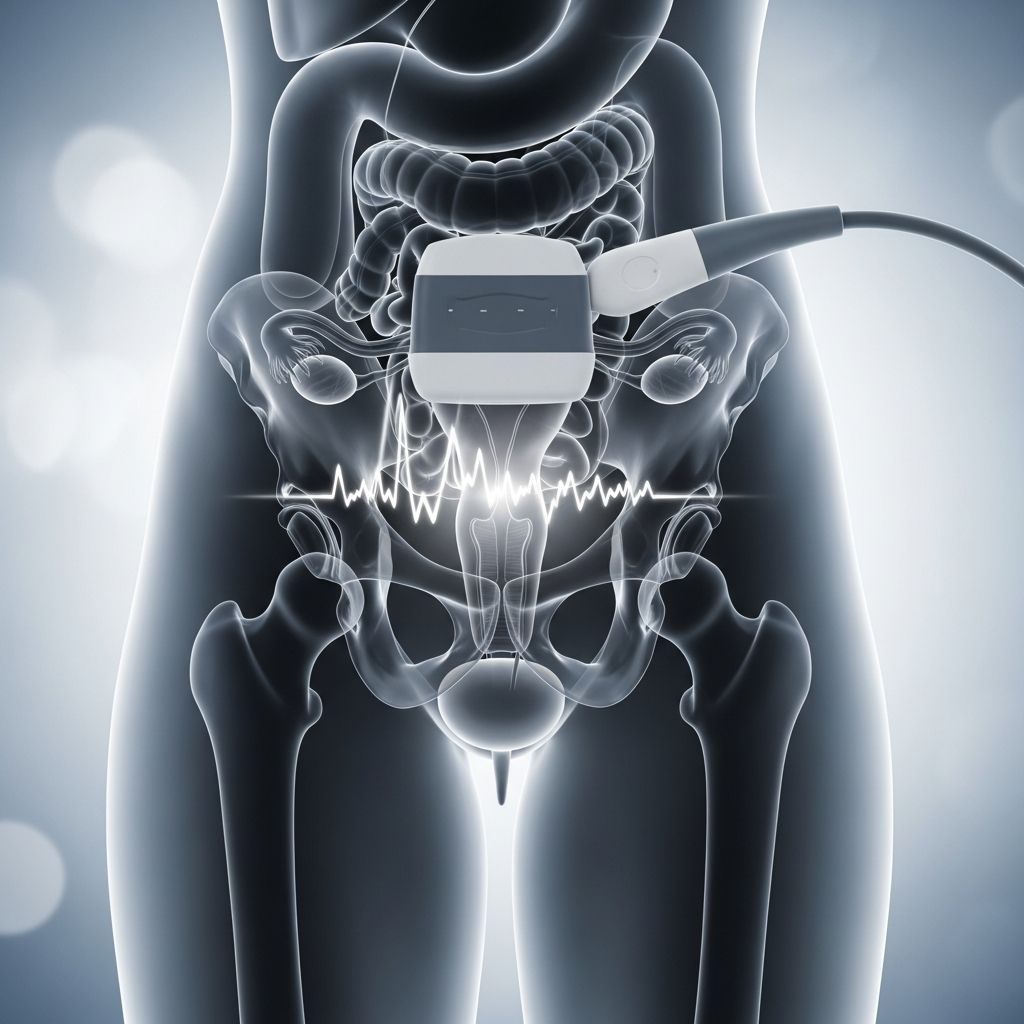
What Is a Pelvic Ultrasound?
A pelvic ultrasound is a non-invasive imaging examination that creates detailed pictures of the organs located in your pelvis—the area between your abdomen and legs. This diagnostic tool uses high-frequency sound waves to visualize reproductive organs and surrounding structures, helping healthcare providers identify abnormalities, diagnose conditions, and monitor your health. The test can be performed using different techniques depending on what specific information your provider needs and which organs require examination.
Pelvic ultrasounds are among the most commonly ordered imaging tests in healthcare because they provide clear, real-time images without using radiation or requiring invasive procedures. Whether you’re experiencing pelvic pain, abnormal bleeding, or fertility concerns, this safe and effective diagnostic tool can help your healthcare provider understand what’s happening inside your body and determine the best course of treatment.
Pelvic Organs Evaluated During Ultrasound
During a pelvic ultrasound examination, your healthcare provider can visualize several important reproductive and pelvic structures. The organs typically examined include:
- Uterus (the womb where babies develop during pregnancy)
- Cervix (the opening between the uterus and vagina)
- Ovaries (female reproductive glands that produce eggs)
- Fallopian tubes (tubes connecting ovaries to the uterus)
- Bladder (organ that stores urine)
- Prostate gland (in males)
- Surrounding pelvic tissues and structures
The specific organs examined during your procedure depend on your symptoms, medical history, and the reason your healthcare provider ordered the ultrasound. Some pelvic ultrasounds focus primarily on reproductive organs, while others may evaluate the bladder, bowel, or other pelvic structures.
Types of Pelvic Ultrasounds
There are several different approaches to performing pelvic ultrasounds, each offering unique advantages depending on what needs to be examined:
Transabdominal Ultrasound
In a transabdominal pelvic ultrasound, the technician applies a warm ultrasound gel to your lower abdomen and moves a probe (called a transducer) across your skin. The probe sends sound waves through your abdominal tissues to create images of your pelvic organs. This external approach is comfortable, requires no insertion, and provides a broader view of your pelvic region. It’s often the first type of pelvic ultrasound performed and works well for evaluating larger structures and overall pelvic anatomy.
Transvaginal Ultrasound
A transvaginal ultrasound involves inserting a thin, probe-shaped transducer into your vagina. This internal approach allows the probe to be positioned much closer to your reproductive organs, providing significantly more detailed and clearer images than transabdominal ultrasound. The transvaginal method is particularly useful for examining your uterus, ovaries, and fallopian tubes in detail. While some patients worry about discomfort, most find the procedure tolerable and no more uncomfortable than a pelvic examination.
Transrectal Ultrasound
In some cases, particularly when examining the prostate gland in males or evaluating certain pelvic conditions, a transrectal ultrasound may be performed. This involves inserting the probe into the rectum to obtain detailed images of structures in the lower pelvis. Your healthcare provider will explain if this type of ultrasound is necessary for your specific situation.
Related Stories



Reasons Your Healthcare Provider May Order a Pelvic Ultrasound
Your healthcare provider may recommend a pelvic ultrasound for various medical reasons. Common indications include:
- Pelvic or lower abdominal pain of unknown cause
- Abnormal or irregular vaginal bleeding
- Suspected pregnancy or pregnancy complications
- Monitoring fetal development during pregnancy
- Evaluating infertility or difficulty conceiving
- Suspected cysts or tumors on ovaries
- Signs of endometriosis or adenomyosis
- Fibroids or other uterine abnormalities
- Polycystic ovary syndrome (PCOS)
- Pelvic inflammatory disease or infection
- Abnormal results from a previous pelvic examination
- Planning for pelvic surgery
- Monitoring known pelvic conditions
- Evaluating post-operative complications
If your healthcare provider suspects something unusual during a physical examination or you’re experiencing symptoms that warrant further investigation, a pelvic ultrasound can provide the detailed imaging needed to make an accurate diagnosis.
What a Pelvic Ultrasound Can Detect
Pelvic ultrasounds can identify a wide range of conditions and abnormalities affecting your reproductive organs and pelvic structures. These include:
- Ovarian cysts (fluid-filled sacs on the ovaries)
- Uterine fibroids (benign muscle tumors in the uterus)
- Endometrial polyps (abnormal growths in the uterine lining)
- Signs of endometriosis (tissue growing outside the uterus)
- Adenomyosis (tissue from uterine lining embedded in uterine muscle)
- Ectopic pregnancy (pregnancy developing outside the uterus)
- Miscarriage or pregnancy loss
- Uterine or cervical abnormalities
- Pelvic masses or tumors
- Fluid accumulation in the pelvis
- Bladder abnormalities
- Pelvic scarring or adhesions
In early pregnancy, pelvic ultrasound can confirm that a pregnancy is developing in the correct location within the uterus, assess gestational age, check for multiple pregnancies, and evaluate fetal development as your pregnancy progresses.
How a Pelvic Ultrasound Procedure Works
Before Your Procedure
Your healthcare provider will give you specific instructions for preparing for your pelvic ultrasound. Preparation depends on which type of ultrasound you’re having. For a transabdominal ultrasound, you’ll typically be asked to drink water and keep your bladder full, as a full bladder helps create clearer images. For a transvaginal ultrasound, you may be asked to empty your bladder before the procedure begins. Always follow your provider’s specific pre-procedure instructions to ensure the best possible imaging.
During the Procedure
During your pelvic ultrasound appointment, you’ll be taken to an ultrasound room where a trained sonographer (ultrasound technician) will perform the examination. You’ll be positioned on an examination table, and the sonographer will explain each step of the process. For a transabdominal ultrasound, warm gel is applied to your lower abdomen, and the probe is moved across your skin. For a transvaginal ultrasound, a probe is gently inserted into your vagina. The sonographer will take multiple images and measurements of your pelvic organs from different angles. Most pelvic ultrasound procedures take between 30 minutes to an hour, though this varies depending on what needs to be examined.
After Your Procedure
After your pelvic ultrasound is complete, you can resume your normal activities immediately. There are no restrictions or recovery time needed. The images will be reviewed by a radiologist (an imaging specialist) who will prepare a detailed report of findings. In some cases, particularly in gynecology and obstetrics, your healthcare provider may review the images directly and discuss results with you right away.
Understanding Your Pelvic Ultrasound Results
Your ultrasound results will be provided to your healthcare provider, who will review them with you and explain what they mean for your health and treatment plan. Results may be normal, indicating no abnormalities were detected. Alternatively, results may reveal specific findings such as cysts, fibroids, masses, or other abnormalities. Your provider will discuss any abnormal findings, explain what they mean, and outline next steps, which might include additional testing, monitoring, or treatment recommendations.
It’s important to remember that an ultrasound finding doesn’t always mean you need immediate treatment. Many conditions detected on ultrasound, such as simple ovarian cysts, resolve on their own without intervention. Your healthcare provider will help you understand whether your findings require further evaluation, monitoring over time, or treatment.
Advantages of Pelvic Ultrasound
Pelvic ultrasounds are widely recommended for diagnosing reproductive and pelvic conditions for several important reasons:
- No Radiation Exposure: Unlike X-rays or CT scans, ultrasounds use sound waves instead of ionizing radiation, making them completely safe with no known risks from the procedure itself.
- Non-Invasive: Transabdominal ultrasounds are entirely external, while transvaginal ultrasounds are minimally invasive and no more uncomfortable than a routine gynecologic examination.
- Real-Time Imaging: Ultrasound provides live, moving images that allow your provider to see how structures are functioning, not just their appearance.
- Cost-Effective: Pelvic ultrasounds are significantly less expensive than many other advanced imaging techniques like MRI or CT scanning.
- Widely Available: Ultrasound services are available in most healthcare facilities, making them accessible to patients.
- Safe During Pregnancy: Ultrasound has an excellent safety record and is the standard imaging method for monitoring pregnancy.
- Quick Results: The procedure is relatively fast, and results are available quickly to guide treatment decisions.
- Accurate Diagnosis: When performed by experienced sonographers, pelvic ultrasounds provide highly accurate images and diagnostic information.
Is Pelvic Ultrasound Safe?
Yes, pelvic ultrasound is a safe, reliable imaging examination with an excellent safety record. The procedure uses sound waves rather than radiation, and there are no known harmful effects from ultrasound waves at the frequencies and intensities used in medical imaging. The procedure causes no pain and has no significant side effects. Millions of pelvic ultrasounds are performed safely every year, including in pregnant patients where ultrasound is the preferred imaging method because it poses no risk to the developing baby.
When to Contact Your Healthcare Provider
After your pelvic ultrasound, contact your healthcare provider if you experience:
- Severe or worsening pelvic pain
- Unexpected vaginal bleeding or discharge
- Signs of infection such as fever or chills
- Any concerns about your ultrasound findings
- Questions about your results or next steps in your care
Your healthcare provider is your best resource for understanding your ultrasound results and determining the appropriate management plan based on your individual circumstances.
Frequently Asked Questions
Q: Is a pelvic ultrasound painful?
A: No, pelvic ultrasounds are generally painless. A transabdominal ultrasound is completely non-invasive and involves only the application of gel and movement of a probe on your skin. A transvaginal ultrasound is minimally invasive and typically no more uncomfortable than a routine gynecologic examination.
Q: How long does a pelvic ultrasound take?
A: Most pelvic ultrasounds take between 30 minutes to an hour, depending on what structures need to be examined and what findings may require additional imaging.
Q: Can I eat or drink before my pelvic ultrasound?
A: This depends on the type of ultrasound. For a transabdominal ultrasound, you’ll typically be asked to drink water beforehand to fill your bladder. For a transvaginal ultrasound, you may be asked to empty your bladder. Follow your provider’s specific pre-procedure instructions.
Q: Will my insurance cover a pelvic ultrasound?
A: Most insurance plans cover pelvic ultrasounds when they’re ordered by your healthcare provider for a medically necessary reason. Contact your insurance provider or your healthcare facility’s billing department if you have questions about coverage.
Q: What if my pelvic ultrasound results are abnormal?
A: If your results are abnormal, your healthcare provider will discuss the findings with you, explain what they mean, and recommend appropriate next steps, which may include additional testing, monitoring, or treatment options.
Q: Can a pelvic ultrasound detect cancer?
A: While ultrasound can detect masses or abnormal structures that may warrant further investigation, it cannot definitively diagnose cancer. Your provider may recommend additional imaging or procedures if concerning findings are detected.
Q: Is it safe to have a pelvic ultrasound during pregnancy?
A: Yes, pelvic ultrasound is completely safe during pregnancy and is the standard imaging method for monitoring fetal development and assessing pregnancy health.
References
- Pelvic Ultrasound: What Is It, Conditions & How It Is Done — Cleveland Clinic. 2024. https://my.clevelandclinic.org/health/diagnostics/4997-pelvic-ultrasound
- Transvaginal Ultrasound: Purpose, Procedure & Results — Cleveland Clinic. 2024. https://my.clevelandclinic.org/health/diagnostics/4993-transvaginal-ultrasound
- How long should we follow simple ovarian cysts with pelvic ultrasound? — Cleveland Clinic Journal of Medicine, Vol. 85, No. 10. 2018. https://www.ccjm.org/content/85/10/745
- Ultrasound: What It Is, Purpose, Procedure & Results — Cleveland Clinic. 2024. https://my.clevelandclinic.org/health/diagnostics/4995-ultrasound
- Endometriosis Ultrasound: Procedure, Results & Types — Cleveland Clinic. 2024. https://my.clevelandclinic.org/health/diagnostics/21814-endometriosis-ultrasound
Similar Articles








Read full bio of medha deb