Pelvis: Anatomy, Function & Common Conditions
Learn about pelvis anatomy, its critical functions, and common health conditions affecting this vital structure.
Your pelvis is a crucial structural component of your body, serving as the foundation for numerous vital functions. Located in your lower abdomen between your lower back and thighs, the pelvis is a complex arrangement of bones, muscles, ligaments, and connective tissues that work together to support your pelvic organs, facilitate movement, and enable essential bodily functions. Understanding the anatomy and function of your pelvis is important for maintaining overall health and recognizing potential issues that may require medical attention.
What Is the Pelvis?
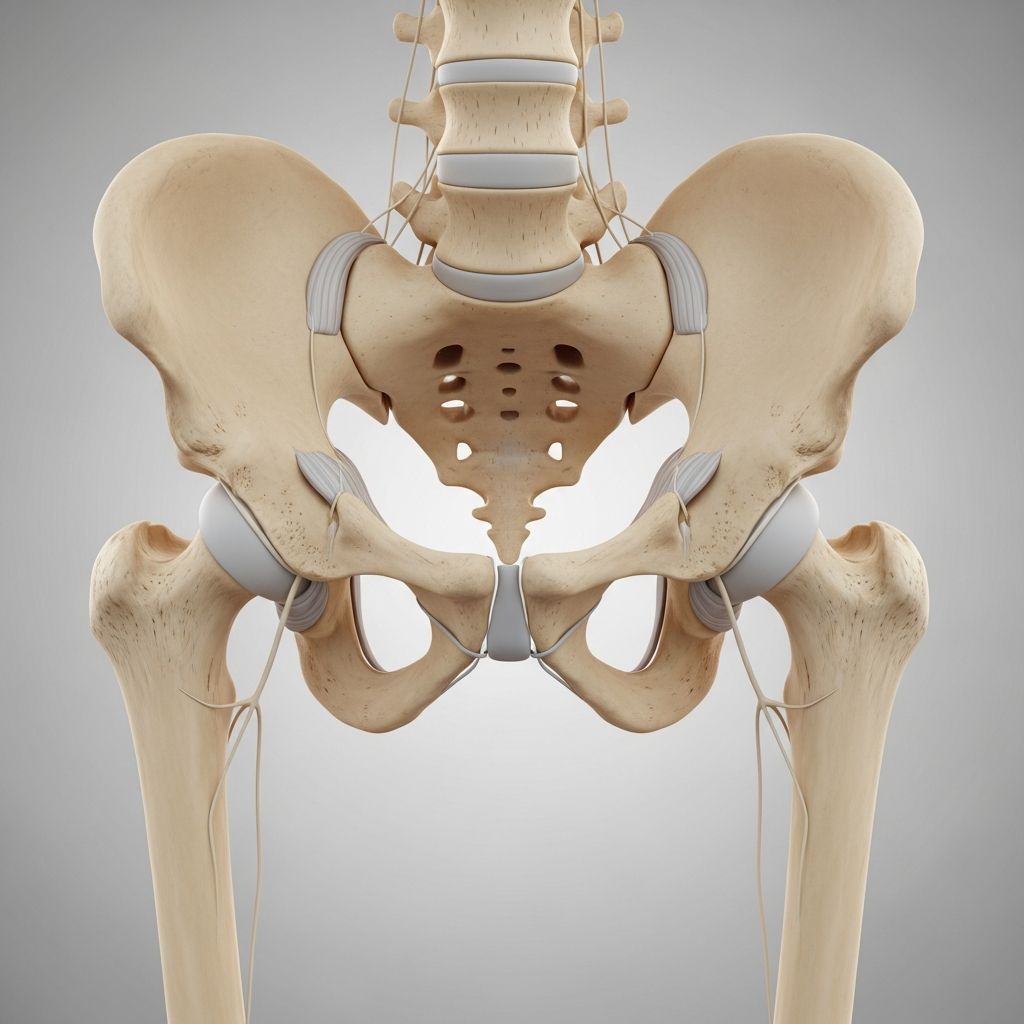
The pelvis is a ring-shaped bony structure that forms the lower portion of your trunk. It consists of several bones including the ilium, ischium, pubic bones, sacrum, and coccyx, which work together to create a strong, supportive framework. In females, the pelvis is typically positioned slightly lower and wider than in males, which is biologically designed to accommodate pregnancy, labor, and delivery.
The pelvic structure can be thought of as a bowl that holds and protects your reproductive organs, bladder, and bowel. The integrity of this structure depends on both the bone framework and the soft tissues—including muscles, fascia, and ligaments—that support it. The bony pelvis serves as the rigid foundation to which all pelvic structures are ultimately anchored.
Pelvic Bone Anatomy
The Bony Framework
The pelvis is composed of several interconnected bones that form a stable foundation. The main bones include:
– Ilium: The largest pelvic bone, forming the upper lateral pelvis- Ischium: Positioned at the lower back of the pelvis- Pubic bones: Located at the front of the pelvis- Sacrum: The triangular bone at the base of the spine connecting to the pelvis- Coccyx: The tailbone at the very bottom of the spine
These bones are connected by joints and ligaments that allow limited movement while maintaining structural stability. The pubic symphysis, located where your left and right pubic bones meet, is a particularly important joint that helps your pelvis absorb weight from your upper body and allows the pelvic bones to widen during childbirth.
Pelvic Orientation and Positioning
When viewed from a standing position, the pelvis has a specific orientation that is crucial for proper function. The anterior superior iliac spine and the front edge of the pubic symphysis are aligned in the same vertical plane, perpendicular to the floor. This orientation directs the pressure of abdominal and pelvic contents toward the bones of the pelvis rather than placing excessive strain on the muscles and connective tissues of the pelvic floor.
The shape and orientation of the bony pelvis can vary among individuals, and these variations may influence the development of certain conditions. For example, variations in pelvic orientation and shape have been associated with an increased risk of pelvic organ prolapse. Women with a loss of lumbar lordosis or a wide transverse pelvic inlet appear to be at increased risk of developing prolapse conditions.
Related Stories



Pelvic Floor Muscles
Function and Importance
The pelvic floor muscles are a group of muscles that form a supportive sling beneath your pelvic organs. These muscles support your bladder, uterus, and bowel, and they play an essential role in controlling urinary and fecal continence. The pelvic floor is also involved in sexual function and contributes to spinal stability by supporting your core.
The levator ani muscle is the primary pelvic floor muscle, and it forms a funnel-shaped structure that supports the pelvic organs from below. These muscles work in coordination with other abdominal and back muscles to maintain proper pelvic pressure and organ support.
Connective Tissue Support System
Beyond the muscles, the pelvis relies on an intricate system of connective tissues and fascia to maintain organ support. These tissues are organized into three integrated levels of support:
– Level I Support: The uterosacral and cardinal ligament complex suspends the upper vagina and cervix from the lateral pelvic walls. These fibrous structures extend vertically and posteriorly toward the sacrum.- Level II Support: The vagina is attached to the arcus tendineus fasciae pelvis, which provides lateral support to the vaginal walls and helps suspend them at a midline position.- Level III Support: The perineal body and external sphincters provide support at the distal vagina and perineum.
This multi-level support system works together to maintain the position of pelvic organs and prevent them from prolapsing into the vaginal canal.
Functions of the Pelvis
Primary Functions
The pelvis serves multiple critical functions in your body:
–
Structural Support
: The pelvis provides a strong bony framework that supports your upper body weight and transmits it to your legs for movement and balance.-Organ Protection
: The pelvic bones and muscles protect your reproductive organs, bladder, and bowel from injury.-Organ Support
: The pelvic floor muscles and connective tissues support your pelvic organs in their proper positions.-Movement Facilitation
: The pelvic bones serve as attachment points for muscles involved in movement of your legs, trunk, and hips.-Bodily Function Control
: The pelvic floor muscles assist with essential functions including urination, bowel movements, and sexual function.-Childbirth Accommodation
: In females, the pelvis is specifically designed to accommodate pregnancy and facilitate vaginal delivery.Pelvic Shapes and Types
Gynecoid Pelvis
The gynecoid pelvis is one of the most common pelvic shapes in females. Individuals with a gynecoid pelvis have a round, wide bone structure that is positioned low in the body. The defining shape of a gynecoid pelvis is an oval, which provides optimal space for childbirth. This pelvic shape is considered biologically ideal for pregnancy and vaginal delivery, as it offers the most favorable dimensions for the passage of a fetus through the birth canal.
Other Pelvic Types
There are four main types of pelvic shapes, and individuals are born with different variations. While the gynecoid pelvis is considered optimal for vaginal childbirth, the other pelvic types have different characteristics that may affect labor and delivery. It is important to note that having a non-gynecoid pelvis does not necessarily indicate a problem; however, it may influence how labor and delivery proceed.
Common Pelvic Conditions
Pelvic Organ Prolapse
Pelvic organ prolapse occurs when the supporting tissues weaken, allowing one or more pelvic organs to fall from their normal position and bulge into the vagina. This condition can develop due to various risk factors including age, vaginal delivery, obesity, and connective tissue disorders.
Pelvic organ prolapse can present in different ways depending on which organs are affected. The condition may involve the vaginal vault, bladder (cystocele), rectum (rectocele), or small bowel (enterocele). Multi-compartment prolapse, where multiple areas of the pelvis are affected simultaneously, is common and often requires a multidisciplinary medical approach involving specialists such as urogynecologists, female urologists, and colorectal surgeons.
Rectal Prolapse
Rectal prolapse is a condition in which the rectum comes out through the anus. This condition is typically addressed by colorectal surgeons. For patients requiring surgical intervention, minimally invasive procedures performed through the abdomen, such as ventral mesh rectopexy, often provide superior results with higher resolution of symptoms and reduced recurrence compared to perineal approaches.
Risk Factors for Pelvic Conditions
Several factors can increase the risk of developing pelvic disorders:
– Age and natural tissue weakening- Vaginal delivery and childbirth trauma- Obesity and excess weight- Connective tissue disorders- Chronic coughing or straining- Pelvic trauma or injury- Variations in pelvic bone shape and orientation
Diagnosis and Evaluation
Medical Assessment
Diagnosing pelvic conditions typically involves a thorough patient history, appropriate testing, and accurate prolapse staging to optimize outcomes and improve quality of life. Imaging tests such as X-rays, ultrasound, or MRI may be used to visualize the pelvic structure and identify abnormalities.
Multidisciplinary Approach
For complex pelvic conditions, especially those involving multiple compartments, a multidisciplinary approach is important. Specialists including urogynecologists, female urologists, and colorectal surgeons work together to comprehensively evaluate and treat the condition. This collaborative approach ensures that all aspects of the pelvic dysfunction are addressed, leading to better patient outcomes.
Treatment Options
Conservative Management
Many pelvic conditions can be managed conservatively through pelvic floor physical therapy, lifestyle modifications, and symptom management. These approaches may include pelvic floor muscle training, weight management, and avoiding activities that strain the pelvic floor.
Surgical Interventions
For patients requiring surgical treatment of multi-compartment pelvic floor prolapse, minimally invasive abdominal approaches are often favored over perineal procedures. These approaches include:
– Ventral mesh rectopexy for rectal prolapse repair- Sacrocolpopexy to address gynecologic anatomy- Transobturator procedures using innovative new techniques
Minimally invasive surgical techniques typically offer superior outcomes with higher resolution of symptoms and reduced recurrence rates compared to traditional perineal approaches.
Frequently Asked Questions
What is the pubic symphysis?
The pubic symphysis is a joint located between your left and right pubic bones. It helps your pelvis absorb weight from your upper body and allows your pelvic bones to widen during childbirth.
How do pelvic floor muscles support my body?
Your pelvic floor muscles support your bladder, uterus, and bowel, and they assist with bodily functions like urination, bowel movements, and sexual function. These muscles also contribute to core stability and spinal support.
Can I determine my pelvic type by appearance?
No, there is no way to know your pelvic type just by looking at your body. You can only determine your pelvic shape through imaging tests such as X-rays.
Is a gynecoid pelvis the best for childbirth?
A gynecoid pelvis is considered optimal for vaginal childbirth because its wide, round shape provides favorable dimensions for fetal passage. However, individuals with other pelvic types can also successfully deliver vaginally, though labor may progress differently.
What causes pelvic organ prolapse?
Pelvic organ prolapse is typically caused by weakness in the connective tissues and muscles that support your pelvic organs. Risk factors include age, vaginal delivery, obesity, connective tissue disorders, chronic coughing, and certain variations in pelvic bone shape.
When should I see a specialist about pelvic problems?
If you experience symptoms such as pelvic pressure, bulging sensations, urinary or fecal incontinence, or pain, you should speak with your healthcare provider. They can evaluate your condition and refer you to appropriate specialists if needed.
References
- Female Pelvic Prolapse Calls for a Multi-Disciplinary Approach — Cleveland Clinic. 2025. https://consultqd.clevelandclinic.org/female-pelvic-prolapse-calls-for-a-multi-disciplinary-approach
- Contemporary Views on Female Pelvic Anatomy — Matthew D. Barber, MD, MHS. Cleveland Clinic Journal of Medicine. 2005-12. https://www.ccjm.org/content/ccjom/72/12_suppl_4/S3.full.pdf
- Gynecoid Pelvis: What It Means & Other Types — Cleveland Clinic. 2025. https://my.clevelandclinic.org/health/body/24807-gynecoid-pelvis
- Pubic Symphysis: What Is It, Function & Anatomy — Cleveland Clinic. 2025. https://my.clevelandclinic.org/health/body/23025-pubic-symphysis
- Pelvic Floor Muscles: Anatomy, Function & Conditions — Cleveland Clinic. 2025. https://my.clevelandclinic.org/health/body/22729-pelvic-floor-muscles
- NIH National Center for Biotechnology Information — PubMed. 2005-12. https://pubmed.ncbi.nlm.nih.gov/16435731/
Similar Articles








Read full bio of Sneha Tete