Pembrolizumab Cancer Treatment Guide: Uses, Dosing, Risks
Explore how pembrolizumab revolutionizes cancer care by unleashing the immune system against tumors in multiple advanced malignancies.
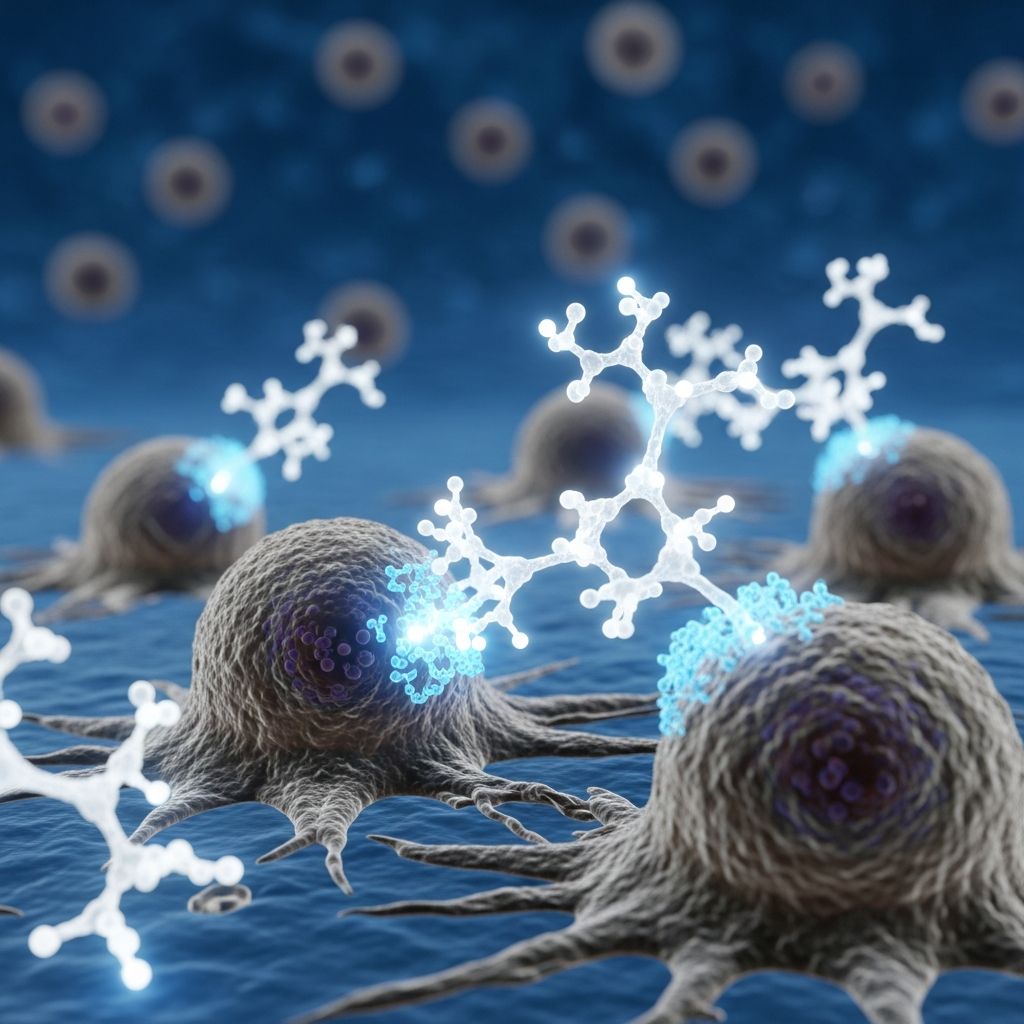
Pembrolizumab, marketed as Keytruda, represents a breakthrough in oncology as a humanized monoclonal antibody that targets the PD-1 receptor to enhance the body’s immune response against cancer cells.
Understanding Pembrolizumab’s Role in Modern Oncology
This immunotherapy drug has transformed treatment paradigms for numerous cancers by blocking immune checkpoints, allowing T-cells to recognize and attack malignant cells more effectively. Approved for a wide array of indications, it is administered via intravenous infusion and has shown significant survival benefits in clinical trials.
How Pembrolizumab Works: The Science of Immune Checkpoint Inhibition
Pembrolizumab binds directly to the PD-1 receptor on activated T-lymphocytes, preventing its interaction with ligands PD-L1 and PD-L2 expressed on tumor cells. Normally, this PD-1/PD-L1 binding inhibits T-cell activity to maintain immune tolerance and prevent autoimmunity. Cancer cells exploit this mechanism to evade detection. By antagonizing PD-1, pembrolizumab restores T-cell proliferation, cytokine production, and cytotoxic activity against tumors.
This action reinvigorates exhausted T-cells within the tumor microenvironment, promoting a robust anti-tumor immune response. Unlike traditional chemotherapies, pembrolizumab harnesses the patient’s own immune system, leading to durable responses in responsive patients.
Broad Spectrum of Approved Cancer Indications
Pembrolizumab’s approvals span multiple solid tumors and lymphomas, often as monotherapy or in combination regimens. Key uses include:
- Melanoma: Unresectable or metastatic cases in adults; adjuvant therapy post-resection for Stage IIB/IIC/III in adults and children ≥12 years.
- Non-Small Cell Lung Cancer (NSCLC): First-line for PD-L1 high-expressing metastatic tumors; post-platinum progression; neoadjuvant/adjuvant with chemotherapy.
- Head and Neck Squamous Cell Carcinoma (HNSCC): First-line metastatic/unresectable with PD-L1 expression; post-platinum therapy.
- Classical Hodgkin Lymphoma (cHL): Relapsed/refractory in adults and pediatrics after ≥2 prior lines.
- Urothelial Carcinoma: Advanced cases ineligible for cisplatin or post-platinum; BCG-unresponsive non-muscle invasive bladder cancer.
- Other Cancers: Triple-negative breast cancer (TNBC) high-risk early-stage neoadjuvant/adjuvant; endometrial MSI-H/dMMR; renal cell carcinoma with axitinib; esophageal/gastric with chemotherapy; malignant pleural mesothelioma with pemetrexed/platinum; TMB-H solid tumors.
| Cancer Type | Key Indication | Regimen |
|---|---|---|
| Melanoma | Metastatic | Monotherapy |
| NSCLC | PD-L1 ≥50% TPS | Monotherapy or + Chemo |
| HNSCC | Recurrent/Metastatic PD-L1+ | Monotherapy or + Platinum/5-FU |
| Urothelial | Advanced | Monotherapy or + Enfortumab Vedotin |
| TNBC | High-risk Early Stage | + Chemo Neoadjuvant, then Monotherapy |
These indications reflect approvals from bodies like the FDA, EMA, and NCI, with ongoing expansions based on biomarker status such as PD-L1 CPS/TPS, MSI-H, dMMR, or TMB-H.
Administration and Dosing Protocols
Pembrolizumab is given as an IV infusion over 30 minutes every 3, 4, or 6 weeks, depending on the dose and indication: 200 mg or 400 mg flat doses, or 2 mg/kg for pediatric/weight-based cases. Treatment continues for up to 2 years or until disease progression/toxicity. Dosing adjustments are rare but may involve delays for immune-related adverse events (irAEs).
- Frequency Options: Q3W (200 mg), Q6W (400 mg) for adults; Q3W (2 mg/kg) for select pediatrics.
- Duration: 35 cycles max or as clinically indicated.
- Monitoring: Pre-infusion checks for hypersensitivity; post-dose observation.
Potential Benefits and Clinical Outcomes
Clinical data demonstrate pembrolizumab’s efficacy in improving overall survival (OS) and progression-free survival (PFS). For instance, in PD-L1 high NSCLC, monotherapy yields superior OS versus chemotherapy. In melanoma, adjuvant use reduces recurrence risk post-resection. Response rates vary by tumor type and biomarkers, with durable complete responses in 10-20% of cases.
Combination therapies, like with chemotherapy or targeted agents, further enhance outcomes in frontline settings, particularly for non-biomarker-selected patients.
Managing Side Effects and Immune-Related Risks
Related Stories



As an immune activator, pembrolizumab can cause irAEs mimicking autoimmune diseases, affecting any organ. Common issues include fatigue (30-40%), rash/pruritus (20-30%), diarrhea (15-20%), and hypothyroidism (10-15%). Severe events like pneumonitis (3-5%), colitis (1-2%), hepatitis, or endocrinopathies require prompt intervention with corticosteroids or immunosuppressants.
Grading and Management:
- Mild (Grade 1): Monitor, symptomatic care.
- Moderate (Grade 2): Hold therapy, start oral steroids.
- Severe (Grade 3-4): Permanent discontinuation, high-dose IV steroids, specialist consult.
Patients need education on symptom reporting and baseline assessments (e.g., thyroid function, pulmonary function).
Patient Selection and Biomarker Testing
Optimal candidates have tumors expressing PD-L1 (CPS ≥1-10 or TPS ≥50%), MSI-H/dMMR, or TMB-H status, confirmed via FDA-approved companion diagnostics like IHC assays. Not all patients respond; non-expressors may benefit from combinations. Genetic testing for EGFR/ALK excludes certain NSCLC uses.
Special Populations: Pediatrics, Elderly, and Comorbidities
Approved for children ≥12 years in melanoma, cHL, PMBCL, and TMB-H tumors, with weight-based dosing. Elderly patients (≥65) show similar efficacy/safety but higher irAE risk. Caution in autoimmune diseases or prior transplants; contraindicated in active infections or certain immunosuppressed states.
Drug Interactions and Concomitant Therapies
No major pharmacokinetic interactions, but combinations with chemotherapy, targeted therapies (e.g., axitinib), or vaccines require monitoring. Live vaccines are avoided during treatment. Steroids/immunosuppressants may reduce efficacy.
Ongoing Research and Future Directions
Trials explore pembrolizumab in earlier stages, new combinations (e.g., with LAG-3 inhibitors), and pan-tumor applications. Biomarkers like TMB continue to refine patient stratification.
Frequently Asked Questions (FAQs)
What is pembrolizumab used for?
It treats various cancers including melanoma, NSCLC, HNSCC, and more, often based on PD-L1 status.
How is pembrolizumab given?
Via IV infusion every 3-6 weeks for up to 2 years.
What are common side effects?
Fatigue, skin reactions, diarrhea, and immune-related issues like thyroid dysfunction.
Can children receive pembrolizumab?
Yes, for select indications in patients ≥12 years.
Does insurance cover pembrolizumab?
Coverage varies; consult providers for specifics on approved uses.
Patient Resources and Next Steps
Discuss with oncologists for personalized plans, including biomarker testing. Support groups and clinical trials offer additional options.
References
- Pembrolizumab — Wikipedia. 2023 (continuously updated). https://en.wikipedia.org/wiki/Pembrolizumab
- Pembrolizumab: Uses, Interactions, Mechanism of Action — DrugBank. 2023. https://go.drugbank.com/drugs/DB09037
- Pembrolizumab – NCI — National Cancer Institute. 2023. https://www.cancer.gov/about-cancer/treatment/drugs/pembrolizumab
- Pembrolizumab – StatPearls — NCBI Bookshelf. 2023-10-01. https://www.ncbi.nlm.nih.gov/books/NBK546616/
- Pembrolizumab (intravenous route) — Mayo Clinic. 2023. https://www.mayoclinic.org/drugs-supplements/pembrolizumab-intravenous-route/description/drg-20122552
- Keytruda EPAR Medicine Overview — European Medicines Agency. 2023. https://www.ema.europa.eu/en/documents/overview/keytruda-epar-medicine-overview_en.pdf
Similar Articles








Read full bio of medha deb