Pemphigus Vulgaris: Symptoms, Diagnosis, And Treatment Guide
Rare autoimmune blistering disease affecting skin and mucous membranes: symptoms, diagnosis, and treatments explained.
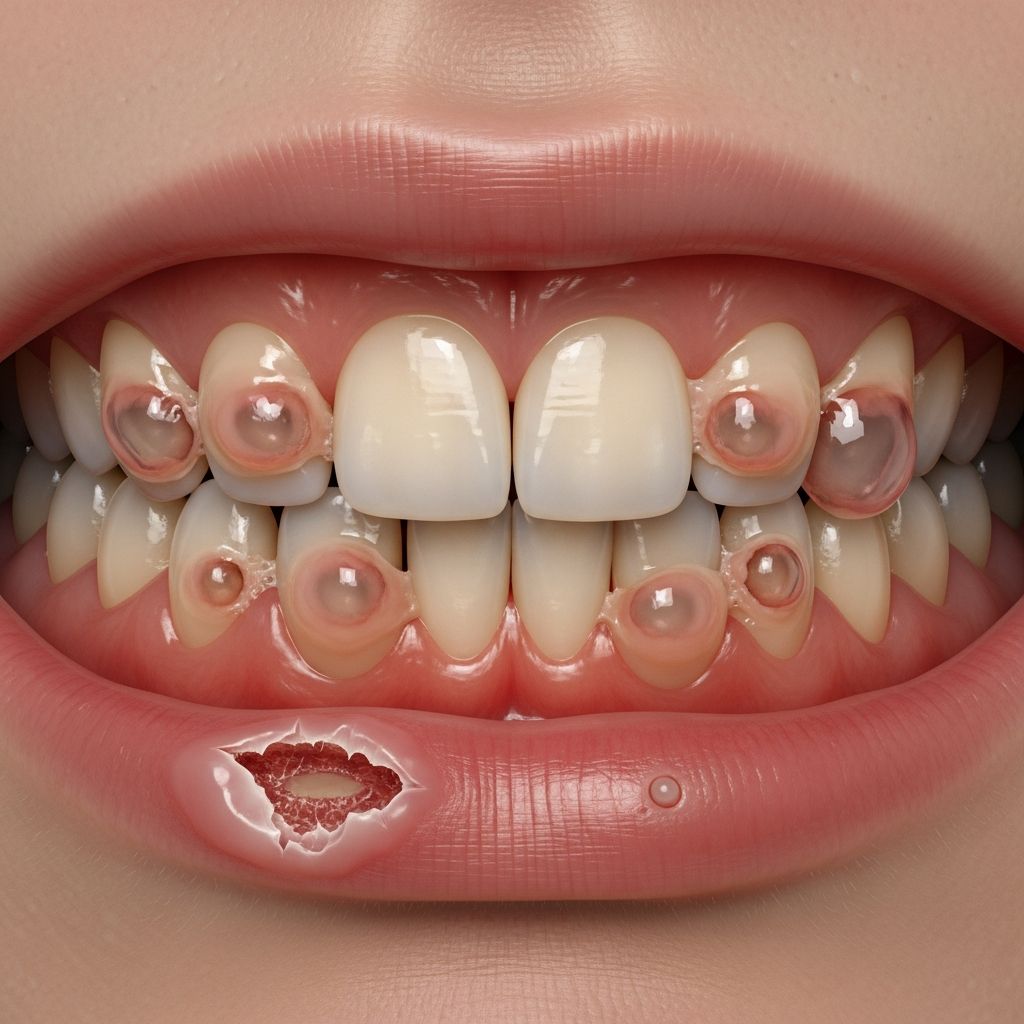
Pemphigus vulgaris is a rare but serious autoimmune blistering disease characterised by painful blisters and erosions on the skin and mucous membranes, most commonly inside the mouth.
What is pemphigus vulgaris?
**Pemphigus vulgaris** is an uncommon, severe blistering disorder affecting skin and mucous membranes. It is a lifelong condition that requires long-term management.
The name *pemphigus* derives from the Greek word *pemphix*, meaning blister or bubble. *Vulgaris* is Latin for common.
In pemphigus vulgaris, autoantibodies target desmoglein 3 (a desmosomal cadherin found in keratinocytes), leading to loss of cell adhesion (acantholysis) and intra-epidermal blister formation.
- Mucosal involvement occurs in nearly all patients (due to ubiquitous expression of desmoglein 3)
- Cutaneous disease affects 60–80% (requires additional anti-desmoglein 1 antibodies)
Who gets pemphigus vulgaris?
Pemphigus vulgaris most commonly affects middle-aged to older adults.
- Peak incidence: 50–60 years
- Slight female predominance
- Higher incidence in Ashkenazi Jews, Mediterraneans, and those of Indian descent
- Rare in childhood
What causes pemphigus vulgaris?
Pemphigus vulgaris is caused by IgG autoantibodies against desmoglein 3 (and desmoglein 1 in mucocutaneous disease).
The underlying cause of autoantibody production is unknown but genetic predisposition plays a role (HLA associations: DRB1*04:02, DQB1*05:03).
**Drug-induced pemphigus** is recognised and most often caused by:
- Penicillamine
- Angiotensin-converting enzyme (ACE) inhibitors
- Angiotensin receptor blockers
- Cephalosporins
- Nonsteroidal anti-inflammatory drugs (NSAIDs)
Pemphigus may be triggered by cancers (paraneoplastic pemphigus), infection, or trauma.
What are the clinical features of pemphigus vulgaris?
Mucosal pemphigus vulgaris
Oral lesions are usually the first sign, affecting >50% of patients.
- Prodrome: weeks to months of painful burning sensation
- Initial lesions: irregular white plaques or erythematous patches
- Rupture to form painful erosions
- Common sites: soft palate, buccal mucosa, lower labial mucosa, ventral tongue
- Multiple lesions develop over weeks
Cutaneous pemphigus vulgaris
Skin lesions develop months after mucosal disease in most cases.
- Flaccid blisters arise on normal or erythematous skin
- Extend laterally due to weak adhesion
- Rupture easily leaving superficial erosions
- Crusts, collarettes of scale, vegetative lesions
- Distribution: scalp, face, upper trunk, axillae, groin, pressure sites
Positive Nikolsky sign
Mechanical fragility of skin: rubbing adjacent skin causes epidermal separation.
How is pemphigus vulgaris diagnosed?
Clinical diagnosis
Suspect pemphigus vulgaris in patients with:
- Recurrent painful oral erosions
- Flaccid blisters/erosions on skin
- Positive Nikolsky sign
Histopathology
Skin or mucosal biopsy shows:
- Suprabasal acantholysis (row of tombstone basal cells)
- Intra-epidermal cleft/blister
- Mild lymphocytic infiltrate

Direct immunofluorescence (DIF)
Perilesional skin biopsy:
- Chicken-wire IgG/C3 deposition around epidermal keratinocytes
Serum studies
- Indirect immunofluorescence: circulating anti-desmoglein IgG
- ELISA: anti-desmoglein 3 antibodies (diagnostic); anti-Dsg1 (cutaneous extent)
Differential diagnosis of pemphigus vulgaris
| Condition | Key Differentiating Features |
|---|---|
| Bullous pemphigoid | Tense blisters, elderly, negative Nikolsky, subepidermal, linear IgG/C3 at BMZ |
| Paraneoplastic pemphigus | Associated malignancy, severe mucosal + polymorphic skin lesions, DIF intercellular + BMZ |
| Hailey-Hailey disease | Familial, frictional sites, negative DIF, acantholysis throughout epidermis |
| Drug eruptions | Temporal association with medication, resolves on withdrawal |
Related Stories



Complications of pemphigus vulgaris
- Severe infections: most common cause of death (Staph, Pseudomonas, Candida)
- Malnutrition/dehydration: painful oral disease impairs eating/drinking
- Side effects of treatment: osteoporosis, diabetes, infections from immunosuppression
- Squamous cell carcinoma: chronic erosions (rare)
Management of pemphigus vulgaris
The primary aim is to decrease blister formation, prevent infections, and promote healing.
Treatment requires specialist dermatology input with multidisciplinary support.
First-line treatment: Systemic corticosteroids
Moderate to high doses of oral
prednisone/prednisolone
(1–2 mg/kg/day) or pulsed IV methylprednisolone.- Response usually within 1–2 weeks
- Taper slowly once <3 new lesions/week
- Adjunctive steroid-sparing agents to enable lower doses
Steroid-sparing immunosuppressants
| Agent | Dose | Onset | Side Effects |
|---|---|---|---|
| Azathioprine | 2–2.5 mg/kg/day | 4–8 weeks | Hepatotoxicity, myelosuppression, malignancy risk |
| Mycophenolate mofetil | 2–3 g/day | 4–8 weeks | GI upset, infections |
| Methotrexate | 7.5–20 mg/week | Slower | Hepatotoxicity, myelosuppression |
Biologics: Rituximab
Anti-CD20 monoclonal antibody: first-line in combination with steroids for moderate-severe disease.
- Two infusions 2 weeks apart
- Remission rates >80%
- Relapse common; repeat dosing needed
Other therapies
- IVIG: 2 g/kg over 2–5 days monthly (refractory disease)
- Plasmapheresis/immunoadsorption: remove circulating antibodies (severe cases)
- Cyclophosphamide: severe refractory disease
Topical therapy
- Skin: potent topical steroids + emollients
- Mouth: topical steroid gels/dexamethasone mouthwash, intralesional steroids, topical tacrolimus
S supportive care
- Wound care to prevent infection
- Pain management
- Nutritional support (NG feeding if needed)
- Prophylaxis: Pneumocystis jirovecii (co-trimoxazole), osteoporosis (bisphosphonates)
Prevention of pemphigus vulgaris
No known prevention as cause unknown. Avoid triggering drugs if diagnosed.
Prognosis and disease course of pemphigus vulgaris
Before steroids (1950s): mortality 75–90% within 1–2 years.
With immunosuppression: mortality 5–15%.
- Complete remission possible in 20–50% after 2–5 years
- Most require long-term low-dose therapy
- Relapses common on steroid taper
- Mortality from complications of disease/treatment
Guidelines for pemphigus vulgaris
- International Bullous Diseases Group (2020)
- European Academy of Dermatology guidelines
- British Association of Dermatologists
Patient support groups for pemphigus vulgaris
- International Pemphigus & Pemphigoid Foundation (ippf.org)
- Pemphigus Vulgaris Network UK (pemphigus.org.uk)
FAQ
Is pemphigus vulgaris contagious?
No, pemphigus vulgaris is an autoimmune disease, not infectious.
Can pemphigus vulgaris be cured?
Not curative but long-term remission achievable with treatment. Most patients require ongoing therapy.
Does pemphigus vulgaris go away on its own?
No, it is progressive without treatment and potentially life-threatening.
Is pemphigus vulgaris hereditary?
Familial cases rare. Genetic predisposition but not directly inherited.
Can diet affect pemphigus vulgaris?
No strong evidence. Maintain nutrition despite painful mouth ulcers.
References
- Pemphigus Vulgaris: Symptoms, Causes & Treatment — Tua Saude. 2024. https://www.tuasaude.com/en/pemphigus-vulgaris/
- Pemphigus Vulgaris: Symptoms, Causes, Diagnosis & Treatment — Metropolis India. 2024. https://www.metropolisindia.com/blog/preventive-healthcare/pemphigus-vulgaris-symptoms-causes-diagnosis-and-treatment
- Pemphigus Vulgaris: Diagnosis & Procedure — UCF Health. 2024. https://ucfhealth.com/our-services/dermatology/pemphigus-vulgaris/
- Pemphigus Vulgaris – StatPearls — NCBI Bookshelf / NIH. 2024-07-01. https://www.ncbi.nlm.nih.gov/books/NBK560860/
- Pemphigus Vulgaris — DermNet NZ. 2024. https://dermnetnz.org/topics/pemphigus-vulgaris
- Pemphigus Vulgaris: Symptoms, Causes & Treatment — Cleveland Clinic. 2024. https://my.clevelandclinic.org/health/diseases/23033-pemphigus-vulgaris
Similar Articles








Read full bio of Sneha Tete