Penicillin: Types, Uses, And Side Effects Guide
Complete guide to penicillin antibiotics: types, bacterial infections treated, and potential side effects.
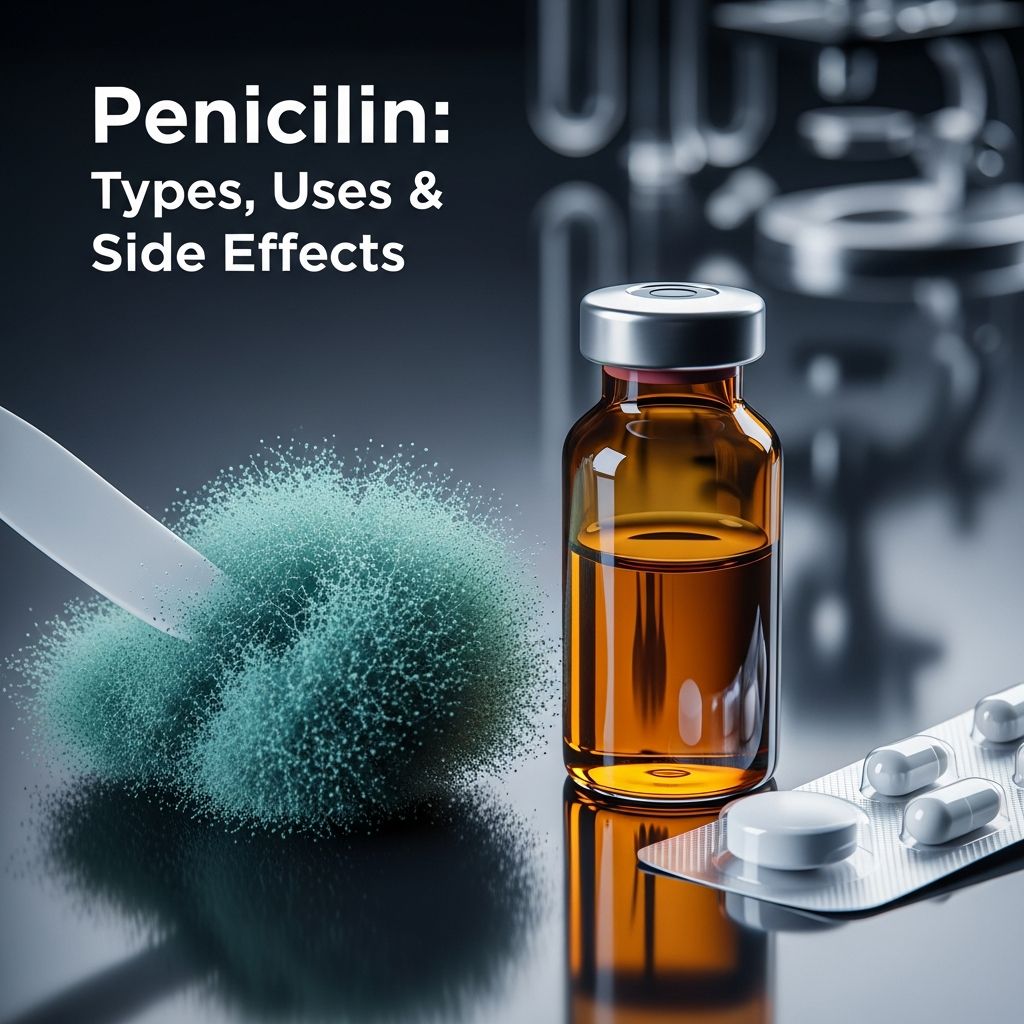
Penicillin: Types, Uses & Side Effects
Penicillin is a class of antibiotic medications that revolutionized medicine since its discovery. Penicillins treat bacterial infections like strep throat, ear infections, and urinary tract infections by attaching to and damaging the cell walls of bacteria. This mechanism makes them highly effective against a wide range of bacterial pathogens. Fleming’s discovery of penicillin fundamentally changed the outlook of bacterial infections from life-threatening to treatable, making it one of the most important medical breakthroughs of the twentieth century.
What is Penicillin?
Penicillin is an antibiotic medication that belongs to the beta-lactam family of antibiotics. Beta-lactam antibiotics, which include penicillins, are among the safest and most effective antibiotics and are widely used in clinical practice. The medication works by interfering with bacterial cell wall synthesis, causing the bacteria to weaken and ultimately die. This makes penicillin an excellent choice for treating numerous bacterial infections across different body systems.
Types of Penicillin
Two of the major differences between the types of penicillin are the way they’re made and what kind of bacteria they’re effective against. Understanding these differences helps healthcare providers select the most appropriate antibiotic for specific infections.
Natural Penicillins
Penicillin G and penicillin V (also known as penicillin V potassium) are natural penicillins. Providers use natural penicillins to treat a range of infections, including strep throat, syphilis, and Lyme disease. Penicillin G comes in IV form and is administered directly into the bloodstream for more severe infections. Penicillin V can be taken by mouth, making it convenient for outpatient treatment.
Semi-Synthetic Penicillins
Amoxicillin and ampicillin are semi-synthetic penicillins that were developed to treat types of bacterial infections that other penicillins hadn’t been able to address in the past. Amoxicillin is the most commonly prescribed antibiotic and represents one of the most frequently used medications in clinical practice. These semi-synthetic variants provide broader spectrum coverage against various bacterial pathogens.
How Penicillin Works
Penicillin antibiotics work by targeting the bacterial cell wall, which is essential for bacterial survival. The drug attaches to penicillin-binding proteins and inhibits peptidoglycan cross-linking in the bacterial cell wall. This disruption weakens the bacterial structure, leading to cell lysis and bacterial death. Unlike many other antibiotics that simply inhibit bacterial growth, penicillins are bactericidal, meaning they actively kill bacteria rather than just stopping their reproduction.
Common Bacterial Infections Treated with Penicillin
Providers use penicillin to treat certain bacterial infections with proven effectiveness:
– Strep throat (Group A Streptococcus pharyngitis)- Ear infections (otitis media)- Urinary tract infections (UTIs)- Syphilis- Lyme disease- Skin and soft tissue infections- Pneumonia- Wound infections- Tooth and gum infections
Forms of Penicillin Administration
Penicillin antibiotics come in oral form (pills or liquid you swallow) and IV form (liquid that a provider injects directly into your vein). The choice between oral and IV administration depends on several factors including the severity of infection, the type of bacteria involved, and the patient’s ability to take oral medications. Oral penicillins are suitable for mild to moderate infections and outpatient treatment, while IV penicillins are reserved for more severe infections or hospitalized patients.
Related Stories



Dosing and Duration
Providers usually prescribe penicillin medications for one to three weeks, depending on which infection you have. The specific duration varies based on the infection type, severity, and patient response to treatment. It is important to take penicillins as prescribed and follow the complete course of treatment.
Key Dosing Principles
– Take medication on schedule as directed by your healthcare provider- Complete the entire course even if you feel better- Never skip doses or stop early- Take at consistent intervals for optimal effectiveness- Do not share medication with others
When to Expect Improvement
Ask your provider what to expect and how long it might take to feel better. If you have a common bacterial infection (like strep throat or an ear infection), you might feel better in just a couple of days. Other infections take longer to recover from. However, feeling better does not mean the infection is completely cleared. Make sure to take your entire course of medicine, even if you feel better, to ensure complete eradication of the bacteria.
Penicillin Side Effects
While penicillins are generally well-tolerated, they can cause various side effects ranging from mild to severe. Common side effects include nausea, vomiting, diarrhea, abdominal pain, and oral thrush. More serious side effects are rare but can include allergic reactions.
Allergic Reactions
Although most patients may be able to tolerate penicillins safely, keep in mind that penicillins are the most common cause of drug-induced fatal and nonfatal anaphylaxis in the United States, particularly when they are given parenterally. IgE-mediated allergic reactions typically occur within minutes after receiving the drug and may present as anaphylaxis, urticaria (hives), bronchospasm, angioedema, or hypotension.
Penicillin Allergy Considerations
Despite the high frequency of documented allergy, more than 95% of hospitalized patients labeled as having penicillin allergy can actually tolerate this class of drug without adverse reactions. This discrepancy between reported and actual penicillin allergy may be explained by the waning of penicillin-specific immunoglobulin E (IgE) antibodies over time. It is estimated that up to 80% of patients with a history of immediate clinical symptoms compatible with a penicillin allergy become tolerant of it after a decade if there has been no further exposure. After 20 years, fewer than 1% of patients continue to maintain their sensitivity.
Clostridioides difficile (C. difficile) Infection
Some people can develop the bacterial infection Clostridioides difficile (C. difficile) from taking antibiotics. While it sounds like the opposite of what should happen, penicillin antibiotics don’t kill off C. difficile but they can kill off bacteria that prevent C. difficile from growing out of control. C. difficile infections cause severe diarrhea, stomach pain, and fever and can be hard to treat. Go to the emergency room if you have severe diarrhea and stomach pain while taking antibiotics.
Antibiotic Resistance and Penicillin
Bacteria are constantly developing ways to protect themselves from antibiotics through a process known as antibiotic resistance. This is dangerous because it makes bacterial infections harder to treat and more likely to cause life-threatening complications. Some bacteria, like MRSA (methicillin-resistant Staphylococcus aureus), resist all types of penicillins, making them very hard to treat. Scientists have developed antibiotics that work in different ways to try to treat these infections.
Preventing Antibiotic Resistance
Taking penicillins and other antibiotics when you don’t need to or not taking them properly can increase the risk that bacteria will develop resistance. If you stop taking penicillin before you’ve completed the course, you might not kill all the bacteria. The remaining bacteria might develop resistance, making your infection harder to treat. To combat this growing threat:
– Take antibiotics exactly as prescribed- Complete the full course of treatment- Do not skip doses or stop early- Never use antibiotics for viral infections- Do not share antibiotics with others- Dispose of unused medication properly
Important Safety Information
Before starting penicillin treatment, inform your healthcare provider about any previous allergic reactions to penicillin or other antibiotics, pregnancy or breastfeeding status, kidney disease, and other medications you’re taking. Penicillin can interact with certain medications and medical conditions may affect how safely you can take this antibiotic.
When to Contact Your Healthcare Provider
– If you experience signs of allergic reaction (rash, swelling, difficulty breathing)- If you develop severe diarrhea or abdominal pain- If your symptoms worsen or don’t improve after a few days- If you experience unexplained fever or chills- If you notice any unusual symptoms while taking the medication
Impact of Penicillin Discovery
Fleming’s discovery of penicillin changed the outlook of bacterial infections from life-threatening to treatable. Most people will take a type of penicillin for an ear infection, strep throat, UTI, or other common infection at some point in their lives. This discovery revolutionized medicine and has saved countless lives over the past decades. However, as antibiotic resistance emerges as a significant global health threat, responsible use of penicillins remains crucial.
Frequently Asked Questions
Q: What is the most commonly prescribed type of penicillin?
A: Amoxicillin is the most commonly prescribed antibiotic and represents one of the most frequently used penicillin antibiotics in clinical practice. It was developed to treat a broader range of bacterial infections than previous penicillins.
Q: How long does it take for penicillin to work?
A: For common bacterial infections like strep throat or ear infections, you might feel better in just a couple of days. However, the timeframe varies depending on the type and severity of infection. It’s important to complete the entire course of treatment regardless of when you start feeling better.
Q: Can I stop taking penicillin once I feel better?
A: No, you should take penicillin for the entire prescribed duration, even if you feel better. Stopping early increases the risk of antibiotic resistance and may allow the infection to return or worsen.
Q: What percentage of people with penicillin allergy can actually tolerate it?
A: More than 95% of hospitalized patients labeled as having penicillin allergy can actually tolerate this class of drug without adverse reactions. Many people lose their sensitivity to penicillin over time, with up to 80% becoming tolerant after a decade without exposure.
Q: Is penicillin safe for everyone?
A: While penicillin is generally safe and well-tolerated, it’s not suitable for people with true penicillin allergies. Some people may also develop side effects like mild gastrointestinal upset. Always inform your healthcare provider of any previous adverse reactions to antibiotics.
Q: What should I do if I develop severe diarrhea while taking penicillin?
A: Severe diarrhea and stomach pain while taking antibiotics could indicate a C. difficile infection. Go to the emergency room if you experience these symptoms, as they require medical evaluation and treatment.
Q: How can I help prevent antibiotic resistance?
A: Take antibiotics exactly as prescribed, complete the full course of treatment, never skip doses, don’t use antibiotics for viral infections, and never share antibiotics with others. These actions help prevent the development of antibiotic-resistant bacteria.
References
- Does My Patient Need an Allergy Evaluation for Penicillin Allergy? — Cleveland Clinic. 2024. https://consultqd.clevelandclinic.org/does-my-patient-need-an-allergy-evaluation-for-penicillin-allergy
- Penicillin: Types, Uses & Side Effects — Cleveland Clinic. 2024. https://my.clevelandclinic.org/health/treatments/penicillin
- Penicillin allergy: A practical guide for clinicians — Cleveland Clinic Journal of Medicine. 2024. https://www.ccjm.org/content/82/5/295
Similar Articles








Read full bio of medha deb