Penrose Drain: What It Is, Care, Placement & Removal
Complete guide to Penrose drains: understanding placement, care, and removal after surgery.
What Is a Penrose Drain?
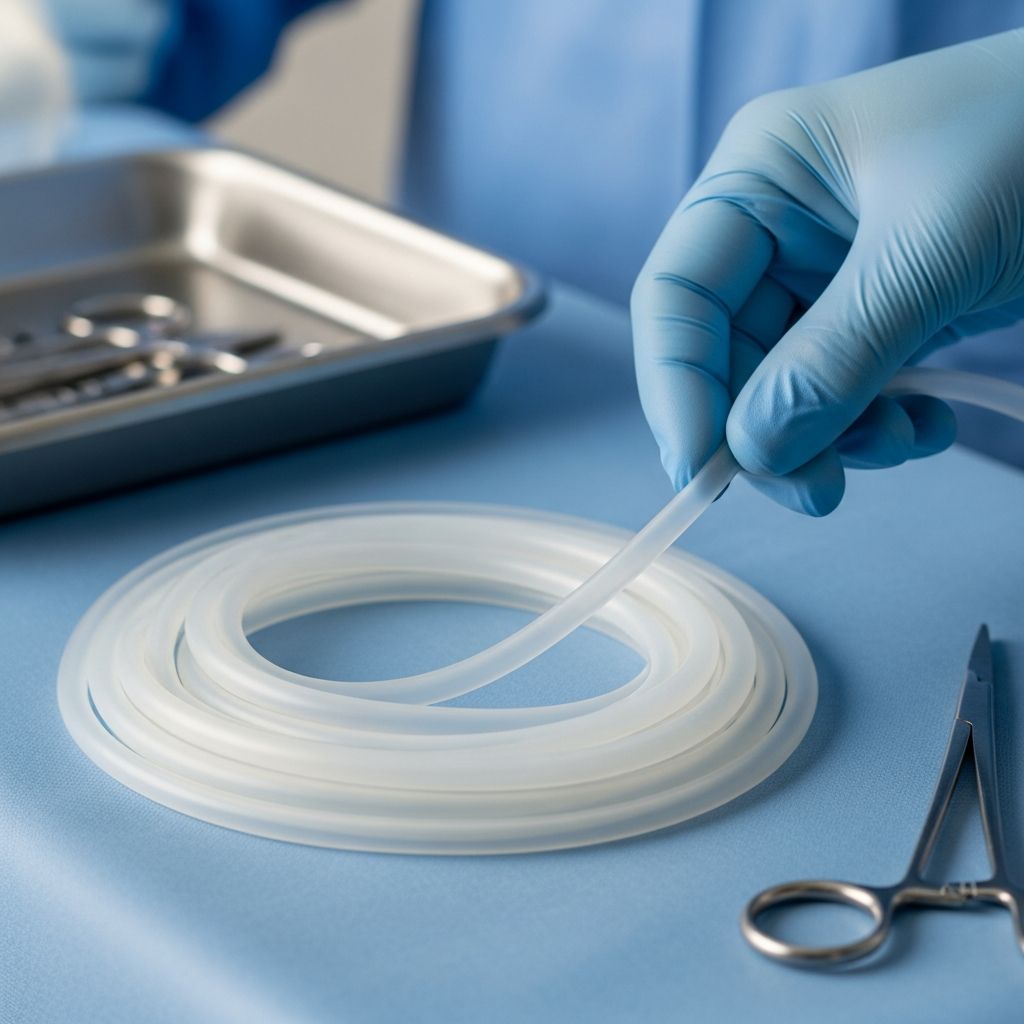
A Penrose drain is a soft, flexible rubber tube used as a surgical drain to prevent the buildup of fluid in a surgical site. It is a straight, flexible tube that channels blood, lymph, and other fluids that can collect in a wound outside your body. This simple yet effective medical device has become a standard tool in surgical practice for over a century, named after American gynecologist Charles Bingham Penrose who developed it in the late 1800s.
The primary function of a Penrose drain is to direct fluids away from the surgical site, reducing the risk of infection and promoting faster healing. After surgery, blood, lymphatic fluid (lymph), and other fluids can naturally collect at the surgery site or wound. If these fluids remain trapped inside the body, they can become infected if bacteria aren’t drained, leading to serious complications. A Penrose drain solves this problem by providing a pathway for these fluids to exit your body safely.
How Does a Penrose Drain Work?
A Penrose drain operates on a simple principle: gravity. It is classified as a type of passive drain, which means its design relies on gravity—not a suction feature—to draw fluid out of your wound. This passive mechanism makes it different from active drains that use suction to remove fluid more forcefully.
Your surgeon will place most of the drain inside the surgical cut and leave a small part sticking out of your body. Usually, they will suture (stitch) the drain so it doesn’t slide out. Sometimes, they’ll attach a safety pin to the end of the drain to ensure it stays outside your body. Gravity naturally pulls the fluid outside your body, and the drain simply provides the route for this fluid to travel.
The beauty of the Penrose drain’s design is its simplicity and reliability. Unlike more complex active drainage systems, it requires minimal equipment and can function effectively in various surgical scenarios, making it an economical choice for many healthcare facilities.
Common Uses for Penrose Drains
Penrose drains have multiple applications across various surgical specialties. They are commonly used to drain surgical spaces and abscess cavities, particularly in procedures where fluid accumulation poses a significant infection risk. Here are the primary uses:
Infection Prevention After Surgery
The most common use of a Penrose drain is to keep you from getting an infection after surgery. It can also drain infected fluid away from your wound. Infection is one of the most common avoidable complications after surgery. By removing potential breeding grounds for bacteria, Penrose drains significantly reduce post-operative infection rates.
Drainage of Abscesses
Complex superficial abscesses are effectively treated using Penrose drains through minimally invasive techniques. Multiple small incisions with looped Penrose drains provide effective drainage while minimizing trauma to surrounding tissues. This technique has been found to be very effective in many areas of the body and has multiple advantages over traditional incision, drainage, gauze packing, and dressing changes.
Specialized Medical Applications
Beyond standard surgical applications, Penrose drains are used in specialized procedures. In podiatry, a Penrose drain is often used as a tourniquet during a hallux nail avulsion procedure or ingrown toenail extraction. Additionally, it can be used to drain cerebrospinal fluid to treat hydrocephalus patients, demonstrating its versatility across medical specialties.
Related Stories



Reconstructive and Cosmetic Surgery
Plastic surgeons use drains in many procedures to help reduce the risk of seromas—collections of normal serous fluid that the body pushes out into the surgical dissection area. Penrose drains direct the normal drainage into one area on each side of the chest after top surgery, allowing for easier postoperative care since all the normal drainage is located over the drains.
When Your Surgeon Places a Penrose Drain
Your surgeon may place a Penrose drain in several specific situations to ensure optimal healing and prevent complications. The decision to use a drain depends on the type of surgery, the amount of tissue manipulation, and the risk factors for fluid accumulation.
Surgeons typically place Penrose drains when they anticipate significant fluid accumulation, when treating infected areas that require careful monitoring, or when performing procedures on areas prone to seroma formation. The drain is inserted during the surgical procedure itself, before the incision is closed, ensuring proper placement in the area most likely to accumulate fluid.
Penrose Drain Care and Maintenance
Proper care of your Penrose drain is essential to prevent infection and ensure optimal healing. Penrose drain care involves changing the dressing regularly. The dressing includes a piece of gauze on your skin that collects the fluid that seeps from the drain and a piece of gauze that covers the drain.
Dressing Changes
The bandage over a Penrose drain should be replaced every 1 to 2 days to prevent strike through, where fluid soaks through the dressing and potentially contaminates the wound. Your surgeon may ask you to log information about the drainage, including how much fluid the gauze absorbs and what it’s like—its color and smell. These notes provide important information about how you’re healing.
Monitoring Drainage
Unlike active drains that measure drainage in cubic centimeters, a Penrose drain doesn’t provide exact quantitative measurements. Instead, you’ll describe drainage based on how wet the gauze becomes. However, it’s important to note how much fluid you’re losing and how the wound looks, sharing this information with your healthcare provider to help them monitor your recovery.
Key Care Instructions
Follow your healthcare provider’s instructions while caring for your drain and wound. Many details, including how often you should change the dressing and when you should return to have the drain removed, depend on your surgery and healing progress. General care guidelines include:
– Keep the area around the drain clean and dry between dressing changes- Wash your hands before and after touching the drain or dressing- Avoid pulling on the drain or allowing it to become kinked- Protect the drain from accidental tugging during daily activities- Watch for signs of infection such as increased redness, warmth, or foul-smelling drainage- Contact your healthcare provider immediately if you notice any concerning changes
Penrose Drain Removal
Penrose drains are typically temporary devices removed once the wound has healed sufficiently and fluid production has decreased to acceptable levels. The timing of removal varies depending on the type of surgery and individual healing progress.
When Are Drains Removed?
Penrose drains are typically removed about a week after top surgery, though the timeframe may vary based on the procedure. As the wound heals, fluid production is expected to taper down and plateau. Your surgeon will monitor the drainage output and wound healing to determine the appropriate time for removal.
The Removal Process
Penrose drains are easily removed and glide out without any pain; most patients usually don’t feel the drain being removed after the small stitches are snipped. The removal procedure is quick and typically performed in an outpatient setting. Your surgeon may remove just one suture or may need to remove several, depending on how the drain was secured.
After Removal
Once removed, the small opening where the drain was placed will close on its own within a few days to a week. Your surgeon may apply a small bandage to the site and provide instructions for keeping it clean and dry. Most patients experience minimal discomfort after drain removal and can resume normal activities relatively quickly, though specific restrictions depend on the type of surgery performed.
Penrose Drains vs. Jackson-Pratt Drains
Understanding the differences between types of surgical drains can help you better understand your post-operative care. While Penrose drains are passive drains that rely on gravity, Jackson-Pratt drains represent the active drain category.
| Feature | Penrose Drain | Jackson-Pratt Drain |
|---|---|---|
| Drain Type | Passive (gravity-dependent) | Active (suction-based) |
| Mechanism | Relies on gravity to draw fluid out | Uses suction to remove fluid |
| Fluid Measurement | Described by wetness of gauze | Measured in cubic centimeters (CCs), milliliters (mLs), or ounces (oz) |
| Cost | More economical | More expensive |
| Best For | Abscesses, infected fluids, areas where large openings help drainage | General surgical drainage where precise measurement is needed |
| Maintenance | Dressing changes every 1-2 days | Bulb emptying as needed |
Benefits of Using Penrose Drains
Penrose drains offer several significant advantages that make them a preferred choice in many surgical situations. Their simplicity, effectiveness, and cost-efficiency have made them a surgical staple for over a century.
Infection Prevention
The primary benefit of Penrose drains is their ability to prevent surgical site infections by removing fluids that could harbor bacteria. By keeping the surgical area dry, they significantly reduce post-operative complications.
Minimally Invasive Approach
The looped Penrose drain technique allows for minimally invasive drainage of complex abscesses using multiple small incisions rather than large open incisions. This approach reduces tissue trauma and promotes faster healing.
Faster Healing
By preventing fluid accumulation and infection, Penrose drains promote faster wound healing. The drainage in that area means longer incisions will seal up more quickly and there will not be drainage across the whole surgical area.
Cost-Effectiveness
Compared to active drain systems, Penrose drains are considerably more economical, making them accessible to more patients and healthcare facilities.
Simple Maintenance
The straightforward care requirements of Penrose drains make them easier for patients to manage at home and reduce the burden on healthcare staff. The patient simply changes their gauze pads when they are wet, making it a low-maintenance solution.
Reduced Staff Exposure
Each dressing change and packing traditionally performed by nursing staff presents a risk of exposure to potentially harmful bodily fluids, and this is minimized with Penrose drains when properly managed.
Potential Complications and When to Contact Your Doctor
While Penrose drains are generally safe, you should contact your healthcare provider if you notice any of the following:
– The drain becomes dislodged or falls out- Excessive bleeding from around the drain site- Foul-smelling or discolored drainage suggesting infection- Increased pain, redness, or warmth around the drain site- Fever or signs of systemic infection- The drain site becomes swollen or develops additional drainage- You notice the drain has moved significantly from its original position
Recovery Considerations
Without drains, there will be more drainage across long incisions, which will take longer to seal well as the body must absorb all the serous fluid or develop a seroma. A larger inflammatory reaction to undrained serous fluid will occur, potentially extending recovery time. However, the presence of a properly managed Penrose drain facilitates the healing process and allows you to return to normal activities sooner.
Following your surgeon’s specific instructions regarding drain care and removal timing is crucial for optimal recovery. Every patient and surgical situation is unique, so personalized guidance from your healthcare provider is essential.
Frequently Asked Questions
Q: How long does a Penrose drain stay in place?
A: Penrose drains are typically removed about a week after surgery, though timing varies depending on the procedure and individual healing progress. Your surgeon will determine the appropriate removal time by monitoring drainage output and wound healing.
Q: Does having a Penrose drain hurt?
A: Most patients experience minimal discomfort from having a Penrose drain in place. The drain is secured with stitches and a safety pin to prevent movement. When removed, patients typically don’t feel any pain as the drain glides out easily once stitches are removed.
Q: Can I shower with a Penrose drain?
A: Ask your surgeon about showering with a drain. You may need to cover the drain area with waterproof protection, or your surgeon may recommend waiting until after drain removal. It’s important to keep the surgical site clean while protecting it from excessive water exposure.
Q: What does the drainage from a Penrose drain mean?
A: The drainage indicates that the drain is working by removing excess fluid from the surgical site. Clear or slightly bloody drainage is normal initially. Changes in color, smell, or consistency may indicate infection and should be reported to your surgeon.
Q: When should I call my doctor about my drain?
A: Contact your healthcare provider if the drain becomes dislodged, if you notice signs of infection (foul smell, excessive redness, warmth), if you develop a fever, or if you have any concerns about the appearance or function of your drain.
References
- Penrose drain — Wikipedia. Accessed December 2025. https://en.wikipedia.org/wiki/Penrose_drain
- Looped Penrose Drain for Minimally Invasive Treatment of Complex Abscesses — National Institutes of Health, PubMed Central. https://pmc.ncbi.nlm.nih.gov/articles/PMC2920392/
- Penrose Drain: What It Is, Care, Placement & Removal — Cleveland Clinic. https://my.clevelandclinic.org/health/articles/penrose-drain
- Utilizing Penrose Drains for Better Surgical Healing — Keele E. MacPhee, M.D. https://keeleemacpheemd.com/utilizing-penrose-drains-for-better-surgical-healing/
- Use of Drains in Small Animal Patients — University of Illinois College of Veterinary Medicine. November 2022. https://vetmed.illinois.edu/2022/11/06/use-of-drains-in-small-animal-patients/
- Caring for Your Penrose Drain — Memorial Sloan Kettering Cancer Center. https://www.mskcc.org/cancer-care/patient-education/caring-your-penrose-drain
- Surgical Drains 101: What to Know About Their Use, Care and Removal — MD Anderson Cancer Center. https://www.mdanderson.org/cancerwise/surgical-drains-101–what-to-know-about-their-use–care-and-removal.h00-159774867.html
Similar Articles








Read full bio of medha deb