Percutaneous Coronary Intervention: PCI Treatment Guide
Understanding PCI: A minimally invasive procedure to open blocked heart arteries and restore blood flow.
Percutaneous Coronary Intervention: Understanding This Life-Saving Procedure
Percutaneous coronary intervention (PCI) is a minimally invasive procedure designed to open blocked or narrowed coronary arteries and restore blood flow to the heart muscle. Also known as coronary angioplasty, PCI has become one of the most effective treatments for coronary artery disease, helping millions of patients worldwide manage their heart conditions and improve their quality of life. This comprehensive guide will walk you through everything you need to know about PCI, from its basic principles to recovery and long-term outcomes.
What Is Percutaneous Coronary Intervention?
Percutaneous coronary intervention refers to a non-surgical treatment that removes plaque buildup and opens blocked arteries in the heart. The term “percutaneous” means the procedure is performed through the skin, making it significantly less invasive than traditional open-heart surgery. During a PCI, an interventional cardiologist uses specialized equipment to access the blocked coronary artery and restore normal blood flow to the heart muscle.
An interventional cardiologist is a physician specializing in the heart, blood vessels, and circulatory system who has received additional training in catheter-based interventional procedures. These specialists perform thousands of PCI procedures annually and are highly skilled in diagnosing and treating coronary artery disease.
The primary goal of PCI is to relieve the narrowing or complete occlusion of coronary arteries and improve blood supply to the ischemic tissue. By restoring adequate blood flow, PCI alleviates symptoms, improves heart function, and significantly reduces the risk of future cardiac events.
Why Might You Need a Percutaneous Coronary Intervention?
PCI is recommended for various conditions caused by coronary artery disease and atherosclerosis. Understanding the indications for this procedure helps patients and families make informed decisions about their cardiovascular care.
Conditions Treated with PCI
PCI can address multiple heart-related conditions that result from plaque buildup in the coronary arteries:
- Coronary artery disease (CAD): Progressive narrowing of coronary arteries due to plaque accumulation, restricting blood flow to the heart muscle.
- Acute myocardial infarction (heart attack): Complete blockage of a coronary artery that cuts off blood supply to heart tissue. Primary PCI is the recommended method of reperfusion when performed in a timely fashion by experienced operators.
- Chest pain (angina): Discomfort or pressure in the chest caused by insufficient blood flow to the heart during exertion or stress.
- Chronic total occlusions: Complete blockages of coronary arteries that have been present for extended periods.
- Non-ST elevation acute coronary syndrome (NSTE-ACS): Heart attack without characteristic ST-segment elevation on electrocardiograms, often requiring early invasive intervention.
Your cardiologist will evaluate your individual condition and determine whether PCI is the appropriate treatment option based on the severity of your coronary artery disease, your symptoms, and your overall health status.
How Is Percutaneous Coronary Intervention Performed?
Understanding the step-by-step process of PCI can help reduce anxiety and prepare you for the procedure. The technique has been refined over decades and combines advanced imaging technology with specialized catheter techniques.
Access and Catheter Placement
The first step involves gaining access to the coronary circulation. The cardiologist typically makes a small incision in either the wrist (radial artery) or the groin (femoral artery) to access the bloodstream. Radial artery access through the wrist is increasingly preferred because it reduces bleeding complications and allows for faster patient mobilization compared to traditional femoral artery access.
Related Stories



Through this small incision, the physician inserts a sheath—a thin protective tube similar to an intravenous line—into the artery. The interventional cardiologist then carefully threads a catheter (a thin, flexible tube) through the sheath and advances it through the arterial system toward the heart.
Coronary Angiography
Once the catheter reaches the coronary arteries, the cardiologist performs coronary angiography to visualize the blood vessels. Real-time X-ray fluoroscopy guides the catheter placement and helps identify areas of atherosclerosis and plaque buildup. Contrast dye is introduced into the coronary artery to enhance visualization and provide detailed pictures of the vessel anatomy from multiple angles. This three-dimensional assessment helps the cardiologist determine the exact location, severity, and characteristics of the blockage.
Balloon Angioplasty
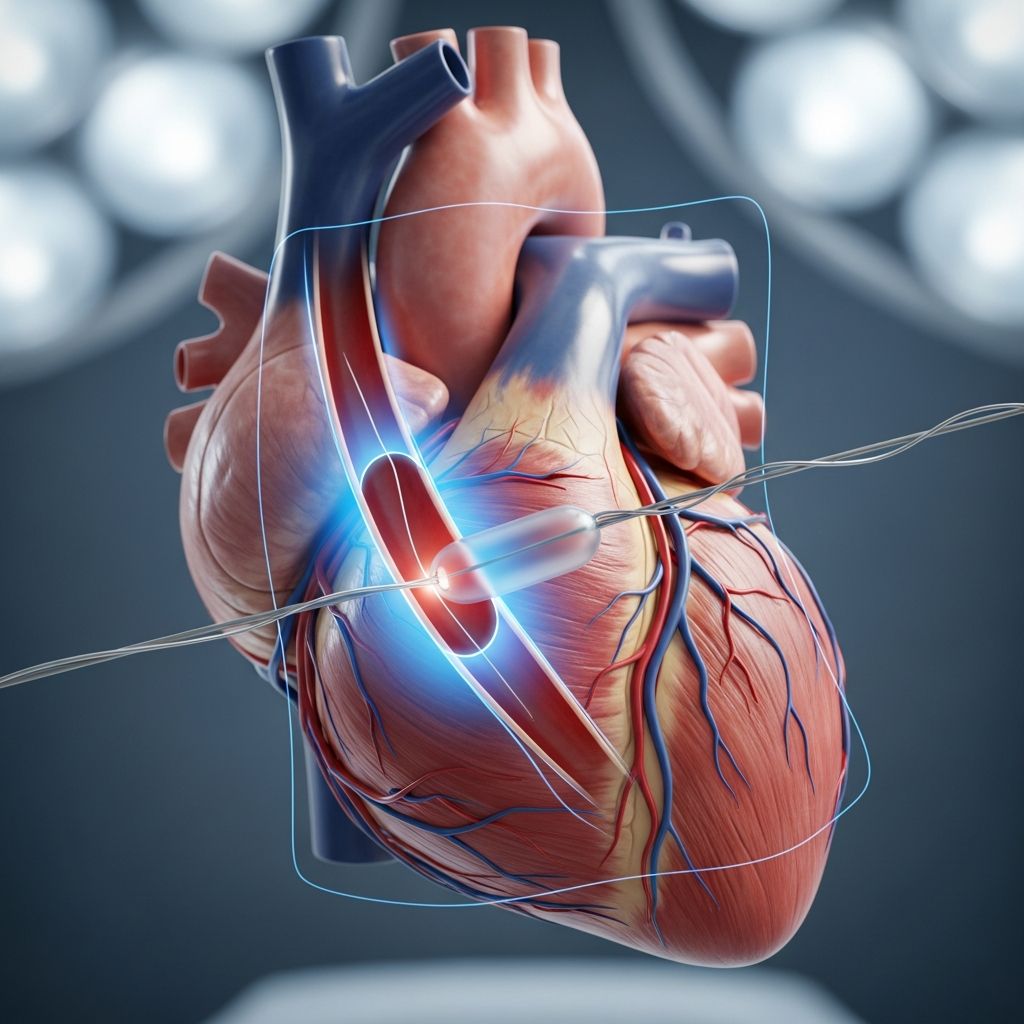
After identifying the blocked area, the cardiologist introduces a guidewire through the catheter and carefully positions the wire tip beyond the narrowed section of the artery. The guidewire serves as a track over which other devices will be advanced. Next, a tiny balloon catheter is threaded over this guidewire and positioned at the site of the blockage.
When inflated, the balloon exerts pressure on the plaque, compressing it against the artery walls and opening the vessel to allow blood flow to resume. The balloon is then deflated and removed. In many cases, balloon angioplasty alone may be sufficient to restore adequate blood flow, but most modern PCI procedures include stent placement for better long-term outcomes.
Stent Placement
Usually, the interventional cardiologist places a small, permanent mesh tube called a stent to keep the artery open long term. The stent is mounted on a balloon catheter and advanced over the guidewire to the site of the previous blockage. Once properly positioned, the balloon is inflated, expanding the stent and embedding it into the artery wall. The balloon is then deflated and removed, leaving the stent in place permanently.
Most modern stents are drug-eluting stents (DES), which release medication directly into the artery to reduce the risk of re-narrowing within the stent—a complication known as in-stent restenosis. These advanced stents have significantly improved long-term outcomes and durability compared to bare-metal stents.
Advanced Techniques
In certain situations, additional advanced techniques may be required to adequately prepare the vessel for stent placement. These specialized interventions include:
- Rotational atherectomy: Specialized equipment that uses a rotating burr to remove calcified plaque and prepare the vessel for stent deployment
- Directional atherectomy: Devices that cut and remove plaque material from the artery wall
- Thrombectomy: Techniques to remove blood clots from occluded vessels, particularly in acute myocardial infarction
- Intravascular ultrasound (IVUS): High-resolution imaging that provides detailed cross-sectional views of the vessel to guide optimal stent placement
The procedure typically lasts between 30 minutes and two hours, depending on the complexity of the blockage and the techniques required.
What to Expect Before Your Percutaneous Coronary Intervention
Proper preparation is essential for a successful PCI procedure and optimal recovery. Your cardiologist and care team will provide specific instructions tailored to your individual situation.
Pre-Procedure Instructions
Your physician will provide detailed instructions regarding medication management, fasting requirements, and other preparatory measures. It is crucial to follow these instructions carefully to ensure your safety and the procedure’s success. Key preparations typically include:
- Fasting for a specified period before the procedure (usually 6-8 hours)
- Adjusting or temporarily stopping certain medications, particularly blood thinners
- Arranging transportation, as you will not be able to drive immediately after the procedure
- Having someone available to stay with you during recovery
- Reporting any recent infections, allergies, or medical changes to your care team
Day of Procedure
On the day of your PCI, you will arrive at the hospital and complete registration procedures. After changing into a hospital gown, a nurse will review your medical charts to ensure no contraindications exist. You will receive moderate sedation when you arrive at the catheterization laboratory, helping you remain calm and relaxed throughout the procedure.
The cardiologist will verify your name and the planned procedure before administering any medication. Once sedation has taken effect, the procedure begins. You will be awake during most of the procedure but will not feel pain or discomfort—only pressure sensations as the catheter moves through your vessels.
Risks and Complications
While PCI is generally considered a safe procedure, as with any medical intervention, there are potential risks. Understanding these complications helps you make informed decisions and recognize warning signs during recovery.
Common Risks
Your surgeon will discuss specific risks related to your procedure, which may include:
- Bleeding: Minor bleeding at the catheter insertion site is common, but significant bleeding is rare
- Infection: Risk of infection at the insertion site or systemic infection, typically managed with sterile technique and prophylactic antibiotics
- Adverse reaction to anesthesia: Rare but possible complications from sedative medications used during the procedure
- Allergic reaction to contrast dye: Some patients may experience reactions to the iodine-based contrast material
- Vessel perforation: Small risk of the catheter or guidewire perforating the vessel wall
- Restenosis: Re-narrowing of the stent, though modern drug-eluting stents have significantly reduced this complication
- Thrombosis: Blood clot formation within the stent, prevented by appropriate antiplatelet medications
Recovery and Aftercare
Recovery from PCI is typically much faster than from traditional open-heart surgery. Most patients go home the same day or after an overnight observation period.
Immediate Recovery
After the procedure, you will be monitored in a recovery area to ensure the insertion site is stable and there are no immediate complications. Your nurses will check your vital signs regularly and assess your comfort level. You may feel drowsy from the sedation—this is normal and typically resolves within a few hours.
Discharge Instructions
Before leaving the hospital, you will receive comprehensive discharge instructions including:
- Medication schedule and adherence requirements, particularly dual antiplatelet therapy
- Activity restrictions and guidelines for gradual return to normal activities
- Wound care instructions for the catheter insertion site
- When to contact your physician with concerns
- Follow-up appointment scheduling
- Signs and symptoms requiring emergency medical attention
Lifestyle Modifications
Long-term success following PCI requires commitment to lifestyle changes and risk factor modification:
- Medication adherence, particularly antiplatelet agents and other cardiac medications
- Heart-healthy diet low in saturated fat and sodium
- Regular physical activity as approved by your cardiologist
- Smoking cessation if applicable
- Stress management and emotional support
- Regular follow-up appointments with your cardiologist
Long-Term Outcomes and Follow-Up Care
PCI has excellent long-term outcomes, with most patients experiencing significant symptomatic improvement and reduced risk of future cardiac events. The success rate for PCI exceeds 95% in appropriately selected patients, and most stents remain patent (open) for many years with appropriate medical management.
Regular follow-up care is essential to monitor your progress, adjust medications as needed, and assess for any complications. Your cardiologist will typically schedule follow-up visits at regular intervals, with additional testing such as stress tests or coronary angiography performed if symptoms recur.
Frequently Asked Questions
Q: How long does a PCI procedure take?
A: Most PCI procedures last between 30 minutes and two hours, depending on the complexity of the blockage and the techniques required. Simpler cases with single-vessel disease typically take less time than complex multi-vessel interventions.
Q: Will I be asleep during the PCI?
A: You will receive moderate sedation to keep you calm and relaxed, but you will remain awake and aware during most of the procedure. You won’t feel pain, though you may sense pressure sensations as the catheter moves through your vessels.
Q: What is a drug-eluting stent?
A: A drug-eluting stent (DES) is a small mesh tube coated with medication that releases gradually into the artery. The medication reduces inflammation and prevents the artery from re-narrowing (restenosis) inside the stent, improving long-term outcomes compared to bare-metal stents.
Q: When can I return to normal activities after PCI?
A: Most patients can resume light activities within a few days of the procedure. Return to strenuous exercise and activities should be gradual, typically over 2-4 weeks, based on your individual recovery and your cardiologist’s recommendations.
Q: How long do stents last?
A: Modern drug-eluting stents are designed to be permanent and typically remain effective for many years. With appropriate antiplatelet medication adherence and risk factor management, most stents remain patent and functional indefinitely.
Q: Will I need to take blood thinners after PCI?
A: Yes, most patients require dual antiplatelet therapy (typically aspirin plus a second antiplatelet agent) for several months after stent placement. The duration depends on the type of stent used and your individual risk factors. Your cardiologist will provide specific instructions.
Q: What is the success rate of PCI?
A: PCI has a success rate exceeding 95% in appropriately selected patients. Success is defined as achieving adequate coronary flow and reducing the stenosis to less than 30% of the vessel diameter without major complications.
Q: Can I need another PCI after the first one?
A: While modern stents have very low restenosis rates, some patients may require repeat intervention if re-narrowing occurs in the stent or if new blockages develop in other coronary arteries. Regular follow-up and aggressive risk factor modification minimize this risk.
References
- Percutaneous Coronary Intervention | Conditions & Treatments — UT Southwestern Medical Center. Accessed December 1, 2025. https://utswmed.org/conditions-treatments/percutaneous-coronary-intervention-pci/
- Percutaneous Coronary Intervention – UAB Medicine — University of Alabama at Birmingham. Accessed December 1, 2025. https://www.uabmedicine.org/specialties/percutaneous-coronary-intervention/
- Percutaneous Coronary Intervention | Heart and Stroke Foundation — Heart and Stroke Foundation of Canada. Accessed December 1, 2025. https://www.heartandstroke.ca/heart-disease/treatments/surgery-and-other-procedures/percutaneous-coronary-intervention
- Percutaneous Coronary Intervention (PCI) – Cleveland Clinic — Cleveland Clinic. Accessed December 1, 2025. https://my.clevelandclinic.org/health/treatments/22066-percutaneous-coronary-intervention
- Percutaneous Coronary Intervention – StatPearls — National Center for Biotechnology Information (NCBI). Accessed December 1, 2025. https://www.ncbi.nlm.nih.gov/books/NBK556123/
- Percutaneous Coronary Intervention (PCI) | Conditions & Treatments — UCSF Health. Accessed December 1, 2025. https://www.ucsfhealth.org/treatments/percutaneous-coronary-intervention
Similar Articles








Read full bio of Sneha Tete