Percutaneous Endoscopic Gastrostomy (PEG): A Complete Guide
Learn about PEG tube placement, its benefits, risks, and aftercare for nutritional support.
Percutaneous Endoscopic Gastrostomy (PEG): Understanding the Procedure
Percutaneous endoscopic gastrostomy (PEG) is a minimally invasive medical procedure that involves the insertion of a feeding tube directly into the stomach through the abdominal wall. This procedure provides a safe and effective way to deliver nutrition, fluids, and medications to patients who are unable to eat or drink adequately by mouth due to various medical conditions. The PEG tube serves as a lifeline for individuals with swallowing difficulties, neurological conditions, or other health challenges that impair their ability to maintain adequate nutrition through oral intake.
What is a PEG Tube?
A PEG tube is a plastic, flexible feeding tube that is carefully positioned to allow direct access to the stomach. Unlike temporary nasogastric tubes that pass through the nose, a PEG tube provides a more permanent solution for patients requiring long-term enteral nutrition, typically beyond four weeks. The tube enables healthcare providers and patients to deliver calories, medications, and hydration directly into the digestive system, bypassing the mouth and esophagus entirely. This approach ensures that patients receive the nutrition they need while eliminating the risks associated with difficulty swallowing or aspiration.
Why is PEG Tube Placement Performed?
PEG tube placement is recommended for patients who have lost the ability to consume food and fluids orally due to various medical conditions. Understanding the indications for PEG placement helps patients and families understand why this procedure may be necessary for their specific situation.
Primary Indications for PEG Placement
Patients may require a PEG tube for several important reasons:
– Neurological conditions such as stroke or traumatic brain injury that affect swallowing ability- Head and neck cancers or post-surgical complications from head and neck surgery- Progressive neurological diseases like amyotrophic lateral sclerosis (ALS) or Parkinson’s disease- Esophageal disorders or obstruction that prevent normal food passage- Severe dysphagia (difficulty swallowing) from various causes- Dementia or advanced cognitive decline affecting appetite and swallowing- Extended periods of mechanical ventilation requiring secure nutritional access- Palliative care situations where oral intake is no longer possible or desired
Beyond nutritional support, PEG tubes also serve an important secondary function: stomach decompression. In certain clinical situations, the tube can be used to relieve pressure and bloating caused by gastric obstruction or other gastrointestinal complications.
How is the PEG Procedure Performed?
The PEG procedure is a well-established endoscopic technique that is performed in a hospital or outpatient endoscopy center. Understanding the step-by-step process helps patients know what to expect and reduces anxiety about the procedure.
Pre-Procedure Preparation
Before the procedure begins, patients undergo thorough preparation to ensure safety and optimal outcomes. Healthcare providers review the patient’s complete medical and surgical history, including any previous abdominal surgeries that might affect tube placement. Imaging studies may be examined to identify the best location for tube insertion. The patient is positioned supine with the head of the bed elevated to approximately 30 degrees to prevent aspiration of gastric contents.
A bite block is typically placed in the mouth to provide better access for the endoscope and reduce the risk of accidental biting. Patients are informed about what to expect during the procedure, and consent is obtained. The surgical site on the abdomen is prepared and marked, usually located about 2 centimeters medial to the costal margin and 2 centimeters below the xiphoid process.
Anesthesia and Sedation
To ensure patient comfort throughout the procedure, appropriate anesthesia is administered. Patients typically receive a local anesthetic that is sprayed or gargled on the back of the throat to numb the area and suppress the gag reflex. Additionally, an intravenous (IV) line is placed in the arm to deliver sedatives that help patients remain calm and relaxed during the procedure. Most patients fall asleep with these sedatives but continue to breathe on their own throughout. Medical staff closely monitor vital signs, oxygen levels, and heart rate to ensure patient safety at all times.
Related Stories



The Procedure Steps
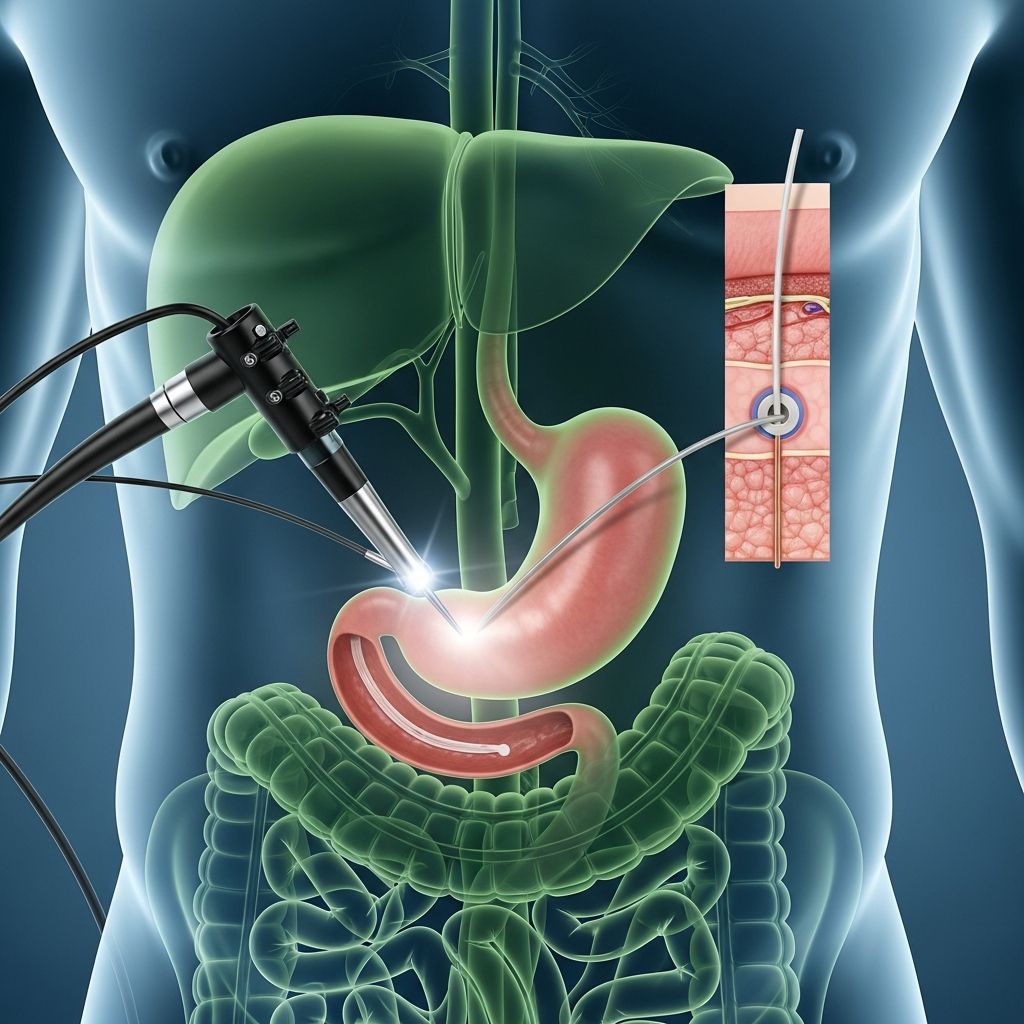
Once the patient is adequately sedated, the actual procedure begins. An antibiotic is administered intravenously just before the procedure to reduce the risk of infection. The endoscope—a thin, flexible tube with a small camera—is carefully passed through the mouth, down the esophagus, and into the stomach. This camera transmits real-time video images to a monitor, allowing the physician to visualize the internal anatomy clearly.
Air is gently pumped through the endoscope to inflate the stomach and make it easier to visualize. The physician then identifies the optimal location on the stomach wall where the tube will be placed. A small incision is made through the skin layer of the abdominal wall at the predetermined site. Using specialized instruments and under direct visualization through the endoscope, a plastic feeding tube is advanced through this opening into the stomach.
There are three main techniques for PEG tube placement: the peroral pull technique (Ponsky), which is the most commonly used method; the peroral push technique (Sacks-Vine); and the direct percutaneous procedure (Russell). Despite these variations, all techniques share similar initial steps and ultimately achieve the same goal of secure tube placement.
Once the PEG tube is properly positioned, it is secured in place using a plastic anchor or retention disc placed on the skin surface. The healthcare provider carefully notes the tube length and tension to ensure optimal positioning. The endoscope is reinserted to verify that the feeding tube is correctly positioned against the stomach wall before the procedure concludes.
Risks and Complications of PEG Tube Placement
Like any medical procedure, PEG tube placement carries potential risks and complications that patients should understand. While PEG placement is generally considered a safe procedure, both minor and major complications can occasionally occur.
Common Minor Complications
– Temporary sore throat that typically resolves within one to two days- Mild discomfort or pain at the tube insertion site- Nausea or mild gastric distention- Minor bleeding at the puncture site- Temporary difficulty with tube feeding initiation
Serious Complications (Rare)
– Peritonitis or infection of the abdominal cavity- Aspiration pneumonia if proper precautions are not taken- Bleeding requiring transfusion- Bowel perforation- Tube malposition requiring replacement- Sepsis in severely immunocompromised patients- Death (extremely rare with modern techniques)
The risk of serious complications is low when the procedure is performed by experienced practitioners using proper technique. Proper patient selection, appropriate pre-operative evaluation, and adherence to sterile techniques significantly reduce complication rates.
What Happens After PEG Tube Placement?
Understanding the recovery process and aftercare instructions is essential for successful tube feeding management and optimal patient outcomes.
Immediate Post-Procedure Recovery
After the PEG tube is successfully placed, patients are moved to a recovery area where they remain for approximately one hour while the sedative wears off. During this recovery period, patients may experience mild discomfort at the insertion site, which is normal and usually manageable with prescribed pain medication. A sore throat is common and typically resolves within a day or two. Patients may feel drowsy and fatigued following sedation and should plan to rest for the remainder of the day.
Vital signs continue to be monitored during recovery to ensure stable recovery from anesthesia. Patients are observed for any signs of complications before being discharged home or admitted to an inpatient unit, depending on their overall condition and the reason for tube placement.
Feeding Initiation and Nutrition Management
In most cases, patients can begin receiving tube feedings within 24 hours of PEG placement, once the physician confirms that the digestive tract is functioning normally. However, the timing and type of feedings may vary depending on individual patient factors and institutional protocols. Some patients may begin with water or specialized feeding solutions before advancing to full-strength nutritional formulas.
Patients and family members receive comprehensive education on proper tube care, feeding administration techniques, and troubleshooting common issues. This education is crucial for preventing complications and ensuring successful long-term tube feeding management. Healthcare providers demonstrate how to flush the tube regularly, inspect the insertion site, recognize signs of infection, and properly position the patient during feeding to prevent aspiration.
Long-Term Care and Maintenance
Proper ongoing care of the PEG tube is essential for preventing infections and maintaining tube function. The insertion site should be kept clean and dry, with regular gentle cleaning around the tube. Patients and caregivers should watch for signs of infection including redness, warmth, swelling, or drainage around the tube site. The tube should be flushed regularly with water to prevent clogging and maintain patency.
Regular follow-up appointments allow healthcare providers to assess the tube’s function, monitor for complications, and adjust feeding plans as needed. Most PEG tubes can remain in place for extended periods, though periodic replacement may be necessary if the tube becomes damaged or dysfunctional.
PEG Tube Feeding Management
Successful PEG tube nutrition requires understanding proper feeding techniques and recognizing potential complications that may arise during tube feeding administration.
Feeding Methods and Schedules
Tube feedings can be administered in several ways depending on patient tolerance and individual needs. Continuous feeding involves delivering nutrition slowly over several hours using a pump, which is often used in hospitals and for patients with sensitive stomachs. Bolus feeding provides larger volumes of nutrition over shorter periods, typically 15-30 minutes, and more closely mimics regular meal patterns. Cyclic feeding delivers nutrition over 8-12 hours, often at night, allowing patients more daytime freedom.
Nutritional Formulas
Healthcare providers select appropriate feeding formulas based on individual nutritional needs, medical conditions, and digestive tolerance. Standard formulas provide balanced nutrition for most patients, while specialized formulas address specific conditions such as diabetes, renal disease, or respiratory conditions. Some patients may benefit from elemental formulas that are easier to digest.
Frequently Asked Questions About PEG Tubes
Q: How long can a PEG tube remain in place?
A: PEG tubes can remain in place indefinitely if properly maintained and functioning well. The tube may need replacement after several years if it becomes damaged, clogged, or malfunctions. Regular medical follow-up ensures the tube continues to meet the patient’s nutritional needs.
Q: Can a patient eat normally if they have a PEG tube?
A: This depends on the reason for tube placement and the patient’s ability to swallow safely. Some patients with PEG tubes can still eat small amounts of food orally if they can swallow safely, while others cannot eat by mouth at all. The physician will determine what oral intake, if any, is appropriate.
Q: How is a PEG tube removed?
A: PEG tube removal is a simple outpatient procedure. Once a patient no longer needs tube feeding support, the tube can be removed by a healthcare provider. The small opening usually closes on its own within a few weeks, leaving minimal scarring.
Q: What are the signs of a PEG tube infection?
A: Signs of infection include redness, warmth, swelling, or drainage around the tube site, fever, abdominal pain, or signs of peritonitis. Any of these symptoms should be reported to a healthcare provider immediately.
Q: Can patients shower or bathe with a PEG tube?
A: Yes, patients can shower or bathe with a PEG tube. The site should be protected from excessive water exposure initially, and the area should be gently dried afterward. Patients should avoid submerging the site in bath water until it is fully healed.
Q: Is PEG tube placement reversible?
A: Yes, PEG tube placement is reversible. The tube can be removed if a patient’s condition improves and they regain the ability to eat and drink safely. After removal, the insertion site typically closes naturally.
Benefits of PEG Tube Placement
PEG tube placement offers significant advantages for patients who cannot maintain adequate nutrition through oral intake. The procedure provides long-term access to the gastrointestinal tract without the discomfort of nasogastric tubes. Patients experience improved quality of life, better nutritional status, and reduced risk of aspiration pneumonia compared to unsafe attempts at oral eating. The tube allows reliable medication administration and is generally well-tolerated by patients when properly maintained.
Conclusion
Percutaneous endoscopic gastrostomy represents an important intervention for patients unable to maintain adequate nutrition orally. As a minimally invasive, relatively safe procedure, PEG tube placement offers a practical solution for long-term enteral nutrition support. By understanding the procedure, potential risks, and proper care techniques, patients and caregivers can successfully manage tube feeding and maintain optimal nutritional status. Healthcare providers should ensure comprehensive patient education and regular follow-up to maximize the benefits of this valuable nutritional support method.
References
- Percutaneous Endoscopic Gastrostomy Tube – StatPearls — National Center for Biotechnology Information (NCBI), National Institutes of Health (NIH). 2024. https://www.ncbi.nlm.nih.gov/books/NBK535371/
- PEG Tube Placement — University of Rochester Medical Center. Updated 2024. https://www.urmc.rochester.edu/encyclopedia/content?contenttypeid=135&contentid=24
- Percutaneous Endoscopic Gastrostomy (PEG) — Yale Medicine. 2024. https://www.yalemedicine.org/clinical-keywords/percutaneous-endoscopic-gastrostomy
- PEG Tube Insertion – Discharge Instructions — MedlinePlus Medical Encyclopedia, U.S. National Library of Medicine. Updated 2024. https://medlineplus.gov/ency/patientinstructions/000900.htm
- Percutaneous Endoscopic Gastrostomy (PEG) Procedures — Michigan Medicine Gastroenterology. 2024. https://mmgastro.com/procedures/percutaneous-endoscopic-gastrostomy-peg/
- Percutaneous Endoscopic Gastrostomy: Before Your Procedure — Kaiser Permanente Health Encyclopedia. 2024. https://healthy.kaiserpermanente.org/health-wellness/health-encyclopedia/he.percutaneous-endoscopic-gastrostomy-before-your-procedure.ud3357
Similar Articles








Read full bio of medha deb