Perianal Lichen Sclerosus Images: 5 Photos To Spot Signs
Comprehensive visual guide to perianal lichen sclerosus: clinical images, symptoms, causes, diagnosis, and effective treatments.
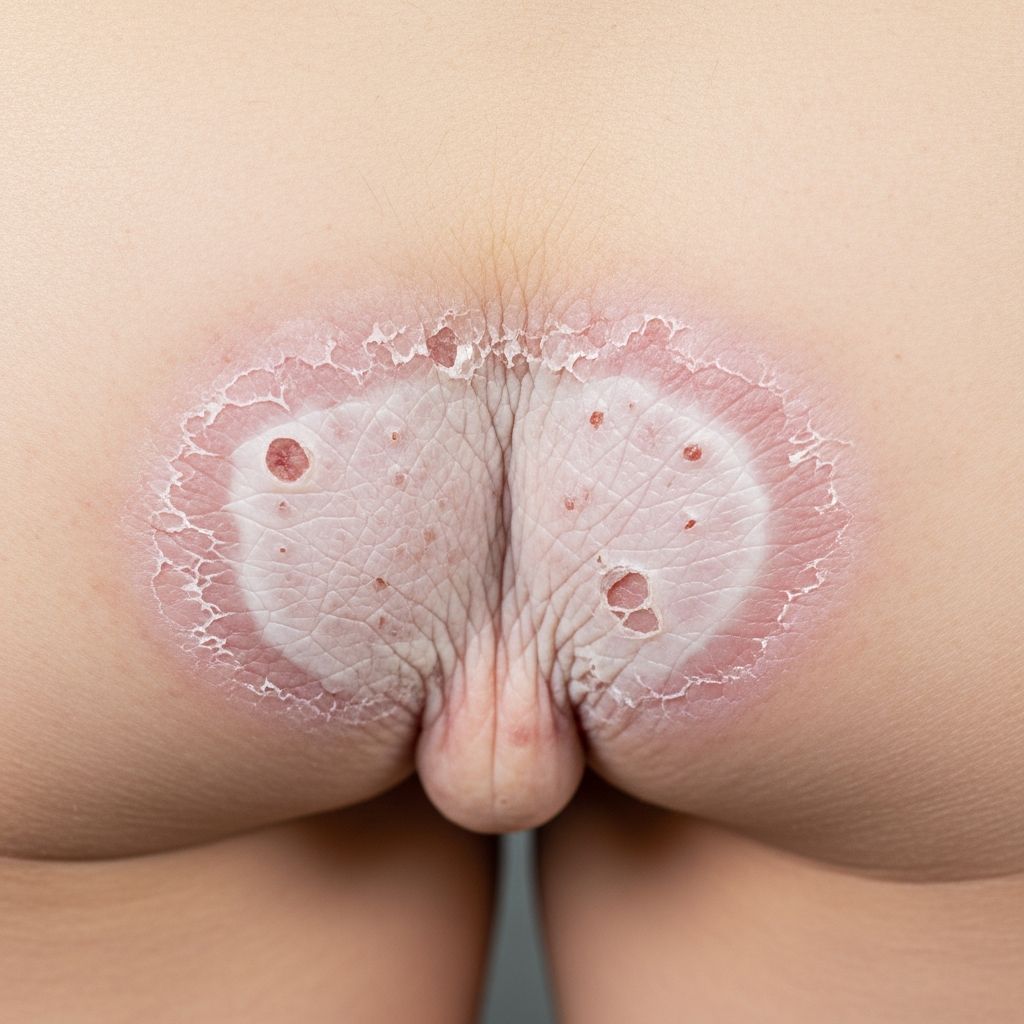
Lichen sclerosus is a chronic inflammatory skin condition primarily affecting the genital and perianal regions, characterized by white, sclerotic patches that can lead to itching, pain, and scarring if untreated. Perianal lichen sclerosus specifically involves the skin around the anus, often presenting with ivory-white plaques, epidermal atrophy, and telangiectasias.
What is perianal lichen sclerosus?
Perianal lichen sclerosus is a subtype of lichen sclerosus et atrophicus, a lymphocytic sclerosing mucinosis of unknown etiology. It manifests as well-demarcated, ivory-white sclerotic plaques with epidermal atrophy and telangiectasias on the perianal skin. The condition is more common in postmenopausal women but can affect individuals of any age, including children. Without intervention, it progresses to scarring, architectural distortion, and increased risk of squamous cell carcinoma.
Clinically, perianal involvement occurs in up to 50% of extragenital lichen sclerosus cases. The affected skin appears thin, fragile, and hypopigmented, often with a crinkled or cigarette-paper-like texture. Symptoms include intense pruritus, pain during defecation, and constipation due to anal stenosis.
Who gets perianal lichen sclerosus?
Perianal lichen sclerosus predominantly affects postmenopausal women, with a female-to-male ratio of approximately 10:1 in genital cases, though perianal presentations may vary. It also occurs in prepubertal girls and, less commonly, in men, where it may present as balanitis xerotica obliterans extending to the perianal area. Risk factors include autoimmune disorders such as thyroid disease, vitiligo, alopecia areata, and type 1 diabetes, suggesting an autoimmune pathogenesis.
- Postmenopausal women: Highest incidence due to hormonal changes.
- Children: Often presents as vulvar or perianal itching mistaken for abuse.
- Men: Associated with phimosis and meatal stenosis.
- Autoimmune predisposition: Family history increases risk.
Prevalence is estimated at 1 in 300 to 1 in 1,000 in dermatology clinics, with perianal involvement in 20-30% of cases.
What causes perianal lichen sclerosus?
The exact cause remains unknown, but multifactorial theories include genetic predisposition, autoimmune mechanisms, hormonal influences, and trauma. Genetic factors are supported by familial clustering and associations with HLA class II alleles. Autoimmunity is implicated by coexistence with thyroiditis (30% of patients) and other autoimmune diseases.
Hormonal theories suggest estrogen deficiency in postmenopausal women triggers the condition. Trauma or koebnerization from friction or incontinence may initiate lesions. Infectious triggers like borrelia have been hypothesized but lack confirmation.
- Autoimmune: T-lymphocyte mediated attack on basal keratinocytes.
- Genetic: Familial cases in 10%.
- Hormonal: Low estrogen levels.
- Environmental: Chronic irritation from moisture or feces.
What are the clinical features of perianal lichen sclerosus?
Classic features include ivory-white, shiny plaques with well-defined borders surrounding the anus. The skin is thin, hypopigmented, and wrinkled, with prominent telangiectasias. Pruritus is severe, leading to excoriations. Pain occurs during bowel movements due to fissuring or stenosis.
Advanced cases show scarring with loss of normal perianal architecture, anal stricture, and buried clitoris in vulvovaginal-perianal disease. Bleeding, ulceration, and bullae may develop.
| Early Features | Late Features |
|---|---|
| White macules/plaques | Scarring and atrophy |
| Itching, burning | Anal stenosis |
| Telangiectasia | Ulceration |
| Fragile skin | Squamous cell ca risk |
Related Stories



Diagnosis
Diagnosis is primarily clinical, based on characteristic morphology. Dermoscopy reveals white structureless areas, linear vessels, and comedo-like openings. Biopsy confirms with interface dermatitis, basal vacuolation, hyalinized dermis, and follicular plugging.
- Clinical exam: Key for perianal figure-of-eight pattern with vulval LS.
- Biopsy: If atypical or unresponsive.
- Dermoscopy: Supports diagnosis non-invasively.
Treatment of perianal lichen sclerosus
First-line treatment is ultrapotent topical corticosteroids like clobetasol propionate 0.05% ointment, applied once daily for 12 weeks, then tapered. Maintenance therapy prevents relapse. Emollients reduce irritation. Calcineurin inhibitors (tacrolimus) are second-line for steroid-resistant cases.
Surgical intervention for stenosis or severe scarring. Treat comorbidities like incontinence.
- Topical steroids: Clobetasol 30g/month induction.
- Emollients: Barrier creams.
- Immunosuppressants: Methotrexate if refractory.
- Surgery: For complications.
Complications
Untreated, leads to scarring, anal stenosis, constipation, dyspareunia, and 4-6% risk of squamous cell carcinoma. Regular monitoring essential.
Perianal Lichen Sclerosus Images
This section features clinical images illustrating various presentations. Images depict perianal skin with characteristic white sclerotic plaques, atrophy, and telangiectasia. Note the well-circumscribed ivory patches encircling the anus, often extending to natal cleft.
- Image 1: Mild perianal lichen sclerosus showing early white plaques with subtle wrinkling.
- Image 2: Moderate case with telangiectatic vessels and epidermal thinning.
- Image 3: Severe scarring with anal stenosis and hypopigmentation.
- Image 4: Post-inflammatory hyperpigmentation after treatment.
- Image 5: Extragenital extension mimicking morphea.
(Descriptions based on typical clinical appearances; actual images show progressive disease stages from early porcelain-white macules to advanced cicatricial changes.)
Frequently Asked Questions
What does perianal lichen sclerosus look like?
It appears as shiny, white, thin patches around the anus, often itchy and painful.
Is perianal lichen sclerosus cancerous?
It increases squamous cell carcinoma risk by 4-6%; monitor lesions.
How is perianal lichen sclerosus treated?
Clobetasol ointment is first-line, with maintenance therapy.
Can children get perianal lichen sclerosus?
Yes, often presenting as stubborn itching; resolves post-puberty in some.
Does lichen sclerosus spread?
No, it’s not contagious.
Patient education and prevention
Avoid irritants, use emollients, treat promptly to prevent scarring. Long-term follow-up required.
References
- Lichen Sclerosus | Condition — UT Southwestern Medical Center. 2024. https://utswmed.org/conditions-treatments/lichen-sclerosus/
- Lichen Sclerosus: Causes, Symptoms, Diagnosis & Treatment — Cleveland Clinic. 2024. https://my.clevelandclinic.org/health/diseases/16564-lichen-sclerosus
- Lichen sclerosus – Symptoms and causes — Mayo Clinic. 2024-09-18. https://www.mayoclinic.org/diseases-conditions/lichen-sclerosus/symptoms-causes/syc-20374448
- Lichen Sclerosus | Fact Sheets — Yale Medicine. 2024. https://www.yalemedicine.org/conditions/lichen-sclerosus
- Lichen Sclerosus — Cedars-Sinai. 2024. https://www.cedars-sinai.org/health-library/diseases-and-conditions/l/lichen-sclerosus.html
- Lichen sclerosus (syn. lichen sclerosus et atrophicus) — Primary Care Dermatology Society. 2024. https://www.pcds.org.uk/clinical-guidance/lichen-sclerosis
Similar Articles








Read full bio of medha deb