Pericardiocentesis: Procedure, Purpose, and Recovery
Understanding pericardiocentesis: A minimally invasive cardiac procedure for fluid removal.
What is Pericardiocentesis?
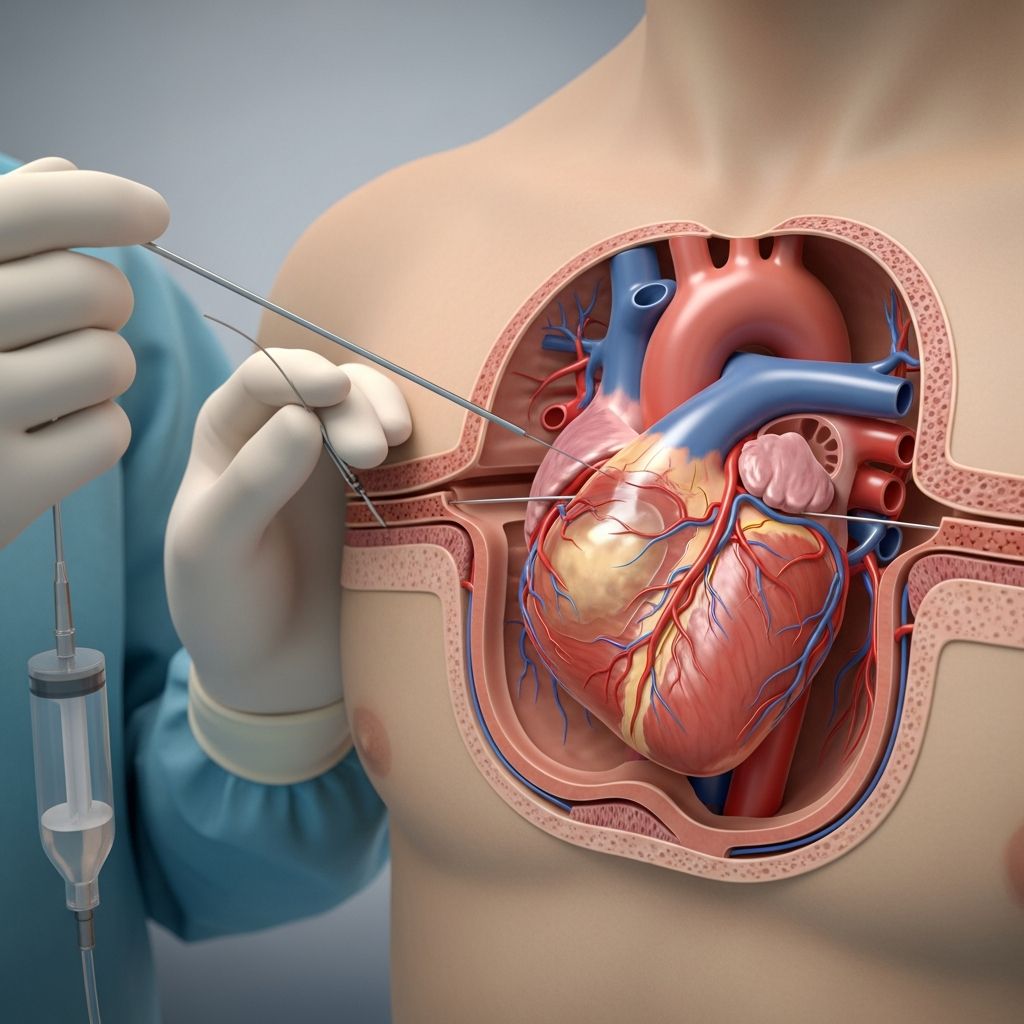
Pericardiocentesis is a minimally invasive medical procedure designed to remove excess fluid that accumulates in the pericardial sac, which is the protective membrane surrounding the heart. The condition of excess fluid buildup is called pericardial effusion. This procedure is performed by a cardiologist or interventional radiologist using a needle to access and drain the fluid from the space between the heart and the pericardium. When pericardial effusion becomes severe, it can restrict the heart’s ability to pump blood effectively, leading to a life-threatening condition known as cardiac tamponade. Pericardiocentesis serves both therapeutic purposes, providing immediate relief from fluid pressure, and diagnostic purposes, allowing physicians to analyze the fluid to determine the underlying cause of the effusion.
Understanding Pericardial Effusion
The pericardium is a double-layered sac that surrounds the heart and contains a small amount of clear, straw-colored fluid that normally lubricates the heart’s movement. Under normal circumstances, there is approximately 15 to 50 milliliters of fluid in this space. However, various medical conditions can cause excessive fluid accumulation, potentially leading to pericardial effusion. Common causes include malignancy, pericarditis (inflammation of the pericardium), cardiac trauma, congestive heart failure, renal failure, and infectious conditions such as tuberculosis or bacterial infections. When fluid accumulates gradually over time, the pericardium can stretch to accommodate larger volumes. However, rapid fluid accumulation can quickly compromise cardiac function, creating a medical emergency requiring immediate intervention.
Why Pericardiocentesis is Performed
Physicians recommend pericardiocentesis for several important clinical reasons:
- To relieve cardiac tamponade, a life-threatening emergency condition where fluid pressure prevents the heart from filling properly
- To diagnose the underlying cause of pericardial effusion through fluid analysis
- To treat chronic or recurrent pericardial effusions that compress the heart
- To obtain fluid samples for laboratory examination, including tests for infection, malignancy, or inflammatory markers
- To reduce symptoms such as shortness of breath, chest pain, and palpitations caused by excessive fluid pressure
In emergency situations where cardiac tamponade is suspected, even a small amount of fluid removal can result in rapid clinical improvement and stabilization of the patient’s hemodynamic status.
Preparation for Pericardiocentesis
Pre-Procedure Instructions
Before undergoing pericardiocentesis, patients must follow specific preparation guidelines to ensure the safety and success of the procedure. You may be instructed to avoid eating or drinking for 6 hours prior to the procedure. This fasting requirement is standard because the procedure may require sedation or general anesthesia, depending on the clinical situation. Patients must sign an informed consent form that outlines the procedure’s purpose, techniques, potential risks, and expected outcomes. It is crucial to inform your healthcare provider about any medications you are currently taking, particularly blood thinners or antiplatelet agents, as these may need to be adjusted before the procedure.
Hospital Arrival and Preparation
Upon arrival at the hospital or procedure facility, a healthcare provider will establish an intravenous (IV) line in your arm. This IV access allows medical staff to administer fluids, medications, or emergency drugs if needed during the procedure. An electrocardiogram (ECG) may be performed to establish a baseline of your heart’s electrical activity. The medical team will review your medical history and current medications to identify any factors that might affect the procedure or your recovery.
The Pericardiocentesis Procedure
Location and Setting
Pericardiocentesis is typically performed in a specialized procedure room, such as a cardiac catheterization laboratory, which is equipped with imaging technology and emergency equipment. In some cases, particularly during emergencies, the procedure may be performed at a patient’s hospital bedside. The choice of location depends on the urgency of the situation and the availability of imaging guidance.
Related Stories



Imaging Guidance
When available, echocardiography (cardiac ultrasound) should be used to guide the pericardiocentesis procedure, as it provides real-time visualization of the needle entering the pericardial space and helps identify the location of the pericardial fluid. Echocardiography allows the physician to select the safest approach route and avoid vital structures such as the lungs, liver, and coronary vessels. Fluoroscopy (moving x-ray imaging) and electrocardiographic monitoring may also be employed to assist with needle positioning and ensure proper placement.
Anatomical Approaches
There are three common anatomical approaches for pericardiocentesis, and the choice depends on where the pericardial fluid is most easily accessible with the lowest risk of damaging surrounding vital structures:
- Subxiphoid approach: This involves inserting the needle below the xiphoid process (the lowest point of the breastbone). This approach is often preferred in emergency situations when imaging guidance is not available, as it provides a relatively direct path to the pericardium with less risk of puncturing the lungs.
- Parasternal approach: The needle is inserted adjacent to the breastbone, typically between the ribs. This approach may be preferred when fluid accumulates in specific locations and when imaging guidance is available.
- Apical approach: The needle is inserted below the left nipple in the apical region. This approach is chosen when pericardial fluid is located near the apex of the left ventricle and is typically performed under echocardiographic guidance to ensure no lung tissue lies between the skin and the pericardial effusion.
Step-by-Step Procedure
The healthcare provider will clean the insertion site with an antiseptic solution to prevent infection. Local anesthetic is then applied to the skin and underlying tissues to minimize discomfort. Once the area is numb, the physician inserts a needle through the chest wall, carefully advancing it toward the pericardial sac. The needle trajectory is directed away from the heart as much as possible to minimize the risk of cardiac injury. When ultrasound guidance is used, the wire entering the pericardial effusion can be directly visualized, confirming proper placement.
Once the needle reaches the pericardial space, a guidewire is inserted through the needle into the pericardial fluid. The needle is then withdrawn and replaced with a flexible catheter that is advanced over the wire. This catheter allows for sustained drainage of the pericardial fluid into sterile containers. In many cases, the catheter is left in place for several hours or overnight to allow for continued drainage and ensure complete fluid removal. The fluid that is collected may be sent to the laboratory for analysis to determine the cause of the effusion.
What to Expect During the Procedure
During pericardiocentesis, you may experience pressure sensations as the needle enters the chest wall. Some patients report mild to moderate chest pain during the procedure, which can be managed with pain medications administered through the IV. Most patients remain awake during the procedure under local anesthesia, though sedation may be provided if needed. The entire procedure typically takes 15 to 30 minutes, depending on the amount of fluid present and the complexity of the case. Your heart rate, blood pressure, oxygen levels, and ECG will be continuously monitored throughout the procedure to ensure your safety.
Potential Risks and Complications
While pericardiocentesis is generally considered a safe procedure when performed by experienced physicians with proper imaging guidance, certain risks and complications can occur:
- Bleeding: Bleeding into the pericardial space or from the insertion site
- Infection: Bacterial infection of the pericardium (pericarditis) or sepsis
- Cardiac perforation: Accidental puncture of the heart wall or coronary arteries
- Pneumopericardium: Air entering the pericardial sac, potentially compromising cardiac function
- Collapsed lung: Puncture or collapse of lung tissue during needle insertion
- Arrhythmias: Irregular heartbeats triggered by needle manipulation or electrical irritation
- Organ damage: Accidental puncture of the liver, stomach, or spleen
- Heart attack: Rare but serious complication from coronary vessel injury
- Heart failure: Acute decompensation from rapid fluid removal in certain patient populations
The risk of serious complications is significantly reduced when the procedure is performed by experienced cardiologists using real-time imaging guidance such as echocardiography or fluoroscopy.
Recovery and Aftercare
Immediate Post-Procedure Period
After the procedure, you will be moved to a recovery area where you will be monitored closely for several hours. Your vital signs, including heart rate, blood pressure, and oxygen saturation, will be checked regularly. If a catheter was left in place for continued drainage, a nurse will monitor the amount and appearance of the draining fluid. Most patients can resume their normal diet once the local anesthetic wears off, typically within a few hours.
Hospital Stay
The length of your hospital stay depends on your clinical condition and whether the pericardiocentesis successfully resolved the pericardial effusion. Some patients may go home the same day if the procedure was uncomplicated and they are clinically stable. Others may require overnight hospitalization for continued monitoring and fluid drainage through the catheter.
Activity Restrictions
You should avoid strenuous activities and heavy lifting for several days following the procedure. Most patients can gradually return to normal activities within one to two weeks, depending on their overall health and the reason the procedure was performed.
Follow-Up Care
Your cardiologist will schedule follow-up appointments to assess your recovery and determine if additional treatment is necessary. Echocardiography may be repeated to confirm that the pericardial effusion has resolved and to evaluate your heart function. If the underlying cause of the effusion requires specific treatment (such as antibiotics for infection or chemotherapy for malignancy), your physician will coordinate that care accordingly.
Results and Findings
Normal Results
The pericardial fluid normally appears clear and straw-colored. Laboratory analysis typically reveals minimal cells and negative cultures for infection. Normal fluid findings confirm that the pericardium was successfully accessed and that no significant abnormalities are present.
Abnormal Results
Abnormal findings in pericardial fluid may indicate various underlying conditions:
- Malignancy or cancer cells suggesting pericardial involvement
- Bacterial, viral, or tuberculous infection
- Inflammatory markers indicating pericarditis
- Blood suggesting cardiac trauma or perforation
- Evidence of congestive heart failure or renal disease
The specific analysis of the fluid helps guide further diagnostic workup and treatment decisions.
Alternatives to Pericardiocentesis
In some clinical situations, alternative approaches to managing pericardial effusion may be considered. Surgical drainage may be necessary if pericardiocentesis cannot be performed safely or if the effusion recurs despite catheter drainage. Surgical options include creating a pericardial window, in which a portion of the pericardium is removed to allow continuous drainage into the pleural cavity. Percutaneous balloon pericardiotomy is a catheter-based technique that may be useful in select patients with malignancy to create a communication between the pericardial and pleural spaces. In rare cases of recurrent effusions, sclerosing agents may be instilled into the pericardial space, or total pericardiectomy (surgical removal of the pericardium) may be performed.
Frequently Asked Questions
Is pericardiocentesis painful?
The procedure is performed under local anesthesia, so you should not experience significant pain. However, you may feel pressure or mild discomfort as the needle is inserted and advanced. Your healthcare team can provide additional pain medication if needed.
How long does pericardiocentesis take?
The procedure typically takes 15 to 30 minutes, depending on the amount of fluid present and the complexity of the case.
Can pericardiocentesis be repeated?
Yes, pericardiocentesis can be repeated if pericardial effusion recurs. However, multiple procedures may indicate the need for more definitive surgical management.
What is the success rate of pericardiocentesis?
When performed by experienced physicians with proper imaging guidance, pericardiocentesis has a high success rate in removing pericardial fluid and relieving cardiac tamponade symptoms.
Will I need surgery after pericardiocentesis?
This depends on the underlying cause of the effusion and whether the pericardiocentesis successfully resolves the condition. Your cardiologist will discuss any additional treatment options with you based on your specific situation.
References
- Procedure Details: Pericardiocentesis | Cardiology | JN Learning — American Medical Association. 2024. https://edhub.ama-assn.org/jn-learning/video-player/18908466
- Pericardiocentesis — UF Health, University of Florida College of Medicine. 2024. https://ufhealth.org/conditions-and-treatments/pericardiocentesis
- Pericardiocentesis – StatPearls — National Center for Biotechnology Information, U.S. National Library of Medicine. 2024. https://www.ncbi.nlm.nih.gov/books/NBK470347/
- Pericardial Effusion and Tamponade: Evaluation, Imaging Modalities, and Management — Johns Hopkins University, School of Medicine. 1995. https://pure.johnshopkins.edu/en/publications/pericardial-effusion-and-tamponade-evaluation-imaging-modalities–4
Similar Articles








Read full bio of Sneha Tete