Pericardium: Essential Guide To Function And Anatomy
Understanding the protective sac surrounding your heart and its vital functions.
Your pericardium is a critical component of your cardiovascular system that often goes unnoticed until problems arise. This protective, fluid-filled sac surrounds your heart and plays essential roles in maintaining proper cardiac function. Understanding the pericardium’s structure, location, and function can help you appreciate how your body protects one of its most vital organs and recognize when something might be wrong.
What Is the Pericardium?
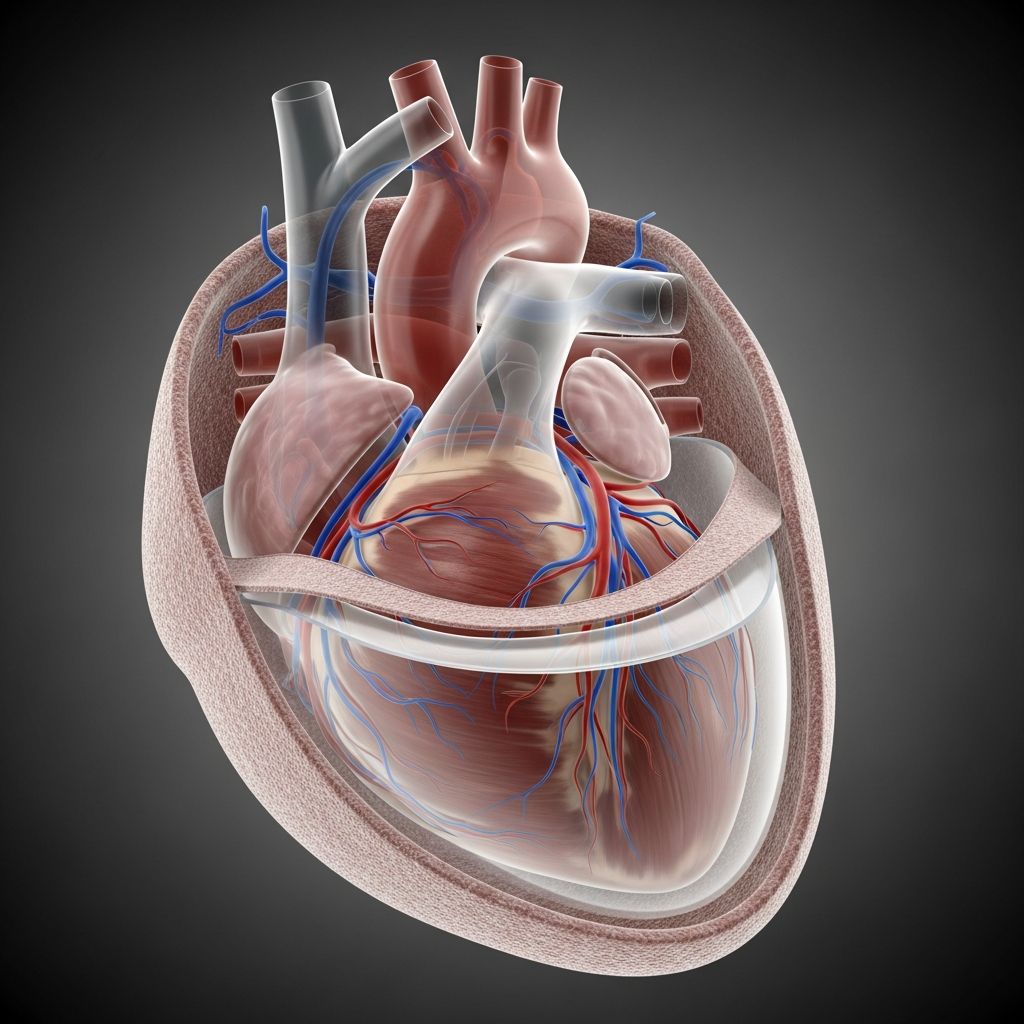
The pericardium is a double-layered, fluid-filled sac that envelops your heart and the roots of your major blood vessels. Think of it as a protective envelope that keeps your heart secure and allows it to function optimally within your chest cavity. This remarkable structure is made up of specialized tissues that work together to safeguard your heart from injury, infection, and inflammation while providing the lubrication necessary for smooth cardiac movement.
The pericardium contains a small amount of fluid—typically about 15 to 50 milliliters—that acts as a lubricant between the layers. This pericardial fluid reduces friction as your heart beats, contracting approximately 100,000 times per day without fatigue or damage.
Anatomy of the Pericardium
The Two Main Layers
The pericardium consists of two distinct layers that work together to protect and support your heart:
Fibrous Pericardium: This is the tough, outer layer of the pericardium. It’s composed of dense connective tissue that provides structural support and protection to your heart. The fibrous layer is inelastic and helps prevent your heart from overfilling with blood. It attaches to surrounding structures including your sternum (breastbone), diaphragm, and vertebral column, anchoring your heart in place within your chest cavity.
Serous Pericardium: Beneath the fibrous layer lies the serous pericardium, which consists of two sublayers. The outer layer is called the parietal pericardium, while the inner layer that directly touches your heart is known as the visceral pericardium or epicardium. These two serous layers are separated by a thin space called the pericardial cavity, which normally contains just enough fluid to allow smooth movement.
Location in Your Body
Your heart and pericardium are located in your chest cavity, positioned in front of your chest and slightly to the left of your breastbone. The pericardium extends superiorly to cover the roots of your major blood vessels—the aorta, pulmonary artery, superior vena cava, inferior vena cava, and pulmonary veins. These vessels, collectively known as the “great vessels,” are partially enclosed within the pericardial sac.
In most people, the heart sits slightly left of center. However, some individuals have a condition called dextrocardia, where the heart is positioned to the right of the breastbone. In these cases, the pericardium still functions normally but is positioned differently.
Primary Functions of the Pericardium
The pericardium serves multiple critical functions that are essential for your cardiovascular health:
- Protection: The fibrous outer layer shields your heart from trauma and injury. It acts as a barrier against physical damage from chest trauma or accidents.
- Lubrication: The pericardial fluid reduces friction between the layers as your heart beats, allowing smooth contraction and expansion without irritation or damage to the tissue.
- Structural Support: The pericardium holds your heart in proper position within your chest cavity, preventing excessive movement and maintaining optimal positioning for efficient pumping.
- Pressure Regulation: The sac helps maintain appropriate pressure around your heart, which is important for proper filling and function.
- Infection Prevention: The sealed nature of the pericardial sac provides some protection against infections spreading from surrounding tissues.
- Containment: In the event of a cardiac rupture, the pericardium acts as a temporary barrier, potentially preventing immediate fatal consequences by containing blood within the sac.
Related Stories



The Pericardial Cavity and Fluid
The space between your visceral and parietal pericardium is called the pericardial cavity. This potential space typically contains 15 to 50 milliliters of clear, serous fluid. This fluid is constantly produced and reabsorbed, maintaining a delicate balance that allows your heart to move freely while the pericardium remains snug around it.
The fluid serves as a shock absorber and friction reducer. Without this fluid, your heart would rub against the pericardium with every beat, causing inflammation and damage. The smooth gliding of the fluid layer allows your heart to contract efficiently thousands of times daily without wear and tear.
Common Pericardial Conditions and Disorders
Although the pericardium is remarkably resilient, several conditions can affect it and compromise heart function:
Pericarditis: This is inflammation of the pericardium, often caused by viral infections, autoimmune diseases, or sometimes following cardiac surgery. Pericarditis causes chest pain that often worsens when lying down or taking a deep breath.
Pericardial Effusion: This condition involves excess fluid accumulating in the pericardial cavity. While small amounts of fluid are normal, significant accumulation can compress the heart and impair its function, potentially leading to a life-threatening condition called tamponade.
Constrictive Pericarditis: In this chronic condition, the pericardium becomes thick and stiff, restricting the heart’s ability to expand and fill properly. This leads to reduced cardiac output and symptoms of heart failure.
Pericardial Tamponade: This is a medical emergency where excessive fluid in the pericardial cavity compresses the heart, preventing it from filling and pumping blood effectively.
Pericardial Cysts and Diverticula: These are abnormal outpouchings or fluid-filled sacs within the pericardium that may require monitoring or treatment depending on their size and symptoms.
How Pericardial Conditions Affect Heart Function
Normally, your pericardium is flexible and elastic, expanding easily as your heart fills with blood and contracting as your heart pumps. This compliance is crucial for normal cardiac function. When pericardial conditions develop, this flexibility is compromised.
When the pericardium becomes inflamed, thickened, or filled with excess fluid, it restricts your heart’s normal expansion. Your heart cannot fill completely with blood during diastole (the relaxation phase), reducing the amount of blood pumped out with each heartbeat. This decreased cardiac output means less oxygen-rich blood reaches your body’s tissues.
Over time, pericardial conditions can lead to serious complications including:
- Reduced cardiac output and decreased oxygen delivery to organs
- Heart failure as the heart struggles to pump efficiently
- Cardiogenic shock, a life-threatening condition where the heart cannot pump enough blood to maintain adequate blood pressure
- Arrhythmias (irregular heartbeat)
- Increased venous pressure leading to fluid accumulation in the lungs and extremities
Recognizing Pericardial Problems
Symptoms of pericardial disorders can vary depending on the specific condition and its severity. Common warning signs include:
- Chest pain or discomfort, often sharp and worsening with deep breathing or lying flat
- Shortness of breath or dyspnea
- Heart palpitations or irregular heartbeat
- Persistent cough
- Difficulty breathing when lying flat (orthopnea)
- Swelling in the legs and abdomen (edema)
- Fatigue and weakness
- Fever, if inflammation or infection is present
If you experience any of these symptoms, contact your healthcare provider immediately. Some pericardial conditions can progress rapidly and require emergency medical intervention.
Diagnostic Evaluation
Healthcare providers use several imaging and diagnostic techniques to evaluate the pericardium:
- Echocardiography: Ultrasound imaging that provides detailed views of the pericardium, heart chambers, and pericardial fluid
- Electrocardiogram (ECG): Records electrical activity of the heart and may show characteristic changes in pericardial disease
- Chest X-ray: Can reveal an enlarged cardiac silhouette or fluid accumulation
- CT Scan: Provides detailed cross-sectional images of the pericardium and surrounding structures
- MRI: Offers excellent visualization of pericardial tissue and fluid
- Cardiac Catheterization: Measures pressures within the heart chambers to assess pericardial constriction
Treatment Options
Treatment for pericardial conditions depends on the underlying cause and severity. Mild cases may resolve with rest and anti-inflammatory medications. More serious conditions may require:
- Medications: Anti-inflammatory drugs, antibiotics for infections, or diuretics to reduce fluid
- Pericardiocentesis: A procedure to drain excess fluid from the pericardial cavity
- Pericardiectomy: Surgical removal of part or all of the pericardium for chronic constrictive pericarditis
- Pericardial Window: Creating an opening between the pericardium and pleural space to allow fluid drainage
- Video-Assisted Thoracoscopic Surgery (VATS): Minimally invasive surgical approach for pericardial procedures
The Pericardium and Overall Cardiac Health
Your pericardium is an underappreciated hero in your cardiovascular system. It works silently and tirelessly to protect your heart, maintain optimal positioning, and reduce friction with every heartbeat. This remarkable structure demonstrates the sophistication of human anatomy, with multiple layers and functions designed specifically to support heart health.
Understanding your pericardium helps you appreciate the complexity of cardiac physiology and recognize the importance of cardiovascular health. When problems do arise, early detection and appropriate treatment can prevent serious complications and maintain your quality of life.
Frequently Asked Questions
Q: How much fluid should be in the pericardial cavity?
A: Normally, the pericardial cavity contains 15 to 50 milliliters of clear serous fluid. This small amount provides lubrication without restricting heart function. Any significant increase beyond this normal range may indicate a pathological condition requiring medical evaluation.
Q: Can the pericardium regenerate or repair itself?
A: The pericardium has limited regenerative capacity. While minor inflammation may resolve with appropriate treatment, severe scarring or structural damage typically cannot be reversed. This is why preventive measures and early treatment of pericardial conditions are important.
Q: Is the pericardium the same as the epicardium?
A: No, they are related but different structures. The epicardium is the innermost layer of the pericardium (also called the visceral pericardium). The pericardium is the complete double-layered sac, including both the visceral layer (epicardium) and the parietal layer, plus the fibrous outer layer.
Q: Can pericardial conditions be prevented?
A: While not all pericardial conditions can be prevented, you can reduce risk by managing underlying conditions like autoimmune diseases, treating infections promptly, avoiding chest trauma, and maintaining overall cardiovascular health through exercise and a heart-healthy diet.
Q: What is the difference between acute and chronic pericarditis?
A: Acute pericarditis develops suddenly, often following a viral infection or cardiac procedure, and typically resolves within weeks. Chronic pericarditis persists for months or longer. Some cases become recurrent, with symptoms returning after initial improvement.
References
- Pericardium: Function and Anatomy — Cleveland Clinic. 2024. https://my.clevelandclinic.org/health/body/23561-pericardium
- Structure and Anatomy of the Human Pericardium — Loukas M, et al. PubMed/National Library of Medicine. 2017. https://pubmed.ncbi.nlm.nih.gov/28062264/
- Epicardium: Function & Anatomy — Cleveland Clinic. 2024. https://my.clevelandclinic.org/health/body/epicardium
- Don’t Judge a Book by Its Cover: Unusual Presentations of Pericardial Diseases — Cleveland Clinic Journal of Medicine. 2017. https://www.ccjm.org/content/92/2/109
- Pericardial Diseases Center — Cleveland Clinic. 2024. https://my.clevelandclinic.org/departments/heart/depts/pericardial-diseases-center
Similar Articles








Read full bio of medha deb