Perineal Pyramidal Protrusion: What You Need To Know in 2025
Understanding infantile perianal pyramidal protrusion: a benign skin condition in young children, its causes, diagnosis, and management.
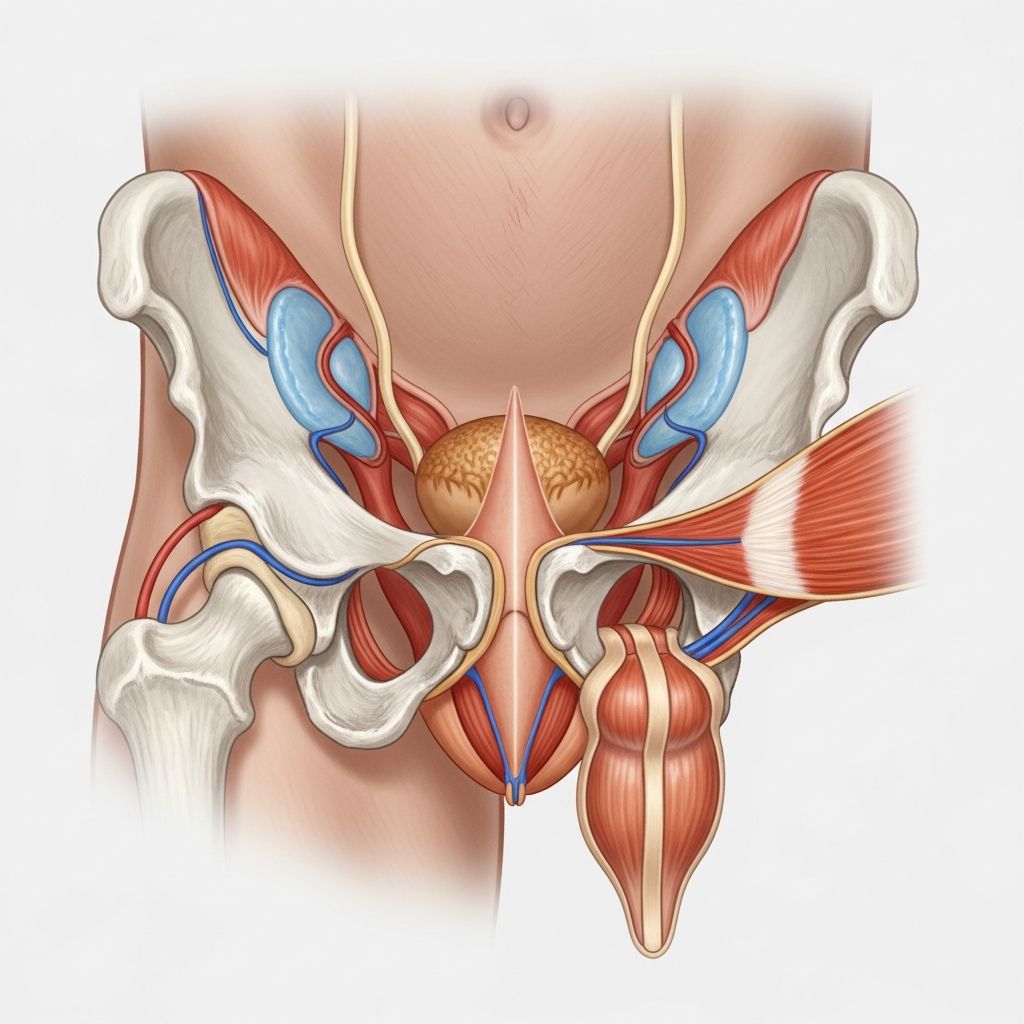
Perineal pyramidal protrusion (PPP), also known as infantile perianal pyramidal protrusion, is a benign, asymptomatic skin lesion characterised by a soft, pyramidal-shaped protrusion of skin in the perineal region, typically anterior to the anus along the midline raphe. It predominantly affects female infants and young children under 5 years of age, with an average diagnosis age of around 14 months. The condition is self-limiting, often resolving spontaneously within months to years without intervention.
What is perineal pyramidal protrusion?
Perineal pyramidal protrusion presents as a smooth, soft, flesh-coloured to pink, rose-red, or purplish-red pyramidal soft tissue tag, measuring 5–30 mm in size, located in the midline perineum, usually anterior to the anus but occasionally posterior. It follows the median raphe and has a characteristic swollen, hen’s crest-like appearance. Unlike skin tags, it features epidermal acanthosis, marked oedema, and mild inflammatory infiltrate microscopically. The lesion is asymptomatic, causing no pain, pruritus, bleeding, or excoriation in most cases.
This condition is far more common in girls (94% of cases), possibly due to inherent anatomical weakness in the female perineal region or median raphe. It can be congenital, familial, or acquired, and may mimic more serious issues like rectal prolapse or abuse lesions, necessitating careful clinical evaluation.
Who gets perineal pyramidal protrusion?
Perineal pyramidal protrusion primarily affects infants and preschool-aged children, with 94% of cases in girls under 5 years. Boys and rarely adults can be affected. A history of constipation is common, reported in many cases, which may contribute to its development. Familial occurrence supports a constitutional predisposition. Risk factors include female sex, young age, constipation, and mechanical irritation from vigorous wiping.
- Prevalence: Most common in females (94%), average age 14 months.
- Associations: Constipation (frequent), lichen sclerosus (rare).
What causes perineal pyramidal protrusion?
The exact aetiology remains unknown, but three main subtypes are recognised: constitutional, functional, and lichen sclerosus-associated.
Constitutional type
The most common form, presumed due to inherent weakness in the median raphe or perineal tissues, especially in females. It may represent a remnant of the urogenital septum projection and can be congenital or familial. Anatomical differences between sexes explain female predominance.
Functional type
Secondary to constipation, mechanical irritation, or vigorous perianal wiping after defecation/urination. Constipation causes straining, leading to tissue protrusion; resolution often follows constipation treatment.
Lichen sclerosus-associated
The least common, where PPP manifests as part of anogenital lichen sclerosus et atrophicus (LSA). Look for signs like dysuria, recurrent UTIs, painful defecation, fecal soiling, itchiness, anal fissures, or ivory-white atrophic plaques.
Other proposed factors include local trauma or perineal body weakness, but no single cause is definitive.
What are the clinical features of perineal pyramidal protrusion?
The hallmark is an asymptomatic, solitary, pyramidal, soft skin prominence (5–30 mm) in the perineal midline raphe, anterior to the anus. Colour varies from pink/flesh to purplish-red. It may swell with crying/straining but is non-tender.
| Feature | Description |
|---|---|
| Appearance | Smooth, pyramidal, soft, pink/red, midline anterior to anus |
| Size | 5–30 mm |
| Symptoms | None (asymptomatic); no pain, itch, bleeding |
| Associated | Constipation history common |
Related Stories



In LSA cases, additional anogenital changes may occur. The lesion reduces with constipation management.
Diagnosis of perineal pyramidal protrusion
Diagnosis is clinical, based on characteristic location, shape, and demographics; biopsy is rarely needed and avoided in children.
Differential diagnosis
- Skin tag/acrochordon: Softer, pedunculated, not pyramidal.
- Genital warts (condyloma acuminata): Verrucous, multiple, HPV-related.
- Rectal prolapse: Mucosal, circumferential, reduces digitally.
- Hemorrhoid: Vascular, painful, in adults.
- Granulomatous lesions (IBD): Inflammatory bowel disease-related.
- Perianal abuse lesions: History/context critical.
- Lichen sclerosus: White plaques, symptoms.
Examine for LSA features; rule out constipation. Imaging/biopsy if atypical.
What is the treatment for perineal pyramidal protrusion?
Conservative management is standard, as it resolves spontaneously in weeks to months.
- Treat constipation: Dietary fibre, polyethylene glycol; protrusion often shrinks.
- Hygiene: Gentle wiping to avoid irritation.
- Monitor: For LSA or complications; biopsy if persistent/symptomatic.
- Surgery: Rarely, excision if cosmetic concern or misdiagnosis.
Avoid unnecessary interventions; parental reassurance key.
What is the outcome for perineal pyramidal protrusion?
Excellent prognosis: spontaneous resolution common within months; complete by puberty. No scarring or recurrence post-resolution. Early constipation treatment accelerates improvement. Rare LSA cases require dermatology referral.
Prevention of perineal pyramidal protrusion
No specific prevention, but minimise constipation via high-fibre diet, adequate fluids, and regular toilet habits in children. Gentle perianal care reduces irritation.
Perineal pyramidal protrusion in adults
Rare in adults; similar presentation but consider differentials like hemorrhoids, cysts, or tumours. Evaluate thoroughly.
FAQ
Is perineal pyramidal protrusion painful?
No, it is typically asymptomatic with no pain, itching, or bleeding.
Does perineal pyramidal protrusion go away on its own?
Yes, it resolves spontaneously in most cases within weeks to months, especially with constipation treatment.
Can boys get perineal pyramidal protrusion?
Yes, though rare (6% of cases); same management.
Is perineal pyramidal protrusion a sign of lichen sclerosus?
Rarely; check for other LSA signs like white plaques or dysuria.
When should I see a doctor for perineal pyramidal protrusion?
If symptomatic, persistent beyond 1 year, or with LSA suspicion; otherwise, routine check suffices.
References
- Perineum Lump: Causes, Symptoms, Treatments, and More — Healthline. 2023. https://www.healthline.com/health/perineum-lump
- Infantile Perianal Pyramidal Protrusions — Dermatology Advisor. 2024. https://www.dermatologyadvisor.com/home/decision-support-in-medicine/dermatology/infantile-perianal-pyramidal-protrusions-infantile-perineal-protrusion-infantile-perianal-protrusion/
- Infantile perianal pyramidal protrusion — VisualDx. 2025. https://www.visualdx.com/visualdx/diagnosis/infantile+perianal+pyramidal+protrusion
- Infantile Perianal Pyramidal Protrusion — Contemporary Pediatrics. 2023-10-01. https://www.contemporarypediatrics.com/view/infantile-perianal-pyramidal-protrusion
- Infantile perianal pyramidal protrusion — PMC (NIH). 2023-09-28. https://pmc.ncbi.nlm.nih.gov/articles/PMC10519168/
- Infantile Perianal Protrusion in a 10-Month-Old Boy — Consultant360. 2024. https://www.consultant360.com/article/consultant360/infantile-perianal-protrusion-10-month-old-boy
Similar Articles








Read full bio of medha deb