Peripheral Nervous System: Structure, Function & Health
Understanding how your PNS controls movement, sensation, and vital body functions.
What Is the Peripheral Nervous System?
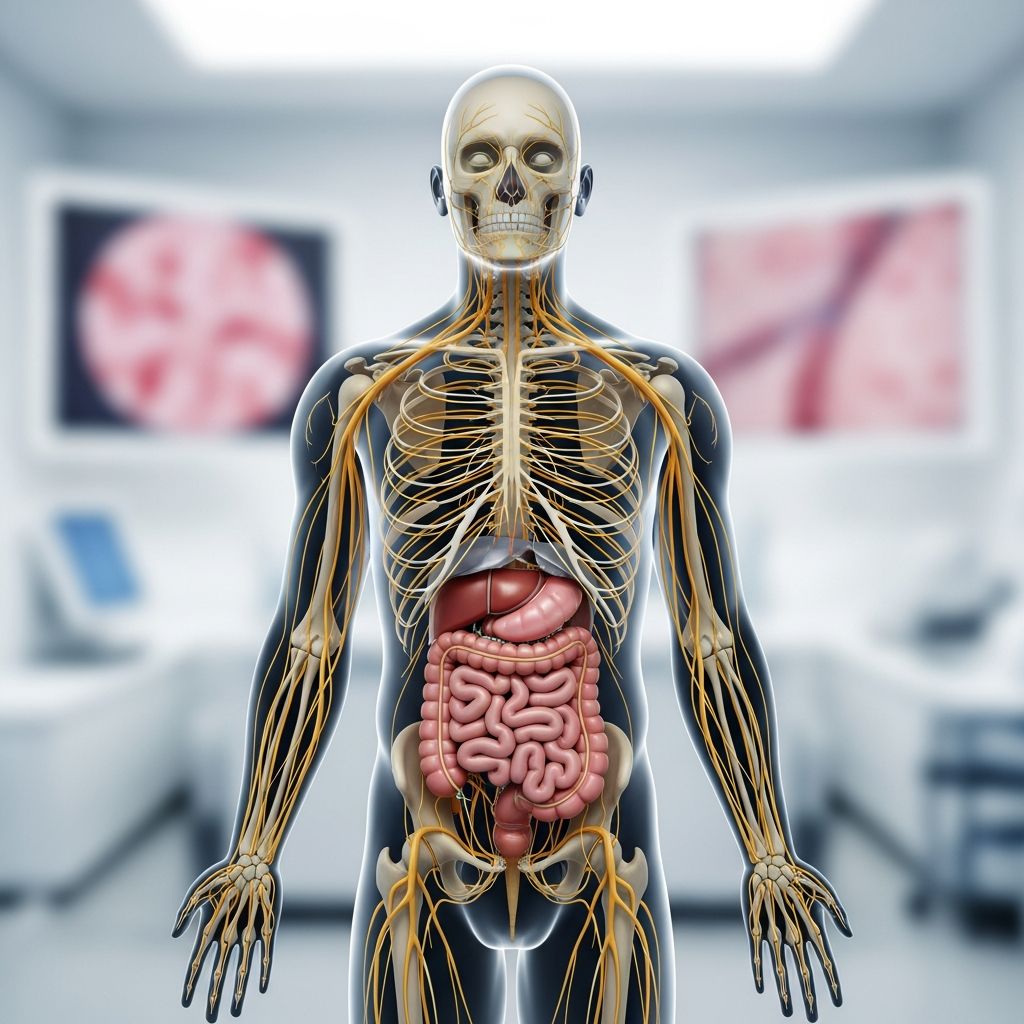
Your peripheral nervous system (PNS) is one of two main parts of your body’s nervous system, serving as a critical communication network that connects your brain and spinal cord to the rest of your body. The PNS feeds information into your brain from most of your senses and carries signals that allow you to move your muscles. Additionally, your PNS delivers signals that your brain uses to control vital, unconscious processes like your heartbeat and breathing.
The term “peripheral” comes from the Greek word meaning “around” or “outside the center,” which accurately describes the location of this system. Your peripheral nervous system consists of all the nerves outside your brain and spinal cord, extending throughout your entire body to reach your organs, muscles, and skin. While your central nervous system (brain and spinal cord) acts like the control center, your PNS is the communication highway that makes everything work together.
The Anatomy and Structure of Your PNS
Understanding the structure of your peripheral nervous system helps explain how it accomplishes its many functions. Your nerves consist of bundles of nerve cells, which have long, arm-like extensions called axons. These nerve cells and their axons twist and intertwine together to form nerve fibers, similar to how multiple strands of spun cloth fibers twist together to form sewing thread.
One helpful way to visualize the nervous system is like an upside-down tree, with your brain as the root and your spinal cord as the tree’s trunk. Your peripheral nervous system spreads out through the rest of your body like limbs, branches, and twigs of the tree. Most of your peripheral nervous system travels to the rest of your body by exiting or entering your spinal cord.
Cranial Nerves: Special Peripheral Nerves
Cranial nerves are unique peripheral nerves that connect directly to your brain, unlike other peripheral nerves. These very special nerves carry signals from your nose, ears, and mouth, as well as many other organs. Your cranial nerves also give you a sense of touch in the skin of your face, head, and neck. This direct connection to the brain allows for more immediate sensory processing in these critical areas.
Components of Peripheral Nerves
Your peripheral nervous system consists of various types of nerve cells and structures. Peripheral nerves and cranial nerves have command centers that are neurons, as well as highways that send information called axons and dendrites. The primary cell types include:
- Neurons: The primary signaling cells that transmit electrical impulses
- Axons: Long extensions that carry signals away from the nerve cell body
- Dendrites: Branches that receive signals from other neurons
- Glial cells: Supporting cells that insulate and protect neurons
- Nerve fibers: Bundles of axons and dendrites working together
The Two Main Subsystems of Your PNS
Your peripheral nervous system has two main subsystems: the somatic nervous system and the autonomic nervous system. These two subsystems work together to accomplish the three main jobs of your PNS, each handling different types of functions and responses.
The Somatic Nervous System
The somatic nervous system is the part of your peripheral nervous system that you can consciously control. It connects to most of your senses and helps you move any muscle you can intentionally control. This system is responsible for your voluntary movements and conscious sensory experiences, allowing you to interact deliberately with your environment.
Related Stories



The Autonomic Nervous System
Your autonomic nervous system functions without you thinking about it. Part of your brain is always working, managing processes that keep you alive. Your brain needs your peripheral nervous system to control those functions. The autonomic nervous system has further subdivisions that handle different aspects of automatic body functions, managing everything from heart rate to digestion without requiring conscious effort.
The Three Main Functions of Your PNS
1. Sensory Information Reception
Your brain is like a powerful supercomputer. However, it knows nothing about the world outside your body without outside input. That’s why your peripheral nervous system is so important. Your peripheral nervous system is how your brain gets information about the outside world. A computer needs peripheral devices like a camera, microphone, or keyboard to give it information from outside itself, and your brain is the same.
Your peripheral nerves convert information about the outside world into nerve signals. Those signals then travel to your brain, which processes those signals into what you can sense of the world around you. Through this system, you experience touch, temperature, pain, sight, sound, taste, and smell.
2. Motor Control and Movement
Your peripheral nerves that branch outward throughout your body deliver command signals from your brain to your muscles. That allows you to move around and do all kinds of tasks, ranging from simple ones, like scratching your nose, to complicated ones, like juggling. Your peripheral nervous system carries motor signals, which are commands sent from your brain to your muscles. These signals are what make it possible for you to move around, and your muscles need nerve connections to the brain to stay healthy and work properly.
3. Autonomic Function Control
Your body has several autonomic processes. These are the automatic functions of your body that happen without your thinking or even being aware of them. They include things like sweating, digestion, blood pressure control, heart rate regulation, and breathing. Autonomic nerve fibers carry autonomic signals throughout your body. The brain continuously monitors and adjusts these functions to maintain homeostasis and keep you alive.
How the PNS Works: A Communication Network
The peripheral nervous system operates through a sophisticated system of electrical and chemical signals. When sensory receptors in your skin, muscles, or organs detect stimuli, they convert this information into electrical impulses. These impulses travel along sensory nerves to your spinal cord and brain, where they are processed and interpreted.
In response, your brain sends out motor commands through motor nerves to muscles, causing them to contract or relax. Simultaneously, your autonomic nervous system continuously sends signals to regulate internal body functions. This constant two-way communication happens at incredible speeds, allowing you to respond to your environment and maintain vital body functions seamlessly.
Common Conditions Affecting the PNS
Peripheral neuropathy is an umbrella term for any condition, disease, or disorder that affects your peripheral nerves. There are many conditions and causes of peripheral neuropathy, which means disease or damage of your peripheral nervous system. Some of the most common examples include diabetes-related neuropathy, infections, injuries, autoimmune disorders, vitamin deficiencies, and certain medications. Your peripheral nerves may also show effects of conditions that affect any part of your central nervous system. While these don’t directly affect your peripheral nervous system, they can still disrupt how it works.
Symptoms of PNS Disorders
The symptoms of peripheral nervous system problems depend on the types of nerves affected. Different types of nerve damage produce distinctly different symptoms.
Motor Nerve Damage Symptoms
Damage to motor nerves affects your muscles by causing:
- Muscle weakness or paralysis
- Muscle atrophy or wasting
- Muscle twitching or spasms
- Difficulty with movement or coordination
- Loss of reflexes
Sensory Nerve Damage Symptoms
Damage to sensory nerves causes the following symptoms:
- Numbness or tingling in affected areas
- Burning or sharp pain sensations
- Loss of temperature sensation
- Inability to feel touch or pressure
- Balance and coordination problems
Autonomic Nerve Damage Symptoms
Damage to your autonomic nerves can affect the following organs and systems:
- Abnormal heart rate or blood pressure
- Sweating problems or inability to sweat
- Digestive issues or constipation
- Bladder control problems
- Sexual dysfunction
- Vision problems
Diagnosis of PNS Conditions
Many tests can help diagnose conditions that affect your peripheral nervous system. The most common starting point is a neurological exam, where your healthcare provider has you use different parts of your body, especially arms, hands, legs, and feet, in certain ways. During this examination, your doctor will test your reflexes, strength, sensation, and coordination.
Additional diagnostic tests may include:
- Electromyography (EMG) to measure muscle electrical activity
- Nerve conduction studies to test how quickly nerves transmit signals
- Blood tests to identify underlying causes
- Imaging studies such as MRI or ultrasound
- Nerve biopsy in certain cases
Treatment and Management of PNS Disorders
For some people, peripheral neuropathy is temporary, treatable, or both. For others, it’s permanent and incurable. Thanks to advances in medical science and technology, many symptoms or forms of peripheral neuropathy are now treatable. That offers many people a chance to manage this condition, meaning they can live longer and with fewer restrictions or impacts from the related conditions and symptoms.
Treatment approaches depend on the underlying cause and severity of the condition. Options may include medications, physical therapy, lifestyle modifications, and in some cases, surgical interventions. Pain management strategies, including peripheral nerve stimulation, have proven effective for many patients in reducing chronic pain associated with PNS disorders.
Prevention and Care of Your PNS
Your peripheral nervous system is a key part of your life. It helps you move around and delivers vital information from your senses to your brain. Prevention is key when caring for this part of your nervous system. Maintaining overall health through proper nutrition, regular exercise, blood sugar control, and avoiding harmful substances can help protect your peripheral nerves.
If you have conditions that affect your peripheral nerves, there’s a wide range of ways healthcare providers can diagnose and treat these conditions. Even with incurable conditions, it’s usually possible to limit how the symptoms of these conditions affect your life. Regular monitoring and early intervention can help prevent complications and maintain quality of life.
Why Your PNS Matters
Your peripheral nervous system is essential for every aspect of your daily functioning. Without it, you couldn’t move, feel sensations, or maintain the automatic processes that keep you alive. From simple tasks like writing an email to complex functions like regulating your heartbeat, your PNS works constantly to keep you connected to your environment and to maintain your health.
Understanding how your PNS works and recognizing early signs of problems can help you seek appropriate medical care and manage conditions more effectively. By taking care of this vital system through healthy habits and prompt medical attention when needed, you can maintain your quality of life and independence.
Frequently Asked Questions
Q: What is the difference between the central nervous system and the peripheral nervous system?
A: The central nervous system (CNS) consists of your brain and spinal cord and acts as the control center. The peripheral nervous system (PNS) includes all nerves outside the brain and spinal cord and serves as the communication network connecting the CNS to the rest of your body.
Q: Can peripheral nerve damage be reversed?
A: Some peripheral nerve damage can be reversed, especially if caught early and the underlying cause is treated. However, some damage may be permanent. Modern medical treatments can often help manage symptoms and improve function even when complete reversal isn’t possible.
Q: How fast do nerve signals travel?
A: Nerve signals travel at different speeds depending on the type of nerve fiber. Some signals travel as fast as 250 miles per hour, while others move much more slowly. Motor and sensory nerves typically transmit signals at speeds of 50-120 meters per second.
Q: What causes peripheral neuropathy?
A: Peripheral neuropathy can be caused by many factors, including diabetes, infections, injuries, autoimmune diseases, vitamin deficiencies, certain medications, alcohol abuse, and toxin exposure. Identifying the underlying cause is essential for effective treatment.
Q: How many cranial nerves does the human body have?
A: The human body has 12 pairs of cranial nerves (24 individual nerves total). These nerves connect directly to the brain and handle sensory and motor functions primarily for the head, neck, and face.
Q: Can lifestyle changes help protect my peripheral nerves?
A: Yes, several lifestyle changes can help protect peripheral nerves, including maintaining healthy blood sugar levels, exercising regularly, eating a balanced diet rich in B vitamins, avoiding smoking and excessive alcohol, managing stress, and protecting yourself from injuries.
References
- Peripheral Nervous System (PNS): What It Is & Function — Cleveland Clinic. 2024. https://my.clevelandclinic.org/health/body/23123-peripheral-nervous-system-pns
- Peripheral Neuropathy: What It Is, Symptoms & Treatment — Cleveland Clinic. 2024. https://my.clevelandclinic.org/health/diseases/14737-peripheral-neuropathy
- Nervous System: What It Is, Parts, Function & Disorders — Cleveland Clinic. 2024. https://my.clevelandclinic.org/health/body/21202-nervous-system
- Somatic Nervous System: What It Is & Function — Cleveland Clinic. 2024. https://my.clevelandclinic.org/health/body/23291-somatic-nervous-system
- Nerves: Types, Function & Anatomy — Cleveland Clinic. 2024. https://my.clevelandclinic.org/health/body/22584-nerves
- Peripheral Nerve Neurosurgery: Surveying the Field — Cleveland Clinic. 2024. https://my.clevelandclinic.org/podcasts/neuro-pathways/peripheral-nerve-neurosurgery-surveying-the-field
Similar Articles








Read full bio of medha deb