Peripheral Ossifying Fibroma: Overview and Management
Understanding peripheral ossifying fibroma: Causes, clinical features, diagnosis, and surgical treatment options.
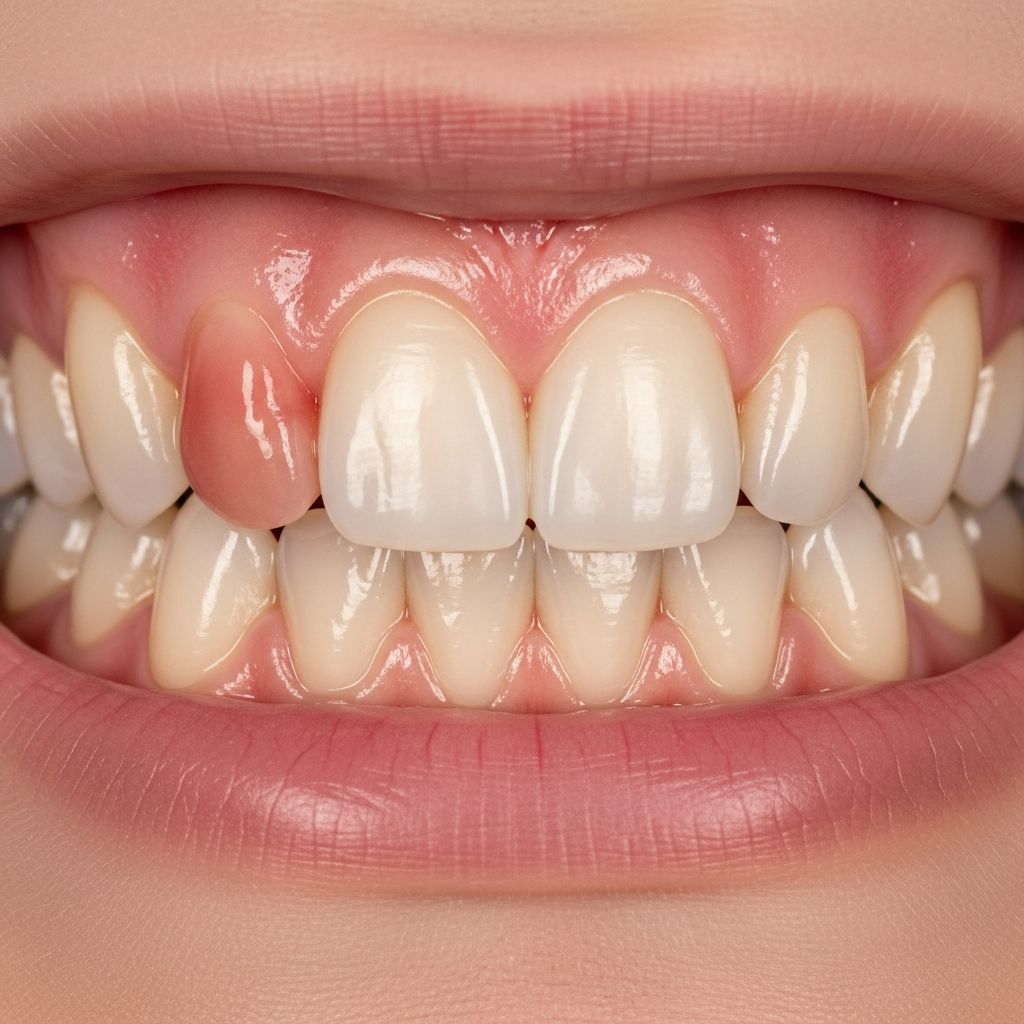
What is Peripheral Ossifying Fibroma?
Peripheral ossifying fibroma (POF) is a benign swelling of the gingival connective tissue that occurs exclusively on the gums. It is derived from cells of the periodontal ligament and has historically been classified as a reactive hyperplasia, though it is sometimes categorized as a benign neoplasm. The terminology surrounding this condition has been subject to considerable confusion in dental literature until a recent WHO classification clearly distinguished it from peripheral odontogenic fibroma. Additionally, POF is occasionally referred to as peripheral cemento-ossifying fibroma, though it is fundamentally distinct from the central cemento-ossifying tumor of bone.
This lesion represents a significant portion of oral pathology cases, accounting for approximately 1-3% of all oral biopsies in most clinical series. The condition has been documented across all age groups, from infancy to advanced age, but demonstrates a distinct peak incidence during the teenage years. Notably, POF is relatively rare in young children with primary dentition and shows declining incidence after age 30, suggesting a potential hormonal influence on lesion development. A pronounced female predominance further supports this hormonal association.
Etiology and Risk Factors
Multiple factors have been identified as contributing to the development of peripheral ossifying fibroma:
- Chronic trauma or irritation: Dental restorations or prostheses that irritate the gingival tissues are considered significant etiological agents.
- Poor oral hygiene: Plaque accumulation beneath the gum line creates an inflammatory environment conducive to lesion development.
- Calculus deposits: Subgingival and supragingival calculus contribute to chronic irritation of the periodontal tissues.
- Hormonal factors: The female predominance and peak incidence during adolescence suggest hormonal influences on POF development.
These etiological factors underscore the importance of maintaining excellent oral hygiene and ensuring proper fit and maintenance of dental appliances.
Clinical Presentation and Characteristics
Location and Appearance
Peripheral ossifying fibroma occurs exclusively on the attached gingiva, typically developing between adjacent teeth in the interdental papilla region. The most common site of occurrence relates to incisor or cuspid teeth, with the anterior maxilla (upper front teeth) representing the most frequently affected location.
The characteristic clinical presentation of POF includes:
- A slow-growing, red, outward-projecting lump
- Typical diameter less than 2 centimeters, though larger lesions are possible
- Often ulcerated surface in more advanced cases
- Generally affecting adolescents and young adults
Growth Pattern
While POF typically demonstrates slow growth, it can expand to considerable size relatively quickly in some cases. Patients frequently delay seeking treatment for several months or years, depending on symptom severity, aesthetic concerns, and development of ulceration. This delayed presentation can result in more advanced lesions at the time of diagnosis.
Differential Diagnosis Challenge
Clinically, peripheral ossifying fibroma can be difficult to distinguish from other common intraoral lesions, including:
- Pyogenic granuloma
- Oral irritation fibroma
- Giant cell fibroma
- Peripheral giant cell granuloma
Due to these clinical similarities with more common oral lesions, histopathological examination and biopsy are essential for accurate diagnosis.
Related Stories



Diagnostic Approach
Clinical Evaluation
Diagnosis of peripheral ossifying fibroma begins with careful clinical assessment of the lesion’s location, size, surface characteristics, and associated symptoms. The clinician must evaluate the presence of predisposing factors such as poor oral hygiene, irritating dental restorations, or subgingival calculus.
Histopathological Examination
Because of the clinical similarity between POF and commoner oral lesions, the condition is almost always definitively diagnosed through biopsy and pathology examination. The histological appearance is characteristic and distinctive, featuring:
- Cellular connective tissue composed of spindle-shaped cells without abnormal characteristics
- Bone formation: Both immature (woven) and mature (lamellar) bone
- Mineralized components: Cementum or calcium deposits in varying proportions
- Mineralization range: 23% to 75% of the lesion composition
Research has identified three distinct components within POF: bone (woven or lamellar), dystrophic calcifications, and cementum, present in variable proportions depending on the specific lesion.
Radiographic Findings
Radiographic imaging plays a limited but supportive role in POF diagnosis. X-rays rarely demonstrate involvement of the underlying jawbone, which helps differentiate POF from more invasive lesions. However, radiographs are valuable for assessing bone integrity and ruling out other pathologies.
Treatment and Management
Surgical Excision as Gold Standard
Complete surgical excision remains the treatment of choice for peripheral ossifying fibroma. The recommended therapeutic approach involves complete removal of the lesion tissue, followed by histopathological examination for confirmation of diagnosis and assessment of complete excision.
Surgical Technique
The conventional surgical management strategy includes several key steps:
- Removal of local irritants: Supragingival and subgingival calculus removal through scaling and planing
- Flap surgery: Surgical access flap creation to visualize the entire lesion
- Lesion excision: Complete removal of the fibrous proliferation using either conventional scalpel technique or laser-assisted approaches
- Periosteal curettage: Careful removal of the periosteal bed to eliminate any residual diseased tissue and reduce recurrence risk
- Tissue management: Proper handling of surrounding periodontium to prevent functional and aesthetic complications
Alternative Surgical Modalities
While conventional scalpel excision represents the most common treatment approach, alternative techniques have demonstrated efficacy in selected cases:
- Diode laser excision: Offers effective hemostasis and reduces postoperative bleeding, particularly beneficial for cases with significant vascular components
- Laterally displaced flap technique: Provides excellent periodontal support and reduces gingival defects following lesion removal
Dental Considerations
An important clinical advantage of POF treatment is that extraction of affected teeth is rarely required for successful lesion removal. This preserves dental structure and maintains natural tooth integrity whenever possible.
Management of Predisposing Factors
Comprehensive POF management extends beyond simple lesion removal. Essential adjunctive care includes:
- Elimination of irritating dental restorations or prostheses
- Rigorous plaque control and patient oral hygiene instruction
- Treatment of calculus and inflammation
- Correction of any iatrogenic factors contributing to gingival irritation
Recurrence and Prognosis
High Recurrence Rate
Unlike most benign oral lesions, peripheral ossifying fibroma demonstrates an unusually high recurrence rate, reaching up to 20% in the postoperative period. Recurrence typically occurs on average approximately 12 months following initial excision. This elevated recurrence risk necessitates specific surgical and postoperative management strategies.
Prevention of Recurrence
To minimize recurrence risk, meticulous surgical technique is essential. Key preventive measures include:
- Complete excision of all diseased tissue, including the periodontal ligament and periosteum
- Thorough curettage of the surgical bed to eliminate any residual lesional tissue
- Careful patient compliance with oral hygiene instructions
- Removal of all predisposing irritants
Postoperative Follow-up
Due to the significant recurrence potential, regular postoperative monitoring and follow-up are essential components of POF management. Clinical guidelines recommend:
- Annual follow-up examinations to detect recurrence at the earliest stage
- Close monitoring during the critical first 12 months post-excision
- Patient education regarding signs and symptoms warranting immediate evaluation
Consequences of Delayed or Untreated POF
If surgical treatment is not performed, the lesion continues to grow and may cause progressive destruction of nearby bone. Untreated ossifying fibroma can lead to several serious complications:
- Bone resorption: Replacement of healthy bone with fibrous tissue, occasionally accompanied by minor bone resorption
- Dental damage: Root resorption of adjacent teeth, leading to tooth mobility and potential loss
- Facial fracture risk: Large lesions replacing substantial bone volume significantly increase susceptibility to pathological fractures
- Functional impairment: Severe lesions can compromise mastication, speech, and swallowing
- Aesthetic consequences: Progressive growth causes facial asymmetry and psychological distress
Treatment Outcomes and Healing
When appropriately managed with complete surgical excision and appropriate postoperative care, peripheral ossifying fibroma typically demonstrates favorable treatment outcomes. Clinical improvements include:
- Resolution of gingival overgrowth and restoration of normal gum contours
- Improvement in mastication function and dietary tolerance
- Enhanced speech clarity and articulation
- Significant aesthetic improvement and restoration of smile appearance
- Uneventful healing with minimal postoperative complications when proper surgical technique is employed
Short-term clinical outcomes following POF excision are generally stable, though long-term surveillance remains necessary to detect potential recurrence.
Frequently Asked Questions
Q: Is peripheral ossifying fibroma cancerous?
A: No, peripheral ossifying fibroma is a benign lesion and does not transform into cancer. However, it requires surgical removal to prevent growth and complications.
Q: Why is POF more common in females and teenagers?
A: The female predominance and peak incidence during teenage years suggest hormonal influences on lesion development, though the exact mechanism remains unclear.
Q: Can POF be treated without surgery?
A: No, surgical excision is the only effective treatment. Non-surgical approaches cannot eliminate the lesion, and it will continue to grow without intervention.
Q: What is the recurrence rate after POF removal?
A: Peripheral ossifying fibroma has an unusually high recurrence rate of up to 20%, typically occurring around 12 months after initial excision, making long-term follow-up essential.
Q: Will I need teeth extraction for POF treatment?
A: No, tooth extraction is rarely required for POF management. The lesion can usually be removed while preserving the natural teeth.
Q: How long does POF healing take?
A: Most patients show uneventful healing during postoperative follow-up appointments, with significant improvement in function and aesthetics typically apparent within weeks to months.
Q: Can POF prevent bone loss?
A: Conversely, untreated POF causes bone loss and destruction. Early surgical removal prevents this progressive bone destruction.
References
- Surgical Periodontal Management of Peripheral Ossifying Fibroma — University of Texas Health Science Center. 2024. https://digitalcommons.library.tmc.edu/uthdb_docs/34/
- The Management of Peripheral Ossifying Fibroma: A Case Report — Cureus. 2024-10-04. https://pmc.ncbi.nlm.nih.gov/articles/PMC11531663/
- Peripheral Ossifying Fibroma — DermNet New Zealand. Accessed 2026. https://dermnetnz.org/topics/peripheral-ossifying-fibroma
- Ossifying Fibroma: What It Is, Types & Treatment — Cleveland Clinic. 2024. https://my.clevelandclinic.org/health/diseases/24275-ossifying-fibroma
Similar Articles








Read full bio of medha deb