Peritonsillar Abscess (Quinsy): Symptoms, Treatments & Causes
Understanding peritonsillar abscess: causes, symptoms, diagnosis, and effective treatment options for this serious throat infection.
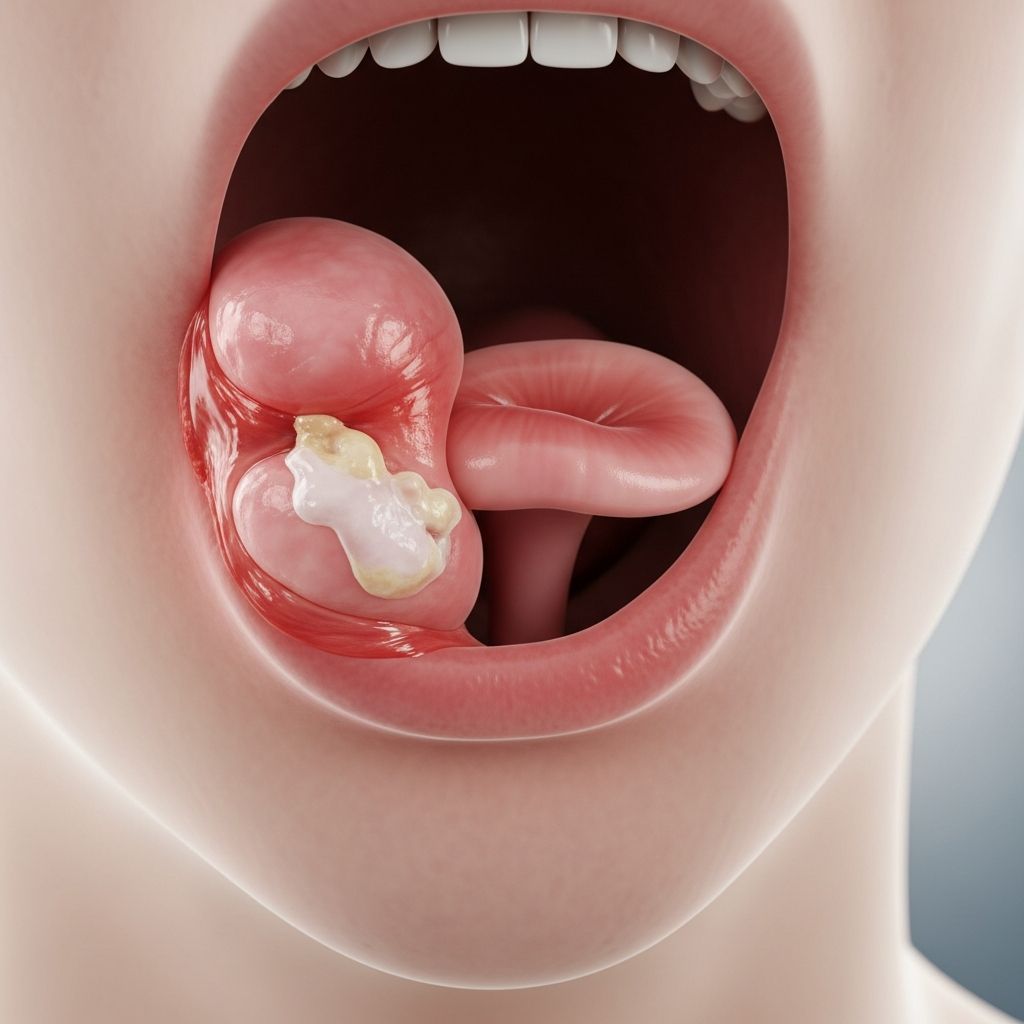
Understanding Peritonsillar Abscess (Quinsy)
A peritonsillar abscess, commonly known as quinsy, is a pus-filled pocket that develops near one of your tonsils. This condition represents a serious complication that can cause significant pain and swelling in the throat. In severe cases, a peritonsillar abscess can grow so large that it blocks your throat, making it difficult to speak, swallow, or even breathe. If left untreated, the infection can spread beyond the throat to your mouth, neck, chest, or lungs, potentially leading to life-threatening complications.
Understanding the nature of this condition is crucial for recognizing early signs and seeking appropriate medical attention. While peritonsillar abscess can develop in people of any age, it is particularly common among teenagers and adults. The condition typically develops as a complication of untreated or inadequately treated acute tonsillitis.
Symptoms of Peritonsillar Abscess
Recognizing the symptoms of a peritonsillar abscess is essential for early diagnosis and treatment. In most cases, a sore throat serves as the first warning sign, with additional symptoms developing gradually over the next few days. Understanding these symptoms can help you seek timely medical care.
Early and Progressive Symptoms
The initial symptom of peritonsillar abscess is typically a sore throat, which may be accompanied by a symptom-free period before the abscess fully develops. A delay of 2 to 5 days between the initial onset of symptoms and actual abscess formation is not uncommon. As the abscess develops, you may experience:
– Severe, unilateral throat pain (usually on one side)- Red and swollen tonsils- Tender and swollen lymph nodes (glands) on one side of the neck- Difficulty and pain when swallowing or opening the mouth- Fever and chills- Headache and body aches- Earache on the same side as the abscess- Drooling or inability to swallow saliva- A muffled or hoarse voice, often described as a “hot potato” voice- Bad breath or foul-smelling odor from the mouth- Facial or neck swelling- Neck stiffness- Muscle spasms in the jaw and neck (trismus and torticollis)
Physical Signs During Examination
During a physical examination, healthcare providers may observe several characteristic signs of peritonsillar abscess. The mouth and throat typically show swelling on one side of the throat, with redness and inflammation concentrated around the affected tonsil. The uvula, the small tissue that hangs in the middle of the throat, may be pushed away from the swollen side. Lymph glands in the jaw and neck may appear enlarged and feel tender to touch. In some cases, a bulge may be visible on the soft palate and anterior tonsillar pillar.
Causes and Risk Factors
Peritonsillar abscess typically develops as a complication of untreated acute tonsillitis. When a bacterial throat infection is not properly treated or adequately managed, the infection can progress and lead to abscess formation. The condition most commonly results from Group A Streptococcus infection, though other bacteria may also be responsible.
How the Infection Develops
The infection begins in the tonsils and, if left unchecked, spreads to the tissue surrounding the tonsil. As the infection progresses, pus accumulates in the peritonsillar space, creating a localized pocket of infection. Several factors can increase your risk of developing this condition, including inadequate treatment of initial throat infections, delayed medical intervention, immunosuppression, and certain anatomical factors that may predispose some individuals to recurrent infections.
Related Stories



Diagnosis of Peritonsillar Abscess
Diagnosing peritonsillar abscess typically involves a combination of clinical evaluation and diagnostic testing. Healthcare providers rely primarily on patient history and physical examination findings to make an initial diagnosis.
Clinical Examination
During the physical examination, your doctor will perform a thorough intraoral inspection using a light and possibly a tongue depressor. The physician will look for characteristic signs including unilateral swelling of the peritonsillar area, redness and swelling in the throat, and displacement of the uvula away from the affected side. The doctor may also gently apply pressure to the area with a gloved finger to assess for pus and determine if fluid is present within the throat tissues. A diagnosis may be easier to make when the abscess is large enough to be clearly visible.
Imaging and Laboratory Tests
While clinical examination is often sufficient for diagnosis, imaging studies may be helpful in confirming the diagnosis and ruling out other conditions. Available diagnostic imaging options include:
– Ultrasonography: Often the easiest and most useful diagnostic tool, performed by placing the transducer over the submandibular area- CT (computed tomography) scan: Provides detailed cross-sectional images of the throat and surrounding structures- Fiberoptic endoscopy: Used to check if the airway is blocked and assess the extent of swelling- Point-of-care ultrasound: Can be used to identify the optimal location for aspiration or incision and drainage
Needle Aspiration
Needle aspiration is considered the gold standard diagnostic procedure for differentiating peritonsillar abscess from peritonsillar cellulitis. During this procedure, a needle is inserted into the suspected abscess area to extract fluid. If pus is obtained through aspiration, this confirms the diagnosis of abscess rather than cellulitis (inflammation without pus formation). Cultures of the aspirated fluid can help identify the specific bacteria causing the infection, which aids in selecting appropriate antibiotic therapy.
Treatment Options
Treatment of peritonsillar abscess typically involves a combination of medical and procedural interventions aimed at eliminating the infection and preventing complications.
Antibiotic Therapy
Broad-spectrum antibiotics are the primary medical treatment for peritonsillar abscess. These medications are selected to cover the most common bacterial pathogens responsible for throat infections. Antibiotics should be started promptly upon diagnosis to help control the infection and prevent further complications. The choice of antibiotic may be adjusted based on culture results and sensitivity testing when available.
Drainage Procedures
In addition to antibiotics, most cases of peritonsillar abscess require drainage of the pus-filled pocket. Common drainage procedures include:
– Needle aspiration and drainage: A needle is used to puncture the abscess and extract the accumulated pus- Incision and drainage: A small incision is made in the abscess to allow pus to drain- Tonsillectomy: In some cases, particularly when recurrent abscesses occur, surgical removal of the tonsil may be recommended
Supportive Care
Along with medical and procedural treatments, supportive care measures help manage symptoms and promote healing. These measures include adequate hydration to prevent dehydration from difficulty swallowing, pain management with appropriate medications, warm salt water gargles to soothe the throat, and soft or liquid diet to minimize pain during eating. Rest is also important to allow your body to focus on fighting the infection.
Potential Complications
If peritonsillar abscess is not treated promptly and appropriately, serious complications can develop. These potential complications include:
– Airway obstruction: Severe swelling can block the airway, making breathing difficult- Lung infection (pneumonia): The infection can spread to the lungs if abscess contents rupture into the airway- Widespread infection: The abscess can rupture and spread infection throughout the throat, mouth, neck, and chest- Sepsis: In severe cases, the infection can spread systemically, causing life-threatening sepsis- Mediastinitis: Infection can spread to the mediastinum (the space in the chest between the lungs)
When to Seek Medical Attention
You should seek immediate medical attention if you experience severe throat pain that worsens over several days, difficulty swallowing or breathing, high fever, signs of airway obstruction, or any symptoms suggestive of peritonsillar abscess. Emergency care is particularly urgent if you develop breathing difficulties, severe swelling, or signs of systemic infection such as confusion or extreme weakness.
Prevention Strategies
While peritonsillar abscess cannot always be prevented, certain measures can reduce your risk. Prompt treatment of acute tonsillitis with appropriate antibiotics is crucial. Complete the full course of prescribed antibiotics even if symptoms improve, maintain good oral hygiene, practice proper hand hygiene to reduce exposure to infection-causing bacteria, and seek medical evaluation for persistent or worsening throat symptoms rather than attempting self-treatment.
Frequently Asked Questions (FAQs)
Q: What is the difference between peritonsillar abscess and peritonsillar cellulitis?
A: Peritonsillar cellulitis is inflammation of the tissue around the tonsil without pus formation, while peritonsillar abscess involves the accumulation of pus in a localized pocket. Needle aspiration can differentiate between these two conditions.
Q: How long does it take to recover from peritonsillar abscess?
A: Recovery time varies depending on the severity of the abscess and the treatment method used. Most patients begin to feel improvement within a few days of starting antibiotics and drainage, with complete recovery typically occurring within 1-2 weeks.
Q: Can peritonsillar abscess recur?
A: Yes, recurrent peritonsillar abscesses can occur in some individuals. Recurrent cases may warrant consideration of tonsillectomy to prevent future episodes.
Q: Is peritonsillar abscess contagious?
A: The underlying bacterial infection can be contagious, so practicing good hygiene measures such as not sharing personal items and covering your mouth when coughing or sneezing is important.
Q: What foods should I eat during recovery?
A: Soft or liquid foods that are easy to swallow are recommended, including soup, yogurt, smoothies, ice cream, and mashed potatoes. Avoid hot, spicy, or hard foods that may irritate the throat.
Q: How is peritonsillar abscess different from a regular sore throat?
A: While a regular sore throat from acute tonsillitis typically involves bilateral (two-sided) symptoms, peritonsillar abscess is characterized by severe, unilateral (one-sided) throat pain, along with visible swelling and the collection of pus in a localized area.
References
- Peritonsillar Abscess (Quinsy): Symptoms, Treatments & Causes — Cleveland Clinic. 2024. https://my.clevelandclinic.org/health/diseases/22817-peritonsillar-abscess-quinsy
- Peritonsillar Abscess – StatPearls — National Center for Biotechnology Information (NCBI), National Institutes of Health. 2024. https://www.ncbi.nlm.nih.gov/books/NBK519520/
- Peritonsillar Abscess Information — Mount Sinai Health System. 2024. https://www.mountsinai.org/health-library/diseases-conditions/peritonsillar-abscess
- Peritonsillar Abscess: Diagnosis and Treatment — American Academy of Family Physicians. 2002. https://www.aafp.org/pubs/afp/issues/2002/0101/p93.html
- Peritonsillar Abscess and Cellulitis – Ear, Nose, and Throat Disorders — Merck Manuals Professional Edition. 2024. https://www.merckmanuals.com/professional/ear-nose-and-throat-disorders/oral-and-pharyngeal-disorders/peritonsillar-abscess-and-cellulitis
- Peritonsillar Abscess (for Teens) — Nemours KidsHealth. 2024. https://kidshealth.org/en/teens/peritonsillar-abscess.html
Similar Articles








Read full bio of medha deb