Perniosis Pathology: Comprehensive Guide
Detailed histopathological analysis of perniosis, revealing key microscopic features and diagnostic challenges in chilblains pathology.
Perniosis Pathology
Perniosis, commonly known as chilblains, is an inflammatory skin condition triggered by exposure to cold, damp, non-freezing temperatures, primarily affecting acral sites such as fingers and toes. This article delves into its histopathological features, clinical correlations, and diagnostic nuances, drawing from authoritative medical literature to provide a thorough understanding for clinicians and pathologists.
Introduction
Perniosis pathology examines the microscopic changes in skin biopsies from patients with chilblains. It is characterised by a localised vasculitis resulting from an abnormal vascular response to cold. The condition manifests as tender, itchy erythematous to purplish papules, nodules, or plaques on acral areas, typically appearing 12-24 hours after cold exposure. Histologically, perniosis shows nonspecific but characteristic features including dermal oedema, lymphocytic infiltrates, and perivascular inflammation, aiding in differentiation from mimics like frostbite or connective tissue diseases.
The term ‘perniosis’ or ‘pernio’ derives from Old English roots meaning ‘cold sore,’ reflecting its aetiology. While primarily idiopathic, secondary forms link to underlying conditions such as lupus erythematosus or vascular disorders. Accurate pathological diagnosis is crucial, as clinical presentation alone may overlap with other vasculopathies.
Clinical Features
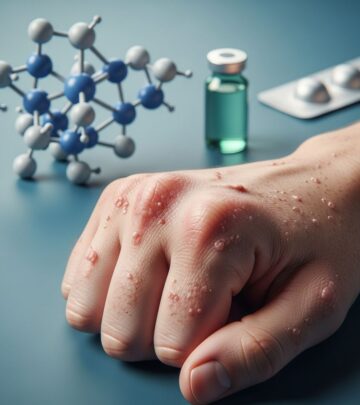
Clinically, perniosis presents with localised
redness and swelling
on acral sites, lasting over 24 hours, fulfilling the major Mayo Clinic diagnostic criterion. Common sites include toes, fingers, heels, ears, and nose. Lesions evolve from erythematous macules to indurated papules or nodules, often symmetric and bilateral.- Burning, itching, or tenderness: Intensifies upon rewarming.
- Colour changes: Red, purple, or bluish hues; may appear shiny or blistered.
- Progression: Potential ulceration, blistering, or secondary infection if chronic.
Symptoms typically resolve in 1-3 weeks with avoidance of cold, but recurrent exposure leads to chronic perniosis with hyperkeratosis or scarring.
Histopathology
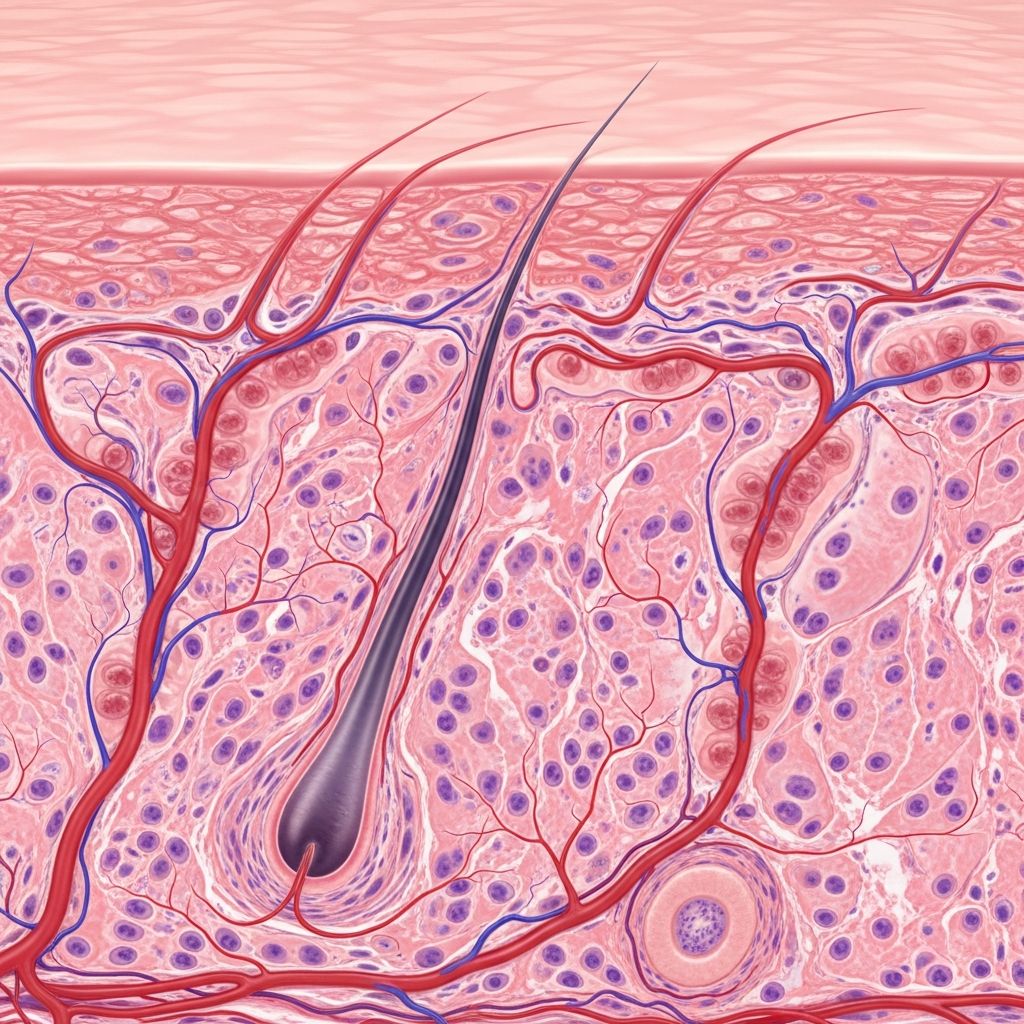
Histological findings in perniosis are often nonspecific, complicating diagnosis, with few well-documented biopsies available. Core features include:
- Dermal oedema and infiltrate: Superficial and deep perivascular lymphocytic infiltrate with oedema, distinguishing acute from chronic phases.
- Epidermal changes: Spongiosis, basal vacuolation, and necrotic keratinocytes; interface dermatitis in some cases.
- Perieccrine inflammation: Prominent lymphocytes around eccrine glands, a hallmark finding.
- Vascular changes: Endothelial swelling, fibrin deposition, and mild vasculitis without true necrosis.
In chronic perniosis, fibrosis replaces oedema, with thickened vessel walls and reduced inflammation. Immunofluorescence may show immunoglobulin deposits in vessel walls, mimicking lupus, but perniosis lacks systemic features. These patterns correlate with clinical acuity: acute lesions show more oedema, while chronic ones exhibit fibrosis.
Microscopic Description
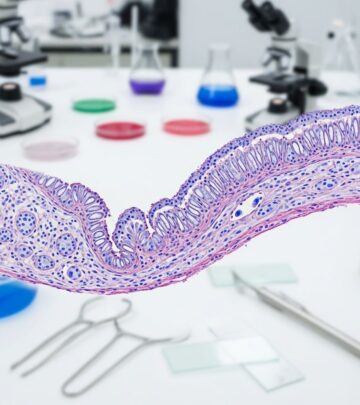
Low-power microscopy reveals wedge-shaped inflammation centred on superficial dermis, extending to deep dermis around adnexa. High-power views highlight perivascular cuffing by lymphocytes and histiocytes, with endothelial cell enlargement. Eccrine coils surrounded by dense lymphoid aggregates are diagnostic clues. Epidermis may show parakeratosis or hypergranulosis in persistent lesions.
| Feature | Acute Perniosis | Chronic Perniosis |
|---|---|---|
| Dermis | Oedema, sparse infiltrate | Fibrosis, dense infiltrate |
| Epidermis | Spongiosis, vacuolation | Hyperkeratosis, acanthosis |
| Vessels | Endothelial swelling | Thickened walls |
| Eccrine glands | Peri-eccrine lymphocytes | Persistent inflammation |
This table summarises key differences, aiding pathologists in staging.
Differential Diagnosis
Perniosis pathology must differentiate from:
- Idiopathic livedo reticularis: Lacks infiltrate and oedema.
- Cryoglobulinaemia: Shows thrombi and immune complexes.
- Lupus erythematosus: Positive lupus band on immunofluorescence.
- Frostbite: Epidermal necrosis and subepidermal bullae.
- Acrocyanosis: Persistent cyanosis without inflammation.
Clinical history of cold exposure is pivotal; biopsy confirms in ambiguous cases.
Pathogenesis
The pathogenesis involves vasoconstriction from cold, followed by reperfusion injury upon rewarming, leading to inflammation. Genetic predisposition, low BMI, and connective tissue disorders heighten risk. Abnormal cold-induced vasoconstriction causes hypoxia, endothelial damage, and cytokine release, culminating in the observed histopathology.
Management Implications
Pathological confirmation guides management: topical steroids for inflammation, nifedipine for vasodilation in severe cases. Avoidance of precipitants prevents recurrence. Secondary perniosis warrants screening for lupus or haematologic disorders.
Frequently Asked Questions (FAQs)
What are the hallmark histological features of perniosis?
Dermal oedema, perivascular lymphocytic infiltrate, and peri-eccrine inflammation are key.
How does perniosis pathology differ in acute vs. chronic forms?
Acute shows oedema and spongiosis; chronic features fibrosis and hyperkeratosis.
Is biopsy always necessary for perniosis diagnosis?
No, clinical features suffice often, but biopsy aids differentials.
Can perniosis lead to systemic disease?
Primary is local; secondary links to lupus or cryoglobulinaemia—screen if atypical.
What is the role of cold exposure in pathology?
Triggers vasoconstriction-reperfusion cycle, causing the inflammatory cascade.
This FAQ section addresses common queries, optimising for search intent on perniosis pathology.
Prognosis
Most cases resolve spontaneously with warmth and protection. Chronic or secondary forms may persist, requiring ongoing management. Complications like ulceration occur in 10-20% of severe cases.
In summary, understanding perniosis pathology enhances diagnostic precision, distinguishing it from mimics and informing targeted therapy. Early recognition prevents morbidity in vulnerable populations.
References
- Pernio and Chillblains: Symptoms and Treatment — Rencic Dermatology. 2023. https://www.rencicderm.com/conditions/pernio-chillblains
- Chilblains (Perniosis) Information — Columbia Doctors. 2024. https://www.columbiadoctors.org/health-library/article/chilblains-perniosis/
- Pernio – StatPearls — NCBI Bookshelf, NIH. 2023-10-01. https://www.ncbi.nlm.nih.gov/books/NBK549842/
- Doctor explains CHILBLAINS (Pernio) — YouTube (Doctor O’Donovan). 2022. https://www.youtube.com/watch?v=oOO4fibEoBA
- Chilblains (Pernio): What Is It, Symptoms, Causes & Treatment — Cleveland Clinic. 2024-05-15. https://my.clevelandclinic.org/health/diseases/21817-chilblains-pernio
- Chilblains (Pernio): Symptoms and Management — DermNet NZ. 2024. https://dermnetnz.org/topics/chilblains
Similar Articles


Read full bio of medha deb