Peroneal Nerve Injury: Causes, Symptoms, and Treatment
Complete guide to peroneal nerve injury: understanding symptoms, diagnosis, and effective treatment options.
Understanding Peroneal Nerve Injury
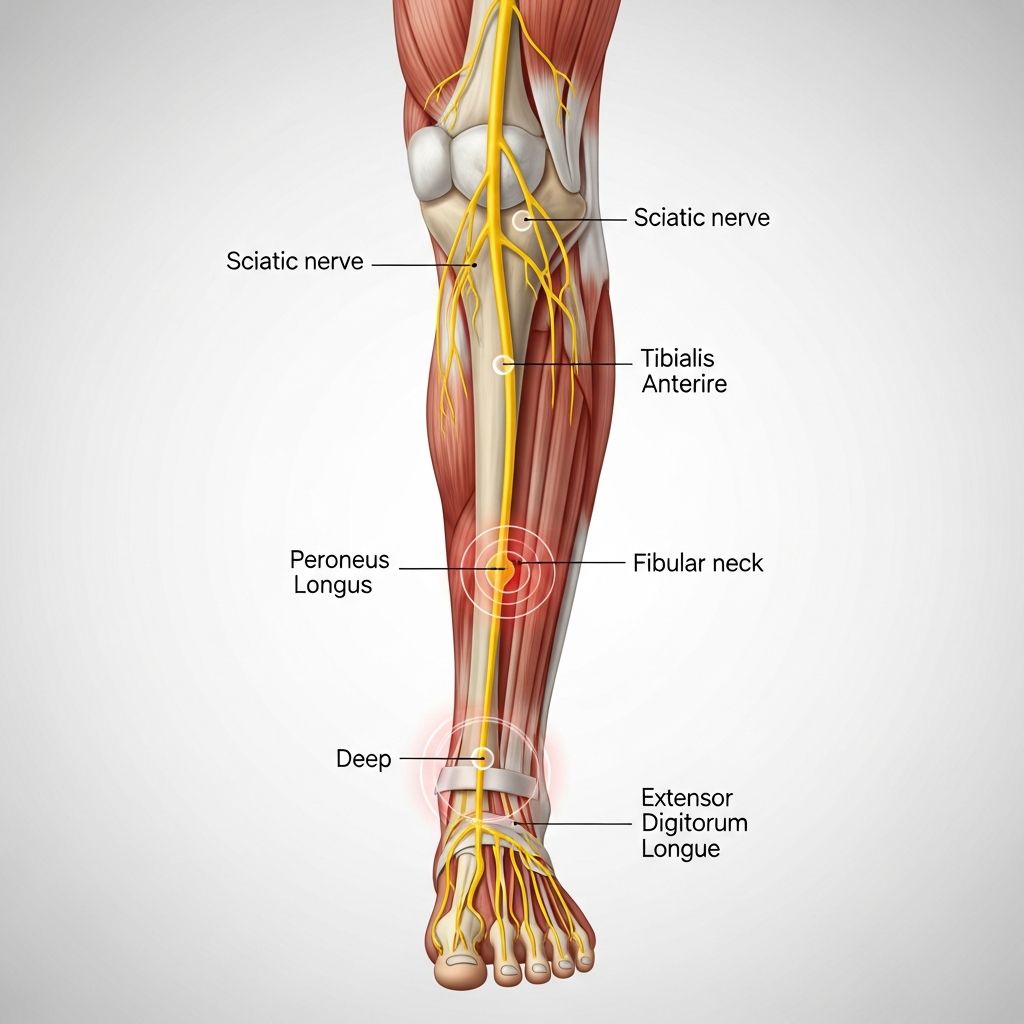
The peroneal nerve is a crucial nerve that originates from the sciatic nerve in the lower leg and controls movement and sensation in the foot and leg. A peroneal nerve injury occurs when this nerve becomes damaged, compressed, or entrapped, leading to significant functional limitations and discomfort. This condition can develop suddenly following trauma or gradually due to chronic compression from various activities or conditions. Understanding the nature of this injury, its underlying causes, and available treatment options is essential for anyone experiencing symptoms affecting their lower extremity mobility and sensation.
Causes of Peroneal Nerve Injury
Peroneal nerve injury can result from multiple etiologies, both traumatic and non-traumatic in nature. Recognizing the cause is important for determining the appropriate treatment strategy and prognosis.
Traumatic Causes
Direct trauma to the knee or lower leg represents one of the most common causes of acute peroneal nerve injury. Fractures of the fibula, the smaller bone in the lower leg, frequently result in nerve damage due to direct bone fragment pressure or injury during the traumatic event. Sports-related injuries from direct impact, such as a blow to the outside of the knee, can immediately compromise nerve function. Surgical procedures involving the knee or leg may inadvertently damage the nerve during retraction or tissue manipulation, resulting in iatrogenic injury during anesthesia positioning.
Chronic Compression Causes
Chronic compression represents a significant category of peroneal nerve injury, often related to lifestyle and occupational factors. Regular leg crossing, a seemingly innocent habit, creates sustained pressure at the fibular head where the nerve is most vulnerable to compression. Wearing tight plaster casts or restrictive leg immobilization devices can compress the nerve over extended periods. High boots and other constrictive footwear that applies pressure around the knee region may contribute to nerve entrapment. Individuals whose occupations require prolonged kneeling, squatting, or prolonged pressure against the outside of the knee face elevated risk of developing compressive peroneal neuropathy.
Other Risk Factors
Certain medical conditions and physical characteristics increase susceptibility to peroneal nerve injury. Very thin individuals with minimal soft tissue padding around the nerve are at higher risk, as are those with autoimmune conditions such as rheumatoid arthritis. Prolonged bed rest, even without other traumatic causes, can lead to nerve compression. Additionally, sleeping in positions that place sustained pressure on the knee or coma-related positioning can result in nerve injury.
Symptoms and Clinical Presentation
Peroneal nerve injury presents with a characteristic constellation of symptoms that vary in severity depending on the degree of nerve damage and whether the injury affects the main nerve trunk or its branches.
Motor Symptoms
The most distinctive motor symptom of common peroneal nerve injury is acute foot drop, a condition where the patient cannot lift the front portion of the foot during walking. This occurs because the nerve controls the muscles responsible for ankle dorsiflexion and toe extension. Individuals with foot drop develop a characteristic gait pattern, often lifting their knee higher than normal to clear the drooping foot with each step. Weakness in foot eversion, the outward turning motion of the foot, is also common. These motor deficits can be mild and activity-dependent or severe, causing significant functional impairment and disability.
Related Stories



Sensory Symptoms
Sensory disturbances occur in the distribution of the peroneal nerve, affecting the anterior and lateral aspects of the leg and the dorsum of the foot. Patients commonly report decreased or abnormal sensation in these regions, with numbness being the predominant complaint. Burning pain at the anterolateral leg and dorsum of the foot may occur, particularly when pressure is applied at the entrapment point, sometimes causing retrograde pain along the nerve. The medial aspect of the foot typically remains unaffected, as this region is innervated by the saphenous branch of the femoral nerve.
Pain Manifestations
Neuropathic pain is a common symptom in peroneal nerve neuropathy and can significantly impact quality of life. Localized pain at the site of nerve compression is typical, and some patients experience progressive symptoms over time. When left untreated, peroneal nerve palsy can progress to foot drop, limb disability, and eventually permanent limb deformity with contracture formation.
Diagnosis and Evaluation
Accurate diagnosis of peroneal nerve injury requires a comprehensive clinical evaluation combining history, physical examination, and specialized testing.
Clinical Assessment
The evaluation begins with a detailed history focusing on the onset of symptoms, mechanism of injury, and activities that exacerbate or alleviate symptoms. Physical examination includes assessment of foot dorsiflexion strength, ankle stability, gait pattern, and detailed sensory testing of the nerve’s distribution. The presence of foot drop and its severity are documented, as this finding is pathognomonic for common peroneal nerve involvement.
Electrodiagnostic Testing
Electromyography (EMG) is essential for determining whether the injury involves the nerve or originates from nerve root compression. This test measures electrical activity in muscles and helps localize the site of nerve injury. Nerve conduction studies provide information about the severity of nerve damage and the likelihood of spontaneous recovery.
Treatment Options
Treatment of peroneal nerve injury varies based on etiology, severity of symptoms, and the duration of nerve compression. A stepwise approach beginning with conservative measures is typically recommended, with surgical intervention reserved for refractory cases or severe nerve damage.
Conservative Treatment
Initial management of peroneal nerve palsy emphasizes nonoperative approaches, as partial or full function often resolves over time without intervention. Lifestyle modification and avoiding activities that trigger or exacerbate neuropathy symptoms form the foundation of conservative care. The most common and effective nonsurgical treatment options include physical therapy with specialized maneuvers such as nerve gliding and nerve flossing.
Ankle-Foot Orthoses (AFO): An ankle-foot orthotic device is a cornerstone of conservative treatment, providing toe dorsiflexion during the swing phase of gait, medial or lateral ankle stability during stance phase, and push-off stimulation during late stance phase. Modern carbon fiber AFOs offer increased energy availability for push-off with lighter weight, improving patient comfort and compliance.
Physical Therapy: Comprehensive physical therapy programs include stretching, strengthening, mobilization, manipulation, proprioceptive exercises, and balance training. Adjunctive modalities may include icing, ankle bracing, and taping. Padding of the fibular head, particularly at night, can prevent compression-related trauma while sleeping.
Medications: When peroneal nerve palsy occurs due to acute trauma, oral corticosteroids may help stabilize the nerve and facilitate recovery. These medications can reduce inflammation and potentially accelerate nerve regeneration in traumatic cases.
Advanced Minimally Invasive Treatments
For cases refractory to conventional conservative treatment, several minimally invasive options have emerged.
Hydrodissection: This technique involves injecting a nonirritating solution around the nerve to reduce pressure from surrounding structures, effectively releasing soft tissue adhesions causing entrapment. Solutions may include saline, anesthetics, steroids, plasma, or dextrose. When combined with ultrasound guidance for accurate needle placement, hydrodissection can restore nerve function with minimal morbidity.
Percutaneous Peripheral Nerve Stimulation: This minimally invasive modality offers an alternative treatment for certain pain manifestations of peroneal neuropathy. With ultrasound-guided lead implantation, nerve leads can be placed with increased accuracy, resulting in improved pain relief. The common target for superficial peroneal nerve lead placement is in the distal leg, just proximal to the lateral malleolus.
Ultrasound-Guided Pulsed Radiofrequency: Recent case reports have described successful use of ultrasound-guided pulsed radiofrequency treatment to alleviate symptoms of superficial peroneal nerve entrapment neuropathy, particularly in athletic populations.
Surgical Treatment
Surgical intervention is indicated when peroneal nerve entrapment is refractory to nonsurgical treatment options or causes severe reduction in nerve conduction with secondary mass effect or nerve laceration. Common peroneal nerve decompression has demonstrated significant clinical benefits for improving foot drop and ankle stability in patients with entrapment.
Surgical Technique: Decompression is typically performed under microscopic visualization by carefully transecting the two layers of fascia surrounding the nerve proximally and distally to the fibular neck, where common peroneal nerve injury most commonly occurs. Minimally invasive approaches using microsurgical decompression under local anesthesia, without sedation, allow intraoperative monitoring of symptom improvement and have demonstrated excellent outcomes with no postoperative complications or recurrence in small series.
Outcomes: The success rate for common peroneal nerve decompression is approximately 70 to 75 percent. The most common reasons for continued symptoms after surgery include permanent nerve damage that cannot be regenerated or recurrent scar tissue formation despite optimal rehabilitation programs.
Expected Outcomes and Prognosis
The prognosis for peroneal nerve injury depends on multiple factors including the severity of initial nerve damage, the duration of compression, and the aggressiveness of early intervention. Many patients experience partial or complete recovery with conservative treatment alone, particularly when intervention begins promptly after symptom onset. However, the ability for a nerve to recover is not entirely predictable, and any progressive nerve changes should raise concern for permanent damage.
Prevention Strategies
Preventing peroneal nerve injury involves awareness of risk factors and lifestyle modifications. Avoiding prolonged leg crossing, wearing appropriate footwear without excessive knee pressure, and taking frequent position changes during prolonged sitting or bed rest can significantly reduce risk. Individuals in occupations requiring sustained kneeling or squatting should implement protective padding and frequent position changes. Proper positioning during anesthesia and surgical procedures is essential in hospital settings to prevent iatrogenic nerve injury.
Frequently Asked Questions
Q: What is the most common cause of peroneal nerve injury?
A: While traumatic causes such as fibular fracture or direct knee trauma are common acute causes, chronic compression from leg crossing, tight casts, or occupational factors causing sustained pressure against the fibular head is a frequent cause of peroneal neuropathy, particularly in athletes and individuals whose work requires kneeling.
Q: Is foot drop from peroneal nerve injury permanent?
A: Foot drop may be temporary or permanent depending on the severity of nerve damage and promptness of intervention. Many patients experience significant improvement or complete resolution with conservative treatment, particularly when started early. However, severe or prolonged nerve compression may result in permanent weakness.
Q: Can peroneal nerve injury heal on its own?
A: Yes, many peroneal nerve injuries heal spontaneously with conservative treatment including rest, bracing, and physical therapy. Partial or full function often resolves over time without surgical intervention, particularly in mild to moderate cases.
Q: When is surgery necessary for peroneal nerve injury?
A: Surgery is considered when conservative treatment fails to improve symptoms over several weeks, when there is progressive increase in numbness or weakness, or when severe nerve damage with conduction loss is documented on electrodiagnostic testing.
Q: How long does recovery from peroneal nerve decompression surgery take?
A: Recovery timeline varies individually, but most patients experience gradual improvement over weeks to months following surgical decompression. Physical therapy is essential during the recovery period to optimize functional outcomes.
Q: What role does physical therapy play in peroneal nerve injury treatment?
A: Physical therapy is a cornerstone of conservative treatment, incorporating nerve gliding exercises, strengthening programs, balance training, and proprioceptive exercises. It helps prevent contractures, maintains muscle function, and facilitates nerve recovery.
References
- Peroneal Nerve Entrapment — Robert LaPrade, MD. 2024. https://drrobertlaprademd.com/peroneal-nerve-entrapment/
- An Update on Peroneal Nerve Entrapment and Neuropathy — Open Medical Publishing. 2024. https://orthopedicreviews.openmedicalpublishing.org/article/24937-an-update-on-peroneal-nerve-entrapment-and-neuropathy
- Peroneal Nerve Injury – StatPearls — National Center for Biotechnology Information, NIH. 2024. https://www.ncbi.nlm.nih.gov/books/NBK549859/
- Common Peroneal Nerve — Physiopedia. 2024. https://www.physio-pedia.com/Common_Peroneal_Nerve
- Common Peroneal Nerve Dysfunction — Mount Sinai Health System. 2024. https://www.mountsinai.org/health-library/diseases-conditions/common-peroneal-nerve-dysfunction
- Foot drop – Diagnosis and treatment — Mayo Clinic. 2024. https://www.mayoclinic.org/diseases-conditions/foot-drop/diagnosis-treatment/drc-20372633
Similar Articles








Read full bio of medha deb