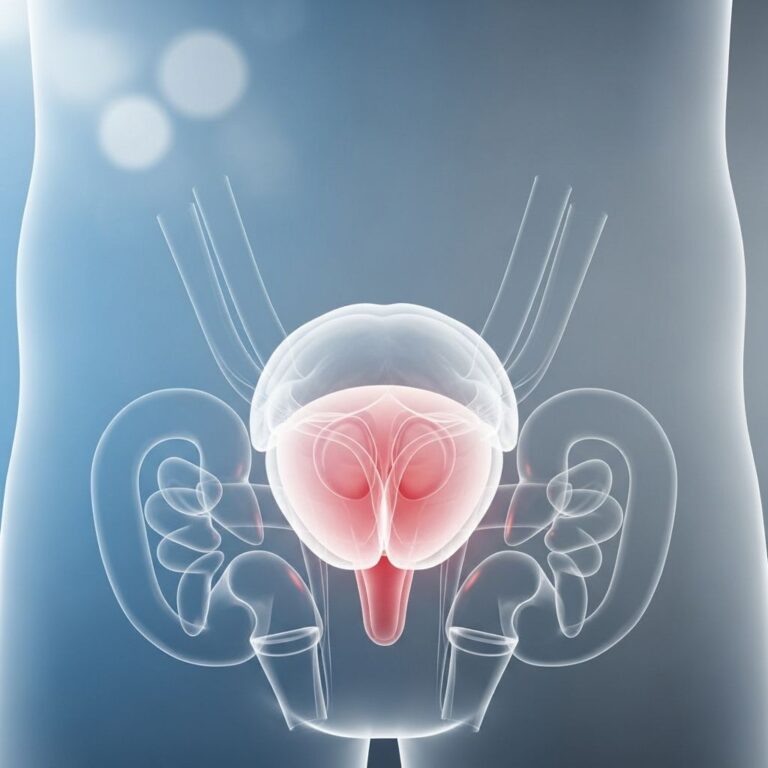
Peroral Endoscopic Myotomy: Advanced Treatment for Swallowing Disorders
Minimally invasive endoscopic solution for achalasia and esophageal disorders without surgical incisions.
Understanding Peroral Endoscopic Myotomy (POEM)
Peroral endoscopic myotomy, commonly abbreviated as POEM, represents a breakthrough in the treatment of achalasia and other esophageal motility disorders. This innovative procedure combines the therapeutic principles of traditional myotomy with cutting-edge endoscopic techniques, eliminating the need for external surgical incisions. Unlike conventional laparoscopic approaches that require multiple incisions on the chest or abdomen, POEM utilizes the body’s natural entry point—the mouth—to access and treat the affected muscles in the esophagus. The procedure has rapidly gained acceptance worldwide since its introduction in Japan, with major medical centers across the United States and internationally adopting it as a primary treatment modality for achalasia.
What Is Achalasia?
Achalasia is a complex esophageal disorder characterized by the inability of the lower esophageal sphincter (LES) to relax properly. The LES is a muscular ring located at the junction between the esophagus and stomach that normally opens to allow food to pass into the stomach. In patients with achalasia, this sphincter remains contracted, preventing food from entering the stomach and causing significant swallowing difficulties. Additionally, achalasia involves poor peristalsis—the wave-like muscle contractions that typically propel food down the esophagus. This combination of factors results in food accumulation in the esophagus, leading to symptoms such as difficulty swallowing, chest pain, regurgitation, and weight loss. The condition can severely impact quality of life and nutritional status if left untreated.
How POEM Works: The Procedural Approach
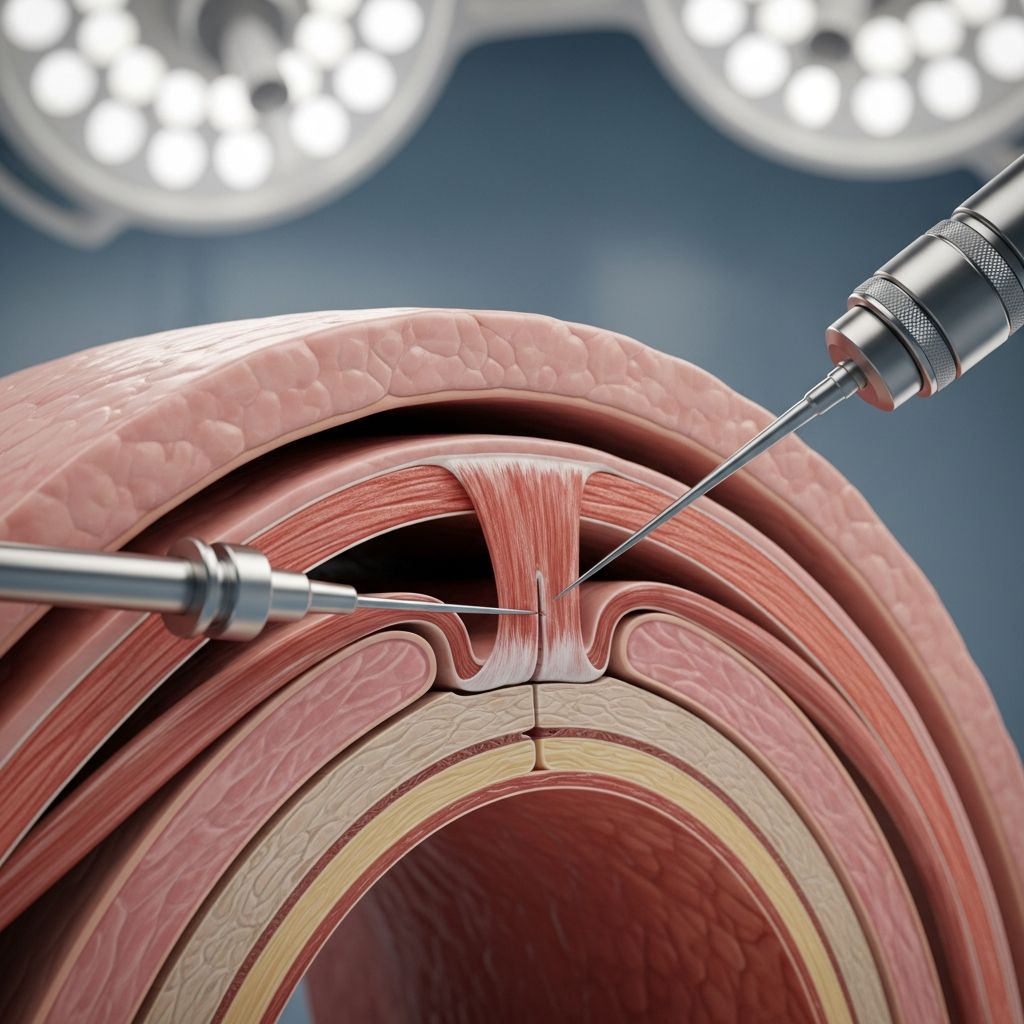
POEM operates on a fundamentally different principle than traditional surgical myotomy. Rather than approaching the esophagus from outside the body, POEM creates a submucosal tunnel—a path beneath the innermost lining of the esophagus—through which the surgeon can access and cut the dysfunctional muscle fibers. This approach allows for precise division of the circular muscle fibers of the LES while preserving the longitudinal muscle layers, a distinction that sets POEM apart from conventional laparoscopic Heller myotomy.
The Four-Step Technique
The standard POEM procedure follows a systematic four-step approach that ensures safety and efficacy:
- Step 1: Mucosotomy — The surgeon creates an initial mucosal entry point, typically located 10 to 15 centimeters above the gastroesophageal junction. This opening provides access to the submucosal layer.
- Step 2: Submucosal Tunneling — Using specialized endoscopic instruments, the surgeon carefully dissects the submucosal tissue, creating a tunnel that extends approximately 3 centimeters below the gastroesophageal junction. This extended length ensures complete disruption of the lower esophageal sphincter.
- Step 3: Myotomy — Once the tunnel is established, the surgeon performs the actual myotomy by cutting the circular muscle fibers of the LES. The myotomy typically begins 3 to 5 centimeters distal to the initial mucosal entry point and extends through the submucosal tunnel.
- Step 4: Mucosal Closure — The initial mucosal entry point is carefully closed using endoscopic suturing techniques, which helps prevent infection and leakage into the submucosal space.
Throughout the procedure, surgeons employ careful hemostasis techniques to manage blood vessels and prevent postoperative bleeding. The entire procedure is performed under general anesthesia, ensuring patient comfort and stability.
Advantages of POEM Over Traditional Surgery
POEM offers several significant advantages compared to conventional surgical approaches for treating achalasia:
Minimally Invasive Nature
The most obvious advantage is the complete elimination of surgical incisions on the chest or abdomen. By using only the natural oral cavity as an entry point, POEM reduces tissue trauma and scarring. This translates to less postoperative pain, reduced risk of infection at surgical sites, and improved cosmetic outcomes.
Related Stories



Shorter Hospital Stay and Faster Recovery
Patients typically spend less time in the hospital following POEM compared to laparoscopic Heller myotomy. Most patients recover within 10 days to two weeks, allowing them to return to normal activities more quickly. This reduced recovery period has significant implications for patient well-being and reduces the burden on healthcare resources.
Superior Technical Success Rates
Clinical data demonstrates that POEM achieves technical success rates exceeding 98%, with clinical success based on symptom resolution and standardized outcome measures reaching 97% or higher in published series. These exceptional outcomes compare favorably to traditional surgical approaches.
Effectiveness in Revision Cases
For patients who have undergone previous failed Heller myotomy, POEM offers a distinct advantage. Systematic reviews indicate that POEM can be successfully performed after failed previous surgery, with a technical success rate greater than 98% and insignificant adverse events occurring in approximately 39% of revision cases. The key advantage is that the myotomy can be performed in any location within the esophageal lumen, avoiding the previous plane of dissection—an advantage generally unavailable in traditional redo laparoscopic approaches.
Applicability and Patient Selection
POEM demonstrates broad applicability across various clinical scenarios. The procedure is suitable for all types of achalasia, including end-stage disease with sigmoid esophagus. Additionally, POEM has proven effective for patients with achalasia who have undergone previous interventions, including Botox injections, endoscopic dilation, and prior surgical myotomy.
Beyond achalasia, POEM principles have been successfully applied to other conditions requiring myotomy. G-POEM (gastric POEM) has emerged as a safe and effective treatment for refractory gastroparesis. In this variant, a submucosal tunnel is created 5 centimeters proximal to the pylorus along the greater curvature or anterior gastric wall, followed by pyloromyotomy with short antral myotomy. This expanded application demonstrates the versatility and future potential of the POEM technique.
Patient Preparation and Preoperative Requirements
Proper preparation is essential for optimal POEM outcomes. Patients typically receive instructions to modify their diet in the days leading up to the procedure. Most surgeons recommend limiting intake to full liquids three days before the procedure, followed by a clear liquid diet for 24 hours prior to surgery. This preparation ensures adequate visualization of the esophageal lumen during the procedure.
Patients should inform their surgical team of all medications, especially anticoagulants and antiplatelet agents, which may need to be adjusted perioperatively. A thorough preoperative evaluation, including endoscopy and esophageal manometry, helps confirm the diagnosis and plan the procedure appropriately.
The Procedural Experience
On the day of surgery, patients receive general anesthesia to ensure comfort and immobility during the procedure. The surgeon inserts a specialized endoscope—a flexible tube equipped with a high-definition camera and precision surgical instruments—through the mouth and advances it into the esophagus. The camera provides real-time visualization of the operative field, allowing the surgeon to precisely identify anatomical landmarks and perform the myotomy with accuracy.
The actual operative time varies depending on the complexity of the case, but most standard POEM procedures require approximately one to two hours. During this time, the surgeon completes all four procedural steps while continuously monitoring for any complications.
Recovery and Postoperative Care
Following POEM, patients remain hospitalized for observation, typically for one to two days. During this period, medical staff monitor for complications and manage any postoperative discomfort. Most patients experience minimal pain, particularly when compared to traditional surgical approaches.
In the immediate postoperative period, free air is frequently observed on chest X-ray in a significant percentage of patients, typically occurring in 28% to 81% of cases depending on the specific technique used. Most cases resolve spontaneously without clinical consequence. However, in rare instances where tension pneumoperitoneum develops, decompression via laparocentesis with a Veress needle may be necessary.
Dietary progression follows a standard protocol: patients typically begin with clear liquids and advance to a soft diet over several days before returning to a regular diet. Most patients tolerate oral intake well within 24 to 48 hours postoperatively.
Comparison with Alternative Treatments
| Treatment Option | Invasiveness | Success Rate | Durability |
|---|---|---|---|
| Botulinum Toxin Injection | Minimally invasive | 80% immediate relief | Temporary (6-12 months) |
| Esophageal Dilation | Minimally invasive | Variable | 1-3 years (30% need repeat) |
| Laparoscopic Heller Myotomy | Minimally invasive (incisions) | 86% at 1 year | Long-term efficacy |
| POEM | No incisions | 97-98% | Long-term (emerging data) |
POEM offers distinct advantages over medical management with botulinum toxin, which provides only temporary relief lasting 6 to 12 months before symptoms recur in more than 60% of patients. Compared to pneumatic dilation, which carries perforation risks of approximately 1% and requires repeat procedures in about one-third of patients, POEM provides more durable results. While laparoscopic Heller myotomy remains effective with established long-term data, POEM achieves superior or comparable outcomes with the added benefit of no external incisions and faster recovery.
Safety Profile and Complications
POEM has demonstrated a favorable safety profile in published series. The procedure is generally well-tolerated with minimal significant adverse events. The low incidence of complications, particularly when compared to traditional surgical approaches, contributes to its growing popularity as a first-line treatment option. Most postoperative events are minor and resolve without intervention or long-term sequelae.
Frequently Asked Questions
Q: Is POEM truly incisionless?
Yes, POEM is completely incisionless. The procedure uses only the natural oral cavity as an entry point, with no cuts made on the chest, abdomen, or anywhere else on the body. This represents a fundamental advancement over traditional surgical approaches.
Q: How long is the recovery period after POEM?
Most patients recover within 10 days to two weeks following POEM. This significantly shorter recovery period compared to traditional surgery means most people can return to normal activities much sooner.
Q: Can POEM be performed after failed previous surgery?
Yes, POEM is highly effective for revision cases. Even after failed previous Heller myotomy, POEM achieves technical success rates exceeding 98%, with the ability to perform the myotomy in any location within the esophageal lumen while avoiding previous dissection planes.
Q: What conditions can POEM treat?
POEM is approved for treating achalasia and other esophageal motility disorders. Additionally, the POEM technique has been successfully adapted for treating conditions like refractory gastroparesis (G-POEM) and esophageal diverticula.
Q: Is POEM appropriate for all types of achalasia?
Yes, POEM is applicable to all types of achalasia, including end-stage disease with a dilated, sigmoid-shaped esophagus. This versatility is one of the procedure’s significant advantages.
Future Directions and Conclusion
Peroral endoscopic myotomy represents a paradigm shift in the minimally invasive treatment of achalasia and related esophageal disorders. With its incisionless approach, exceptional technical and clinical success rates, rapid recovery, and broad applicability across various clinical scenarios including revision cases, POEM has established itself as a leading treatment modality at many centers worldwide. The procedure’s principles continue to be adapted for other conditions requiring myotomy, suggesting an expanding role in gastrointestinal therapy. As more long-term outcome data accumulates and surgical expertise continues to grow globally, POEM is positioned to become the standard of care for appropriately selected patients with achalasia and other esophageal motility disorders. Patients considering treatment for achalasia should discuss POEM with their gastroenterologist or surgeon to determine if this innovative approach is appropriate for their specific situation.
References
- Peroral endoscopic myotomy: techniques and outcomes — National Center for Biotechnology Information (NCBI/NIH). 2021. https://pmc.ncbi.nlm.nih.gov/articles/PMC8130836/
- Peroral Endoscopic Myotomy for Treatment of Esophageal Achalasia — South Carolina Blues Medical Policy. 2024. https://www.southcarolinablues.com/web/public/brands/medicalpolicy/external-policies/peroral-endoscopic-myotomy-for-treatment-of-esophageal-achalasia/
- Peroral Endoscopic Myotomy (POEM) Procedure — UPMC. 2024. https://www.upmc.com/services/esophageal-lung-surgery-institute/treatments/esophageal-surgery/poem
- Peroral Endoscopic Myotomy (POEM) — Yale Medicine. 2024. https://www.yalemedicine.org/conditions/peroral-endoscopic-myotomy-poem
- Peroral Endoscopic Myotomy (POEM) Procedure — Cleveland Clinic. 2024. https://my.clevelandclinic.org/health/procedures/peroral-endoscopic-myotomy-poem
- Peroral Endoscopic Myotomy — Northwestern Medicine. 2024. https://www.nm.org/conditions-and-care-areas/treatments/peroral-endoscopic-myotomy
Similar Articles








Read full bio of Sneha Tete