Personality Type: Complete Guide To MBTI, Enneagram & More
Discover the main personality types, their traits, scientific backing, and how they influence health and behavior patterns.
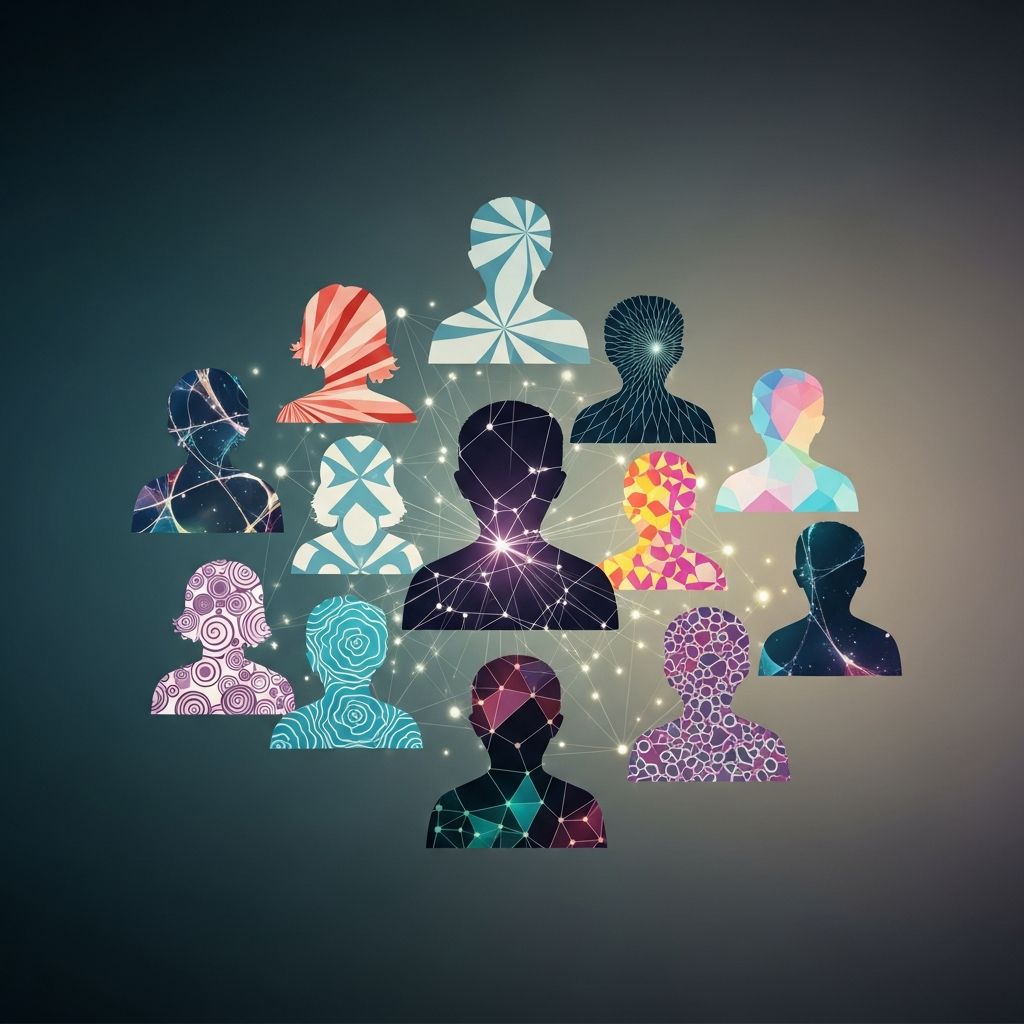
Personality types offer frameworks to categorize human behavior patterns, helping individuals understand themselves and others. Popular systems include the Myers-Briggs Type Indicator (MBTI), Type A/B/C/D, Enneagram, and Big Five traits, each with unique traits and varying scientific support.
What Is Personality Type?
Personality type refers to distinct categories of behavioral patterns based on preferences in how people perceive the world and make decisions. These models simplify complex human psychology into identifiable groups, aiding self-awareness, relationships, and career choices. While useful for personal insight, many lack robust scientific validation, with results often inconsistent upon retesting.
Systems like MBTI emerged from Carl Jung’s theories, assessing four dichotomies: Extraversion/Introversion, Sensing/Intuition, Thinking/Feeling, Judging/Perceiving, yielding 16 types. Type A/B/C/D focuses on stress responses and health risks, originating from cardiovascular research. Enneagram explores motivations and fears across nine types, while Big Five measures five continuous traits.
The 16 Myers-Briggs Personality Types
The MBTI identifies 16 types by combining four preference scales. Despite widespread use in businesses and education, its predictive power for outcomes is weakly supported scientifically.
- ISTJ: Practical, realistic, responsible; enjoys order and reliability.
- ISFJ: Friendly, thorough, considerate; prioritizes others’ needs.
- INFJ: Insightful, organized; seeks deep connections.
- INTJ: Independent, analytical; sets high standards.
- ISTP: Tolerant, independent; values efficiency and observation.
- ISFP: Quiet, creative, kind; lives in the present, avoids conflict.
- INFP: Idealistic, flexible; driven to improve the world.
- INTP: Logical, analytical; focuses deeply on ideas.
- ESTP: Spontaneous, outgoing; learns by doing.
- ESFP: Exuberant, flexible; makes life fun.
- ENFP: Imaginative, confident; creative and affirming.
- ENTP: Sharp, outspoken; innovative but routine-averse.
- ESTJ: Decisive, results-oriented; implements plans forcefully.
- ESFJ: Warm-hearted, harmony-seeking.
- ENFJ: Empathetic, understanding; catalyzes growth.
- ENTJ: Confident, decisive; excels in planning.
Retests often yield different results, limiting reliability.
Type A, B, C, and D Personalities
These types classify based on stress, competitiveness, and emotional expression, with links to health outcomes.
| Type | Key Traits | Health Implications |
|---|---|---|
| Type A | Competitive, impatient, hostile, ambitious, time-urgent | Higher stress, burnout risk; hostility linked to heart disease and hypertension, though not CHD directly |
| Type B | Relaxed, patient, easygoing, non-competitive | Lower disease risk, moderated stress; may neglect health due to laidback nature |
| Type C | Suppressive of emotions, detail-oriented, passive, prone to worry/guilt | Increased depression risk, emotional instability |
| Type D | Pessimistic, anxious, socially inhibited, negative emotions | CHD risk (1 in 4 cases), worsened by poor coping, depression/anxiety |
Type A traits like anger correlate with cardiovascular issues, while Type D shows strong CHD associations per 2018 reviews.
Enneagram Personality Types
The Enneagram maps nine interconnected types based on core fears and motivations, useful for growth despite limited empirical research.
- 1. Reformer: Rational, principled, perfectionistic.
- 2. Helper: Caring, generous, people-pleasing.
- 3. Achiever: Success-driven, adaptive, image-conscious.
- 4. Individualist: Creative, moody, self-conscious.
- 5. Investigator: Intense, innovative, cerebral.
- 6. Loyalist: Responsible, anxious, troubleshooting.
- 7. Enthusiast: Fun-loving, spontaneous, scattered.
- 8. Challenger: Confident, controlling, decisive.
- 9. Peacemaker: Easygoing, conflict-avoidant, complacent.
It emphasizes personal development over prediction.
Other Personality Models
Beyond core systems, the Big Five (OCEAN) traits—Openness, Conscientiousness, Extraversion, Agreeableness, Neuroticism—offer a scientifically robust continuum model. High neuroticism links to anxiety, while low conscientiousness predicts poorer health adherence.
Related Stories



Eysenck’s model focuses on Extraversion, Neuroticism, Psychoticism. HEXACO adds Honesty-Humility. These trait-based approaches outperform categorical types in research.
Do Personality Types Affect Health?
Personality influences health via stress responses and behaviors. Type A hostility raises blood pressure and heart risks; Type D predicts CHD progression. Big Five studies show conscientiousness aids medical outcomes, while neuroticism biases clinician judgments.
No direct Type A-CHD link exists, but negative traits elevate cardiovascular disease. Patient personality affects treatment adherence and recovery.
Limitations of Personality Typing
Types oversimplify; people blend traits. MBTI lacks reliability. Categorical models ignore nuance, unlike trait spectra. Use for insight, not stereotyping.
Frequently Asked Questions (FAQs)
What is the most accurate personality test?
The Big Five has strongest scientific backing due to its trait-based, reliable measurement.
Can personality types predict career success?
Limited evidence; MBTI is popular but inconsistent for outcomes.
Do Type A personalities have more heart problems?
Hostility does, but not the full type; Type D shows clearer CHD links.
Is Enneagram scientifically valid?
Limited research; valuable for self-growth.
How does personality affect mental health?
High neuroticism increases anxiety/depression risk.
References
- Simple List of Personality Types and Their Scientific Proof — Healthline. 2023. https://www.healthline.com/health/mental-health/list-of-personality-types
- Personality types: A, B, C, and D — Medical News Today. 2023-10-12. https://www.medicalnewstoday.com/articles/personality-types-a-b-c-d
- Personality Types, Personality Traits, and Mental Health — HelpGuide.org. 2024. https://www.helpguide.org/mental-health/psychology/personality-types-traits-and-how-it-affects-mental-health
- Understanding Patient Personality in Medical Care: Five-Factor Model — PMC (National Library of Medicine). 2021-01-28. https://pmc.ncbi.nlm.nih.gov/articles/PMC7840072/
Similar Articles








Read full bio of medha deb