Pervasive Developmental Disorders: Understanding PDD and ASD
Comprehensive guide to pervasive developmental disorders, now classified as autism spectrum disorder.
Pervasive Developmental Disorders: Overview and Classification
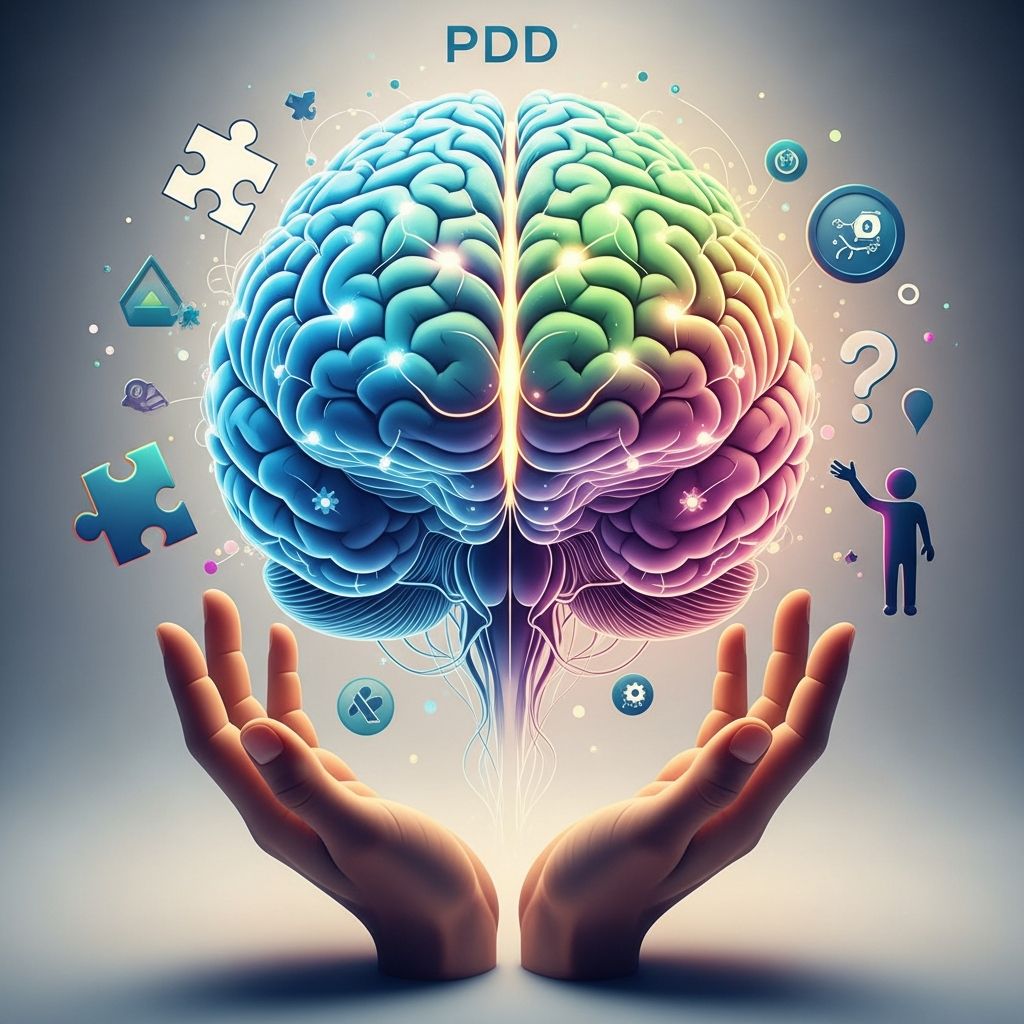
Pervasive developmental disorder (PDD) is a term that has historically been used to describe a group of neurodevelopmental conditions characterized by significant delays and differences in social interaction, communication, and behavior. These conditions typically emerge during early childhood and affect multiple aspects of a child’s development. The classification of PDD represented a major advancement in understanding complex developmental conditions that shared core features while varying considerably in severity and presentation.
In modern diagnostic practice, PDD has been largely integrated into the broader classification known as autism spectrum disorder (ASD). This transition, formalized in the Diagnostic and Statistical Manual of Mental Disorders, Fifth Edition (DSM-5), reflects contemporary understanding that these conditions exist on a spectrum rather than as separate categorical entities. The shift from PDD to ASD acknowledges that individuals with these diagnoses share common core challenges but may present with different symptom combinations and severity levels.
Historical Classification and Subtypes
The PDD framework historically encompassed several distinct diagnostic categories, each with unique characteristics:
- Autistic Disorder: The most commonly recognized form, characterized by significant difficulties in social interaction, communication challenges, and restricted or repetitive behaviors. Individuals with autistic disorder may have varying levels of intellectual ability and language development.
- Asperger’s Syndrome: Distinguished by social interaction difficulties and restricted interests while maintaining relatively normal language development and average to above-average intelligence. Individuals with Asperger’s syndrome typically have normal or superior cognitive abilities and may pursue focused interests intensely.
- Childhood Disintegrative Disorder (Heller’s Syndrome): Characterized by typically normal development during the first two to five years of life, followed by significant regression in language, social skills, and motor functioning. This rare condition represents a distinct developmental pattern requiring specialized intervention approaches.
- PDD-Not Otherwise Specified (PDD-NOS): A diagnostic category for individuals who exhibited severe social and communication impairments but did not meet full criteria for other specific PDD diagnoses. This category accounted for approximately 47% of PDD diagnoses, reflecting the diverse presentations of developmental disorders.
- Rett Syndrome: A neurological disorder primarily affecting girls, involving normal early development followed by loss of purposeful hand skills, repetitive hand movements, and severe cognitive impairment. This condition has a genetic basis involving the MECP2 gene and is now recognized as distinct from other autism spectrum conditions.
Key Symptoms and Characteristics
Individuals with pervasive developmental disorders typically exhibit a range of symptoms affecting multiple developmental domains:
Communication Difficulties
Children with PDD often experience significant delays in speech and language development. These may include difficulty expressing thoughts and ideas verbally, challenges understanding spoken language, and problems with nonverbal communication such as gestures, facial expressions, and body language. Some individuals may have limited speech or use language in atypical ways, such as echolalia or repetitive phrases.
Social Interaction Challenges
Social difficulties represent a core feature of PDD, affecting how children relate to peers, family members, and authority figures. Common challenges include limited eye contact, difficulty interpreting social cues and emotions, trouble forming and maintaining friendships, reduced interest in sharing experiences with others, and difficulty understanding social hierarchies and unwritten social rules.
Repetitive and Stereotyped Behaviors
Individuals with PDD often engage in repetitive movements or behaviors, such as hand flapping, spinning, or repetitive object manipulation. Many prefer routines and may become distressed when routines are altered. Restricted interests are also common, with individuals focusing intensely on specific topics or activities to the exclusion of others.
Sensory Sensitivities
Many individuals with pervasive developmental disorders experience unusual responses to sensory stimuli, including heightened sensitivity to sounds, lights, textures, or smells. Some may seek out intense sensory experiences, while others actively avoid certain sensory inputs.
Causes and Etiology
The development of pervasive developmental disorders results from a complex interplay of genetic and environmental factors rather than a single identifiable cause. Current research indicates that genetic susceptibility plays a significant role, with multiple genes contributing to increased risk. Family studies have demonstrated higher rates of autism spectrum conditions among relatives of affected individuals.
Related Stories



Environmental factors are also believed to contribute to the development of these conditions. These may include prenatal exposures, complications during pregnancy or birth, and early developmental experiences. However, extensive research has conclusively demonstrated that vaccines do not cause autism, dispelling a persistent misconception that has influenced public health discussions.
The complexity of causation means that no single preventative measure can eliminate the development of these disorders. Instead, understanding the multifactorial nature of PDD supports the importance of early detection and intervention, which can significantly improve outcomes regardless of underlying causes.
Diagnostic Process and Assessment
Diagnosis of pervasive developmental disorders is based primarily on behavioral observations and developmental history rather than laboratory tests or imaging studies. The diagnostic process typically involves:
Screening During Routine Care
Screening for developmental concerns is recommended during routine pediatric visits at ages 18, 24, and 30 months. Healthcare providers may use standardized screening tools such as the Autism Screening Checklist or other validated questionnaires to identify children who may require further evaluation.
Comprehensive Evaluation
If screening raises concerns, a comprehensive diagnostic evaluation is conducted by specialists including developmental pediatricians, clinical psychologists, neurologists, speech-language pathologists, and occupational therapists. This multidisciplinary approach ensures thorough assessment across all developmental domains.
Key Components of Assessment
The diagnostic evaluation includes:
- Detailed developmental history from parents and caregivers, focusing on developmental milestones in language, social engagement, and behavior
- Direct behavioral observation by qualified clinicians
- Standardized assessment tools and rating scales
- Evaluation of communication and language abilities
- Assessment of social interaction skills and adaptive functioning
- Identification of repetitive behaviors and restricted interests
- Evaluation of sensory processing and responses
Timing of Diagnosis
Most signs of pervasive developmental disorder become apparent during early childhood, often before age three. Early detection and diagnosis are critically important, as they enable timely initiation of evidence-based interventions that can significantly improve developmental trajectories and long-term outcomes.
Treatment and Intervention Approaches
Managing pervasive developmental disorders involves a comprehensive, personalized approach tailored to each individual’s specific strengths, challenges, and needs. Effective treatment plans typically combine multiple intervention modalities:
Behavioral Therapies
Applied Behavior Analysis (ABA) is one of the most extensively researched and evidence-based interventions for individuals with PDD. ABA focuses on identifying the functions of behaviors and systematically teaching new skills through reinforcement and environmental modifications. This approach has demonstrated effectiveness in improving social skills, communication, and adaptive behaviors.
Speech and Language Therapy
Speech-language pathologists work with individuals to improve receptive and expressive language skills, pragmatic communication abilities, and social communication. Interventions may include picture exchange communication systems, visual supports, or augmentative and alternative communication methods for non-speaking individuals.
Occupational Therapy
Occupational therapists address sensory processing difficulties, motor skills, and activities of daily living. Interventions may include sensory integration techniques, fine and gross motor skill development, and adaptive strategies for managing daily routines and transitions.
Educational Support
Many children with PDD benefit from specialized educational services including individualized education programs (IEPs), classroom accommodations, specialized instruction, and support from trained paraprofessionals. Educational approaches should be tailored to each child’s learning style and needs.
Family Support and Training
Parent and family involvement is crucial to intervention success. Family training programs teach parents strategies to promote skill development across various settings and support their child’s learning and development at home.
Long-Term Outlook and Prognosis
The long-term outlook for individuals with pervasive developmental disorders is highly variable and depends on multiple factors including age at diagnosis, severity of symptoms, available support systems, and presence of co-occurring conditions. With early detection and appropriate intervention, many individuals show significant improvement in communication and social skills.
While pervasive developmental disorders do not have a cure, early intervention and comprehensive, ongoing support can dramatically improve quality of life and functional abilities. Some individuals achieve a high degree of independence, pursuing education, employment, and maintaining relationships, while others require lifelong support. The key to optimal outcomes is recognizing signs early and initiating evidence-based interventions promptly.
Transition to Adult Services
As children with pervasive developmental disorders reach adolescence and adulthood, transition planning becomes increasingly important. This includes developing skills for independent living, vocational training or supported employment, and transition from pediatric to adult healthcare services. Planning for adult life should begin in adolescence to ensure continuity of care and support.
Frequently Asked Questions
Q: What is the difference between PDD and autism?
A: PDD was a historical diagnostic classification that has been integrated into the broader autism spectrum disorder (ASD) category in current diagnostic manuals. PDD included several conditions now all recognized as existing on the autism spectrum with varying presentations and severity levels.
Q: At what age are pervasive developmental disorders typically diagnosed?
A: While signs often appear before age three, diagnosis can occur at any age. Early screening at 18, 24, and 30 months during routine pediatric visits helps identify children who may benefit from further evaluation and early intervention services.
Q: Can pervasive developmental disorders be cured?
A: Pervasive developmental disorders do not have a cure, but early intervention through behavioral therapy, speech therapy, occupational therapy, and educational support can significantly improve skills and quality of life.
Q: What causes pervasive developmental disorders?
A: These disorders result from a complex combination of genetic and environmental factors. Research indicates multiple genes contribute to increased risk, and various environmental factors may also play roles, but no single cause has been identified.
Q: How is pervasive developmental disorder diagnosed?
A: Diagnosis is based on behavioral observations, developmental history, and standardized assessments conducted by multidisciplinary specialists. There are no definitive laboratory tests or imaging studies used for diagnosis.
Q: What interventions are most effective for pervasive developmental disorders?
A: Early, comprehensive interventions combining applied behavior analysis, speech therapy, occupational therapy, specialized education, and family support have demonstrated the greatest effectiveness in improving outcomes.
References
- Autism Spectrum Disorder (ASD) Symptoms & Causes — Cleveland Clinic. 2024. https://my.clevelandclinic.org/health/articles/autism
- Understanding Pervasive Developmental Disorder — Step Ahead ABA. 2024. https://www.stepaheadaba.com/blog/what-is-pervasive-developmental-disorder
- Diagnostic and Statistical Manual of Mental Disorders — American Psychiatric Association. 2013. https://www.psychiatry.org/psychiatrists/practice/dsm
- What Is Pervasive Developmental Disorder — Building Blocks Therapy. 2024. https://www.buildingblockstherapy.org/blog/what-is-pervasive-developmental-disorder
- Centers for Disease Control and Prevention: Autism Spectrum Disorder — CDC. 2024. https://www.cdc.gov/ncbddd/autism/index.html
Similar Articles








Read full bio of Sneha Tete