PET Scan for Lung Cancer: Guide to Diagnosis & Staging
Discover how PET scans detect lung cancer, stage the disease, and guide treatment decisions for better outcomes.
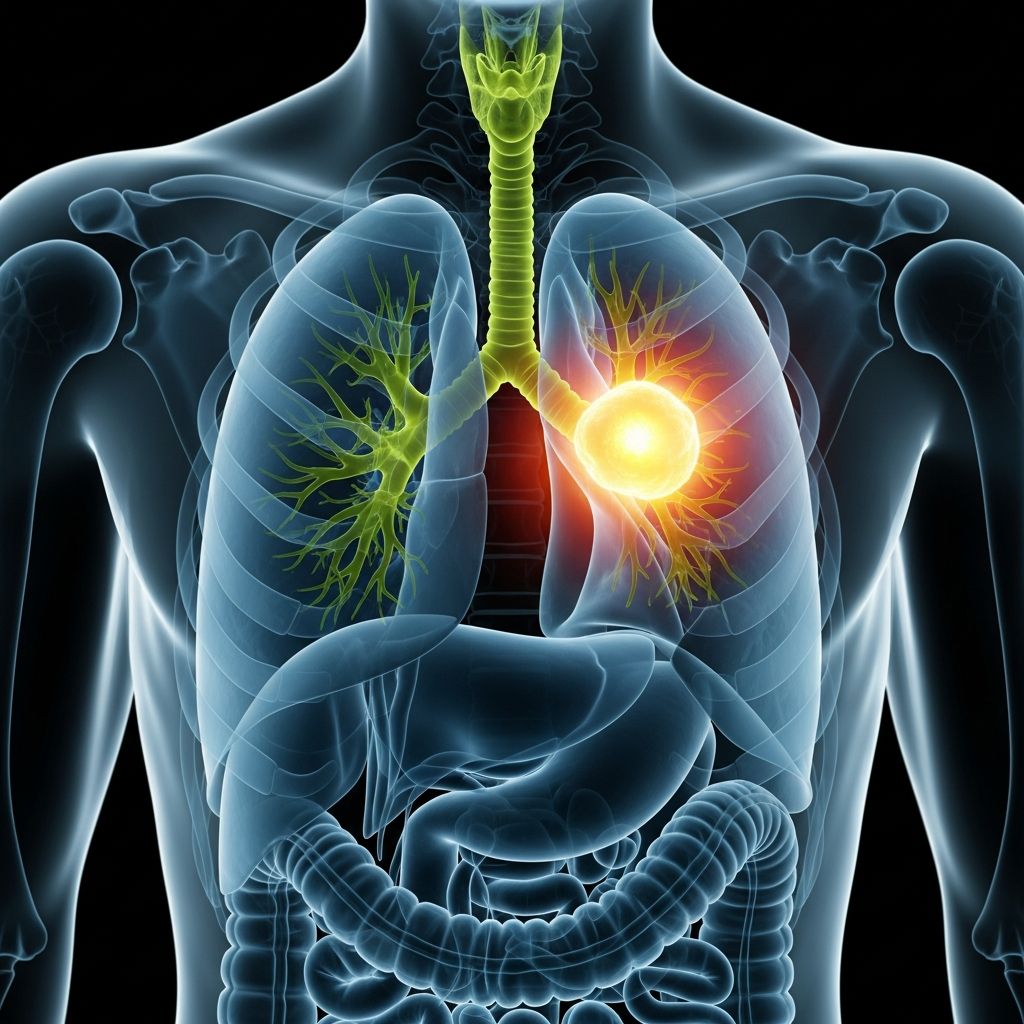
A
PET scan
, or positron emission tomography scan, is a powerful imaging test that uses a radioactive tracer to detect areas of high metabolic activity, such as lung cancer cells. It helps diagnose, stage, and monitor lung cancer by revealing how cancer cells function differently from healthy tissue.Lung cancer remains one of the leading causes of cancer deaths worldwide, and early, accurate detection is critical for improving survival rates. PET scans provide functional insights that complement structural imaging like CT scans, enabling oncologists to make informed decisions on treatment.
What Is a PET Scan?
A PET scan involves injecting a small amount of radioactive tracer, typically fluorodeoxyglucose (FDG), which is absorbed more by cancer cells due to their high glucose metabolism. The scanner detects gamma rays emitted as the tracer decays, producing detailed 3D images of metabolic activity in the lungs and body.
Often combined with CT (PET/CT), this hybrid imaging offers both anatomical structure and functional data, improving accuracy for lung cancer evaluation. Unlike CT or MRI, which show size and shape, PET highlights active disease processes.
How Does a PET Scan Work for Lung Cancer?
During the procedure:
- Patients fast for 4-6 hours and avoid strenuous activity to ensure accurate tracer uptake.
- A radioactive tracer is injected intravenously.
- Patients rest quietly for 45-60 minutes while the tracer circulates and accumulates in metabolically active areas.
- Scanning takes 20-40 minutes; patients lie still on a table that moves through a ring-shaped scanner.
The images are analyzed using standardized uptake value (SUV), where higher SUV indicates potential malignancy. PET/CT fusion images overlay metabolic and anatomical data for precise localization of lung tumors, lymph nodes, and metastases.
Why Is a PET Scan Used for Lung Cancer?
PET scans are integral in lung cancer management for several reasons:
- Diagnosis: Distinguishes malignant from benign lung nodules, especially those 8mm or larger seen on CT.
- Staging: Detects mediastinal lymph node involvement and distant metastases missed by CT alone, with higher sensitivity.
- Treatment Planning: Guides surgery, radiation, or chemotherapy by assessing tumor extent and resectability.
- Monitoring Response: Evaluates treatment effectiveness; decreasing SUV post-therapy signals positive response.
- Detecting Recurrence: Identifies cancer return in survivors, though guidelines recommend it only after CT findings, not routinely.
For non-small cell lung cancer (NSCLC), PET/CT improves staging accuracy from 60-70% with CT alone to over 90%.
Who Needs a PET Scan for Lung Cancer?
PET scans are recommended for:
- Patients with suspicious lung nodules on CT, particularly at moderate-to-high malignancy risk.
- Confirmed lung cancer cases for initial staging before treatment.
- Those evaluating operability or radiation planning.
- Post-treatment restaging to check for residual or recurrent disease.
Not all patients need it; low-risk nodules under 8mm may be monitored with CT. Small cell lung cancer (SCLC) benefits from PET for early detection of residual disease.
Preparing for a PET Scan
Preparation ensures optimal results:
Related Stories



- Diet: Fast 4-6 hours; low-carb diet day before if diabetic.
- Medications: Inform doctor about insulin, steroids, or diabetes meds; may need adjustment.
- Comfort: Wear loose clothing; remove metal objects. IV line placed for tracer.
- Diabetes: Special protocols due to altered glucose metabolism affecting FDG uptake.
Pregnant or breastfeeding patients should avoid due to radiation risks.
What to Expect During the Scan
The process is painless but requires stillness:
- Tracer injection feels like a quick pinch.
- Rest in a quiet room; no talking to minimize muscle uptake interference.
- Scanning is open and non-claustrophobic; noise is minimal.
- Total time: 2-3 hours.
Hydrate well post-scan to flush tracer; resume normal activities unless advised otherwise.
Risks and Limitations of PET Scans
| Aspect | Details |
|---|---|
| Radiation Exposure | Equivalent to 2-3 years background radiation; low risk but cumulative. |
| False Positives | Inflammation, infections mimic cancer (e.g., pneumonia, tuberculosis). |
| False Negatives | Small tumors (<1cm), low-metabolism cancers like carcinoids. |
| Cost | $2,000-$5,000; Medicare limits follow-up scans to 3 per patient. |
| Overuse | 22% lung cancer survivors get unnecessary PET without prior CT. |
Guidelines from NCCN and ASCO emphasize PET after CT suspicion, not routine surveillance, as overuse doesn’t improve survival but increases costs.
Understanding PET Scan Results
Results show:
- SUVmax: Measures uptake intensity; >2.5 often suspicious.
- Hypermetabolic areas in lungs, nodes, bones, liver indicate disease.
- Comparison pre/post-treatment assesses response.
Multidisciplinary review with biopsy confirmation is essential; PET guides but doesn’t replace pathology.
PET Scans vs. Other Imaging
| Modality | Strengths | Limitations |
|---|---|---|
| PET/CT | Functional + anatomical; high staging accuracy | Radiation, cost, false positives |
| CT | Detailed anatomy, fast | No metabolism info; lower specificity |
| MRI | No radiation, soft tissue | Poor for lungs, longer scan |
| Bone Scan | Bone mets | Less sensitive for soft tissue |
PET/CT outperforms CT in mediastinal staging and metastasis detection.
Future of PET Scans in Lung Cancer
Advancements include new tracers for hypoxia, proliferation; AI-enhanced image analysis; lower-dose protocols. PET guides immunotherapy response and targeted therapies by assessing tumor biology.
Frequently Asked Questions (FAQs)
Is a PET scan painful?
No, it’s noninvasive. Only the IV injection may cause brief discomfort.
How accurate is PET for lung cancer staging?
Over 90% accurate for NSCLC, superior to CT alone.
Can PET scans detect early-stage lung cancer?
Yes, for nodules >8mm; helps characterize solitary pulmonary nodules.
Are PET scans safe for diabetics?
Yes, with blood sugar control <200 mg/dL and adjusted protocols.
Does insurance cover PET scans for lung cancer?
Often yes for staging/treatment; Medicare limits surveillance to 3 scans.
Can PET replace biopsy?
No, it guides but pathology confirms diagnosis.
References
- Study Suggests Lung Cancer Survivors Receiving Too Many PET Scans — University of Michigan Medical School/ITN Online. 2016-02-22. https://www.itnonline.com/content/study-suggests-lung-cancer-survivors-receiving-too-many-pet-scans
- PET/CT imaging in lung cancer: indications and findings — PMC/NCBI (Peer-reviewed). 2015-07-29. https://pmc.ncbi.nlm.nih.gov/articles/PMC4541763/
- Lung PET scan — MedlinePlus/NIH (.gov). Last updated 2023. https://medlineplus.gov/ency/article/007342.htm
- PET scans: What are they and what to expect — MD Anderson Cancer Center. 2020-11-04. https://www.mdanderson.org/cancerwise/getting-a-pet-scan-what-to-expect.h00-159776445.html
- Journal of the National Cancer Institute Study on PET Use — JNCI/Oxford University Press. 2016. https://www.jnci.oxfordjournals.org
Similar Articles








Read full bio of Sneha Tete