PHACE Syndrome: Essential Guide For Parents And Clinicians
Rare neurocutaneous disorder linking large facial hemangiomas with structural anomalies of brain, heart, arteries, eyes, and sternum.
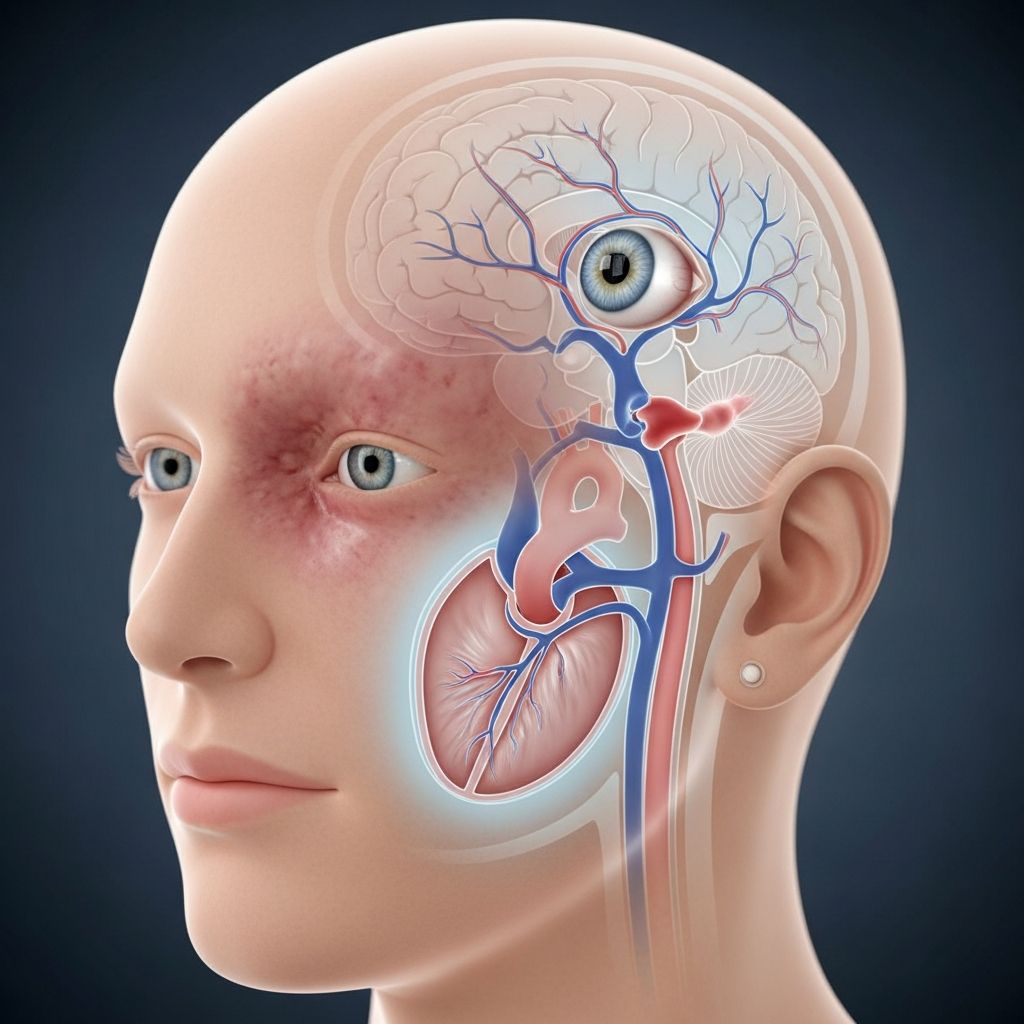
PHACE syndrome is a rare neurocutaneous disorder characterized by the association of large segmental infantile hemangiomas, typically on the face, neck, or scalp, with one or more congenital anomalies including posterior fossa brain malformations, arterial anomalies (especially cerebrovascular), cardiac defects (such as coarctation of the aorta), ocular abnormalities, and sternal or ventral developmental defects.
What is the PHACE association?
The
PHACE association
(sometimes called PHACES syndrome) represents a spectrum of anomalies linked to extensive infantile hemangiomas affecting the cervicofacial region. It is diagnosed when a child presents with a large segmental hemangioma (>5 cm in diameter) in the facial, scalp, or neck area accompanied by structural malformations. This condition predominantly affects females at a ratio of approximately 9:1 and arises from disrupted embryogenesis during early gestation, likely involving vasculogenesis between weeks 3-12.Infants with PHACE syndrome exhibit a hallmark large infantile hemangioma, which is a benign vascular tumor that proliferates rapidly in the first months of life before involuting over several years. These hemangiomas follow specific facial segments (frontotemporal, frontonasal, maxillary, mandibular) and correlate with extracutaneous involvement based on location. For instance, mandibular segment hemangiomas are frequently associated with aortic coarctation.
Who gets PHACE syndrome (Epidemiology)?
PHACE syndrome is exceedingly rare, occurring in about 2% of infants with large segmental cervicofacial hemangiomas. It is almost exclusively diagnosed in infancy, with nearly all cases identified by the end of the first month of life when the hemangioma becomes apparent. The marked female predominance (90% of cases) suggests possible hormonal or genetic influences, though the exact pathogenesis remains unknown. No ethnic or geographic predispositions have been firmly established, but prompt recognition is critical as up to 70% of affected children have extracutaneous manifestations that can be life-threatening if undetected.
Clinical features
The clinical presentation of PHACE syndrome revolves around the acronym
PHACE(S)
, encompassing the hemangioma and associated anomalies. Features vary widely in severity and combination, with most patients having only one major extracutaneous anomaly.Infantile hemangioma (H)
Nearly 100% of patients have a large (>5 cm), segmental infantile hemangioma on the face (90%), scalp, or neck. These appear at birth as pale, telangiectatic, or erythematous patches and rapidly proliferate into raised, red-blue plaques, papules, or tumors during the first 5 months (proliferative phase), stabilize, then involute over 3-10 years. Specific facial segments predict associated anomalies: frontonasal with ocular/SGA issues; maxillary with cerebrovascular; mandibular with cardiac. Complications include ulceration (painful), airway obstruction, vision impairment, or cosmetic distortion.
Posterior fossa malformations (P)
Common brain anomalies include Dandy-Walker malformations, cerebellar hypoplasia, cysts, or vermis hypoplasia, affecting up to 80% of cases. These may cause microcephaly, developmental delays, seizures, or hydrocephalus. Posterior fossa issues correlate with frontonasal/maxillary hemangiomas.
Arterial anomalies (A)
Cerebrovascular anomalies occur in 83-91% of patients, including arterial dysplasia, stenosis, aneurysms, or aberrant origins (e.g., persistent trigeminal artery). Head/neck arteries are most affected (4/5 cases), risking ischemia, stroke, or Moyamoya-like vasculopathy.
Cardiac defects (C)
Present in 41-67%, most commonly coarctation of the aorta (often right-sided), aortic arch anomalies, or ventricular septal defects. Mandibular hemangiomas strongly predict cardiac involvement.
Ocular anomalies (E)
Affecting up to 33%, include periocular hemangiomas causing amblyopia/strabismus, microphthalmia, colobomas, cataracts, glaucoma, optic atrophy, Horner syndrome, or retinal vascular anomalies. Frontonasal hemangiomas heighten ocular risk.
Related Stories



Sternal clefting or supraumbilical raphe (S)
Midline chest/abdomen defects like sternal clefts, ectopic thymus, or supraumbilical raphe occur in 15-20%.
Additional features: dental enamel hypoplasia, hearing loss, growth retardation.
Diagnosis
Diagnosis relies on clinical criteria established in 2009 and revised in 2016:
- Definite PHACE: Facial/scalp/neck hemangioma >5 cm + 1 major or 2 minor criteria.
- Possible PHACE: Hemangioma + 1 minor criterion.
Major criteria: Posterior fossa malformation, arterial anomaly, coarctation of aorta/cardiac defect, ocular anomaly, ventral developmental defect.
Minor criteria: Cranial nerve dysfunction, structural brain anomaly, cerebrovascular anomaly, aortic arch anomaly, ventricular septal defect, isolated cleft lip/palate, other midline defects.
Evaluation mandates multidisciplinary screening: echocardiography, brain/artery MRI/MRA, ophthalmology exam, even if asymptomatic.
Management and treatment
Management is multidisciplinary (dermatology, cardiology, neurology, ophthalmology, etc.) with early screening to prevent complications.
- Hemangioma: Beta-blockers (propranolol 2-3 mg/kg/day) for proliferation/ulceration; monitor airway/vision.
- Cardiac/arterial: Surgical repair (coarctation), anticoagulation/stenting for cerebrovascular risks.
- Neurologic/ocular: Neurosurgery, glaucoma meds, patching for amblyopia.
- Monitoring: Serial imaging, neurodevelopmental assessments.
Propranolol is first-line for hemangiomas >5 cm due to efficacy and stroke risk reduction. Prognosis varies; severe vascular anomalies carry morbidity/mortality risks, but early intervention improves outcomes.
PHACE syndrome facial segments
Hemangiomas follow 4 embryologic facial segments predicting anomalies:
| Segment | Location | Associated Anomalies |
|---|---|---|
| Frontotemporal (S1) | Forehead, temple, ear | Cerebrovascular, posterior fossa, eye |
| Frontonasal (S2) | Forehead, nose tip, philtrum | SGA, eye, sternal defects |
| Maxillary (S3) | Cheek, upper lip, nose | Cerebrovascular, eye |
| Mandibular (S4) | Lower face, chin, neck, lip | Cardiac (coarctation), airway |
Frequently asked questions
What causes PHACE syndrome?
Unknown; likely defective vasculogenesis/embryogenesis 3-12 weeks gestation. No specific genetic cause identified; female predominance noted.
Is PHACE syndrome life-threatening?
Potentially yes, due to cardiac, cerebrovascular anomalies risking heart failure, stroke.
Do all facial hemangiomas indicate PHACE?
No; only large segmental (>5 cm) ones with anomalies. Affects ~2% of such hemangiomas.
How is PHACE screened?
MRI/MRA brain/vessels, echocardiogram, eye exam at diagnosis.
Does the hemangioma always regress?
Yes, typically by 3-10 years, but anomalies persist.
References
- PHACE Syndrome — MD Searchlight. 2023. https://mdsearchlight.com/child-health/phace-syndrome/
- About PHACE Syndrome — Stanford Medicine Children’s Health. 2024-01-15. https://www.stanfordchildrens.org/en/services/phace-syndrome/about.html
- PHACES Syndrome — EyeWiki (AAO). 2025-06-20. https://eyewiki.org/PHACES_Syndrome
- PHACE Syndrome: Symptoms and Treatment — Cleveland Clinic. 2024-03-10. https://my.clevelandclinic.org/health/diseases/24505-phace-syndrome
- PHACE Syndrome — Children’s Hospital of Philadelphia (CHOP). 2025. https://www.chop.edu/conditions-diseases/phace-syndrome
- PHACE syndrome: clinical manifestations, diagnostic criteria — Anais Brasileiros de Dermatologia. 2021-01-15. https://www.anaisdedermatologia.org.br/en-phace-syndrome-clinical-manifestations-diagnostic-articulo-S0365059620304438
Similar Articles








Read full bio of medha deb