Phakic ICL Surgery: Clinical Essentials for New Practitioners
Master the fundamentals of implantable collamer lens procedures with evidence-based techniques.
Understanding the Fundamentals of Phakic Lens Implantation
The surgical correction of high myopia has evolved significantly over the past two decades, offering patients multiple pathways to refractive stability. Among the most advanced techniques available, phakic intraocular lens (IOL) implantation represents a reversible surgical approach that preserves the eye’s natural lens while correcting refractive error. Unlike laser-based procedures such as LASIK, which reshape the corneal surface, phakic lenses work by positioning an artificial optical element within the eye to redirect light rays onto the retina with precision.
The term “phakic” derives from the Greek word “phakos,” meaning lens, indicating that the natural crystalline lens remains intact throughout the procedure. This fundamental distinction makes phakic IOL implantation particularly valuable for patients with thin corneas or extremely high myopic prescriptions that exceed the safe correction limits of excimer laser treatments.
Patient Selection Criteria and Pre-Operative Assessment
Successful phakic IOL implantation begins with meticulous patient evaluation and selection. Practitioners must identify candidates who will achieve optimal outcomes while minimizing complication rates. The pre-operative workup establishes baseline measurements and identifies potential contraindications that may influence surgical planning.
Ideal Candidate Profile
Patients presenting with high myopia or myopia in thin corneas represent the primary candidate population for phakic lens implantation. These individuals typically cannot undergo safe LASIK or photorefractive keratectomy due to corneal thickness limitations or the magnitude of refractive error requiring correction. Additionally, patients seeking a reversible refractive procedure, as opposed to the permanent alterations created by laser ablation or refractive lens exchange, benefit from the removability of phakic lenses.
The FDA-approved EVO ICL and Visian ICL systems accommodate patients aged 21 to 60 years with stable refractive errors. Age represents an important parameter because the natural lens’s accommodative capacity diminishes after age 40, which affects visual outcomes in patients seeking near vision correction without additional presbyopia management.
Essential Pre-Operative Measurements
Before surgical planning, practitioners must obtain precise biometric data to ensure optimal lens sizing and positioning:
- Anterior chamber depth (ACD): Measured from the corneal endothelium to the anterior lens surface, this measurement determines whether sufficient space exists for safe lens placement and aqueous humor circulation
- Corneal topography and thickness: Establishes baseline corneal health and confirms unsuitability for corneal-based refractive procedures
- Refractive error magnitude and axis: Defines the IOL power and potential astigmatic correction required
- Pupil size in photopic and mesopic conditions: Influences IOL selection and potential for visual phenomena such as halos or glare
- Intraocular pressure and gonioscopy findings: Establishes baseline angle anatomy to assess pupillary block risk
- Lens thickness and zonular assessment: Confirms natural lens integrity and evaluates contact risk during ICL positioning
Lens Types and Anatomical Positioning Strategies
Phakic IOL systems vary in their anatomical location and fixation method, with each design offering distinct advantages and considerations for different patient scenarios.
Classification by Anatomical Location
The primary distinction among phakic lens designs relates to their positioning within the anterior segment. Practitioners encounter three main classifications:
| Lens Type | Anatomical Position | Fixation Method | Clinical Application |
|---|---|---|---|
| Posterior Chamber (Visian ICL/EVO ICL) | Behind iris, in front of natural lens | Lens body vaulting | Most commonly implanted; preserves iris anatomy |
| Anterior Chamber Angle-Supported | In front of iris in angle recess | Angle footplates | Limited use; higher complication rates historically |
| Anterior Chamber Iris-Fixated (Verisyse) | In front of iris | Iris enclavation | Selected cases; requires meticulous sizing |
Related Stories



The Visian ICL and its successor, the EVO ICL, represent the most widely adopted posterior chamber designs. The posterior chamber location provides several advantages: it maintains natural iris mechanics, reduces visibility of the lens to external observers, and minimizes corneal endothelial contact risk.
Understanding the EVO ICL Innovation
The introduction of the EVO ICL in 2022 marked a significant advancement in phakic lens technology. This newer generation incorporates central apertures (ports) designed to enhance aqueous humor circulation throughout the anterior segment. This innovation directly addresses complications associated with earlier designs, particularly cataract formation and pupillary block glaucoma.
The addition of flow-through ports eliminated the necessity for prophylactic laser peripheral iridotomy prior to lens implantation, streamlining pre-operative preparation and reducing potential laser-related complications. Clinical data indicates that over 99 percent of patients receiving phakic ICL implants report satisfaction with their surgical outcomes, underscoring the refinements incorporated into contemporary lens designs.
Surgical Technique and Intraoperative Considerations
Phakic IOL implantation represents a brief, minimally invasive procedure requiring specialized instrumentation and meticulous technique to achieve optimal positioning and long-term stability.
Operative Duration and Anesthesia
The surgical procedure typically requires 15 to 30 minutes per eye. Most practitioners offer bilateral simultaneous surgery, though patients may elect unilateral procedures if preferred. Topical anesthesia using local anesthetic eye drops provides adequate corneal numbing without the systemic effects of general anesthesia, and many surgeons supplement topical agents with intravenous sedation to optimize patient comfort and cooperation.
Incision Planning and Surgical Access
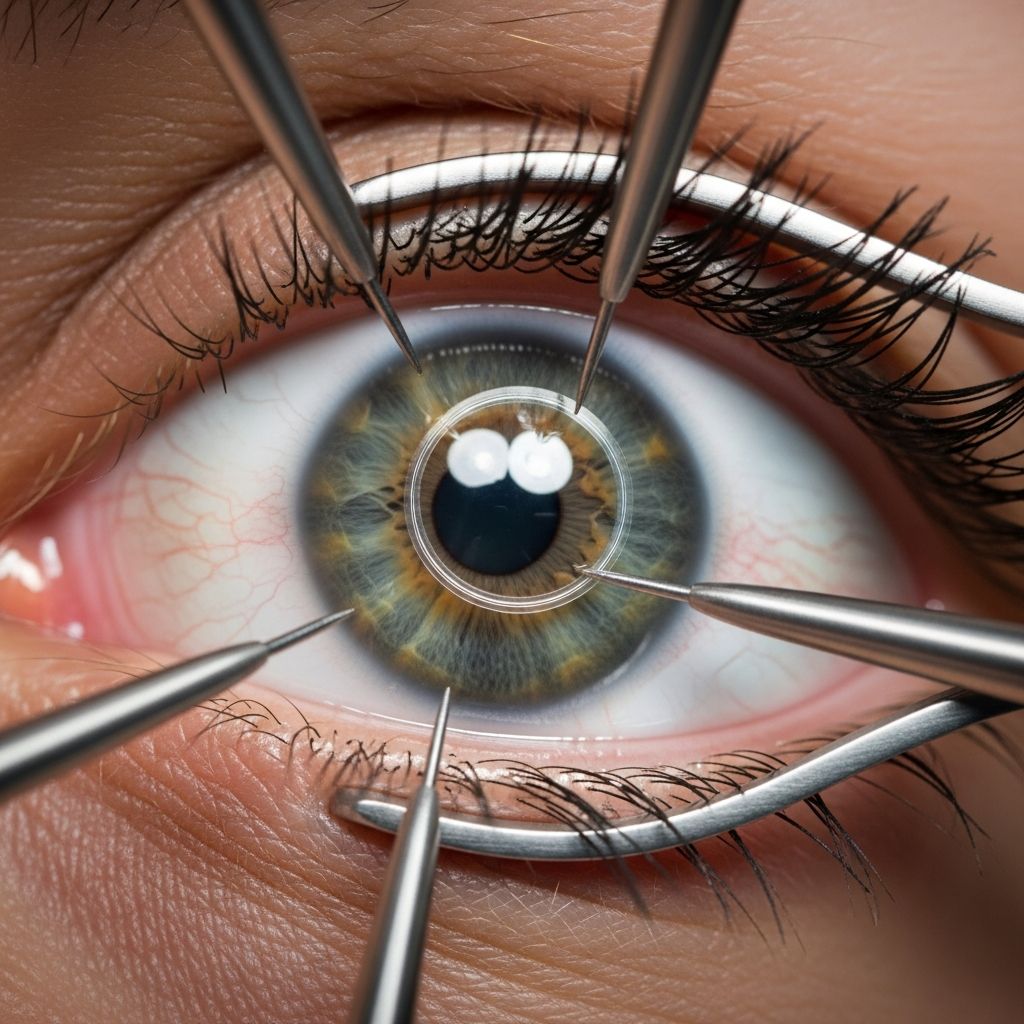
For posterior chamber ICL implantation, a clear temporal corneal incision measuring 3.0 to 3.2 millimeters is created. This small “key-hole” incision permits passage of the ICL injector while maintaining anterior chamber stability. Supplementary paracentesis incisions positioned superiorly and inferiorly facilitate viscoelastic insertion, anterior chamber manipulation, and IOL positioning.
The self-sealing nature of corneal incisions eliminates the need for suturing in most cases, promoting rapid visual recovery and reducing postoperative inflammation.
Viscoelastic Management and Lens Positioning
Cohesive viscoelastic agents occupy the anterior chamber before ICL insertion and again following lens unfolding. This protective substance shields endothelial cells from mechanical trauma during IOL passage and positioning. Practitioners must ensure complete viscoelastic removal at procedure completion to prevent postoperative pressure elevation.
Proper lens positioning within the posterior chamber requires adequate vault—the space between the posterior lens surface and the anterior crystalline lens. Correct sizing remains the most critical factor in preventing complications such as lens-zonule contact, iris chafing, or insufficient aqueous circulation.
Immediate Postoperative Management and Recovery
The postoperative period following phakic ICL implantation typically demonstrates rapid visual stabilization. Many patients notice improved vision within 24 hours of surgery, reflecting the minimal corneal disruption compared to excimer laser procedures. Patients require transportation home on the surgical day due to residual sedation effects, though most return to light activities within several days.
Topical antibiotic and anti-inflammatory medications suppress infection risk and inflammatory responses during the critical early healing phase. Practitioners should educate patients regarding activity restrictions and proper eye care during the first postoperative weeks to optimize outcomes and prevent contamination.
Visual Outcomes and Patient Expectations
Clinical results following phakic ICL implantation consistently demonstrate excellent refractive outcomes. Most patients without corneal astigmatism achieve vision of 20/40 or better after implantation, with the majority achieving 20/20 or superior vision in the months following surgery. Approximately 95 percent of patients discontinue glasses and contact lens wear following successful ICL implantation, maintaining visual freedom until age-related cataract formation develops.
The preservation of natural lens accommodation in younger patients (<40 years) provides sustained near vision capability without additional presbyopia management initially. However, patients over 40 years of age should anticipate potential reading glasses for near tasks, as the ICL does not address presbyopia.
Complications and Risk Mitigation Strategies
While phakic ICL implantation offers an excellent safety profile compared to historical refractive procedures, practitioners must understand potential complications and implement strategies to minimize their occurrence.
Common Complications and Prevention
- Cataract formation: Results from lens-epithelium contact; minimized through proper sizing, vaulting maintenance, and flow-through port designs in EVO systems
- Pupillary block glaucoma: Prevented through adequate anterior chamber depth and modern designs with improved aqueous circulation
- Endophthalmitis: A rare but serious intraocular infection occurring in approximately 1 in several thousand cases; requires aggressive early antibiotic therapy to preserve vision
- Glare and halos: More common with high myopic corrections but reduced compared to excimer laser results
- Mild discomfort: Expected in first 24 hours post-operatively; severe pain warrants immediate evaluation
Reversibility and Long-Term Management
A fundamental advantage of phakic IOL implantation compared to permanent refractive procedures involves its reversible nature. If visual changes occur, patient preferences evolve, or complications develop, the lens remains removable and replaceable. This flexibility provides particular value for younger patients or those with unstable refractive errors that may change during their lifespan.
Long-term follow-up imaging and periodic examination ensure ICL stability and permit early detection of developing complications. Should refractive power adjustment become necessary, lens exchange rather than additional surgical procedures can achieve the desired outcome.
Advantages Over Alternative Refractive Procedures
Phakic ICL implantation offers distinct benefits compared to laser-based refractive surgery and refractive lens exchange. Patients with thin corneas unsuitable for LASIK gain access to high-quality refractive correction. The procedure reduces risk of glare, halos, and low-light vision problems that can develop following aggressive laser ablation in high myopic eyes. The natural lens remains preserved, maintaining accommodation in younger patients and permitting future cataract surgery without additional refractive calculations.
Frequently Asked Questions About Phakic ICL Procedures
How long does vision recovery take after ICL implantation?
Most patients experience significantly improved vision within 24 hours following implantation. Complete visual stabilization typically occurs within 1 to 3 weeks as any residual inflammation resolves and the eye fully adapts to the implanted lens.
Can ICL implants be removed if vision changes occur?
Yes, phakic lenses remain removable and can be exchanged if necessary. This reversibility distinguishes phakic implantation from permanent refractive procedures, offering flexibility for future vision changes or patient preferences.
Will I still need glasses after ICL implantation?
Approximately 95 percent of patients achieve glasses-free distance vision following successful implantation. Patients over 40 may require reading glasses for near vision, as the procedure does not address presbyopia.
What is the difference between the Visian ICL and EVO ICL?
The EVO ICL represents a newer generation incorporating central ports for improved aqueous circulation. This innovation reduces complication rates, particularly cataract formation, and eliminates the need for preventive laser procedures before implantation.
How long does the ICL implantation surgery take?
The procedure typically requires 15 to 30 minutes per eye. Most patients undergo bilateral simultaneous surgery, though unilateral procedures can be arranged per patient preference.
References
- Phakic ICL Implant – Laser Refractive Surgery — UCLA Health. https://www.uclahealth.org/medical-services/ophthalmology/laser-refractive-surgery/services-offered/phakic-icl-implant
- Phakic Intraocular Lens — Kaiser Permanente Laser Vision Correction. https://www.kplaservisioncorrection.com/other-services/phakic-intraocular-lens/
- Phakic intraocular lenses: An overview — National Center for Biotechnology Information (NCBI). 2021. https://pmc.ncbi.nlm.nih.gov/articles/PMC7856940/
- Phakic Intraocular Lenses (IOLs) or Implantable Contact Lenses (ICLs) — University of Michigan Health. https://www.uofmhealth.org/our-care/specialties-services/phakic-intraocular-lenses-iols-or-implantable-contact-lenses-icls
- Implantable Collamer Lens — EyeWiki. https://eyewiki.org/Implantable_Collamer_Lens
Similar Articles








Read full bio of medha deb