Photodynamic Therapy: 2 Main Types & Benefits
Non-invasive light-activated treatment for skin cancers, precancers, acne, and rejuvenation.
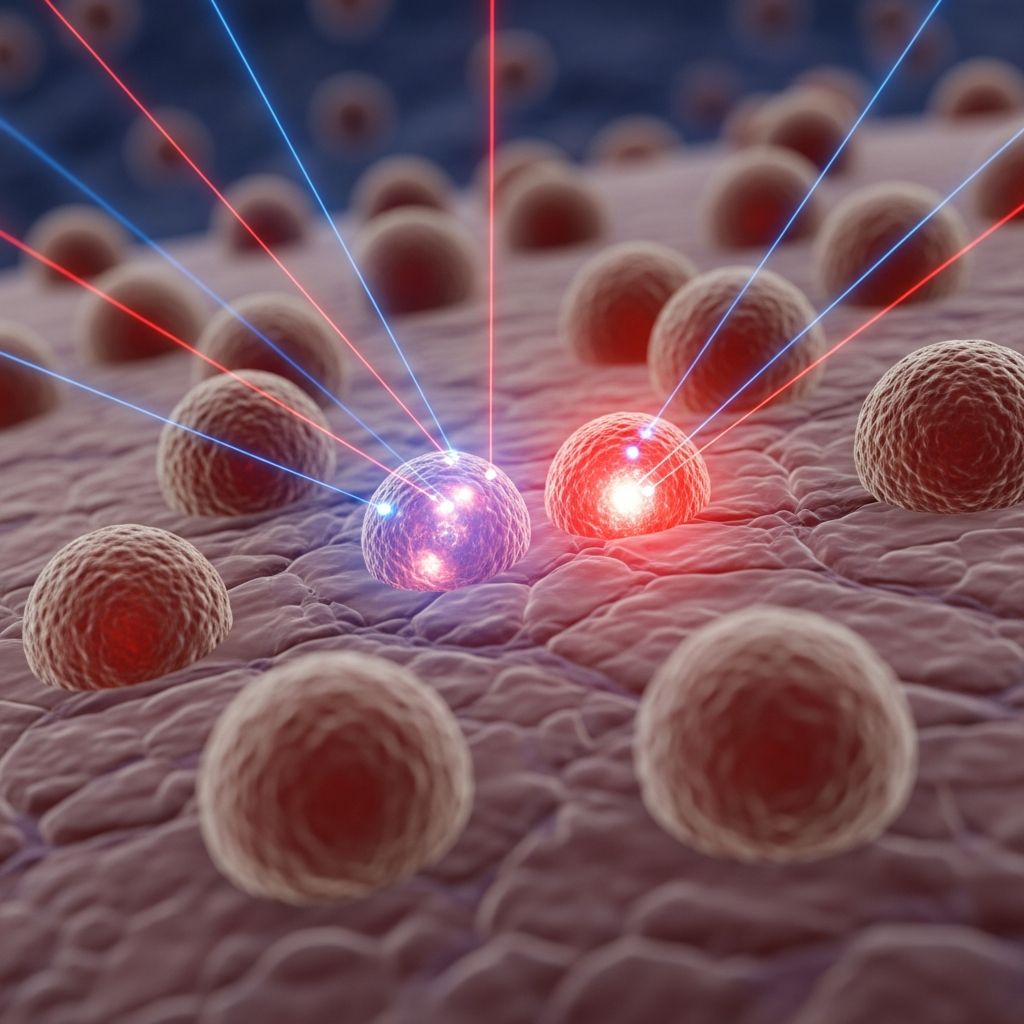
Photodynamic therapy (PDT) is a non-invasive treatment primarily used for superficial skin cancers and precancerous lesions. It combines a photosensitizing agent, specific light wavelength, and oxygen to selectively destroy abnormal cells while sparing healthy tissue.
What is photodynamic therapy?
Photodynamic therapy (PDT), also known as photochemotherapy, involves applying a photosensitizer (a light-activated drug) to the skin, allowing it to accumulate in target cells, and then exposing the area to light of a specific wavelength. This activates the photosensitizer, producing reactive oxygen species that cause selective cell death in abnormal tissues.
The treatment is particularly effective for sun-damaged skin, as photosensitizers like aminolevulinic acid (ALA) or methyl aminolevulinate (MAL) are preferentially absorbed by rapidly proliferating cells such as those in actinic keratoses and superficial cancers.
PDT has been utilized in dermatology since the early 1990s and is FDA-approved for field treatment of actinic keratoses on the face and scalp.
Who gets photodynamic therapy?
PDT is suitable for patients with fair skin types who have extensive sun damage, particularly older individuals with multiple actinic keratoses on the face, scalp, or other sun-exposed areas. It is ideal for those seeking a cosmetic outcome with minimal scarring.
- Individuals with numerous actinic keratoses (pre-cancerous lesions).
- Patients with superficial non-melanoma skin cancers like Bowen disease or thin basal cell carcinomas.
- People desiring skin rejuvenation for photoaging, fine lines, and pigmentation.
- Those with mild to moderate acne or certain infections (off-label uses).
Contraindications include porphyria, hypersensitivity to photosensitizers, and active skin infections in the treatment area.
What are the aims of photodynamic therapy?
The primary goals of PDT are to eradicate precancerous and cancerous cells, prevent progression to invasive squamous cell carcinoma, improve skin texture and tone, and achieve excellent cosmetic results with low recurrence rates.
For actinic keratoses, PDT provides field treatment, addressing subclinical lesions not visible to the naked eye, unlike spot treatments like cryotherapy.
How does photodynamic therapy work?
PDT relies on three key components: a topical photosensitizer (e.g., ALA in Levulan or Ameluz, MAL in Metvix), a light source (red, blue, or daylight), and tissue oxygen. The photosensitizer is metabolized into protoporphyrin IX (PpIX), which accumulates in abnormal cells. Light activation generates singlet oxygen and free radicals, leading to apoptosis or necrosis of targeted cells.
Protoporphyrin IX production is higher in neoplastic cells due to altered heme synthesis pathways, ensuring selectivity.
Types of photodynamic therapy
There are two main types: conventional PDT (c-PDT) and daylight PDT (DL-PDT).
| Aspect | Conventional PDT (c-PDT) | Daylight PDT (DL-PDT) |
|---|---|---|
| Incubation | 1-3 hours in dark | 30 minutes outdoors in daylight |
| Light Source | Artificial red/blue LED light (10-30 min) | Natural sunlight |
| Pain Level | Higher (burning/stinging) | Lower (milder reaction) |
| Efficacy for AK | High (up to 90% clearance) | Comparable for thin lesions (77-89%) |
| Convenience | Clinic-based | Home/outdoor, less downtime |
c-PDT uses lamps like BF-RhodoLED for deeper penetration; DL-PDT is simpler for non-hyperkeratotic lesions on the face/scalp.
What conditions are treated with photodynamic therapy?
Related Stories



Oncological uses (approved)
- Actinic keratoses (AK): Field-directed treatment for multiple lesions on face/scalp; clearance rates 75-90%.
- Bowen disease (squamous cell carcinoma in situ): 85-90% complete response.
- Superficial basal cell carcinoma (BCC): Effective for thin/nodular types (<2mm thick) outside head/neck; 80-90% success.
Off-label uses
- Mild-moderate acne vulgaris: Reduces sebaceous glands and Propionibacterium acnes.
- Facial rejuvenation: Improves photoaging, fine wrinkles, pigmentation, and texture.
- Skin infections: Viral warts, onychomycosis, cutaneous leishmaniasis.
- Other: Psoriasis, mycosis fungoides, extramammary Paget disease.
How is photodynamic therapy performed?
- Preparation: Cleanse skin, degrease with alcohol/saline, curette thick lesions.
- Apply photosensitizer: ALA (e.g., Ameluz) or MAL; occlude for 1-3 hours (c-PDT) or 30 min (DL-PDT).
- Illumination: Expose to red light (630nm, 37-75 J/cm², 8-30 min) or daylight; local anesthetic if needed for pain.
- Post-treatment: Strict sun avoidance 48 hours; moisturize, use mild analgesics.
Total procedure: 1-3 hours in clinic. Multiple sessions (1-3, 4-6 weeks apart) may be needed.
Side effects of photodynamic therapy
Common reactions mimic severe sunburn: erythema, pain, burning (peaks during light), edema, crusting, peeling (resolve 5-14 days).
- Mild-moderate: Pain (managed with cooling/analgesics), hyperpigmentation (transient).
- Rare: Blistering, ulceration, infection, scarring (minimal), permanent hypopigmentation.
- DL-PDT has less pain but similar efficacy for thin AK.
Pain is less than with topical chemotherapies like 5-FU.
Comparison of photodynamic therapy to other treatments
| Treatment | Efficacy for AK | Pain/Downtime | Cosmesis | Field Treatment |
|---|---|---|---|---|
| PDT | High (75-90%) | Moderate/1 week | Excellent | Yes |
| Cryotherapy | Medium (spot only) | Low | Good (hypopig scars) | No |
| 5-FU cream | High | High/4-6 weeks | Fair | Yes |
| Imiquimod | High | High/4 weeks | Fair | Yes |
PDT offers superior cosmesis and faster healing vs. topicals; better for large areas than cryotherapy.
Follow-up for photodynamic therapy
Review at 1 week for healing, then 3 months for efficacy. Annual surveillance for new AK in high-risk patients. Retreatment if needed.
Alternatives to photodynamic therapy
- Cryotherapy, curettage/electrodessication for solitary lesions.
- Topical 5-FU, imiquimod, ingenol mebutate.
- Laser ablation, excision for thicker tumors.
- Chemoprophylaxis for field cancerization.
Frequently asked questions (FAQs) on photodynamic therapy
Q: Is PDT painful?
A: Mild to moderate burning during light exposure; managed with fans, cooling, or lidocaine. Less painful than fluorouracil creams.
Q: How many treatments are needed?
A: 1-2 sessions for AK, spaced 4-6 weeks; annual maintenance possible.
Q: Can PDT be used on all skin types?
A: Best for Fitzpatrick I-III; higher pigmentation may reduce efficacy due to melanin competition.
Q: Does insurance cover PDT?
A: Often yes for actinic keratoses as FDA-approved; cosmetic uses (acne, rejuvenation) out-of-pocket.
Q: What is the downtime?
A: 5-7 days redness/peeling; avoid sun 48 hours post-treatment.
References
- Photodynamic Therapy | Clear Dermatology — Jennifer L. Mueller, MD. Accessed 2026. https://www.mycleardermatology.com/photodynamic-therapy
- Photodynamic Therapy (PDT) – Fairfield Dermatology — Fairfield Dermatology. Accessed 2026. https://www.fairfieldderm.com/procedures/photodynamic-therapy-pdt/
- Photodynamic therapy (PDT) – DermNet — DermNet NZ. Accessed 2026. https://dermnetnz.org/topics/photodynamic-therapy
- Photodynamic therapy: A hot topic in dermato-oncology — PMC – NIH. 2019-03-26. https://pmc.ncbi.nlm.nih.gov/articles/PMC6444307/
- Photodynamic therapy – Mayo Clinic — Mayo Clinic. Accessed 2026. https://www.mayoclinic.org/tests-procedures/photodynamic-therapy/about/pac-20385027
- Photodynamic Therapy for Dermatologic Conditions – StatPearls — NCBI Bookshelf. Accessed 2026. https://www.ncbi.nlm.nih.gov/books/NBK617062/
Similar Articles








Read full bio of medha deb