Phrenic Nerve: Anatomy, Function & Clinical Significance
Understanding the phrenic nerve: Essential anatomy, function, and its critical role in breathing.
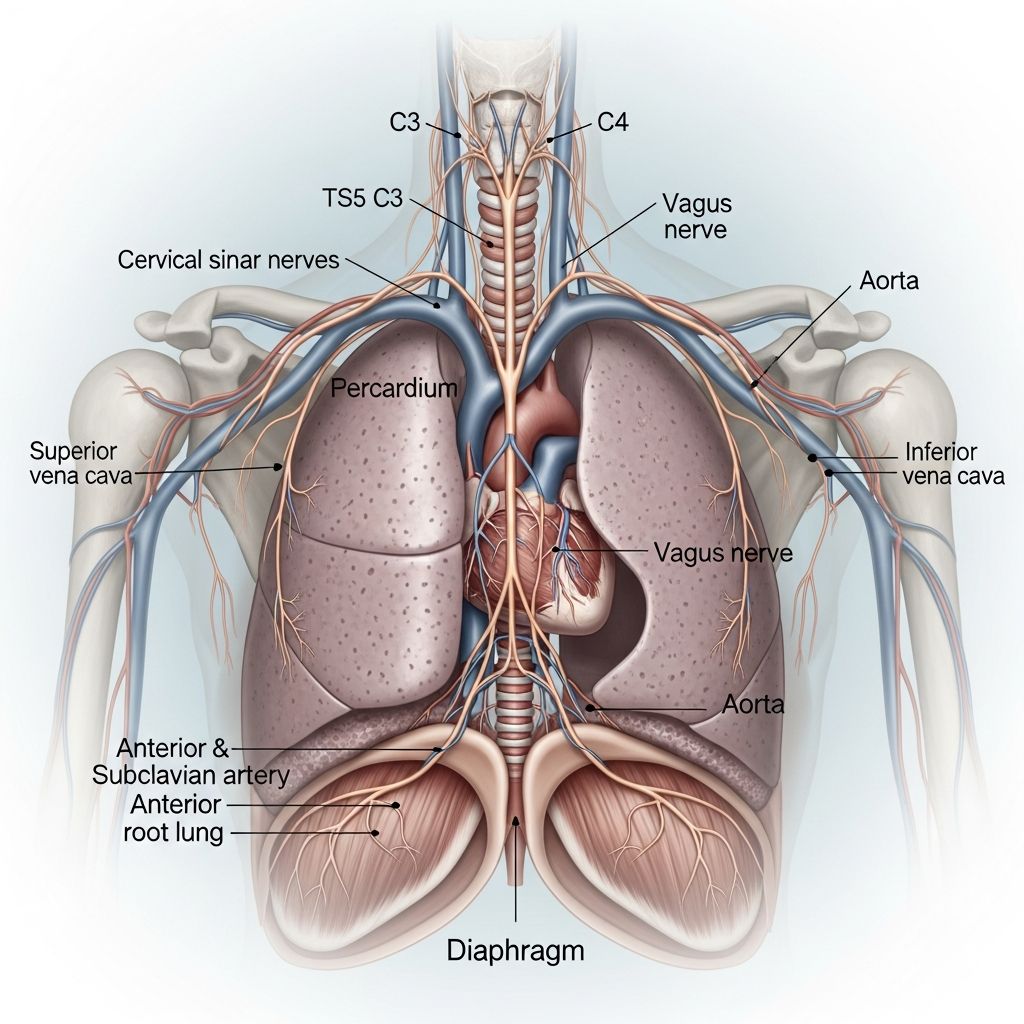
Understanding the Phrenic Nerve
The phrenic nerve is one of the most vital structures in the human body, responsible for controlling the primary muscle of respiration. This specialized nerve originates from the cervical spine and travels an extensive pathway through the chest to reach the diaphragm, where it orchestrates the mechanical process of breathing. Understanding the anatomy and function of the phrenic nerve is essential for healthcare professionals, surgical teams, and anyone interested in the mechanisms of human respiration.
The phrenic nerve performs multiple critical functions beyond simple motor control of the diaphragm. It carries sensory information from vital thoracic structures and maintains connections with the heart and lungs. When functioning properly, this nerve ensures efficient, unconscious breathing throughout your lifetime. However, injury or dysfunction of the phrenic nerve can have serious consequences for respiratory health and overall well-being.
Anatomical Origin and Pathway
The phrenic nerve originates from the anterior rami of the third, fourth, and fifth cervical spinal nerves, commonly referred to as C3, C4, and C5. The fourth cervical nerve contributes the majority of fibers to this nerve bundle. After emerging from the spinal cord at the cervical level, these nerve fibers converge in the neck to form the complete phrenic nerve.
From its origin, the phrenic nerve descends vertically through the body in a predictable anatomical course. In the neck and upper thorax, the nerve travels adjacent to the internal jugular vein, maintaining close proximity to major vascular structures. The right and left phrenic nerves follow slightly different paths as they descend through the thorax.
The Right Phrenic Nerve
The right phrenic nerve runs superficially over the anterior scalene muscle and passes over the second part of the right subclavian artery. As it continues its descent through the thorax, it maintains an anterior position relative to the root of the lung. The nerve travels between the mediastinal surface of the parietal pleura and the fibrous pericardium, passing lateral to the right atrium and right ventricle. Finally, the right phrenic nerve descends through the vena cava hiatus, an opening in the diaphragm at the level of the T8 vertebra, where it terminates and innervates the right hemidiaphragm.
The Left Phrenic Nerve
The left phrenic nerve follows a comparable but distinct pathway. In the neck and upper thorax, it travels proximal to the left subclavian artery. The left phrenic nerve descends anteriorly to the pericardial sac containing the left ventricle of the heart. This anatomical relationship places the left phrenic nerve in close proximity to cardiac structures. The nerve ultimately terminates at the central tendon of the diaphragm, providing motor innervation to the left hemidiaphragm.
Structure and Function
The phrenic nerve is a mixed peripheral nerve containing motor, sensory, and sympathetic fiber components. This composition allows it to perform multiple functions essential to respiratory physiology and pain sensation. The nerve’s structural complexity reflects its diverse physiological roles.
Related Stories



Motor Function and Diaphragmatic Contraction
The primary function of the phrenic nerve is to provide complete motor innervation to the diaphragm. When the phrenic nerve delivers motor signals to the diaphragmatic muscle, the muscle contracts and flattens. This mechanical change increases the intrapleural space within the chest cavity, creating negative pressure that draws air into the lungs. This contraction represents the active phase of inspiration.
The diaphragm normally exists in a relaxed state with a characteristic dual dome shape. During exhalation, when the phrenic nerve ceases its stimulation, the diaphragm relaxes and returns to its resting domed configuration. This rhythmic cycle of contraction and relaxation occurs automatically multiple times per minute throughout your entire lifetime, usually without conscious awareness or control.
Sensory Function
Beyond motor control, the phrenic nerve supplies comprehensive sensory innervation to multiple thoracic structures. The nerve provides touch and pain sensation to the central tendon of the diaphragm itself. Additionally, the phrenic nerve carries sensory information from the mediastinal pleura (the membrane covering the lungs) and the pericardium (the membrane surrounding the heart). This sensory function is clinically significant because pain originating from these deep structures follows specific referred pain patterns.
Blood Supply and Vascular Relationships
The phrenic nerve does not exist in isolation but travels as part of a neurovascular bundle. The pericardiophrenic artery and superior phrenic vein accompany the phrenic nerve throughout its entire course from the neck to the diaphragm. These three structures—nerve, artery, and vein—descend in parallel along the lateral aspects of the pericardial sac.
The pericardiophrenic artery originates as a branch of the internal thoracic artery, ensuring a consistent blood supply to the nerve tissues throughout the nerve’s course. The superior phrenic vein provides venous drainage from the region, terminating in the azygos vein on the right side and the left. This coordinated vascular supply is essential for maintaining the nerve’s metabolic needs and supporting its continuous function.
Embryological Development
The phrenic nerve develops through a fascinating embryological process that begins in early fetal life. The phrenic nerve originates from neural crest cells derived from the neural plate, establishing its identity as a peripheral nerve. Neurulation, the process by which the neural plate develops into nervous system structures, commences after the third week of fertilization.
Between weeks 5 and 6 of fetal development, the septum transversum, which forms the thoracic diaphragm, begins its descent from the cervical vertebrae toward the thoracolumbar region. The phrenic nerve descends in concert with this embryological migration, carrying motor innervation derived from the ventral rami of C3 through C5 nerve roots. This developmental relationship explains why the phrenic nerve, despite innervating abdominal and lower thoracic structures, maintains its cervical origin throughout life.
Associated Muscles and Secondary Respiratory Function
While the phrenic nerve provides the primary motor control for breathing through diaphragmatic innervation, it works in coordination with secondary respiratory muscles to optimize ventilation. The trapezius, pectoralis major, pectoralis minor, sternocleidomastoid, and intercostal muscles all participate in the respiratory process, particularly during increased physical activity or respiratory stress.
In certain individuals, an accessory phrenic nerve may be present, which can provide motor innervation to the subclavius muscle. The subclavius muscle, originating at the costochondral junction of the first rib and inserting at the subclavian groove of the clavicle, functions to stabilize the clavicle during upper extremity movements and breathing.
Clinical Significance and Referred Pain Patterns
Understanding the phrenic nerve’s distribution and sensory pathways is crucial for clinical diagnosis and patient care. The phrenic nerve supplies sensory innervation to the diaphragm, and pain arising from diaphragmatic pathology follows a distinctive referred pain pattern. Pain originating from structures innervated by the phrenic nerve is often referred to the tip of the shoulder, a phenomenon known as the Kehr sign.
This referred pain pattern occurs because sensory information from the phrenic nerve reaches the spinal cord at the level of the C3, C4, and C5 nerve roots, which also supply sensory innervation to the shoulder region. The brain interprets pain signals arriving via these cervical pathways as originating from the shoulder, even though the actual pathology may involve the diaphragm, pleura, or pericardium.
For example, a patient with a subphrenic abscess (an infected collection beneath the diaphragm) or a ruptured spleen may present with complaints of left shoulder pain rather than abdominal pain. Similarly, pericarditis (inflammation of the heart’s protective membrane) may manifest as shoulder pain due to phrenic nerve involvement. Recognition of this referred pain pattern is essential for accurate diagnosis of thoracic and abdominal pathology.
The Hiccup Reflex
The hiccup reflex represents a common clinical manifestation of phrenic nerve irritation. Hiccups result from sudden, involuntary spasms of the diaphragm that pull air against the closed folds of the larynx, producing the characteristic hiccupping sound. While usually benign and self-limiting, persistent hiccups can indicate underlying phrenic nerve irritation from various causes, including gastric distension, sudden temperature changes, or more serious pathology.
Surgical Considerations and Injury Prevention
The anatomical course of the phrenic nerve makes it vulnerable to injury during various surgical procedures, particularly those involving the thorax and neck. Surgeons must carefully identify and preserve the phrenic nerve during cervical and thoracic surgical dissection to maintain neuromuscular function and prevent postoperative respiratory complications.
One particularly important surgical consideration involves coronary artery bypass grafting (CABG). The internal mammary artery, commonly harvested for use as a bypass graft, travels in close proximity to the phrenic nerve. During the takedown of this artery, the phrenic nerve may be inadvertently injured, resulting in postoperative diaphragmatic paralysis. Careful dissection and identification of the nerve can prevent this complication.
Phrenic nerve injury during cardiac or thoracic surgery can result in diaphragmatic paralysis, ranging from minor functional impairment to severe respiratory compromise depending on whether one or both nerves are affected. Patients with unilateral phrenic nerve injury may experience subtle breathing difficulties, particularly during physical exertion or when lying down (orthopnea). Bilateral phrenic nerve injury represents a surgical emergency requiring immediate intervention to restore adequate ventilation.
Phrenic Nerve Dysfunction and Respiratory Implications
Phrenic nerve dysfunction can result from various causes, including traumatic injury, surgical injury, compression from tumors or inflammatory masses, neurological disease, and idiopathic causes. When only one phrenic nerve is affected, the contralateral diaphragm typically compensates, and patients may not immediately recognize functional impairment during normal activities.
However, upon careful examination or during increased physical demands, patients with unilateral phrenic nerve injury often experience breathlessness during exertion or when assuming a recumbent position. This symptom profile is particularly pronounced in patients with obesity, underlying heart disease, or chronic lung disorders, where respiratory reserve is already diminished.
Additional symptoms associated with unilateral phrenic nerve dysfunction include daytime somnolence, fatigue, and snoring, reflecting the compromised respiratory efficiency that results from reduced diaphragmatic function. These symptoms may develop insidiously, with patients adapting gradually to their reduced respiratory capacity.
When both phrenic nerves are damaged, breathing immediately becomes severely compromised. Although the lungs retain partial function through intercostal muscle activity and rib cage movement, this compensatory mechanism alone proves inadequate for normal respiratory needs. Patients experience significant dyspnea, particularly when lying down, and face substantially increased risk for pneumonia, sleep disturbances, and daytime fatigue. Bilateral diaphragmatic paralysis can lead to serious respiratory infections and neurological complications, requiring prompt medical intervention.
Treatment Options for Phrenic Nerve Dysfunction
Modern medicine offers innovative approaches to restore function in cases of phrenic nerve injury or dysfunction. One important therapeutic option is diaphragmatic pacing, a procedure that restores phrenic nerve function when the nerve remains anatomically intact but lacks functional activity.
In diaphragmatic pacing, an electronic pacer device is surgically implanted and attached to the phrenic nerve. This device delivers periodic electrical stimulation to the phrenic nerve, triggering coordinated diaphragmatic contraction and restoring natural breathing patterns. This approach has proven successful in selected patients, allowing restoration of spontaneous breathing and improved respiratory function.
Frequently Asked Questions
Q: What exactly is the phrenic nerve?
A: The phrenic nerve is a mixed peripheral nerve originating from cervical spinal nerves C3, C4, and C5. It provides motor innervation to the diaphragm, sensory innervation to the pleura and pericardium, and carries sympathetic fibers. It is essential for automatic breathing control.
Q: Why does diaphragmatic pain feel like shoulder pain?
A: Pain from structures innervated by the phrenic nerve is referred to the shoulder through a phenomenon called referred pain. This occurs because sensory signals from the phrenic nerve reach the spinal cord at C3-C5 levels, which also supply the shoulder region. This referred pain pattern is known as the Kehr sign.
Q: What happens if both phrenic nerves are damaged?
A: Bilateral phrenic nerve injury causes severe respiratory compromise requiring immediate medical attention. Patients experience significant breathlessness, particularly when lying down, frequent respiratory infections, sleep disturbances, and daytime fatigue. Ventilatory support or diaphragmatic pacing may be necessary.
Q: Can phrenic nerve injuries occur during surgery?
A: Yes, the phrenic nerve can be injured during cardiac bypass surgery, particularly during internal mammary artery harvesting, or during thoracic and cervical surgical procedures. Careful surgical identification and preservation techniques help prevent these complications.
Q: What causes hiccups, and are they related to the phrenic nerve?
A: Hiccups result from sudden involuntary spasms of the diaphragm caused by phrenic nerve irritation. The muscle contraction pulls air against the closed laryngeal folds, producing the characteristic sound. While usually benign, persistent hiccups may indicate underlying pathology.
Q: How does diaphragmatic pacing help restore breathing?
A: Diaphragmatic pacing involves surgically implanting an electronic device that delivers periodic electrical stimulation to an intact but non-functional phrenic nerve. This stimulation triggers coordinated diaphragmatic contraction, restoring natural breathing patterns in selected patients.
References
- Anatomy, Thorax, Phrenic Nerves — National Center for Biotechnology Information (NCBI) StatPearls. 2024. https://www.ncbi.nlm.nih.gov/books/NBK513325/
- Phrenic Nerve: What to Know — WebMD Medical Reference. 2024. https://www.webmd.com/lung/phrenic-nerve-what-to-know
- Phrenic nerve — Britannica Encyclopedia. 2024. https://www.britannica.com/science/phrenic-nerve
- Diaphragm and Respiratory Function — Cleveland Clinic Medical Education. 2024. https://my.clevelandclinic.org/health/body/21578-diaphragm
- Images of Note: Phrenic Nerve Paralysis — Cleveland Clinic Consult QD. 2024. https://consultqd.clevelandclinic.org/images-of-note-phrenic-nerve-paralysis
Similar Articles








Read full bio of medha deb