Phytomenadione Injection (Konakion MM): Uses and Information
Complete guide to phytomenadione injection: uses, dosage, administration, and side effects.
About Phytomenadione
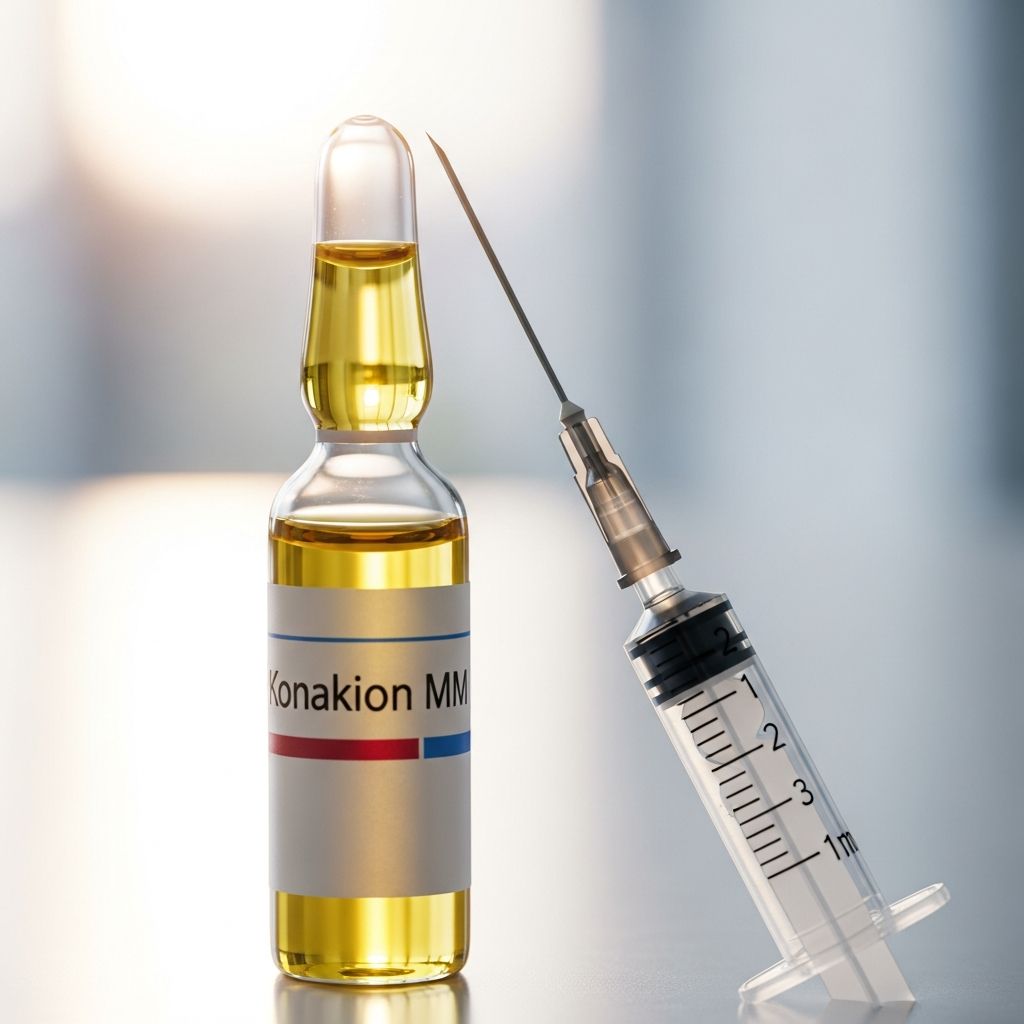
Phytomenadione is a man-made form of vitamin K, commonly available under the brand name Konakion MM. It is primarily used to treat people who are at risk of bleeding due to taking anticoagulant medicines, such as warfarin. Vitamin K is a fat-soluble vitamin that is essential for blood clotting and plays an important role in bone health. The medication works by reversing the effects of anticoagulant drugs when bleeding becomes a serious concern.
What Type of Medicine is Phytomenadione?
Phytomenadione belongs to a group of medicines classified as antihaemorrhagic agents. It is a synthetic vitamin K1 preparation that helps restore the body’s ability to form blood clots. This makes it essential for patients taking blood-thinning medications who experience unexpected bleeding or require emergency surgery.
| Property | Details |
|---|---|
| Type of Medicine | A form of vitamin K; an antihaemorrhagic |
| Used For | To prevent bleeding caused by anticoagulant medicines; to reverse anticoagulant effects before surgery |
| Also Called | Phytonadione (US); Konakion® MM |
| Available As | Injection for intravenous or oral use |
Uses of Phytomenadione Injection
Phytomenadione has several important medical uses. It is used to prevent and treat bleeding after the use of certain anticoagulant medicines. Additionally, phytomenadione is used to treat children aged 1 year and older who have liver disease or low levels of vitamin K in their bodies. In newborns, it is administered to prevent vitamin K deficiency bleeding (VKDB), which can occur in infants who lack sufficient natural vitamin K.
Prevention of Anticoagulant-Related Bleeding
People who take anticoagulant medicines such as warfarin are at increased risk of bleeding. Regular blood tests are required to monitor how quickly the blood clots. The aim is to achieve the correct warfarin dose so that blood does not clot as easily as normal, but not so much as to cause bleeding problems. If the anticoagulant dose becomes too high, bleeding can become a serious problem. Phytomenadione is given as an antidote to counteract this risk.
Emergency Surgery Preparation
Patients taking anticoagulant medicines may receive phytomenadione before emergency surgery to reverse the effects of blood-thinning medications. This helps reduce the risk of excessive bleeding during surgical procedures.
Neonatal Vitamin K Deficiency
Newborn infants are given phytomenadione to prevent vitamin K deficiency bleeding, a serious condition that can occur in the first weeks of life. The medication is typically administered at birth and again at one week and one month of age, depending on the clinical protocol and the infant’s birthweight.
Before Having Phytomenadione
Before receiving phytomenadione treatment, it is important that your doctor knows about your medical history. Tell your healthcare provider if:
- You are pregnant or breastfeeding
- You are taking or using any other medicines, including over-the-counter medications, herbal remedies, and complementary medicines
- You have ever had an allergic reaction to a medicine
- You have liver disease or bleeding disorders
- You are allergic to phytomenadione or any other ingredients in Konakion MM
Related Stories



If you are uncertain whether any of these conditions apply to you, discuss this with your doctor or nurse before receiving phytomenadione.
How Phytomenadione is Given
Phytomenadione injection will be administered by a doctor or nurse. The medication is available in different formulations, and the method of administration depends on the clinical situation and the patient’s condition.
Routes of Administration
Phytomenadione can be administered through several routes:
- Intravenous injection: The most common method for acute bleeding situations, administered slowly over at least 30 seconds
- Intravenous infusion: Delivered through a small tube into one of the veins
- Oral administration: By mouth, often used for people taking phytomenadione before surgery or those with abnormal blood results but without bleeding symptoms
- Intramuscular injection: Used in pediatric formulations
Dosage for Adults
The dosage of phytomenadione for adults varies depending on the clinical situation:
- For severe or life-threatening bleeding during anticoagulant therapy: 5 to 10 mg given intravenously, usually combined with prothrombin complex concentrate (PCC)
- For mild bleeding or bleeding risk: 0.5 to 1 mg
- For emergency surgery: 5 mg may be given before surgery to reverse anticoagulant effects
- Oral dose: 1 mg to 5 mg, depending on the clinical situation
An important restriction is that not more than 40 mg of Konakion MM should be given intravenously in 24 hours. For severe cases, coagulation profiles must be monitored daily, and in extremely serious situations, more frequent monitoring may be necessary.
Pediatric Dosage
For children and infants, phytomenadione dosages are carefully calculated based on body weight and clinical need. In newborns with birthweight of 1500 g or more, a single dose of 1 mg (0.1 mL of Konakion MM) is typically given at birth. For infants with birthweight less than 1500 g, a dose of 0.5 mg (0.05 mL of Konakion MM) is administered.
For vitamin K deficiency bleeding in children, the initial intravenous dose is typically 1 mg, with further doses administered as required depending on the clinical picture and coagulation status. A haematologist should be consulted regarding appropriate investigation and treatment for any infant or child receiving this medication.
Administration in Newborns
If you have been asked to administer phytomenadione to your newborn baby by mouth, follow the midwife’s or doctor’s instructions carefully. Read the printed manufacturer’s instructions on how to use the ampoule and dropper. A dose is usually needed at 1 week old and then at 1 month old.
Getting the Most From Your Treatment
To maximize the effectiveness of phytomenadione treatment, follow these important guidelines:
- If you have any questions about your treatment, ask your doctor or nurse for further advice
- After leaving hospital, remember to keep your regular clinic appointments so that your progress can be monitored
- Inform your healthcare provider immediately if you experience any unusual symptoms or side effects
- For patients on warfarin therapy, maintain regular blood test appointments to monitor coagulation levels
- Do not stop taking anticoagulant medications unless instructed by your doctor
Can Phytomenadione Cause Problems?
Phytomenadione is generally well-tolerated with minimal side effects. Very occasionally, there have been reports of irritation or allergic-type reactions, but the medicine is unlikely to cause significant side-effects in most patients. The most serious potential adverse reaction is a hypersensitivity reaction, though this is rare.
Potential Side Effects
Side effects are uncommon, but may include:
- Local irritation at the injection site
- Allergic-type reactions (very rare)
- Hypersensitivity reactions
If you experience any other symptoms which you think could be due to phytomenadione, please speak with your doctor or pharmacist for further advice.
How to Store Phytomenadione
Proper storage of phytomenadione is essential to maintain its effectiveness:
- Keep all medicines out of the reach and sight of children
- Store in a cool, dry place, away from direct heat and light
- Do not store in a bathroom where humidity may affect the medication
- Check the expiration date before use
- Do not use the medication if the solution appears discolored or contains particles
Additional Important Information
Phytomenadione (Konakion MM) is available in different strengths to accommodate various patient needs. The standard adult formulation contains 10 mg/ml, while pediatric formulations such as Konakion MM Paediatric contain 2 mg/0.2 ml, making it suitable for administration to infants and young children.
When phytomenadione is used to treat severe vitamin K deficiency bleeding in infants or children, the medication may need to be accompanied by more immediate effective treatment, such as transfusion of blood or blood clotting factors, to compensate for severe blood loss and the delayed response to vitamin K therapy.
The earliest effect seen with vitamin K treatment is typically at 4 to 6 hours after administration. Therefore, in patients with severe haemorrhage, replacement with coagulation factor concentrates may be indicated, and consultation with a haematologist is advisable.
Frequently Asked Questions (FAQs)
Q: What is the difference between phytomenadione and warfarin?
A: Warfarin is an anticoagulant medication that thins the blood to prevent clots, while phytomenadione (vitamin K) reverses the effects of anticoagulants when bleeding becomes a problem. Phytomenadione restores the body’s ability to form blood clots.
Q: How quickly does phytomenadione work?
A: The earliest effect of vitamin K treatment is typically seen 4 to 6 hours after administration. In severe bleeding situations, faster-acting blood products may be needed in addition to phytomenadione.
Q: Can phytomenadione be given orally?
A: Yes, phytomenadione can be administered by mouth, particularly for patients taking it before surgery or those with abnormal blood results but without active bleeding symptoms. The undiluted injection can also be given orally.
Q: Is phytomenadione safe for newborns?
A: Yes, phytomenadione is routinely given to newborns to prevent vitamin K deficiency bleeding. Standard doses are 1 mg for infants with birthweight ≥1500 g and 0.5 mg for those <1500 g at birth, with additional doses at 1 week and 1 month of age.
Q: What should I do if I experience side effects from phytomenadione?
A: Side effects are rare, but if you experience any symptoms you believe are related to phytomenadione, speak with your doctor or pharmacist immediately. Seek emergency medical attention if you experience signs of a serious allergic reaction.
Q: Can I take other medications while using phytomenadione?
A: Inform your doctor about all medications you are taking, including over-the-counter drugs and herbal supplements, before receiving phytomenadione, as some medicines may interact with this treatment.
Q: How often will I need blood tests while taking anticoagulants and phytomenadione?
A: Regular blood tests are essential to monitor coagulation levels. Your doctor will determine the frequency based on your individual situation, but daily monitoring may be necessary in severe cases, especially after phytomenadione administration.
References
- Konakion MM Ampoules 10 mg/ml – Patient Information Leaflet — Medicines and Healthcare products Regulatory Agency (MHRA). 2024. https://www.medicines.org.uk/emc/files/pil.9755.pdf
- Phytomenadione Injection – Konakion MM — Patient.info. 2024-12-23. https://patient.info/medicine/phytomenadione-injection-konakion-mm
- Konakion MM Paediatric 2 mg/0.2 ml – Patient Information Leaflet — Medicines and Healthcare products Regulatory Agency (MHRA). 2024. https://www.medicines.org.uk/emc/files/pil.9754.pdf
- Vitamin K1 (Phytomenadione) Guidelines — Australian Nursing and Midwifery Federation. 2023-08-10. https://www.anmfonline.org/wp-content/uploads/2023/08/Vitamin-K_ANMFv3.0_20230810-1.pdf
- Konakion Consumer Medicine Information — New Zealand Medicines and Medical Devices Safety Authority (Medsafe). https://www.medsafe.govt.nz/consumers/cmi/k/konakion.pdf
- Phytomenadione (Vitamin K) – IV Guidelines — Cork University Hospital Pharmacy. 2025-01-03. https://emed.ie/_docs/Pharm-Phytomenadione-Vitamin-K-IV-CUH_20250103.pdf
Similar Articles








Read full bio of medha deb