PICC Lines: 5 Essential Uses, Care, And Risks
Comprehensive guide to PICC lines: uses, insertion, care, and safety for long-term IV therapy.
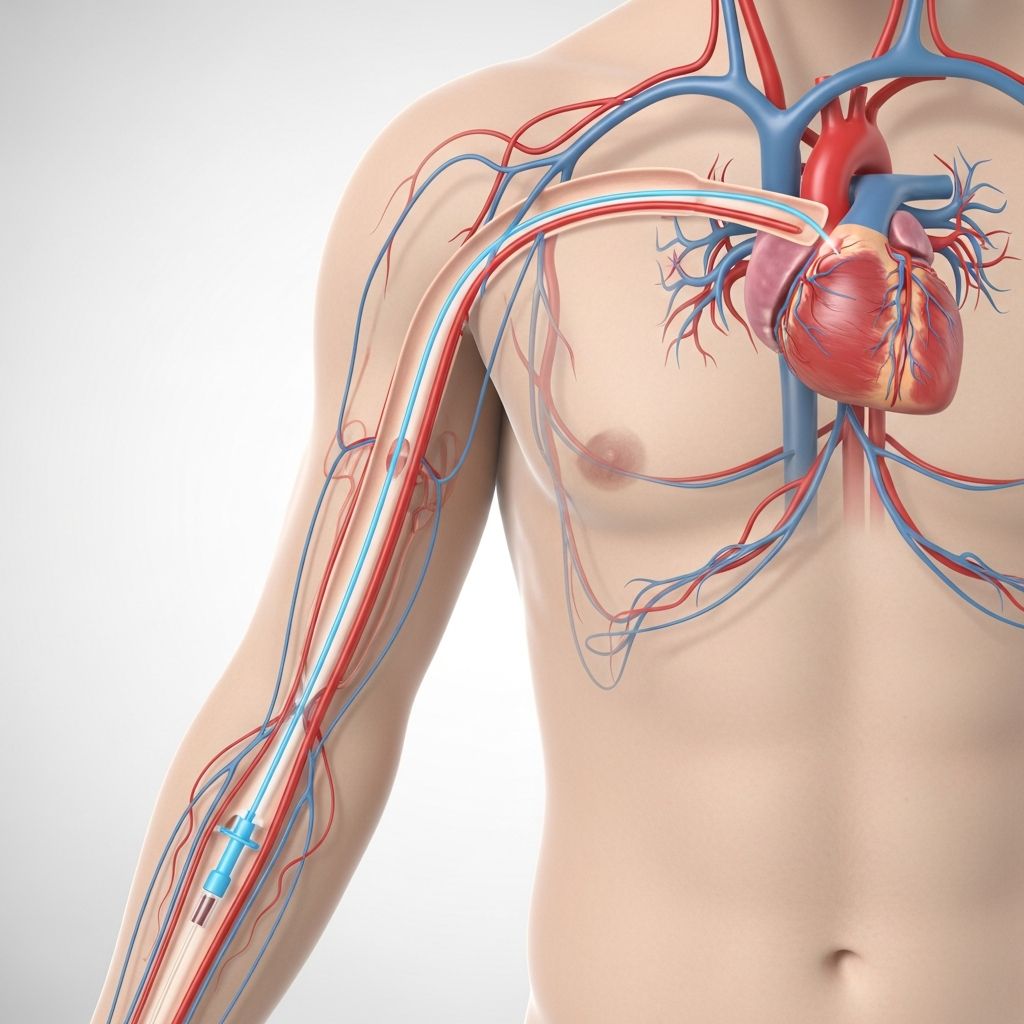
Peripherally inserted central catheters, known as PICC lines, serve as vital tools in modern healthcare for delivering treatments directly into large veins near the heart. These devices support extended therapies without the repeated trauma of standard IV insertions.[Mayo Clinic][Cleveland Clinic]
Understanding the Design and Function of PICC Lines
A PICC line consists of a thin, flexible tube, typically 50-60 cm long, made from biocompatible materials like silicone or polyurethane. Inserted via a vein in the upper arm, it threads through the vascular system to position its tip in the superior vena cava, just above the heart’s right atrium. This placement ensures rapid dilution of infused substances in high blood flow areas.[Health Line Medical Products]
Available in single, double, or triple-lumen configurations, PICC lines allow simultaneous administration of incompatible medications through separate channels. Their external portion includes a Dacron cuff in some models to anchor the device subcutaneously, reducing migration and infection risk over time.
Clinical Applications and Therapeutic Uses
PICC lines excel in scenarios requiring prolonged or aggressive intravenous interventions. Key applications include:
- Chemotherapy delivery: Safely administers vesicant agents that could cause tissue damage if extravasated from peripheral sites.[Macmillan Cancer Support]
- Infection management: Provides weeks-long access for intravenous antibiotics or antifungals in cases of osteomyelitis, endocarditis, or sepsis.
- Nutritional support: Facilitates total parenteral nutrition (TPN) for patients with gastrointestinal dysfunction, delivering lipids, proteins, and electrolytes centrally.[Mayo Clinic]
- Hydration and transfusions: Supports large-volume fluid resuscitation, blood products, or contrast for imaging studies.
- Blood sampling: Enables routine lab draws, minimizing venipuncture-related pain and vein sclerosis.
Pediatric use adapts PICC lines for smaller anatomies, often in neonates needing prolonged antibiotics or nutrition.[CHOP][KidsHealth]
Patient Selection and Preparation
Not every patient qualifies for a PICC line. Ideal candidates have anticipated therapy durations of 7 days to 6 months, preserved upper extremity veins, and no contraindications like active bacteremia or severe coagulopathy. Pre-insertion evaluation involves blood tests for clotting factors, renal function, and ultrasound vein mapping to select optimal access sites.[Cleveland Clinic]
| Factor | Ideal Criteria | Contraindications |
|---|---|---|
| Vascular Anatomy | Visible, compressible basilic/cephalic veins | Thrombosis, prior damage |
| Treatment Duration | >1 week, <6 months | Very short or indefinite |
| Patient Factors | Mobile arm, compliant | Paralysis, lymphedema |
| Coagulation | Normal INR/Platelets | Uncontrolled bleeding risk |
Patients receive education on the device, potential risks, and home care responsibilities prior to consent.
Step-by-Step Insertion Procedure
Performed in sterile settings by vascular access specialists, nurses, or physicians, PICC insertion uses modified Seldinger technique under ultrasound guidance. Here’s the process:
- Site preparation: Arm cleaned with chlorhexidine; draped sterilely; local anesthetic (lidocaine) injected.
- Vein access: Ultrasound identifies vein; needle punctures skin and vessel.
- Guidewire advancement: Flexible wire passed to central position.
- Catheter placement: Dilator exchanges for PICC; advanced over wire to target depth (confirmed by ECG or manometry).
- Confirmation: Chest X-ray verifies tip position in lower superior vena cava.
- Securing: StatLock or suture; transparent dressing applied.[HSS]
Related Stories



The procedure lasts 30-60 minutes with minimal sedation. Power-injectable PICCs support CT contrast.
Daily Maintenance and Home Care Protocols
Proper upkeep extends dwell time and prevents complications. Essential practices include:
- Weekly dressing changes with chlorhexidine gluconate using aseptic no-touch technique.
- Daily flushing with 10 mL normal saline post-use; heparin locks if prescribed.
- Arm immobilization initially; avoid submersion in water.
- Site inspection for erythema, exudate, or catheter migration signs.
- Patient diary for infusion logs and symptom tracking.[Health Line Medical Products]
Caregivers learn cap changes, tubing swaps every 7 days, and emergency declotting with thrombolytics.
Recognizing and Managing Complications
While safer than alternatives, PICCs carry risks:
- Infection: Catheter-related bloodstream infection (CRBSI); treat with cultures, antibiotics; remove if persistent.
- Thrombosis: Deep vein thrombosis (5-15% incidence); anticoagulate, consider removal.
- Occlusion: Managed by instilling alteplase; assess for malposition.
- Phlebitis/Extravasation: Rare due to central tip; monitor infusions.
- Mechanical issues: Breakage, migration; X-ray evaluation.[MSKCC]
Early intervention via multidisciplinary vascular teams optimizes outcomes.
Comparing PICC Lines to Other Central Access Devices
| Device | Insertion Site | Dwell Time | Complication Rate | Best For |
|---|---|---|---|---|
| PICC | Peripheral arm | Weeks-Months | Low-Moderate | Ambulatory therapy |
| Tunneled Catheter | Chest | Months-Years | Moderate | Hemodialysis |
| Implanted Port | Subcutaneous | Years | Low | Intermittent use |
| Standard IV | Peripheral | Days | High phlebitis | Short-term |
PICCs balance convenience and safety for intermediate durations.[KidsHealth]
Safe Removal Techniques
Removal occurs when therapy ends or complications arise. Performed outpatient:
- Remove dressing; cut securing device.
- Gently withdraw catheter during Valsalva maneuver to prevent air embolus.
- Inspect for intactness; apply pressure 5 minutes.
- Site observation for hematoma or bleeding.
Post-removal, monitor for rebound thrombosis.
Frequently Asked Questions (FAQs)
Can I shower with a PICC line?
Yes, using waterproof covers; avoid direct water jets on the site.
How long can a PICC stay in?
Typically 1-6 months, depending on care and assessments.[Mayo Clinic]
Does PICC insertion hurt?
Local anesthesia minimizes pain; some feel pressure during threading.
Can I exercise with a PICC?
Light activity yes; avoid heavy lifting or contact sports.
What if my PICC gets pulled?
Seek immediate medical help; do not reinsert yourself.
References
- Peripherally inserted central catheter (PICC) line — Mayo Clinic. 2023-10-15. https://www.mayoclinic.org/tests-procedures/picc-line/about/pac-20468748
- PICC Line (Peripherally Inserted Central Catheter) — Cleveland Clinic. 2024-02-10. https://my.clevelandclinic.org/health/treatments/14983-peripherally-inserted-central-catheter-picc
- What are PICC Lines Used For? — Health Line Medical Products. 2023-08-22. https://hlic.net/what-are-picc-lines-used-for/
- PICC line for chemo — Macmillan Cancer Support. 2024-01-05. https://www.macmillan.org.uk/cancer-information-and-support/treatment/types-of-treatment/cancer-drug-treatments/picc-lines
- Peripherally Inserted Central Catheter (PICC Line) — Children’s Hospital of Philadelphia (CHOP). 2023-11-20. https://www.chop.edu/treatments/peripherally-inserted-central-catheter-picc
Similar Articles








Read full bio of medha deb